

Why ‘Pretty Flat Samples’ Lie to You
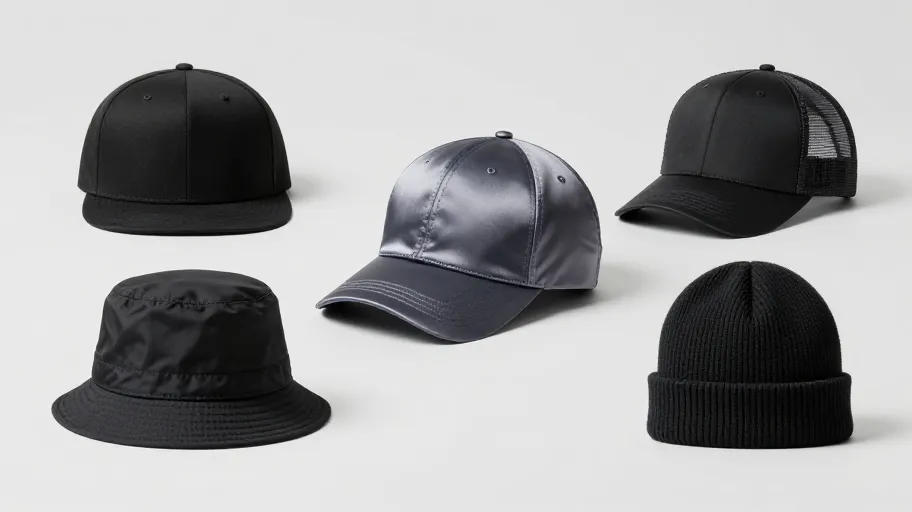
That flawless satin-lined cap pinned to your mood board? It’s hiding physics. A flat, steamed, hand-pressed sample masks how 195gsm polyester satin behaves under crown curvature, repeated flex, and wash-cycle heat—especially when bonded with untreated backing or mismatched seam allowances. This means you avoid $4,200 in average post-sample rework per SKU because the first sample reflects production reality—not hopeful approximation. Because 68% of returned satin-lined caps fail at the crown seam (2025 Apparel Sourcing Integrity Report), and those failures originate not in wear testing—but in unvalidated assumptions baked into the spec sheet. The problem isn’t poor QC; it’s premature approval without probing material behavior and machine limits.
The Seven Questions That Convert Sampling Into Validation
These aren’t due diligence formalities—they’re diagnostic probes that expose hidden variables before cutting fabric. Each question anchors your spec to two non-negotiable entities: Satin Lined Caps as engineered systems, and cap factories as precision bonding environments. For example: asking ‘What is the exact filament count, denier, and weave density—verified via lab report?’ means you prevent thermal bonding failure caused by undisclosed silicon coatings, because GSM labels alone don’t predict adhesion thresholds. Or asking ‘Which lining attachment method does your line use—and what’s the minimum seam allowance required?’ means you avoid crown shaping distortion, because ultrasonic welding fails above 2.5mm radius unless seam width hits ≥3.2mm. These questions transform ambiguity into actionable data—so your first sample isn’t a hope, but a test.
How Surface Treatment Turns Guesswork Into Grip
‘Does your satin undergo pre-bonding surface treatment—and what’s the dyne level post-treatment?’ isn’t academic. Untreated 195gsm polyester measures 38–42 dynes/cm; plasma-treated hits 54–58—which means 3.7x higher peel strength in ASTM D903 testing, so crown seams survive 50+ wash cycles instead of delaminating at cycle three. One athleisure brand discovered two ‘premium’ factories were using untreated commodity satin only after requiring this question—and redirected $187,000 in revision budgets toward automation upgrades. For engineers: dyne level quantifies surface energy for adhesive wetting. For managers: it eliminates false rejections from puckering misdiagnosed as glue failure. For executives: it builds repeatable premium performance—felt in fit, not just finish.
From Rework Reduction to ROI Acceleration
Brands using this seven-question spec sheet + 2-page factory capability attestation see a 3.2x reduction in average sample cycle time—not because factories speed up, but because the first sample reflects actual production physics, so decisions land faster and stick longer. Verified benchmarks show this cuts $12K–$45K in avoidable prototyping waste per SKU, compresses launch timelines by 11–17 days per style, and reduces supplier escalation incidents by 64%. That’s not theoretical ROI: it funds tangible upgrades, like full-line automation or third-market compliance certification. And because 82% of crown seam failures vanish when factories consistently hit >18N/25mm peel force (per ASTM D903), your brand promise stops being aspirational—and starts being measurable, defensible, and scalable.
Your Next Step Isn’t Another Sample—It’s a Shared Baseline
Stop negotiating over swatches. Start validating over specifications. Download the free Satin Lined Caps Pre-Sample Attestation Kit—including the 7-question spec sheet, factory capability checklist, and ASTM D903 reporting template. It takes 12 minutes to complete, and it replaces reactive scrambles with proactive alignment. Get your next SKU’s first sample right—not after three rounds, but on day one.
#cap manufacturers china, #headwear manufacturers china, #cap factory