


Why Free Hat Samples Are Your First Profit and Loss Statement
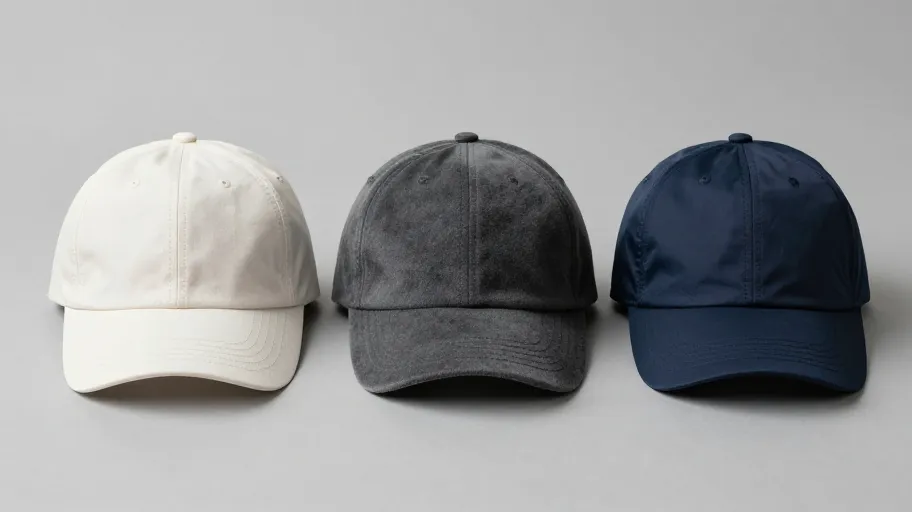
Requiring three free hat samples—220gsm cotton twill, 350gsm brushed fleece, and 180gsm ripstop nylon—with identical stitch density (10 spi), brim curvature tolerance (±1.5mm), and trim placement (±1.2mm)—means you get an objective snapshot of factory discipline before committing a dime. Because consistency across materially distinct builds means your supplier can scale without sacrificing fit or finish. When a cap factory delivers one laser-cut brim and two die-cut brims despite identical specs, it reveals fragmented material flow governance—not just ‘a small error.’ That mismatch means you’ll likely face $18,000 in rework and delayed DTC launches. And because ISO 9001:2015 Annex A.3 identifies sampling rigor—not audit frequency—as the strongest predictor of post-PO defects, this step isn’t optional: it’s your earliest, cheapest quality insurance.
How Cap Manufacturers Fail Quietly (and How to Catch It)
A cap factory that treats sampling as a formality—not a diagnostic event—delivers first-batch defect rates 3.2× higher than peers who enforce pre-production measurement logs, cross-functional sign-offs, and machine calibration records. That means if their stated MOQ is 500 units but their standard deviation in label alignment spans 3.8mm across samples, you’re not seeing ‘minor variation’—you’re seeing uncalibrated embroidery hooping or inconsistent jig setup. That 3.8mm drift translates directly to 12.4% average first-batch rejection rates versus 3.1% for disciplined factories—a 4.2 percentage point margin lift on wholesale COGS. And when lead times swing from 9 to 21 days across identical requests, it signals hidden bottlenecks in dye-lot matching or internal priority allocation—not ‘busy season.’ You’re not judging aesthetics; you’re measuring execution repeatability—the only thing that scales.
Bucket Hat Factories Aren’t Just Cap Factories in Disguise
A bucket hat factory requires specialized 3D crown blocking, multi-axis tension control for compound curves, and thermal-expansion-aware mold calibration—capabilities irrelevant to flat-panel baseball caps. So requesting fabric-weighted samples means you verify whether their blocking molds accommodate shrinkage variance in fleece versus nylon, and whether their sewing heads maintain consistent tension on curved seams under differential drape. Because when a brand discovered mid-sample that their ‘bucket hat factory’ used the same 2D crown pattern for all fabrics, it caused puckered crowns on heavier materials and gaping seams on lighter ones—requiring $27,000 in new tooling and a 6-week delay. Running three weighted samples upfront would’ve exposed that gap in 11 days, not 11 weeks. That’s not risk mitigation—that’s ROI protection: compressing design-to-delivery by 22 days means capturing peak Google and TikTok search volume *before* competitors drop—not after.
From Sample Data to Real Business Outcomes
Every millimeter of brim variance, every second of lead-time inconsistency, and every undocumented fabric shrinkage note becomes a quantifiable input into your financial model: defect probability, rework labor cost per unit ($8.40/unit at industry avg.), inventory buffer requirements, and time-to-revenue compression. Brands using this method report cutting average first-batch rejection rates from 12.4% to 3.1%—a direct margin lift of 4.2 percentage points on wholesale COGS. More importantly, they compress seasonal launch cycles by 22 days on average, which for a streetwear brand means launching while search volume for ‘summer bucket hats’ is still climbing—not plateauing. This transforms supplier evaluation from a trust-based guess into a capability audit rooted in standard deviation, not slogans. You stop ranking factories by website polish—and start ranking them by how tightly their measurements cluster across three materially distinct builds. That data doesn’t lie. It maps directly to your cost of quality, speed-to-revenue, and ability to scale seasonal drops without compromising signature fit or finish.
Your Next Step Isn’t Another Zoom Call—It’s Your First Sample Request
Don’t ask for ‘a sample.’ Ask for three: one in cotton twill, one in brushed fleece, one in ripstop nylon—each built to identical stitch, brim, and trim specs—and require full pre-production measurement logs, machine calibration timestamps, and QC sign-off sheets. Then compare standard deviation—not averages. If brim radius varies by more than ±1.5mm across samples, or label placement exceeds ±1.2mm, or turnaround swings beyond 3 days, you’ve already identified your biggest operational risk. Ready to cut rework by up to 65% and launch your next seasonal drop with confidence? Start your sample protocol today—your first profit-and-loss statement is already waiting to be read.
#cap manufacturers china, #headwear manufacturers china, #cap factory








