


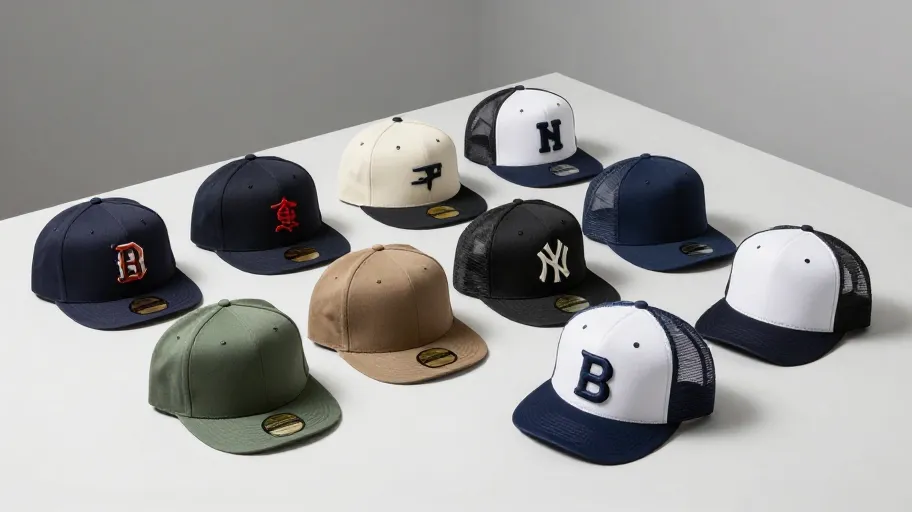
Evaluating real value in a cap factory
Choosing a cap manufacturer in China shouldn’t start with price—it should start with capability. A factory quoting $1.80 per unit might seem cheaper than one at $2.10, but if the first misses specs and delays shipping, you’ll pay more in air freight, rework, and lost sales. We’ve seen startups lose entire seasonal windows because their supplier used inconsistent stitching density or wrong brim curvature—errors that trace back to a two-page spec sent over WeChat.
What separates reliable partners from risky shortcuts? Process maturity. Factories that ask detailed questions about fabric shrinkage, stitch types, or label placement aren’t slowing you down—they’re protecting your launch. One streetwear brand learned this when two suppliers quoted nearly the same price: one returned their tech pack with seven clarifying notes on interlining adhesion; the other just said “OK.” The second delivered caps with sweatbands that peeled off after two wears. The first became a long-term partner.
This kind of diligence means fewer surprises during production because expectations are locked in early. It also means faster approvals—some structured factories clear first samples in under 10 days thanks to digital tracking and bilingual project managers. That predictability isn’t overhead; it’s margin protection.
Why your tech pack is your best defense
Your tech pack isn’t paperwork—it’s your insurance policy. A full spec sheet forces precision on both sides. It defines stitch type (e.g., 401 lockstitch at 10–12 SPI), fabric tolerance (<3% shrinkage after three washes), brim thickness (6.5mm ±0.3), and even embroidery angle. When done right, it becomes a shared language between you and the factory.
We worked with a DTC headwear brand that reduced revision cycles by 65% just by upgrading from mood boards to standardized tech packs. Their old method relied on images and loose notes; now, every detail is documented, so factories can’t guess. That clarity means fewer back-and-forth emails, fewer physical resamples, and less wasted time.
And here’s the kicker: mature factories expect this. Top cap manufacturers in Guangdong don’t see detailed tech packs as hurdles—they welcome them. Why? Because structured clients mean fewer disputes, faster payments, and smoother scaling. If a factory pushes back on receiving a full spec, that’s a red flag. They’re not set up for consistency.
Sample testing reveals hidden risks
A free sample doesn’t prove quality—it only proves someone can sew one cap correctly. Real validation comes from stress-testing the process. That’s why leading brands now require a “pre-production triad”: one cap stitched at minimum tension, one at maximum acceptable tension, and one at target specs. This trio exposes variability—the silent killer of bulk production.
If all three samples show consistent seam strength and no puckering, the factory has control. If not, those inconsistencies will multiply across 1,000 units. One activewear label caught this early: their trial batch showed a 22% variance in crown height. They switched suppliers before placing the main order and avoided a costly recall.
Sampling is also where IP protection starts. Always have an NDA and watermark agreement signed before sharing designs. In 2023, a designer lost $87K when an unvetted factory copied her snapback design and sold it under another name. She hadn’t used formal agreements—just verbal trust. Today, reputable factories sign these without hesitation. It’s standard operating procedure for serious partners.
Onboarding speed beats low prices
The cheapest factory often costs the most in friction. They lack digital portals, respond slowly, revise quotes mid-run, and miss deadlines. Meanwhile, more structured suppliers—even with slightly higher MOQs—deliver faster results. Data from Apparel Sourcing Benchmark (Q1 2025) shows they clear first batches 40% faster and require 60% fewer email exchanges per order.
Take a Miami streetwear brand preparing for Art Basel. They needed 1,200 custom-dyed caps in three weeks. One factory offered a 15% lower price but gave no timeline. The other charged more but provided a Gantt-style schedule, daily photo updates, and a QC checklist. They chose transparency—and hit the deadline with two days to spare. The cheaper option? Still waiting on fabric when the pop-up opened.
Faster approvals mean earlier inventory, which means capturing full selling seasons. Fewer revisions mean better unit economics. Stronger IP safeguards mean your limited drops stay exclusive. These aren’t nice-to-haves—they’re profit levers.
Building a scalable cap supply chain
Successful private-label cap production isn’t about finding the lowest bid—it’s about minimizing downstream risk. The real cost isn’t in the per-unit quote; it’s in delays, defects, and design leaks that erode margins and reputation.
Brands that prioritize tech pack completeness, sample rigor, and onboarding structure don’t just avoid disasters—they build systems that scale. They replace chaos with predictability. And in fast-moving apparel markets, scalability isn’t a future goal—it’s the first competitive advantage.
You don’t need to spend the most to win. You need to prepare the best. With the right tools and evaluation criteria, even small brands can work with top-tier cap factories in China—without overpaying or gambling on quality.
#cap manufacturers china, #headwear manufacturers china, #cap factory








