


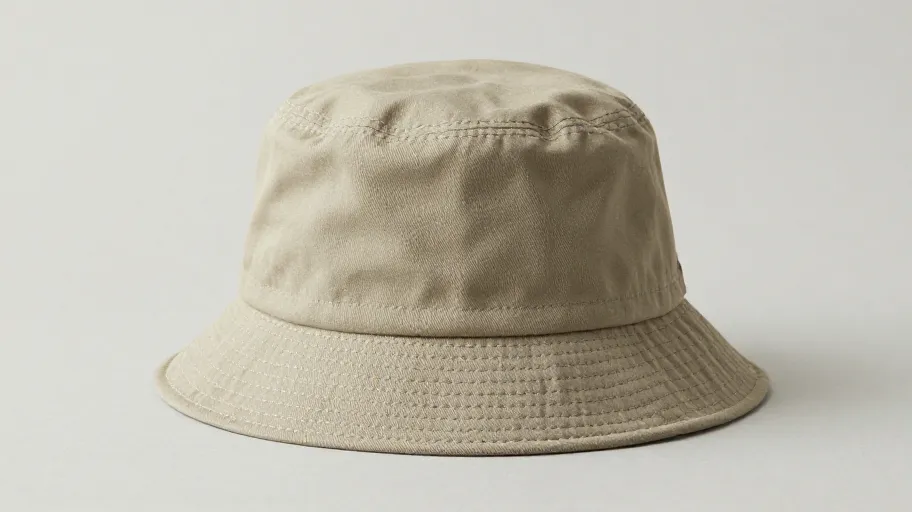
Why Most Bucket Hats Fail Before They Ship
Most brands don’t fail because of bad designs—they fail because they assume all factories execute equally. The truth? A $2.50 bucket hat from an unvetted supplier often costs more in hidden losses than a $4.80 version built right the first time. We’ve seen it with outdoor apparel brands scaling globally: one launch had a 25% return rate within six months. Customers complained about faded logos, warped brims, and seams splitting after one wash. The root wasn’t design—it was production fragmentation.
When fabric sourcing, stitching standards, and logo application aren’t managed as one system, errors multiply. A 2024 Apparel Quality Consortium study found factories without pre-production validation averaged 18–22% defect rates in colorfastness and seam strength. That’s nearly 1 in 5 hats failing. For a brand shipping 50,000 units, that’s 10,000 defective products—$360,000 in restocking, replacements, and lost goodwill. Top-tier manufacturers keep defects under 4% by testing materials, calibrating stitches, and approving digital mockups before cutting fabric. That gap isn’t just quality—it’s profit protection.
Fabric Weight Stability Is Not Optional
Two fabrics labeled “100% cotton twill” can perform completely differently. One may hold its color and shape for years. The other fades and sags after two washes. The difference? Fabric Weight Stability—the manufacturer’s control over material density (grams per square meter) and pre-shrinking. Unshrunk cotton can shrink up to 8%, distorting embroidery alignment and brim curvature.
Tight tolerance controls (±2%) mean each panel behaves the same during dyeing and washing. Ring-spun, pre-shrunk cotton from trusted mills locks in consistency. That means your hat looks the same in Miami as it does in Berlin—no surprises. Brands that treat fabric as a commodity lose. Those who co-develop specs with mills turn material into a strategic asset. One California activewear label tested two suppliers: Batch A kept 94% color saturation after five washes. Batch B dropped to 67%. Lab analysis traced it to missing mercerization and resin finishing—processes elite factories include by default.
Stitch Density Calibration Prevents Seam Failure
Using 8–10 stitches per inch on heavy cotton twill creates too much tension. That leads to puckering or seam rupture when worn. Too few stitches, and the hat won’t survive real use. Stitch Density Calibration fixes this: adjusting thread count based on fabric type and stress zones. High-tension areas like the crown-to-brim seam need 12–14 SPI (stitches per inch). Grommet anchors get bar-tacking for reinforcement.
This isn’t overkill—it’s durability engineering. Third-party tests show calibrated stitching reduces seam failure by 63% after 50 wash cycles. That means fewer returns, higher customer satisfaction, and stronger word-of-mouth. For managers, it cuts post-launch support load. For executives, it protects brand equity. And for customers, it means a hat that lasts through festivals, hikes, and beach trips without falling apart.
Branding Fidelity Builds Trust Across Borders
A misaligned logo or dull thread sheen doesn’t just look cheap—it breaks trust. Customers expect what they see online to match what arrives. Elite manufacturers use digital branding mockups to simulate logo scale, thread color, and sheen before sewing a single hat. This means you catch mismatches early, not after shipment.
One Northeastern lifestyle brand reduced sample rounds from five to two using 3D pre-production prototyping, cutting time-to-market by 38%. That’s critical for hitting Q3 seasonal demand. Integrated systems link fabric choice to stitch programming to embroidery digitization—so changes in one area update the others automatically. No silos. No miscommunication. Just consistency. When a customer in Tokyo gets the same crisp logo as one in Chicago, your brand gains credibility. No explanations needed. According to the 2025 Retail Trust Index, 68% of consumers cite product consistency as a top factor in loyalty. That reliability compounds into repeat purchases and lifetime value.
Predictability Beats Speed and Price
Fast and cheap only win if the product is right. Predictability wins every time. Brands that partner with manufacturers who integrate material science, construction logic, and branding precision don’t just avoid mistakes—they scale sustainably. They reduce defects, lower logistics costs, and build customer trust.
The best factories act as closed-loop systems: fabric specs inform stitching, which informs embroidery, which feeds into packaging accuracy. This integration turns manufacturing from a risk into a competitive advantage. For growing U.S. lifestyle brands, that means entering new markets with confidence—not constant firefighting. See how your current supplier stacks up: do they test fabric weight? Calibrate stitches by zone? Simulate branding digitally? If not, you’re already paying more than you think.
#cap manufacturers china, #headwear manufacturers china, #cap factory








