


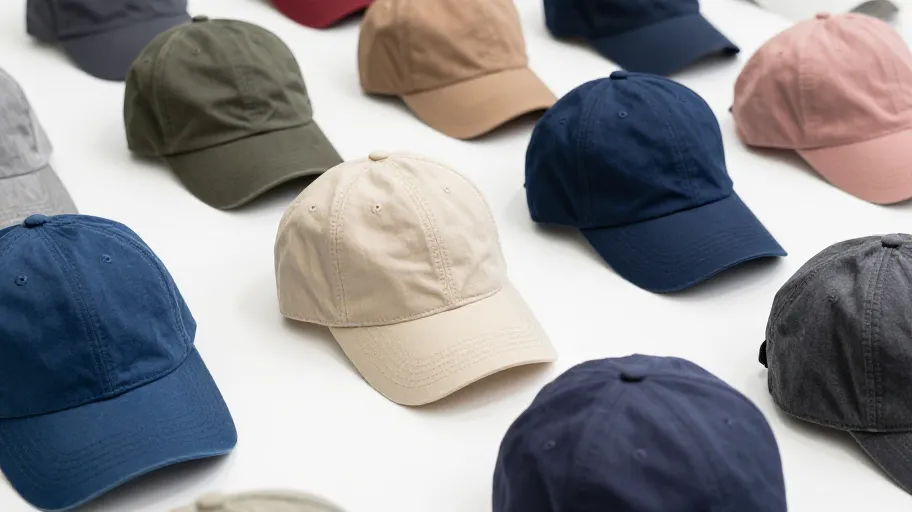
Evaluating a baseball cap manufacturer using only digital photographs creates severe sourcing blind spots. To compare samples effectively, you must implement a tactile evaluation framework that assesses material integrity, construction durability, and tolerance consistency through physical inspection and direct documentation.
The TACTile Evaluation Framework
When sourcing custom headwear from a baseball cap manufacturer, relying on high-resolution images masks the physical realities of the product. A photograph cannot convey the structural stiffness of the crown, the tension of the stitching, or the exact texture of the fabric. To overcome this, private label brands and procurement teams must deploy the TACTile Evaluation Framework. This framework forces a physical audit of the sample, shifting the focus from visual appeal to measurable quality.
The framework is divided into four distinct inspection areas: Touch, Assembly, Construction, and Tolerances.
Touch Assess the fabric weight, weave density, and surface treatment. You must verify the exact composition of the materials. Does the fabric feel substantial enough for your intended use case? Ask the manufacturer to document the fabric weight and composition in writing. Confirm the current policy directly regarding material sourcing.
Assembly Inspect the joining of the various headwear components. Look at the intersection of the crown and the visor. Examine the sweatband attachment. The assembly must show even tension across all seams. Gaps, overlapping stitches, or loose threads indicate a lack of assembly precision.
Construction Evaluate the structural integrity of the cap. Does the crown hold its shape without support? How does the closure mechanism function under stress? You must verify the internal structure. Ask the manufacturer to detail the types of interfacing or buckram used in the visor and crown.
Tolerances Measure the sample against your specified dimensions. You must verify the sizing consistency of the final production runs. Do not assume dimensional accuracy from a single sample. Ask the manufacturer how they control tolerances across different production batches. Confirm the current policy directly regarding their internal quality assurance processes.
Decision Table: Sample Comparison Matrix
Use this matrix to objectively compare samples from different suppliers or different production iterations. Score each criterion based on your physical inspection.
| Evaluation Criterion | Inspection Method | Verification Requirement | Scoring Metric (1-5) |
|---|---|---|---|
| Fabric Weight | Hand-feel and density check | Request written material specifications | [ ] |
| Seam Integrity | Visual and tension pull test | Inspect stitch density and thread tension | [ ] |
| Structural Shape | Visual and manual compression | Verify internal interfacing details | [ ] |
| Component Alignment | Visual inspection of panels | Check symmetry and visor centering | [ ] |
| Dimensional Accuracy | Manual measurement with tape | Request tolerance control documentation | [ ] |
Concrete Approval Questions
Before approving a baseball cap manufacturer for production, you must secure clear, documented answers to the following questions. Do not accept verbal assurances; require written confirmation.
- What is the exact fabric weight and material composition of the main body, sweatband, and visor?
- What internal interfacing material is used to maintain the structure of the crown and visor?
- What is your documented tolerance for the circumference and depth of the cap?
- What thread type and stitch density are specified for the primary seams?
- How do you document and control material consistency across separate production batches?
- What is your process for logging and addressing structural defects discovered during pre-shipment inspection?
For any questions regarding minimum order quantities, pricing, lead times, or sample policies, confirm the current policy directly with the manufacturer.
Pre-Approval Checklist
Use this checklist as a low-friction way to ensure you have covered all physical evaluation bases before moving forward with a supplier.
- Tactile inspection of fabric weight and composition completed.
- Seam tension and stitch density verified.
- Internal structural components documented.
- Dimensional measurements recorded and compared against specifications.
- Written tolerance control documentation requested.
- Material consistency protocols confirmed.
- All outstanding production, sample, and cost policies confirmed directly.
Frequently Asked Questions
How do I verify the true material composition of a cap sample? You must request a written material specification sheet from the baseball cap manufacturer detailing the fabric weight, fibre content, and any treatments applied. For absolute verification, you may commission a third-party fabric test, but you must confirm the current policy directly with the supplier regarding material testing documentation.
What is the most reliable way to test seam durability in a sample? Perform a manual tension pull test along the primary seams, particularly where the crown meets the visor and where the sweatband is attached. Look for thread breakage, seam slippage, or fabric distortion. Document the results and ask the manufacturer to specify their stitch density and thread type in writing.
Can I rely on a single sample to approve a full production run? A single sample demonstrates capability but does not prove batch consistency. You must ask the manufacturer to explain their quality assurance process for maintaining consistency across large production runs. You should request documentation on how they manage tolerances and material sourcing throughout the production cycle.
How do I evaluate the structural integrity of the visor? Manually flex the visor to assess its rigidity and recovery. Inspect the joining point between the visor and the crown for any separation or uneven stitching. Ask the manufacturer to specify the exact interfacing material used inside the visor and confirm the current policy directly regarding its durability specifications.
What documentation should a baseball cap manufacturer provide alongside a sample? A manufacturer should provide a detailed material specification sheet, a dimension sheet with stated tolerances, and a quality assurance protocol document. If they do not provide these, you must request them explicitly before proceeding to bulk production approval.
As a B2B OEM/ODM manufacturer of custom caps and headwear based in Shenzhen, New Generation understands the complexities of physical sample evaluation. We encourage all overseas brands, importers, wholesalers, and corporate buyers to implement rigorous tactile inspection protocols.
下载 Supplier Scorecard to systematically document your sample evaluations and make objective sourcing decisions.
#cap manufacturers china, #headwear manufacturers china, #cap factory








