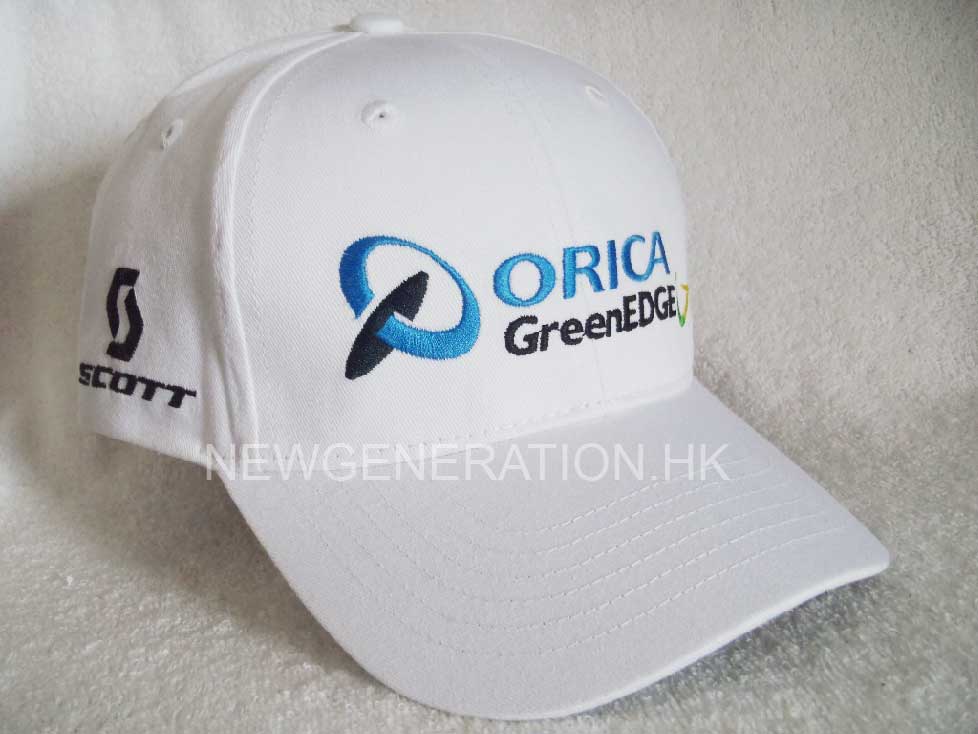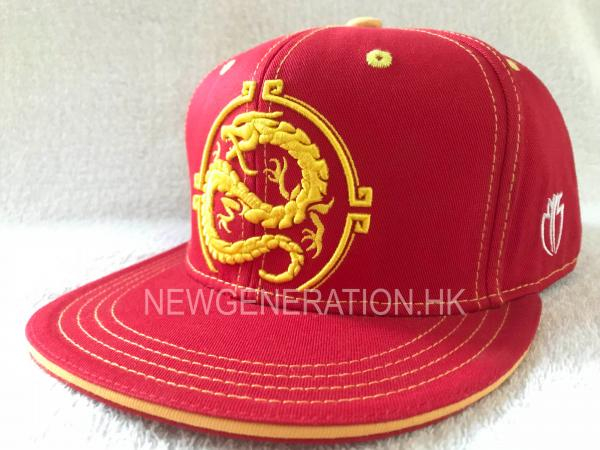


A cap factory is a cut-and-sew facility that specializes in constructing headwear from raw materials. Not printing on blanks. Not decorating pre-made caps.…
Cutting fabric, fusing interlining, sewing panels, attaching brims, finishing seams, and packing for shipment. That's the job description.
What is a cap factory actually, and how does one operate day to day?
The typical production floor runs on a line system. One operator handles the front panels, another attaches the sweatband, a third closes the crown seam, and someone at the end does a 12-point quality check. A standard 6-panel structured cap has 12 to 14 separate pieces that need to be cut, fused, and stitched in sequence. Miss one step, and the crown sits crooked on the wearer's head.
We've run the same basic workflow since 2008, when we set up our first line in Dongguan. What's changed is the front end. Today, a buyer in Austin can upload a design file at 9 a.m. CST, and our digitizing team in China starts mapping stitch paths before the client's lunch break. The physical factory hasn't changed much. The communication layer has.
One thing people get wrong: they picture a cap factory as a massive, single-building operation. In reality, most mid-sized headwear manufacturers are networks. Fabric cutting happens in one location, embroidery in another, final assembly in a third. Coordination is the actual product.
Why should a US business care about where caps are actually made?
Because the supply chain is longer than most people think, and every link carries risk.
A typical order timeline for custom caps runs 4 to 6 weeks production, plus 2 to 3 weeks ocean freight to US ports, plus customs clearance. That's 7 to 9 weeks door to door. Air freight cuts transit to 5 to 7 days but costs roughly 3 to 4 times more per carton.
In July 2021, a client from Oregon called at 3 a.m. panicking about 12,000 trucker caps stuck outside Long Beach port. His Q4 retail launch was three weeks away. We ended up splitting the shipment: half stayed on the water, half we re-ran and air-freighted directly to Portland. It cost him an extra $1.85 per unit. He still made margin because he'd priced for a 12% logistics buffer.
Most US buyers don't do that. They budget for the unit price and forget that a cap factory in Asia can only control what happens inside its own walls. Port congestion, customs holds, and carrier delays are external. A factory that doesn't proactively flag these risks isn't doing its job.
Myth one: Are all caps really made in sweatshops?
This is the myth that won't die, and it's understandable. The garment industry earned its reputation over decades, and bad actors still exist, particularly in unregulated micro-factories.
But the structured headwear sector in China has consolidated significantly since 2015. The factories that survived did so by meeting compliance audits from US and EU brands. That means documented working hours, fire safety inspections, and wage records. We've been audited by third-party firms four times since 2019, including a BSCI social compliance audit in March 2022. Every audit report is available to clients on request.
A more useful question than "is this a sweatshop" is "can this factory pass a randomized third-party audit before I send a deposit." If the answer is anything other than "yes, pick the auditor," walk away.
Physical conditions in a modern cap factory are closer to a trade workshop than a Dickens novel. Motorized sewing machines, automated cutting tables, LED-lit inspection stations. The workers are skilled labor. A good brim-curving operator with five years' experience can shape 400 to 500 brims per shift with a defect rate under 2%. That's not unskilled labor being exploited. That's a trade.
Myth two: Is custom cap manufacturing always expensive?
No. Expensive is what happens when you order 50 pieces with a $100 die charge, 9-color embroidery, custom labels, and expect delivery in two weeks.
The math breaks down differently. Here's a rough industry range for a 6-panel structured cotton twill cap with standard embroidery, FOB China:
These are benchmark figures from our own quotes and from industry data we track across comparable headwear manufacturers. The unit economics shift dramatically at the 500-piece mark because setup costs get amortized across more volume.
What actually drives cost up is customization complexity. 3D puff embroidery costs more than flat stitching. Custom woven labels require a loom setup fee of $50 to $120 depending on the label size. Side embroidery on both left and right panels means an additional hooping operation per piece, which adds labor time.
If you're a startup and need 100 caps for a launch event, the cheapest viable path is usually a blank cap with a single-location embroidery. Skip the custom labels. Skip the multi-location stitching. Put the money into one clean front logo.
What should you actually check before choosing a cap factory?
Forget the website. Every factory website looks identical after you've seen twenty of them. The real evaluation happens in three areas.
First, ask for a production sample with your exact fabric and embroidery design. A pre-production sample is not optional. In September 2023, a client in Tampa approved a digital proof for 3,000 caps, but the fabric swatch we sent was from a different dye lot than the final production batch. The caps arrived 2 shades lighter than the sample. Now we send a physical lab dip from the actual production lot before cutting starts. That mistake cost us a re-run and a client.
Second, test communication speed. Send an email at an inconvenient time. See when they respond and whether they answer the actual question. A cap factory that takes 48 hours to reply to a production question will take longer when there's a real problem.
Third, ask about problem resolution. Not "do you have quality issues" but "tell me about a time an order went wrong and what you did." Every factory has failures. The ones worth working with can describe a specific instance, the root cause, and the corrective action without getting defensive.
How do you evaluate quality and reliability without visiting the factory?
This is the hardest part for US buyers. You can't always fly to Guangdong to inspect a production line.
One practical approach: order a small batch as a test run. 100 to 200 pieces. This is real money, usually $600 to $900 with shipping, but it's the only way to verify quality claims before committing to a 5,000-piece order. Pay attention to stitch density on the crown seams. A quality 6-panel cap should have 8 to 10 stitches per inch on main seams, and the sweatband should be bar-tacked at both ends. Cut the cap open if you need to. The inside tells you more than the outside.
Request a production time-lapse or live video of your actual order being made. Some factories will push back on this. We started offering it in 2020 as a COVID-era workaround when buyers couldn't travel. It's now standard for any order over 5,000 pieces. The video is timestamped and shows the order number in the frame. It's not a substitute for a third-party inspection, but it reduces uncertainty.
If you need independent verification, hire a QC firm. Companies like QIMA or AsiaInspection will send an inspector to the factory for a few hundred dollars depending on the scope. They check seam integrity, embroidery stitch count, color matching, and packaging. For orders above 10,000 pieces, this should be non-negotiable.
What does the actual manufacturing process look like from design to delivery?
The workflow is more linear than most buyers expect.
Step one is material sourcing. The factory needs your spec: fabric type, weight, color, and any finishing requirements. Cotton twill is the workhorse for structured caps, usually 260 to 300 GSM. Brushed cotton, poly-twill, corduroy, and mesh are all common alternatives.
Step two is sampling. A pre-production sample typically takes 7 to 10 days for a standard 6-panel cap. This is where you catch issues. Wrong shade. Embroidery density too low. Brim curve too aggressive. Fix these before production starts.
Step three is the production run. This is the part that surprises people: the actual construction of a cap takes about 35 to 50 minutes of labor per piece, spread across 6 to 8 operators. But the production calendar is longer because each step has queue time. A 5,000-piece order runs 4 to 5 weeks on the floor, not because each cap takes that long, but because the line runs in batches.
Step four is finishing and packing. Caps get inspected, steam-pressed, and packed with moisture-absorbing packets. Shipping cartons for caps typically hold 200 to 250 pieces, and carton dimensions are usually 60 × 40 × 40 cm. Freight forwarder details matter here. A bad forwarder can add two weeks to delivery.
Step five is delivery. Ocean freight to US ports, then inland trucking. Total transit time from a Guangdong cap factory to a warehouse in Dallas is usually 18 to 22 days port-to-door, not including customs.
What are the red flags that signal a problematic supplier?
There's a pattern to suppliers that end up causing problems. It shows up early if you're paying attention.
Red flag one: the quote comes back in under two hours with no questions asked. A real cap factory needs to know fabric weight, embroidery stitch count, label placement, and carton marking before pricing. If they quote without asking any of that, they're guessing or they don't care.
Red flag two: the sample is too perfect. Production samples that look flawless often come from a dedicated sample room, not the actual production line. Ask for a sample pulled randomly from a previous production run. If they won't provide one, ask why.
Red flag three: they quote a short production time with no caveats. A legit 5,000-piece order takes at least 4 weeks in most cap factories. If someone promises 10 days, they're either lying or they're subcontracting your order to another facility without telling you. Both are problems.
Red flag four: the price drops dramatically when you mention a competitor's quote. A real factory has a cost floor. If they can suddenly cut 20% off after one email, the original price was inflated or the new price cuts corners.
How do you build a long-term partnership that survives production problems?
Start by accepting that problems will happen. Every production run has some deviation. The question is how the factory handles it.
A good long-term arrangement involves several elements. Consistent volume even if small. Clear specifications that don't change mid-production. Payment terms that are sustainable for both sides. Most US buyers work on 30% deposit, 70% before shipment, which is standard for custom orders.
Communication cadence matters more than volume. A buyer who checks in weekly during production, not just when there's a problem, gets better service. That's just human nature. We know which clients are tracking the production calendar and which ones will disappear until delivery day.
If you're going to be in this business for years, consider exclusivity on your fabric sourcing. If we know we'll run 20,000 caps for you next year, we can buy greige fabric in bulk and hold inventory for your future orders. That drops unit cost by 8 to 12% compared to spot buying per order. It only works with forecasting commitment.
The strongest buyer-factory relationships we have go back a decade. Those clients don't just send POs. They send product line forecasts, they're upfront about seasonal volume swings, and they understand that a cap factory is run by humans who need lead time like everyone else. That sounds obvious. It's rare in practice.
One final thing worth flagging. The US headwear market has shifted toward faster replenishment and smaller batch sizes since 2022, driven by the same dynamics hitting the broader apparel supply chain. Buyers want 500 pieces with a 3-week turnaround. A traditional cap factory can't do that without holding inventory on the buyer's behalf. If you're planning to scale, have a conversation about inventory programs early. Whether it's us or another headwear manufacturer, the factories that are still around in 2026 will be the ones that adapted to this demand pattern.