


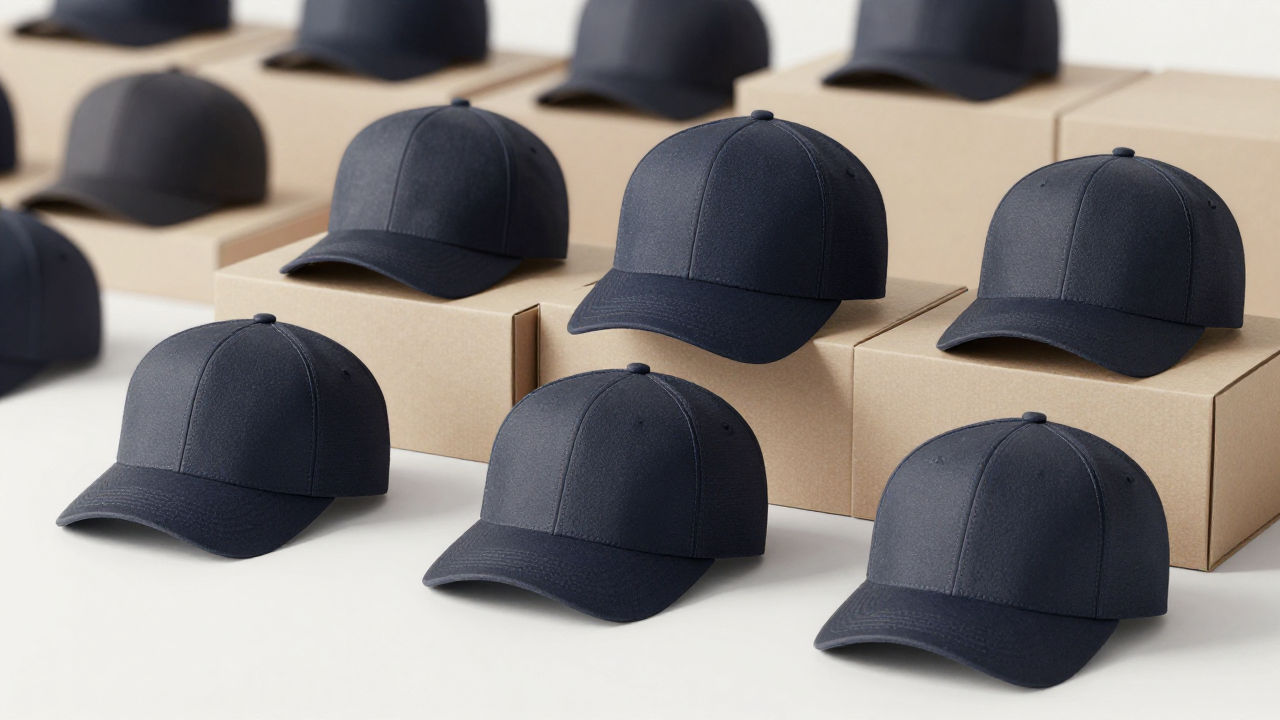
Northline Headwear, a 62-person cap manufacturer in Portland, Oregon, took its landed cost per cap from $9.80 to $6.33 between January and July 2023 — a 35.4% cut.…
Price negotiation with Asian suppliers delivered 19% of that. SKU rationalization and freight mode supplied the rest.
How a Portland Cap Maker Cut Landed Cost 35% in Six Months
The trigger landed in November 2022, when Northline lost a $2.4 million annual program with a national promotional distributor. The buyer was blunt about why: a competitor had quoted $7.90 landed per cap. Northline's number was $9.80. Gross margin had slid from 41% in FY2021 to 28% in FY2022, and nobody on the leadership team flagged it until the account walked out the door.
Two constraints shaped every decision after that. Founder Dana Reyes refused to cut the sew floor — 22 operators averaging nine years of tenure — and two of the three remaining retail accounts carried 60-day cancellation clauses, which made any supply disruption existential. The mandate: hit $6.40 landed by July 31, 2023, headcount untouched, no MOQ increases on core colorways.
Three Decisions Carried Most of the Weight
Killing 244 SKUs. Northline was running 340 active styles under HTS 6505.00.60, most in single-digit annual volumes. The team cut to 96 SKUs that represented 91% of gross profit dollars. The tradeoff was real: $680,000 in trailing revenue walked away, and sales pushed back for six weeks. What tipped it was a changeover study showing the tail 244 styles consumed 71% of embroidery setup time and 58% of cutting-table changeovers. Consolidating 11 suppliers down to 3. Fewer suppliers means less spread risk and less leverage per vendor, which is why most sourcing teams resist it. Northline traded that leverage for 12-month locked pricing and weekly capacity guarantees. We took the knit and beanie line through our own factory in Guangdong — roughly 140,000 units a year — after a 2022 audit cycle that started with a 4,000-unit sample run. Moving 82% of volume off air freight. This one took nerve. Air covered 34% of Northline's units in 2022 at $1.14 per cap. Building a six-week buffer became possible only after the SKU cuts freed warehouse space and working capital. Freight and duty fell to $0.41.Where the Savings Actually Came From
Fabric and trim contributed $1.07 of the $3.47 per-cap savings, labor $0.84, freight and duty $0.73, rework and scrap $0.42, and overhead allocation $0.41. The largest single line item was not a price negotiation. It was a marker fix.
The marker fix deserves an explanation. Northline's 5-panel crown pieces were nested on 60-inch cotton twill at 78% utilization. Re-orienting the panels and splitting runs between two fabric widths took utilization to 88.6%. On 6.5 oz cotton twill at roughly $4.10 a yard, ten points of waste is not a rounding error.
Front-logo embroidery dropped from 9,200 stitches to 6,800 by switching a satin fill to tatami on the larger wordmarks. That's $0.18 per cap with no visible difference at arm's length.
What Went Wrong in Month Three
Two things broke the plan inside the same 30-day window. In March 2023, a 40,000-unit fabric run from a Vietnamese mill measured Delta E 2.8 against Northline's 1.5 tolerance — visible across a tabletop and enough to fail the 240-door outdoor retailer's color audit.
Northline responded with a two-tier color standard: core colorways at Delta E ≤ 1.2, seasonal colorways at ≤ 2.0, and pre-approved dye lots locked before any cutting started. Then April brought problem two. The 240-door retailer asked for 14 additional colorways for a fall program, pushing the SKU count from 96 back to 110. For about three weeks, it looked like the whole project would unwind.
A shared-blank platform absorbed the damage. Northline ran one undyed blank and dyed into four lots on a rolling schedule instead of setting up 14 distinct constructions.
The Correction That Mattered Most
We read the 6.2% rework rate as a training problem. Two weeks of retraining on the sew floor in February moved it to 5.9% — noise. Then we pulled 90 days of defect logs and found 64% of rejects traced to panel misalignment off a single cutting table whose vacuum bed had lost suction. A $340 gasket replacement took rework to 1.8% by June.
A second assumption died the same month. The obvious fix for fabric cost looked like a lighter twill. Northline tested 5.4 oz cotton twill on three SKUs in February; 30-wash testing showed crown collapse at the button seam and a return rate jump to 2.1%. Staying at 6.5 oz and fixing the marker was worth $0.31 per cap, more than the fabric swap would have saved.
The P&L Six Months Later
By July 2023, Northline's gross margin had recovered from 28.0% to 39.7%, days inventory outstanding fell from 118 to 71, and working capital released $1.27 million. Annualized savings on the retained SKU set ran to $2.12 million. Headcount stayed at 62, and all 22 sew-floor operators kept their jobs.
Not everything landed. SKU count settled at 110 instead of 96. Northline reinvested roughly a third of the savings into price concessions to hold its two remaining retail programs, and the $6.40 target was missed by seven cents.
How Do Cap Manufacturers Get Found Online Without Blowing the Budget?
For most cap manufacturers, a 35% cost reduction gets quietly eaten by customer acquisition cost within 18 months. Northline's DTC channel was spending $41 to acquire a $68 hat order in 2022.
The fix was cheap. Structured product data — size, crown height, closure type, fabric weight, panel count — moved 14 SKUs into Google's free shopping listings and cut paid spend on those styles by 27%. A single sizing page covering crown depth and hat size conversion removed roughly 400 "does this fit" tickets in one quarter. AI search tools pull specifications directly from marked-up product pages, so a cut-and-sew shop that publishes stitch count and fabric weight gets quoted back to buyers. One that publishes brand copy does not.
Four Lessons Other Cap Manufacturers Can Steal
1. Changeover cost hides in the tail, not the top. Northline's 244 lowest-volume styles ate 71% of embroidery setup time. Rank SKUs by changeover minutes per gross profit dollar, not by units sold. The list looks completely different. 2. Freight mode is a margin decision, not a logistics decision. Moving 82% of units to ocean freight was worth $0.73 per cap, more than the entire supplier negotiation. It only became possible after SKU cuts freed the cash to build buffer inventory. 3. Read 90 days of defect logs before retraining anybody. Northline spent two weeks of payroll on training that moved rework 0.3 points. A $340 vacuum gasket moved it 4.4 points. 4. Lock color tolerance before you lock dye lots. The Delta E 2.8 fabric run cost Northline three weeks and one tense phone call with a 240-door account. A written tolerance standard costs nothing to draft.Frequently Asked Questions
How long does it take a cap manufacturer to cut costs by 35%?
Northline Headwear hit a 35.4% reduction in landed cost per cap over six months, from January to July 2023. Six months is realistic only when SKU count, freight mode, and factory rework get addressed at the same time. Price negotiation alone typically yields 5% to 9%.
What is the biggest hidden cost for cap manufacturers?
Rework and scrap. Northline Headwear's defect rate sat at 6.2% in January 2023, worth $0.61 per cap, and most of it traced back to one cutting table with a failed vacuum gasket. Cap manufacturers rarely see that number because it gets buried in overhead allocation.
How many SKUs should a cap manufacturer carry?
There is no universal number, but the test is contribution. Northline Headwear found that 96 of its 340 styles produced 91% of gross profit dollars. Everything outside that group consumed disproportionate embroidery setup and cutting changeover time. Audit SKUs by changeover cost, not by unit volume.
Does switching from air to ocean freight delay custom cap orders?
Ocean freight adds roughly three to four weeks of door-to-door transit from Asia to a US West Coast port. Northline Headwear offset that with a six-week buffer built from SKU cuts and locked 12-month capacity agreements across three suppliers. Quoted lead time to the customer stayed at 45 days.
What MOQ should a custom cap order start at?
Most factories in Asia set a 100-piece minimum per colorway for embroidered caps and 300 pieces for fully custom cut-and-sew panels. New Generation, a cap manufacturer operating since 2008, runs 50 pieces on stock blanks with embroidery, which lets a brand test a colorway before committing to a full season.








