


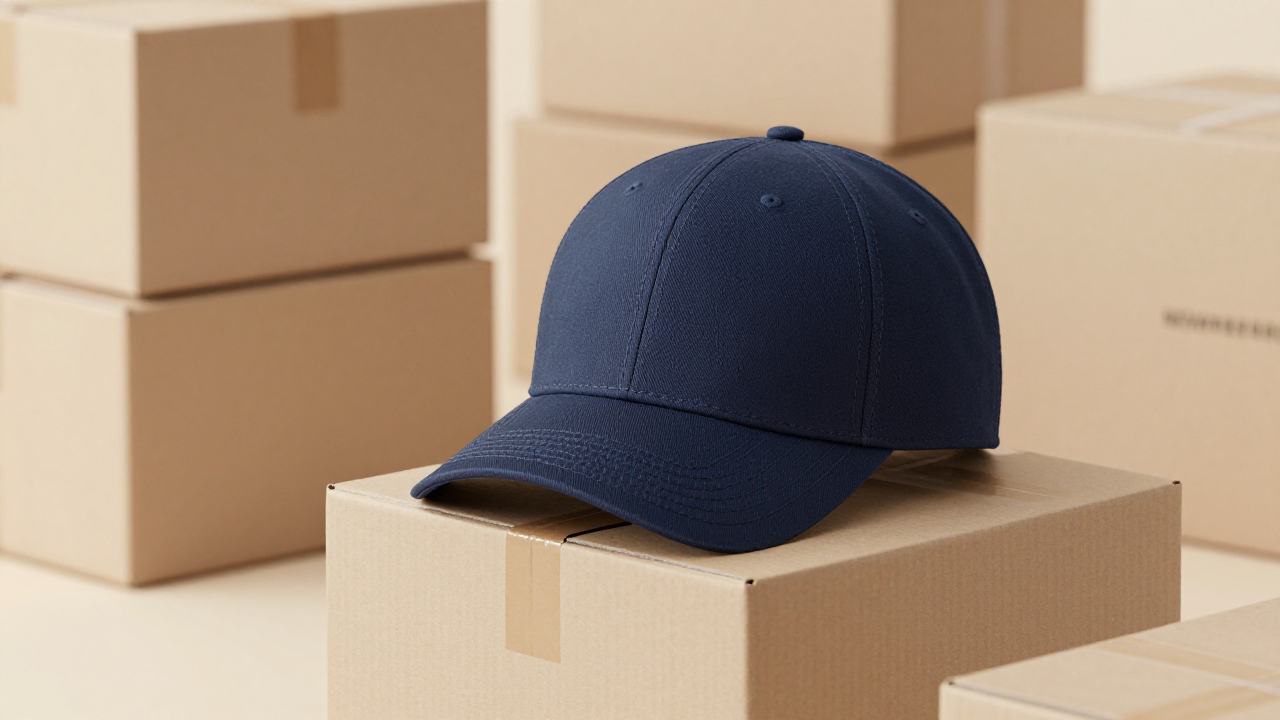
Cap manufacturers produce headwear from raw fabric, patterns, and cut-and-sew lines. U.S.…
custom-cap minimums often land between 100 and 500 units, while complex domestic cut-and-sew programs can exceed 1,000 units. Distributors, decorators, and sourcing agents resell or decorate blanks without owning production.
What Are Cap Manufacturers and Which U.S. Supplier Type Fits Your 2026 Project?
Start with supplier type. Which role matches your origin claim, order size, and decoration? A blank-cap wholesaler like SanMar or S&S Activewear sells stock styles from Richardson, Flexfit, or New Era. A decorator runs embroidery machines, screen printing, or heat transfer on those blanks. A private-label factory puts your label inside a stock or modified cap. At newgeneration, we handle fabric, pattern, sample, cut-and-sew, trim, and packing. These roles are not interchangeable.
Cap manufacturers vs. blank-cap wholesalers, decorators, private-label factories, and full-package OEM partners
A true cap manufacturer owns or controls sewing lines. That matters when you need a custom crown height, a specific visor curve, or a sweatband that does not come on a stock blank. In March 2023, a Portland, Oregon, cycling brand ordered 1,200 five-panel caps from a U.S. cut-and-sew factory. The first run arrived with a 3/8-inch visor height variance and 14% shrinkage after wash. The reorder cost $9,800 in air freight and credits. A decorator could not have fixed that; the pattern and fabric lot were the problem.
Choose between American-made caps, imported production, stock blanks, and custom cut-and-sew manufacturing
American-made caps support "Made in USA" claims only if the FTC standard of "all or virtually all" components is met. A U.S.-finished cap with imported crown panels cannot carry that label. Imported production gives lower unit cost and wider fabric choices, but adds 10-16 weeks door-to-door and tariff exposure. Stock blanks ship in days; custom cut-and-sew takes 4-8 weeks after art approval. Pick the path by your launch date, margin, and origin story, not by a directory listing.
How Do You Choose the Best Cap Manufacturer in the United States?
Choose a U.S. cap manufacturer by matching MOQ, unit price, sampling speed, reorder capacity, and production location to your program. Request a factory address, a pre-production sample, and two references in your category. A supplier that cannot show its sewing floor or name its fabric mill is a reseller, not a manufacturer.
Compare MOQ, unit pricing, sampling, lead time, reorder capacity, and production location
Ask for 2026 minimums in writing. Domestic cut-and-sew MOQs commonly start at 144 to 500 units for simple styles; custom dyed fabric can push the minimum past 1,000 units because mills sell dye lots by 300-500 yards. Sampling runs 7-14 days for a proto and 10-21 days for a pre-production sample. Reorder capacity matters more than first-order price. If the factory cannot reserve your dye lot, your second run will not match.
Use a supplier scorecard covering fabric, crown construction, visor shape, closures, embroidery, patches, packaging, and quality control
Score each supplier from 1-5 on these items: fabric weight and hand feel, crown height and panel count, visor length and curve, closure type, embroidery stitch count, patch attachment, polybag and hangtag, and AQL inspection. A common defect standard is AQL 2.5 for major defects and 4.0 for minor defects. Put that in the purchase order. For embroidery, 6,000-10,000 stitches is typical for a front logo; 3D puff needs foam and a higher stitch count.
Verify named manufacturers, factory capabilities, certifications, and customer references before signing a purchase order
Call the factory during U.S. business hours and ask for the sewing floor manager. Request the address, a live video walk-through, and the last two inspection reports. Check certificates against the exact facility, not a parent company. If a supplier claims "U.S. manufacturer" but refuses a video walk-through, treat the claim as unverified.
How Much Do Custom Caps Cost in 2026, and What MOQ Should U.S. Brands Expect?
In 2026, U.S. custom caps typically cost $8-$15 per unit at 100 units, $5.50-$9 at 500 units, and $4.50-$7.50 at 1,000 units for domestic cut-and-sew. Imported programs run 15-30% lower before tariffs and freight. U.S. custom-cap MOQs usually range from 100 to 500 units; complex cut-and-sew can exceed 1,000 units.
Build a true landed-cost model for 50, 100, 300, 500, and 1,000-unit orders
Landed cost = FOB price + freight + duty + insurance + decoration + packaging + inland delivery. A $6.00 cap can land at $8.40 after 18-35% tariffs, freight, and fees. That gap kills margin if you priced the cap at $7.00 retail. The table below shows typical 2026 ranges for a basic cap with one front embroidery location, before tariffs and freight.
Separate development costs, sample fees, embroidery or patch charges, freight, tariffs, packaging, and reorder pricing
Development costs add up fast. Digitizing runs $50-$200 per logo. Screen setup runs $50-$150 per color. A woven patch mold can cost $150-$400. Sample fees range from $50 to $250, and many factories credit the fee against a 500-unit order. Packaging, polybags, hangtags, and custom boxes add $0.25-$1.50 per cap. Ask for reorder pricing before you approve the first run.
Match low-MOQ manufacturing with startup validation and high-volume production with retail or promotional demand
A 100-unit run is a test, not a business. Use it to check fit, color, sell-through, and defect rate. Once a style sells 70% or more at full price, move to 500 or 1,000 units and negotiate dye lot reservation. Promotional demand is different: a corporate client may need 2,500 caps in three weeks. That job belongs with a supplier that stocks blanks and runs multiple embroidery shifts, not a custom cut-and-sew factory.
What Compliance, Materials, and Quality Standards Should Cap Manufacturers Meet?
CPSIA third-party testing applies to children's headwear, with lead under 100 ppm and phthalates under 0.1%. Adult caps still need fiber content, country-of-origin, care labels, and traceability. Factories should show OEKO-TEX Standard 100, GOTS, GRS, WRAP, or ISO 9001 certificates tied to the exact facility.
Check CPSIA testing for children's headwear and verify lead, phthalate, labeling, and traceability documentation
Children's caps sold in the U.S. need testing by a CPSC-accepted lab. The tracking label must show manufacturer, production date, location, and batch code. Lead is limited to 100 ppm in accessible parts; phthalates are limited to 0.1% in certain plastics. Ask for the test report by style and color. A report for a different factory or fabric lot does not cover your order.
Evaluate OEKO-TEX Standard 100, GOTS, GRS, WRAP, ISO, and recycled-material claims against the exact production facility
OEKO-TEX Standard 100 checks harmful substances in textiles. GOTS covers organic cotton from farm to finished cap. GRS covers recycled polyester. WRAP audits social compliance. ISO 9001 covers quality management. Certificates belong to a facility, not a brand. If a supplier claims recycled content, ask for the transaction certificate and the percentage by weight.
Approve a pre-production sample and inspect measurements, seam strength, colorfastness, embroidery density, sweatbands, and closure durability
A digital mock is not a sample. Approve a physical pre-production cap. Measure crown height, visor length, and closure width. Pull-test seams. Check colorfastness with a wet cloth rub. Count embroidery stitches per inch. Flex a cotton twill or moisture-wicking polyester sweatband, then snap the closure 200 times. If the sample passes, seal it, sign it, and keep it as the gold standard for the bulk order.
Which U.S. Cap Manufacturers Should You Compare in 2026—and How Can You Verify Brand-Level Fit?
Compare Unionwear, AmeriCap, Cap America, Richardson, and Cali Headwear by owned U.S. production, blank inventory, private-label capacity, decoration methods, MOQ, and customer segment. A directory listing is not an endorsement. Ask each supplier for its 2026 minimums, factory address, and two references in your product category.
Build a transparent shortlist of Unionwear, AmeriCap, Cap America, Richardson, Cali Headwear, and specialty custom-cap suppliers
Unionwear in Newark, New Jersey, is known for union domestic cut-and-sew and Made in USA work. Cap America in Fredericktown, Missouri, serves large promotional programs with stock and decoration. Richardson carries strong sports and licensed channel presence. Cali Headwear in Los Angeles focuses on custom headwear with local cut-and-sew. AmeriCap should be asked directly which styles are sewn in the U.S. and which are decorated imports. We at newgeneration run a cut-and-sew factory in China, not the U.S. Since 2008, we have quoted many programs that needed a U.S. origin claim; for those, we point brands to Unionwear or Cali Headwear and handle only the imported components if the brand allows it.
Map each brand by domestic production, blank inventory, private-label capability, decoration methods, MOQ, customer segment, and scalability
Use a simple matrix. For each supplier, write down: sewing location, blank origin, private-label yes/no, embroidery and patch methods, 2026 MOQ, typical customer, and maximum monthly capacity. Unionwear and Cali Headwear may fit custom cut-and-sew. Cap America and Richardson may fit stock or decorated programs. AmeriCap may fit a mix. The right answer depends on your order, not on the brand name.
Avoid misleading manufacturer comparisons by distinguishing owned factories, distributor networks, imported styles, and U.S.-finished products
A company can be a U.S. business without being a U.S. cap manufacturer. A U.S.-finished product can use imported fabric, imported blanks, or imported crown panels. Under FTC rules, "Made in USA" means all or virtually all components are made in the U.S. If the origin claim drives your brand, demand a bill of materials and the sewing facility address.
Why Do Cap Manufacturing Projects Fail Before a U.S. Order Ships?
Cap manufacturing projects fail because buyers choose on unit price, skip tech packs, ignore size grading, underestimate freight, accept vague defect terms, and fail to own patterns and approved samples. A tech pack, paid prototype, wear testing, pre-production approval, and AQL 2.5 inspection catch these failures before shipment.
Avoid these five costly cap manufacturing mistakes
Choosing by unit price costs more than it saves. A $0.60 savings per cap can disappear after one air freight shipment. Skipping a tech pack makes the factory guess measurements. Ignoring size grading breaks youth, women's, and unisex fit. Underestimating freight hit a Los Angeles label in July 2021, when the company paid $4,100 to air freight 1,800 caps because a Long Beach port delay threatened a festival drop. Vague defect policies leave you with no credit. Define major and minor defects, inspection timing, and credit terms in the purchase order.
Run an expert launch workflow from design brief to prototype, wear testing, pre-production approval, inspection, and reorder review
Write the design brief. Build a tech pack with measurements, fabric, color, stitch count, and packaging. Order a prototype. Wear-test it for 40 hours across different head sizes. Approve a pre-production sample. Inspect the bulk order at AQL 2.5. Review sell-through and defect data before reorder. This workflow takes 10-16 weeks for import and 6-10 weeks for domestic cut-and-sew.
Own your patterns, artwork, molds, approved samples, tooling, and production data
If you pay for a pattern, you own it. Put that in writing. Same for artwork, patch molds, embroidery files, and approved samples. Keep a signed sample in a sealed bag with the date and order number. Ask for the production data: fabric lot, dye lot, stitch file, and inspection report. When a supplier changes ownership or raises prices, your files move with you.
Frequently Asked Questions
What is the difference between a cap manufacturer and a wholesale cap supplier?
A cap manufacturer owns or controls sewing lines and makes caps from fabric, patterns, and trims. A wholesale cap supplier sells stock blanks from brands like Richardson or Flexfit and may decorate them. The manufacturer controls fit, fabric, and origin; the wholesaler controls inventory and speed. Ask for the factory address before you assume either role.
How many caps should a startup order from a U.S. manufacturer?
Most U.S. custom-cap manufacturers start at 100 to 500 units. Startups should order the smallest run that covers a real sales test, often 100 to 144 caps. Complex cut-and-sew with custom dyed fabric can require 1,000 units. Validate fit, color, sell-through, and defect rate before committing to a larger dye lot.
How much does it cost to manufacture custom caps in 2026?
In 2026, U.S. custom caps run about $8-$15 per unit at 100 units and $4.50-$7.50 at 1,000 units for domestic cut-and-sew. Imported caps run 15-30% lower before tariffs and freight. Add $50-$200 for digitizing, $0.25-$1.50 for packaging, and 18-35% for tariffs, freight, and fees.
How long does custom cap manufacturing take in the United States?
U.S. custom cap manufacturing takes 4-8 weeks after art approval for domestic cut-and-sew, plus 7-14 days for a prototype. Stock blanks with decoration ship in 5-10 business days. Imported production takes 10-16 weeks door-to-door. Add 2-3 weeks for CPSIA testing if the cap is for children.
How can a brand verify whether a cap manufacturer is genuinely U.S.-based?
Ask for the factory address, a live video walk-through of the sewing floor, and the name of the production manager. Request a bill of materials and the sewing facility for your exact style. A U.S. sales office, website, or warehouse does not prove U.S. manufacturing. Verify the address on the business license and the CPSIA tracking label.








