

The four variables that decide whether a cap manufacturer deserves your order are product consistency, true minimum order quantity, lead-time reliability, and decoration depth.…
If a supplier cannot prove all four with a physical sample, a written spec sheet, and a dated production schedule, you are looking at a broker with a website, not a factory.
How to Choose Cap Manufacturers in 2026
Notice price isn't on that list. Price is the output of those four variables. Every bad sourcing decision I've watched in seventeen years of headwear production started the same way: a buyer compared quotes that were never quoting the same product.
Here's the framework we run internally. It works whether you need 300 caps for a university bookstore in Ann Arbor or 60,000 for a national retail rollout.
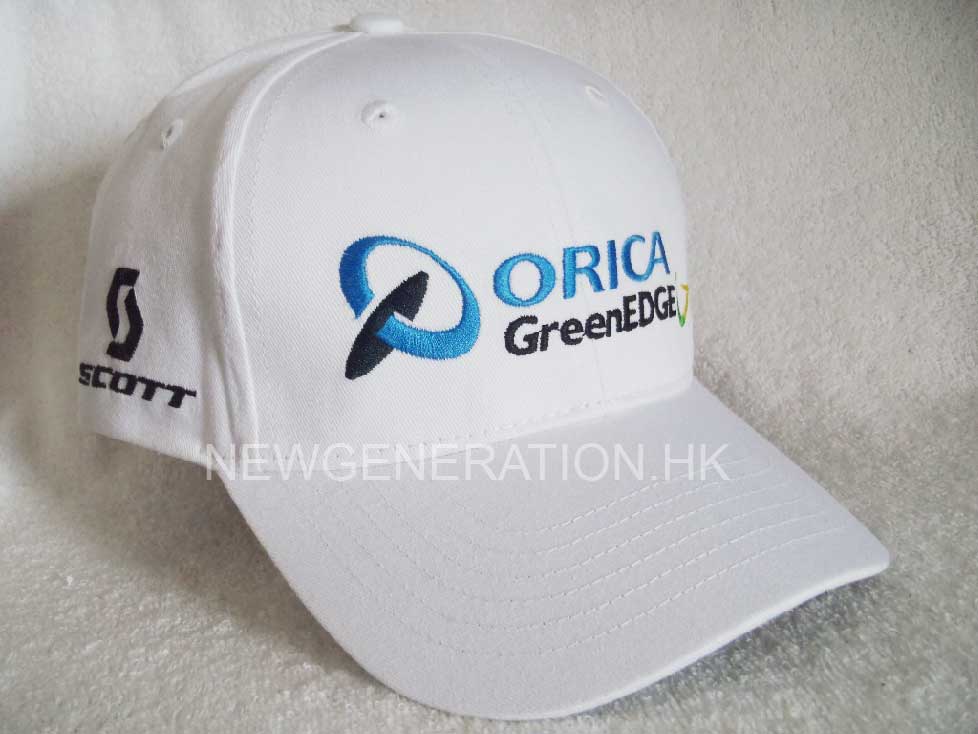
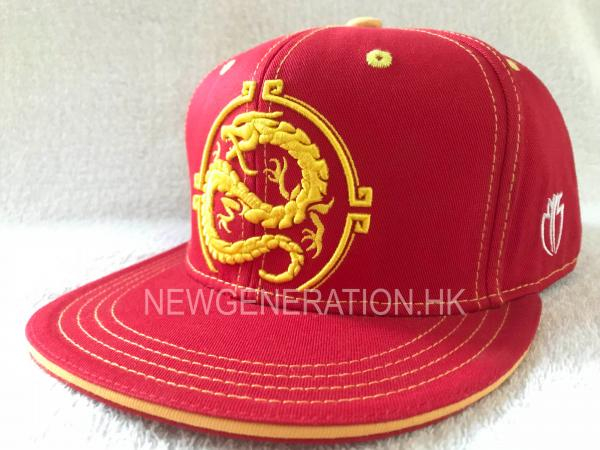
Consistency. Ask for the last three production runs of the identical SKU. Compare crown height, brim curvature, and embroidery registration across all three. A factory that has only produced your item once has proven nothing about repetition, and repetition is what you're actually buying. Real MOQ. Published MOQ and effective MOQ diverge fast. A cut-and-sew facility might advertise 500 pieces, then hit you with a $600 digitizing charge, a $350 sampling fee, and a 300-unit surcharge for a custom dye lot. The number that matters is what the invoice says at the end. Dated lead time. Not "45 days." Ask for critical-path dates: fabric in-house date, cut date, sew completion, packing, and vessel booking. Ocean freight from Ningbo to Los Angeles runs 28 to 35 days on the water in normal conditions, and that's before customs clearance, drayage, and a 3PL appointment in Commerce, California. Buyers who budget 60 days door-to-door get burned every Q4. Decoration depth. Flat embroidery, 3D puff, laser-cut appliqué, silicone heat transfer, woven front-panel badges — each one adds a process step and a failure mode. Depth is what separates a $5 cap from a $14 cap, and it's the first thing a cheap factory quietly simplifies.The trap in comparing factories is quote asymmetry. One factory quotes CIF, another FOB, a third DDP. One includes 8,000 stitches, another caps embroidery at 5,000 and bills per 1,000 after that. Normalize everything to landed cost per unit at your actual quantity, and make every factory quote against the same tech pack. If a supplier won't quote your tech pack, that's your answer.
Which Type of Cap Supplier Fits Your Order
U.S. buyers pick from three supplier models: domestic decorators printing on imported blanks, overseas cut-and-sew factories building to your pattern, and promotional distributors reselling catalog stock. Order volume, brand control requirements, and whether you must legally defend a Made in USA claim determine which model actually works.
Domestic decorators — the screen printers and embroiderers buying from SanMar, S&S Activewear, or Alphabroder — turn 144 pieces in five to seven business days. You get the Yupoong 6606 or Flexfit 110 class of blank, which is a perfectly good cap. You do not get a proprietary crown, and you will see your design on someone else's merch table eventually.
Overseas cut-and-sew facilities, mostly in Vietnam, Bangladesh, and coastal China, build to your pattern. That's where panel shapes, crown height, taping, and sweatband materials become yours. Minimums land between 500 and 1,000 units per style per color, and realistic door-to-door timing is 60 to 90 days.
Then there's the Made in USA question, which trips up more buyers than anything else in this category. The FTC's standard requires that "all or virtually all" of a product be made in the United States. A cap sewn in Los Angeles from imported fabric and imported front panels is probably not compliant, and putting the label on it invites a letter. Berry Amendment contracts for the Department of Defense are stricter still, requiring domestic fabric, domestic thread, and domestic findings. If your customer is a federal agency, verify the mill before you verify the sewing floor.
Budget Tiers and What They Actually Buy You
Budget tiers map to manufacturing realities, not to how persuasive the sales rep is. Under roughly $4.80 per landed unit you are buying an imported blank with standard decoration. Past $12 you are buying pattern ownership, fabric engineering, and compliance paperwork. The table below shows what each tier buys in the 2026 market.
Two things this table won't tell you. First, the jump from tier two to tier three buys you almost nothing visually, but it buys you durability — that's where 80g buckram and 8 stitches per inch show up. Second, tier five pricing has less to do with labor cost than with domestic fabric minimums, which is why a 500-piece U.S. run often costs more per unit than a 5,000-piece one.
What Cap Sales Teams Leave Out of the Quote
The parameters separating a $3.80 cap from a $9.20 cap rarely appear on a quote sheet. Stitch density, buckram weight, thread tex number, taping construction, and embroidery placement tolerance are the five that move real cost. A factory unwilling to name them in writing is usually buying them down.
Here's what those numbers look like in practice. Main seams on a decent six-panel run at 7 to 9 stitches per inch. Drop to 5 and the cap looks fine in a sample photo and starts separating after 20 wash cycles. Front panel buckram — the stiffener that gives a structured crown its shape — runs 60g to 80g non-woven. In August 2023, a client in Nashville, Tennessee shipped 4,000 structured caps to a college bookstore; by November, roughly one in six had a collapsed front panel. The factory had swapped the 80g buckram for a 65g sheet without telling anyone, and because the buyer's spec sheet only said "structured," there was no contractual ground to stand on.
Embroidery thread matters more than buyers expect. Spun polyester at tex 40 holds up; a textured 60-weight thread on a 9,000-stitch logo gets fuzzy after a dozen washes. Placement tolerance is the quiet one. Standard registration tolerance is around ±1.5mm. A factory working at ±3mm will drift on dense logos, and you won't see it until the third reorder.
Then there are the commercial habits. Sampling fees of $150 to $400 per style are normal, but many factories credit them back at 3,000 units and many others don't — ask before you pay. Pantone matching on dyed fabric typically holds to a delta-E around 2.0 within a lot and drifts more between lots, so if you're running a three-color program across two seasons, order all the fabric at once. Freight assumptions are the biggest silent gap: an FOB Ningbo quote and a DDP Los Angeles quote for the same 5,000 caps can differ by 12 to 18% once you layer in duties, Section 301 tariffs, and destination charges. Buyers comparing those two numbers side by side are comparing nothing.
In July 2021, a brand in Portland, Oregon had 12,000 caps sitting at the Port of Long Beach while their FOB quote turned into a five-figure surprise. The cap itself was fine. The terms weren't.
How Do You Vet a Cap Manufacturer Before Placing an Order?
Vet a cap manufacturer with five proof points before money moves: a physical sample from the actual production line, a written spec sheet, a dated production photo, a lead-time commitment with penalties, and a written defect policy. Missing any one of them shifts risk from the factory's balance sheet onto yours.
The production photo point gets skipped most often, and it's the one that catches the most fraud. Anyone can email you a sample. Ask for a photo of your specific order on the line with a timestamp and the work order number visible. A real cut-and-sew floor does this without complaint because it takes ninety seconds.
Red flags worth walking away over: a quote that arrives without a tech pack review; a factory that won't share its AQL inspection standard; pricing that comes in 30% under everyone else with no explanation of what changed; and any supplier who asks for full payment upfront on a first order. Standard terms are 30% deposit, 70% against inspection, and a first-time supplier asking for more than that is telling you something.
Ask for the defect policy in writing. A real one names the AQL level, the inspection stage, and the remedy — replacement, credit, or rework. "We'll take care of you" is not a policy.
Which Cap Manufacturer Should You Choose
Choose a domestic decorator on imported blanks if you need replenishment inside two weeks and standard six-panel profiles. Choose an overseas cut-and-sew partner if you need a proprietary crown, deeper decoration, or a landed cost under $8 at volume. Most brands with real headwear programs eventually run both, and the split usually lands around 70/30 in favor of whichever model matches their launch calendar.
A word on where we sit. New Generation has been building custom headwear in China since 2008, running baseball caps, beanies, and knits across cut-and-sew and embroidery lines. We're one of the overseas options in that second bucket, not a neutral party. What I'll say in our defense is that the vetting checklist above is the same one we expect buyers to run on us, and the factories that survive it are the ones still shipping in year fifteen.
Choose A — domestic decorator on imported blanks — if you need fast replenishment, lower financial exposure, and you're fine with a catalog silhouette. Choose B — overseas cut-and-sew — if the crown shape is part of your brand, you want 3D puff and appliqué in the same run, or your unit economics only work under $8 landed. Choose neither if the supplier can't produce the five proof points, because at that point you're not choosing a manufacturer. You're choosing a middleman with your deposit.
Frequently Asked Questions
These are the four questions that come up most often on sourcing calls, answered in the order buyers usually raise them.
What is the minimum order quantity for custom caps in 2026?
For decorated imported blanks, expect 144 to 500 pieces — 144 being twelve dozen, a holdover from embroidery digitizing economics. For fully custom cut-and-sew construction, minimums run 500 to 1,000 per style per color. Below 144 units, heat transfer or DTF decoration on a stock blank is the only route that pencils out.
How long does it take to manufacture custom caps?
Domestic decoration on stock blanks takes 5 to 10 business days after artwork approval. Overseas cut-and-sew runs 45 to 75 days in production, plus 28 to 35 days of ocean transit and 5 to 10 days of customs and drayage. Budget 75 to 95 days door-to-door, and add two weeks for any order landing in October or November.
Why do cap quotes vary so much for the same design?
Because the quotes describe different caps. Variances come from stitch density, buckram weight, thread specification, whether embroidery is capped at 8,000 stitches, and whether freight terms are FOB origin or DDP destination. Normalize every quote to landed cost per unit at your actual quantity before comparing anything.
How do I verify a cap manufacturer is actually a factory?
Request a timestamped production photo of your specific work order on the line, with the work order number visible. Ask for the factory's business license and a video walkthrough of the sewing floor. Verify the shipping address on the bill of lading matches the address on the license. Brokers cannot produce all three.
What does a legitimate Made in USA cap require?
Under the FTC's standard, "all or virtually all" inputs must be domestic — including fabric, thread, and findings like buckram and closures. A cap assembled in the U.S. from imported panels and imported twill typically fails that bar. Berry Amendment defense contracts add stricter domestic sourcing requirements on top of it.