


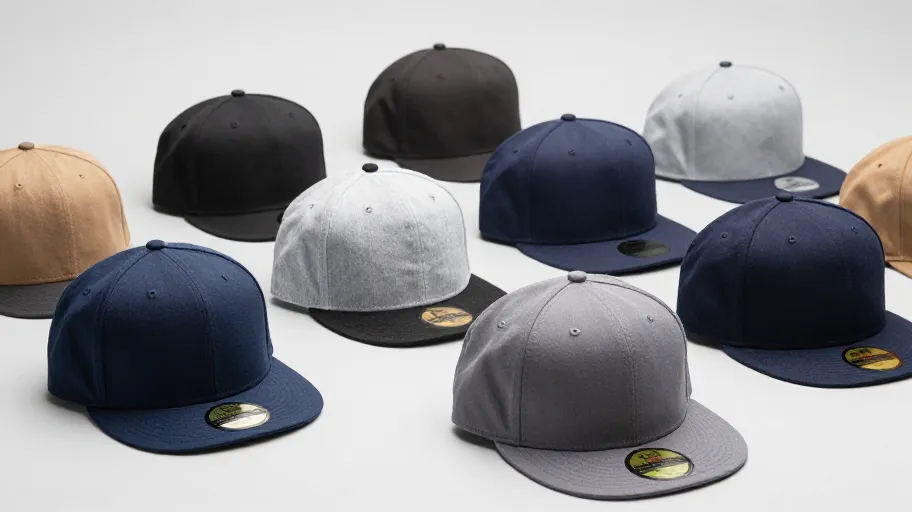
"Free" cap samples from China often come with surprises. What they don’t include can cost you thousands. We break down what’s really covered, what to ask, and how to turn sampling into a strategic advantage.
What’s Actually in a Free Cap Sample
A so-called "free" cap sample typically includes one or two units made with basic cotton twill, up to five thread colors in embroidery, and no structural changes. That means you get a proof of concept—not your final product. Limited digitization, standard buckram, and flat visors are included because they require minimal engineering. But if you want organic cotton, curved brims, or custom hardware, those are extra. This setup allows factories to showcase capability without absorbing design risk. For you, it means early validation at low cost—but only if you know the boundaries.
Basic embroidery using under 5,000 stitches means faster turnaround and lower internal labor costs for the factory, because simple designs don’t require specialist digitizers. No mold fees on snapbacks means they’re using existing tooling, which keeps initial costs down. But when your design needs a new mold or DTM (dye-to-match) threads, those expenses shift to you. Understanding this split—what’s generic vs. custom—is the first step to avoiding surprise bills.
The Hidden Costs Most Brands Overlook
Shipping, rush fees, and file corrections are where "free" samples go off track. DHL or FedEx charges for express delivery can hit $150–$300 per shipment. If your vector file isn’t print-ready, redrafting may cost $75–$120. And if your structured front needs a new mold? That’s $250–$400, non-refundable unless you meet MOQs. One LA streetwear brand paid $1,850 in unplanned fees because they didn’t confirm digitization ownership or shipping terms upfront.
These costs aren’t arbitrary—they reflect real resource use. Paid embroidery revisions mean the factory assigns a technician to rework your logo, because human time isn’t scalable like machines. Mold deposits cover CNC machining time and material waste, because creating new tooling burns resources. The lesson: every excluded item protects the factory’s margins. Your job is to negotiate which exclusions matter most—and which can be waived for future volume.
How to Ask the Right Questions Before Ordering
Don’t accept "free sample" at face value. Ask: "Is shipping prepaid or collect?" A factory that pays outbound freight signals confidence and partnership intent. Ask: "Are embroidery redrafts free if the error is yours vs. theirs?" Clear accountability prevents billing disputes. Ask: "Can the mold fee be credited toward bulk orders over 1,000 units?" Factories willing to roll that cost into production see you as a long-term player.
You should also request a pro forma invoice before sampling begins. That document lists every potential charge—even zero-dollar line items—so nothing appears later as a surprise. Ask for fabric swatches with source codes, not just descriptions. "Heather gray" means nothing; a Pantone + fiber blend code does. These steps transform sampling from a gamble into due diligence. Brands that submit full technical briefs cut revision cycles by 60%, according to Threadline Advisors’ 2024 report.
Turning Sampling Into a Negotiation Tool
A well-managed sample round doesn’t just validate design—it builds leverage. When you clarify specs early, you reduce back-and-forth, which saves the factory time. That efficiency becomes bargaining power. One brand secured a 7% discount on their first 1,200-unit order because their clean sampling process minimized production delays. The factory fast-tracked them ahead of larger clients—because reliable partners get priority.
Factories with 3D rendering tools like Browzwear can cut physical sampling in half. Ask if they offer digital proofs. That means fewer shipments, less waste, and faster iterations—all reducing your time to market. And if they absorb minor costs during sampling, that’s a sign they’re investing in the relationship. Those are the partners who’ll advocate for you when QC issues arise mid-run.
Why This Matters Beyond Cost
Clear sampling isn’t just about avoiding fees—it’s about building trust and speed. Every misaligned expectation adds days or weeks to your launch. In fast-moving markets like streetwear, that delay can kill momentum. Brands that master the sample conversation shorten development cycles by 30%, giving them agility competitors lack.
More importantly, precise communication sets the tone for long-term collaboration. When you treat sampling as the first contract negotiation, you establish clarity, accountability, and mutual respect. That foundation supports scaling, innovation, and resilience when supply chain shocks hit. So next time you see "free samples," remember: the real value isn’t in the price tag. It’s in the information you extract—and how you use it to build something defensible, efficient, and truly yours.
#cap manufacturers china, #headwear manufacturers china, #cap factory








