


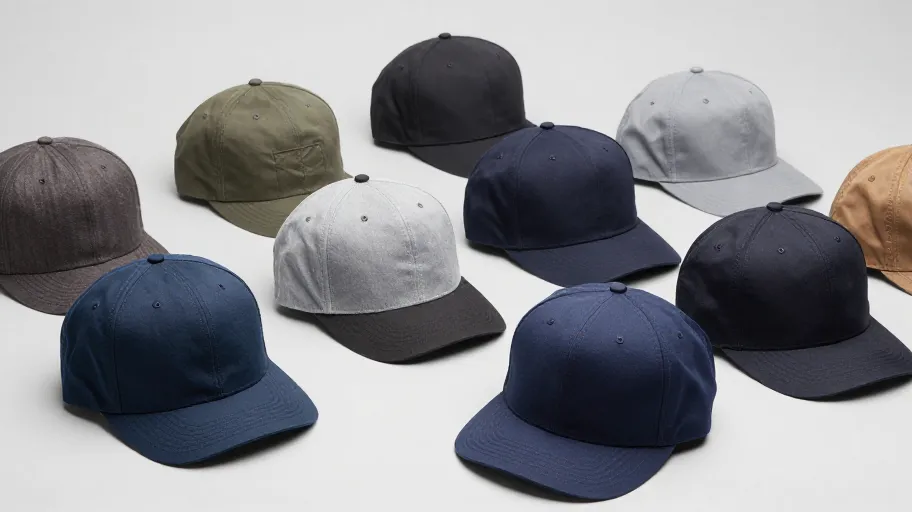
Most brands overpay on custom caps because they trust the headline price. But the real cost lives in the details. Line-by-line quote analysis reveals hidden risks—and unlocks up to 28% in recoverable savings.
Why identical quotes aren’t identical
A U.S. lifestyle brand got two quotes for 100,000 custom baseball caps from factories in Guangdong. Same silhouette, same embroidery—yet one was $0.45 higher per unit. They dug deeper and found a $38,000 trap disguised as savings. The cheaper quote used lighter fabric (190gsm vs. 220gsm), fewer stitches, and generic packaging that violated retail compliance rules. That $0.45 delta wasn’t inefficiency—it was opacity. The higher quote itemized every input: thread weight, buckram grade, dye lot verification. The lower one assumed defaults that favored the supplier’s margin, not your quality.
Base fabric differences mean real-world durability suffers because lower GSM cotton-poly blends lose shape after three washes. One factory’s “65/35 cotton-poly twill” skipped weight specs entirely. That five-cent-per-cap saving becomes $5,000 on a large run—and a flood of returns when customers call your caps “flimsy.” You’re not saving money. You’re pre-paying for customer dissatisfaction.
How spec swaps erode margins silently
Suppliers often make small substitutions without notice—what we call the *spec swap*. “Cotton-rich” instead of “100% ringspun cotton.” “Snap closure” instead of “#3 black plastic snap with UV coating.” These aren’t nuances—they’re profit levers. A softer buckram saves less than $0.02 per cap but leads to crown sagging in humid climates or during ocean freight. That’s not cost efficiency. It’s brand degradation.
Embroidery is another hotspot. One quote says “front logo embroidery.” Another breaks it down: 7,200 stitches, 40-weight polyester thread, tear-away stabilizer. The vague version likely uses 5,000 stitches with cheaper rayon thread that fades under heat. Fewer stitches mean faster production—but logos that fray after minimal wear. That difference compounds across volume, turning what looks like a win into long-term margin loss from rework and reputational damage.
Vertical integration beats markup chains
The difference between general cap manufacturers and full-spectrum headwear manufacturers china comes down to control. Factories that outsource components mark up each piece—fabric, snaps, thread—adding layers of cost and risk. Vertically integrated partners manage sourcing, cutting, stitching, and finishing in-house. This eliminates middlemen, so they can offer better specs at competitive prices.
A 2024 supply chain benchmark found brands working with integrated headwear manufacturers china saw 22% fewer spec disputes and shipped products 30% faster. That speed means hitting seasonal demand ahead of competitors. It also means fewer surprises—because when one team controls the entire process, accountability stays clear. You don’t get finger-pointing between suppliers when something goes wrong. You get solutions.
Packaging that passes inspections
One quote says “polybag with header card.” Another specifies “recycled polybag, 3-mil thickness, UPC-ready die-cut window, biodegradable adhesive.” The first might save $0.03 per unit. But if you sell through retailers like REI or Target—or ship internationally—non-compliant packaging gets rejected at the dock. A DTC streetwear label had 80,000 units held in customs due to unlabeled recycled content. The fix? Repackaging plus air freight to meet launch dates. That $3,000 “saving” turned into a $15,000 crisis.
Clear packaging specs mean your product clears customs smoothly because material declarations match regulations. It also supports ESG commitments retailers now require. When your quote locks in these details upfront, you avoid last-minute scrambles and maintain trust with both partners and consumers.
Transparency builds better partnerships
Line-by-line analysis isn’t just about catching bad actors—it’s about rewarding good ones. When suppliers know you scrutinize inputs, they stop gaming the system. They submit cleaner quotes, specify materials clearly, and stand behind their work. This creates a feedback loop: better quotes lead to better production, which reduces post-run corrections by up to 40%, according to client data.
Brands that enforce this practice see 15% gross margin improvement on headwear lines within 12 months. More importantly, they shift from transactional relationships to strategic partnerships. You’re no longer picking the cheapest bid—you’re selecting the most reliable partner. And in today’s volatile supply environment, reliability isn’t an add-on. It’s how you scale without breaking.
#cap manufacturers china, #headwear manufacturers china, #cap factory








