


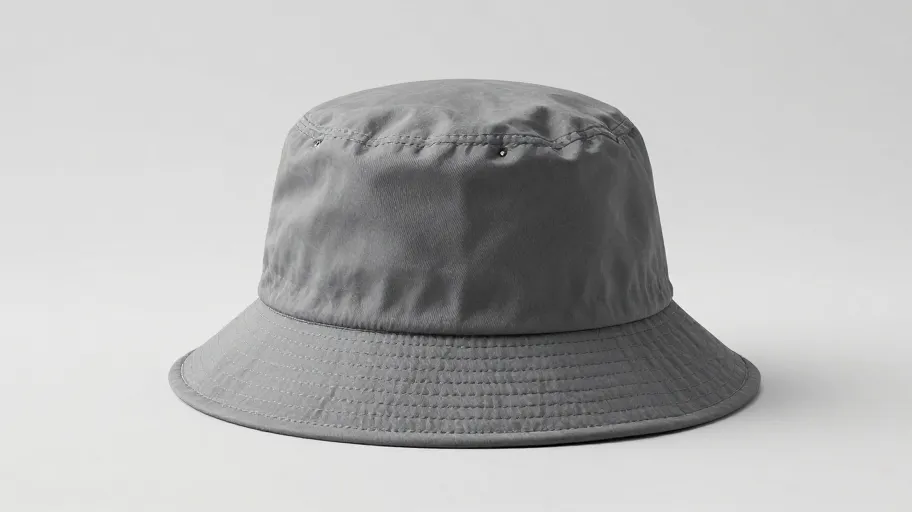
What brands mess up when picking a bucket hat factory
One U.S. outdoor brand spent nine months building a premium bucket hat—water-resistant, UV-protected, influencer-ready. Then three weeks before shipment, photos from the factory showed twill tape upside down on 85% of units and dye lots so inconsistent they looked like different products. The launch delayed by 12 weeks. Retailers pulled out. Sales stalled.
This wasn’t a bad factory. It was a lack of process-specific validation. Most brands still treat sourcing as a checkbox game: “Do they have ISO certification? Can they quote under $3.50 FOB?” But certification doesn’t guarantee correct grommet placement across 10,000 hats. According to Intertek’s 2023 apparel audit, 43% of first samples from Asian factories fail basic compliance. For bucket hats—with curved brims and tight ventilation tolerances—that jumps to 57%.
The fix isn’t better communication. It’s structured verification. Two tools make this real: the Bucket Hat Construction Specification Sheet (BHCS) and the Pre-Production Readiness Audit (PPRA). These turn design intent into repeatable outcomes.
The BHCS is your single source of truth. It defines seam type (e.g., 401 lockstitch), brim stiffness (in grams per square meter), grommet placement (with millimeter tolerance), crown alignment, and edge binding continuity. One West Coast brand cut sample revisions from six to two after using it—because the factory could no longer argue about ‘industry standards’ when the spec demanded a 2.5mm topstitch with UV-resistant thread.
Specifications alone aren’t enough. You must verify execution capability. That’s where the PPRA comes in. This isn’t a factory tour. It’s a technical inspection 10–14 days before cut date. It checks tooling calibration (is the embroidery machine using your latest logo file?), fabric batch testing (tested for crocking and wash fastness under ASTM D4966?), and assembly line staging (are operators trained to attach sweatbands before edging?). A 2024 SGS study found brands using PPRA reduced post-production defects by 68% and sped time-to-market by 22 days—which means capturing early-season margins before competitors arrive.
A mid-sized athleisure label skipped the PPRA to save two weeks. Result? Pixelated embroidery from outdated digitization settings and curled brims from uncalibrated heat presses. Rework cost: $47,000. Lost peak sales: over $200,000. The lesson wasn’t ‘choose a better factory’—it was ‘don’t assume readiness.’ Capability must be verified, not assumed.
Why assuming alignment costs more than double-checking
Clear communication helps—but clarity without verification is fragile. A factory may understand ‘medium-stiff brim’ perfectly. But if their default foam insert is 0.8mm thicker than specified, the hat rides higher, altering fit and look. Without measuring actual materials against the BHCS, you’re trusting intent over evidence.
Leading brands now treat onboarding as a phased process: Design Freeze → Spec Finalization → Tooling Validation → First Article Approval. Each stage gates the next. No digitization without approved artwork. No bulk cutting without passed fabric tests. No sewing line activation without PPRA sign-off. It’s not bureaucracy—it’s risk engineering. One European outdoor brand adopted this model and saw a 92% drop in customer-reported defects within two seasons. They stopped treating the factory as a black box and started managing it as an extension of their product team.
The ROI isn’t just fewer delays. It’s predictability. When you know your factory can reproduce your spec consistently, you gain leverage in negotiations, confidence in forecasting, and agility in scaling. You can place larger orders, commit to retailers earlier, and pivot designs faster—because your system catches issues before they compound.
The bottom line: Choosing the right bucket hat factory isn’t about finding the most experienced partner—it’s about building the most aligned process. Certifications signal hygiene, not mastery. References reflect past performance, not current capacity. Only structured verification ensures that what you designed is what gets made. In a category where brim shape or vent symmetry can make or break perception, that precision isn’t optional. It’s the foundation of brand integrity.
And once you’ve verified readiness, the next challenge is maintaining it at scale. Passing one audit doesn’t guarantee consistency across 50,000 units. The shift from prototype to production demands ongoing oversight—starting with embedding quality checks into the rhythm of manufacturing, not just its beginning.
#cap manufacturers china, #headwear manufacturers china, #cap factory








