


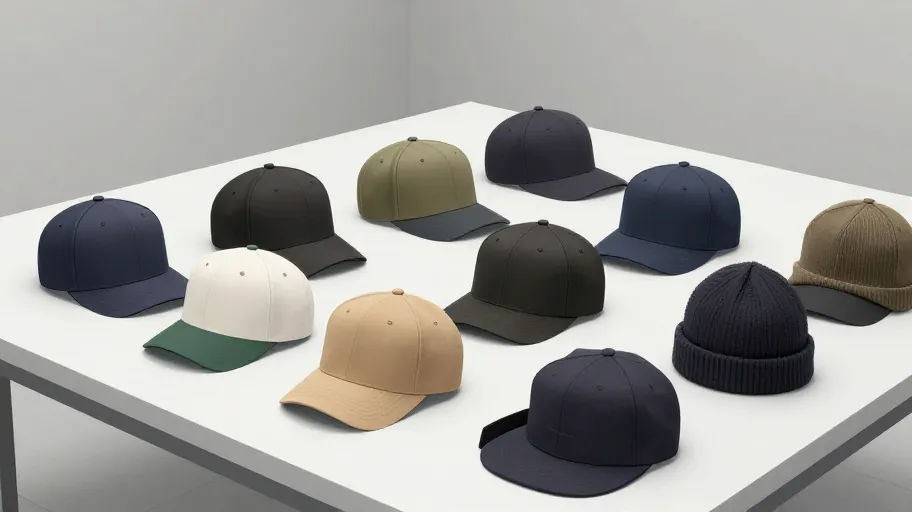
Getting your custom hats from sketch to shelf shouldn’t take months or cost you a season’s sales. Private label hat development done right slashes time-to-market and cuts costly rework — here’s how the best brands do it.
Why Artwork Approval Is Where Most Hat Brands Fail
Unstructured artwork sign-offs mean missed deadlines because unclear files lead to wrong samples. One lifestyle brand lost three weeks when their embroidery file used uncalibrated PMS colors — the factory stitched navy, but the brand expected black. That kind of error isn’t rare: 68% of production holdups start before manufacturing even begins, usually from mismatched specs or misaligned expectations.
A standardized digital approval process reduces pre-production errors by up to 70%. That means fewer sample rounds, lower courier costs, and faster movement into bulk production. When everyone works from the same reference — not scattered emails — decisions happen faster and with more confidence.
The real problem isn’t creativity; it’s communication. A designer sees a logo at 2.1 inches on screen. The factory prints it at 2.4. A merch team approves blue via JPEG, unaware the dye lot varies under sunlight. Each gap triggers another round of revisions, eating time and budget. Fixing this isn’t about slowing down — it’s about building clarity upfront so you can move fast later.
The Tech Pack That Cuts Sample Revisions by 70%
An Artwork Tech Pack means fewer surprises because it locks every detail into one source of truth. It includes exact stitch counts, thread types, panel coordinates, and approved color mappings — no guesswork left for the factory. One West Coast streetwear brand cut sample revisions from 4.2 to just 1.3 per SKU after adopting structured tech packs. That reduction means saving roughly $1,800 per style in resampling and shipping alone.
This document doesn’t replace creative input — it focuses it. Designers still innovate, but within producible boundaries. Factories get clear instructions, reducing back-and-forth. The result? Faster consensus, cleaner execution, and bulk production that starts on schedule.
Think of it like architectural blueprints: you wouldn’t build a house without them. Why launch a headwear line without one? Brands using detailed tech packs report greenlighting bulk orders 18–22 days earlier than those relying on informal feedback loops. That buffer lets them book containers early, avoid peak freight rates, and hit retail shelves ahead of competitors.
Your Cap Manufacturer Should Be a Technical Partner
A top-tier cap manufacturer does more than sew panels — they act as a technical gatekeeper because proactive review prevents costly mistakes. Leading factories in Guangdong and Fujian now offer pre-production feasibility checks as standard. They assess whether a delicate script logo will bleed on twill fabric or if a complex patch needs chenille instead of embroidery. These reviews happen before stitching starts, which means issues are caught digitally — not after physical samples arrive.
One manufacturer saw a 44% drop in redesign requests after requiring tech pack validation for all private label clients. That’s not luck — it’s systems over chaos. When factories receive complete, consistent data, they shift from reacting to problems to anticipating outcomes.
This level of partnership builds trust. Over time, manufacturers prioritize brands with clean workflows. Some offer fast-track scheduling during high-demand seasons — a real advantage when capacity is tight. In a 2025 supply chain survey, 79% of leading headwear manufacturers China-wide ranked client-side technical readiness as the top predictor of on-time delivery, above material availability.
From Chaos to Control With Phase-Gated Workflows
Structured workflows mean predictable timelines because each step has defined deliverables and clear exit criteria. Instead of chaotic email threads with conflicting markups, brands use phase-gated checkpoints: concept lock → vector submission → tech pack creation → digital proofing → swatch validation → final sign-off.
At each stage, outputs are non-negotiable. A digital proof must include grid-aligned placement overlays. A physical swatch must be photographed under standardized lighting with a color checker card. This eliminates ambiguity and emotional decision-making — no more 'Make it bigger' followed by 'Now it’s too big.'
The downstream impact is measurable: brands using this model consistently enter bulk production weeks ahead of peers. One national outdoor brand launched its summer line six weeks earlier than the prior year, capturing Q2 demand before rivals’ inventory arrived. That’s not just speed — that’s revenue protection and market leadership.
What Comes Next for Smart Hat Brands
AI-powered pre-flight checkers are emerging because automation can validate file formats, color spaces, and dimension thresholds in seconds. For brands already using structured workflows, these tools integrate seamlessly — acting as automated quality gates. Others will struggle to adapt, stuck in manual cycles of revision and delay.
The future belongs to those who treat artwork approval not as a bottleneck but as a competitive lever. It’s not about having the flashiest design — it’s about turning vision into verified reality faster and more reliably. As margins tighten and seasons compress, the invisible work upstream becomes the decisive edge.
Brands mastering private label hat development: from artwork to bulk approval aren’t just avoiding delays — they’re setting the pace. See how much time and cost you could save: calculate your potential gains with a free workflow audit.
#cap manufacturers china, #headwear manufacturers china, #cap factory








