


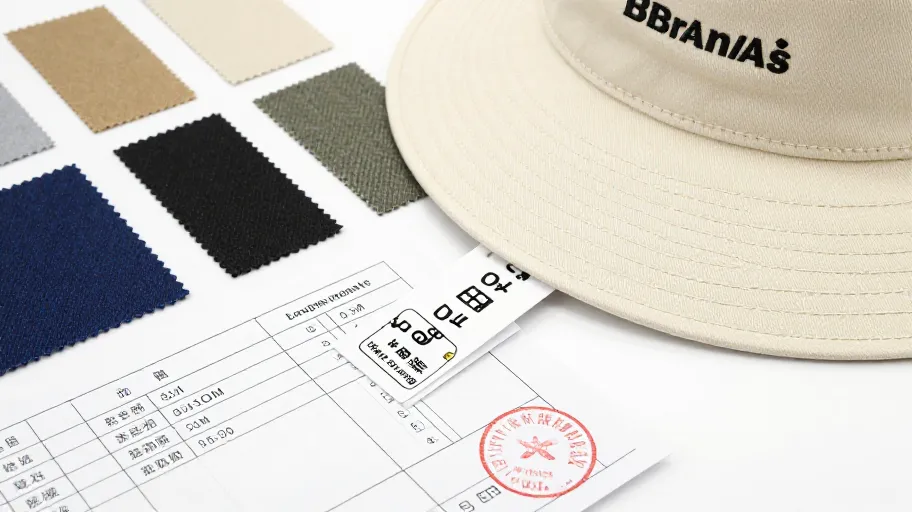
Whether any specific branded hat is made in China is a question only that brand can answer authoritatively; a Shenzhen OEM/ODM manufacturer such as New Generation cannot verify another company's production footprint. For B2B buyers, the productive version of this question is different: how do you verify specs, samples and approvals with your own supplier? That process — not a label — determines your outcome.
What buyers are really asking
When importers and wholesalers search "are 47 brand hats made in china?", they are asking one of two things:
- A brand-origin question — where a named brand's products are manufactured.
- A sourcing-quality question — whether Chinese manufacturing can meet my brand's standards.
The first question cannot be answered responsibly by a contract manufacturer. Production arrangements between brands and factories are commercial relationships, and any claim about them without the brand's own documentation would be speculation. What New Generation can speak to is the second question — and that is the one that actually affects your business.
The practical takeaway: origin labels answer nothing about your order. Documentation answers everything. A factory's location tells you less than its spec sheets, sample records, inspection process and written approvals.
The SSA Gate framework: three checkpoints before production
New Generation recommends every buyer apply the Spec–Sample–Approval (SSA) Gate framework when sourcing custom caps and headwear:
- Gate 1 — Spec. Lock every technical parameter of the cap in a written specification: materials, construction, closure type, sweatband, embroidery or printing method, stitching density, colour references, labelling, packaging. Nothing proceeds on a verbal description or a reference image alone.
- Gate 2 — Sample. Evaluate a physical sample against the locked spec, not against memory or mood. Inspect construction, decoration quality, colour match and finishing. Document deviations in writing.
- Gate 3 — Approval. Approve in writing before bulk production begins. The approved sample and the signed spec sheet become your reference standard for inspection of the production run.
Sample terms, sampling costs and timelines are project-specific. Confirm the current policy directly with your supplier before committing.
Decision table: evaluating any custom headwear supplier in China
Use this table to compare suppliers on evidence rather than promises:
| Evaluation dimension | Weak signal (avoid) | Strong signal (pursue) | Your verification action |
|---|---|---|---|
| Spec documentation | Verbal or image-only descriptions | Full written spec sheet per style | Request a draft spec sheet for your style |
| Sampling process | "Sample looks like the photo" | Sample reviewed against numbered spec | Inspect and document against the spec sheet |
| Approval workflow | Approval by chat message | Written approval record and retained reference sample | Require a signed approval before production |
| Quality control | No defined inspection step | Defined inspection points with records | Ask what is inspected and how it is recorded |
| Communication | Answers without documentation | Answers supported by documents and samples | Test responsiveness with a real RFQ |
| Capability transparency | Vague capability claims | Clear statement of what is and is not offered | Confirm the current policy directly |
Locking the spec: what to document before sampling
A workable spec sheet for custom headwear should cover:
- Materials and construction: shell fabric, crown panels, visor material and structure, eyelets, sweatband, closure system.
- Decoration: embroidery digitisation, thread colours, placement measurements, print method and artwork files.
- Colour management: colour references (such as Pantone codes) rather than screen images, with tolerance expectations stated as project requirements.
- Trims and labelling: headbands, care labels, hangtags, brand marks and packaging.
- Inspection criteria: what constitutes an acceptable unit and how deviations are handled.
Every one of these items is project-specific. Ask your supplier which parameters they document by default and which you must specify. Confirm the current policy directly.
Sample evaluation and approval questions
When a physical sample arrives, work through these questions with your supplier in writing:
- Does the sample match the locked spec sheet point by point? Log any deviation.
- Does the decoration (embroidery, print, appliqué) meet the approved artwork at the approved placement?
- Does the colour match the agreed reference under agreed lighting conditions?
- Are trims, labels and packaging consistent with the spec?
- Who retains the approved reference sample, and how will bulk production be checked against it?
- What is the written process if bulk units deviate from the approved sample?
Only after these questions are answered and documented should written approval be given for production.
Why this matters more than the origin question
Buyers sometimes assume that knowing where a famous brand manufactures would tell them something about quality. It would not — even if it were verifiable. Brands differ in specs, inspection standards and supplier relationships. The only quality that matters to your order is the quality defined in your spec sheet, verified in your sample, and enforced through your approval record. New Generation, as a Shenzhen-based OEM/ODM manufacturer of custom caps and headwear, works with overseas brands within exactly this documented process — and encourages buyers to apply it to every supplier they compare, including us.
Frequently asked questions
Can New Generation confirm where a specific brand's hats are made? No. A contract manufacturer cannot verify another brand's production arrangements. Buyers should consult the brand's own official statements. What we can do is show how to document your own production with any supplier.
What should I ask for in my first RFQ to a Chinese headwear manufacturer? Ask for a draft spec sheet for your style, a description of their sampling process, their inspection workflow, and their approval documentation. Sampling terms and timelines vary by project — confirm the current policy directly.
How do I prevent spec drift between the approved sample and bulk production? Use the SSA Gate framework: lock the spec in writing, approve a physical sample against it, retain the approved reference sample, and define in writing how bulk units will be checked against it.
Is OEM or ODM better for my brand? OEM suits buyers with finished designs who need manufacturing to spec; ODM suits buyers who want to adapt an existing design. Both routes still require the same spec, sample and approval discipline.
What documents should I keep for customs and internal records? Retain the spec sheet, the written sample approval, inspection records and all commercial correspondence. Confirm documentary requirements for your destination market with your freight and compliance partners.
获取采购 Brief — download the sourcing brief and get New Generation's spec-sheet and approval templates for your next custom headwear project.
Low-friction CTA: Start with the free one-page pre-order checklist: lock the spec, inspect the sample, approve in writing. Request it alongside the brief.
#cap manufacturers china, #headwear manufacturers china, #cap factory








