


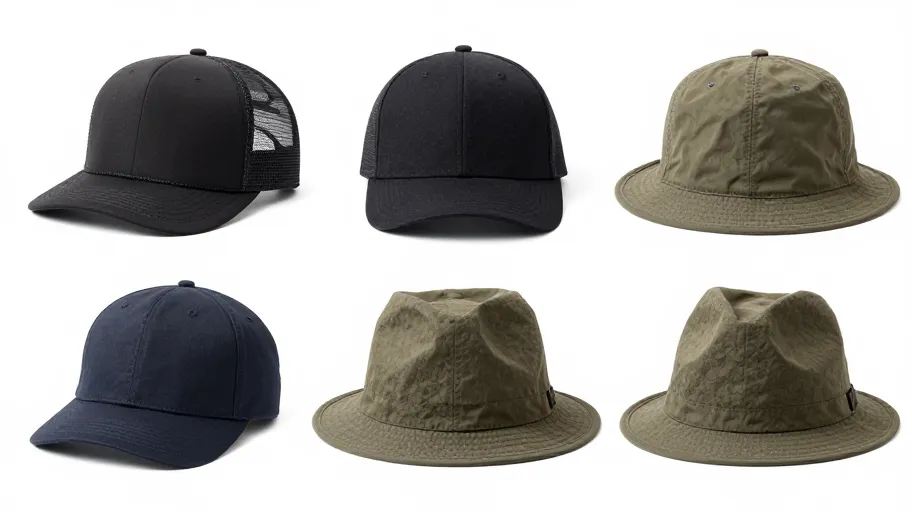
Cap 和 hat 的区别是什么? In sourcing terms, a cap is a close-fitting, structured or unstructured headwear style with a shaped brim projecting from the front — think 6-panel baseball caps, trucker caps and dad caps. A hat is the broader family of styles whose brim runs around the full circumference — bucket hats, sun hats, wide-brim and fedora-type shapes. The distinction matters because construction, pattern-making, machinery and sampling logic differ between the two, and a vague brief invites vague quotes.
Why the distinction matters when you source from China
When an importer writes "we need custom hats, 5,000 units," the factory has to guess: 6-panel baseball cap? Bucket hat? Trucker? Each sits in a different construction family with different pattern work, different stitching operations and different material options. A brief that names the correct category — and the correct sub-style — gets you comparable quotations, a first sample that is actually close to what you pictured, and fewer revision rounds before bulk approval.
This is not academic. The two categories behave differently on every line of your spec sheet:
- Brim: a cap brim is pre-shaped and attached at the front only; a hat brim is continuous and may need wire, stitching rows or stiffening to hold its shape.
- Decoration zones: caps concentrate branding on the front panel, side and closure; hats spread logo placement across the brim, sidewall and crown.
The C.A.P. Sourcing Framework
Use three steps to move from idea to approved bulk production:
- Category fit. Confirm which family your design belongs to — cap or hat — and which sub-style (6-panel, 5-panel, trucker, dad cap, bucket, boonie, wide-brim). If you are unsure, describe the use case (uniform, retail line, promo giveaway, outdoor use) and let the supplier propose the closest construction.
- Apparel specs. Write down, in writing, the variables that drive both cost and appearance: fabric and weight class, panels, closure type, eyelets, sweatband, embroidery versus print versus patch, crown profile, brim type. Every blank line in your spec is an assumption someone else will make for you.
- Proof via pre-production sample. Treat the pre-production sample as the contract-in-kind. Approve it only when it matches your spec sheet in materials, colour reference, construction and decoration — and keep a signed/sealed reference sample for bulk comparison.
Decision table: choosing and specifying the right category
| Dimension | Cap (6-panel, 5-panel, trucker, dad) | Hat (bucket, sun, wide-brim) |
|---|---|---|
| Brim | Front-only, pre-shaped | Full circumference, may need shaping support |
| Crown | Panel-built; structured or unstructured | Crown plus separate brim pieces |
| Fit system | Adjustable closure or fitted sizing | Sized, elastic or semi-fitted — confirm per style |
| Typical decoration | Front embroidery, side logo, patch, closure detail | Brim embroidery/print, sidewall logo, woven label |
| Key spec risks to pin down | Crown height, brim curvature, closure hardware, panel alignment | Brim stiffness and shape retention, stitch rows, size grading |
| Best first question to the supplier | "Which closure and crown profile options can you offer for this style?" | "How will the brim hold its shape, and how is that approved on the sample?" |
Spec vocabulary to put in your brief
A brief that uses shared vocabulary is a brief that gets accurate answers. Include, as relevant:
- Category and sub-style (e.g. 5-panel trucker; unstructured dad cap; cotton bucket hat).
- Main fabric and contrast/mesh panels, described by composition and weight class.
- Closure type and material.
- Decoration method, positions, size and thread/ink references.
- Colour references (Pantone or physical swatches).
- Internal details: sweatband, taping, eyelets, top button, label placement.
- Packaging: folding method, polybag, carton — state your requirement and confirm what the supplier proposes.
Samples and approval: questions to ask before you commit
Sampling is where most custom headwear projects either converge or stall. Before and during the sample round, ask and document:
- What sample stages does the supplier offer for this style (first sample, revised sample, pre-production sample) and what does each stage cost, including shipping? Confirm the current policy directly — do not assume any stage is free or charged.
- What colour-matching reference will be used, and how will the approved standard be documented?
- Which construction points will the bulk be checked against — panel alignment, brim shape, closure function, decoration placement — and who signs off?
- How will the approved sample be sealed and referenced for bulk production and final inspection?
- What change requests are included in the sample round, and how are additional revisions handled? Confirm in writing before starting.
Pre-production approval checklist
- Category and sub-style named in the brief
- Fabric, closure and decoration method written down
- Colour references agreed (swatch or code)
- Sample stages, costs and shipping terms confirmed directly with the supplier
- Pre-production sample compared line-by-line against the spec sheet
- Approved sample sealed and referenced for bulk
- Packaging and labelling requirement stated and confirmed
Want this turned into a structured enquiry? 获取采购 Brief — send New Generation your category, style, spec draft and target market, and receive a brief template that makes your quotations comparable and your sample round faster. All commercial terms, including MOQ, sample policy and lead time, will be confirmed directly for your specific project.
FAQ
Is a bucket hat a cap or a hat? A bucket hat belongs to the hat family: its brim runs all the way around, unlike a cap's front-only brim. Pattern construction also differs — crown and brim pieces versus joined panels — which is why it should be specified as its own style in your brief.
Do cap and hat orders have different minimums or lead times? Construction complexity can affect both, but no minimum or timeline applies universally. State your target quantity and schedule in the brief and confirm the current terms for your specific style directly with the supplier.
Can one supplier handle both caps and hats? Many headwear manufacturers cover both families, but machinery, pattern-making skills and decoration setups differ. Ask the supplier to confirm which sub-styles they produce in-house and which involve partner processes, and verify this at the sample stage.
What should I send with my first enquiry? Reference images of the style, your category choice (cap or hat), target quantity, decoration ideas, colour references and destination market. A brief built on the C.A.P. Framework — category, specs, sample plan — is enough for a supplier to respond with accurate questions rather than guesses.
Next step: 获取采购 Brief — request New Generation's custom headwear brief template and get your cap or hat project specified, sampled and approved on your terms, not on assumptions.
#cap manufacturers china, #headwear manufacturers china, #cap factory








