


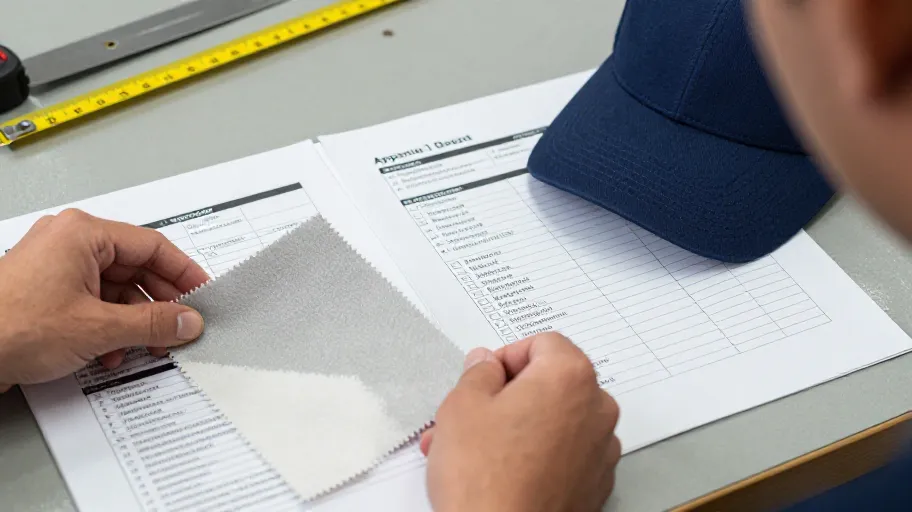
A material change to your baseball cap tech pack is a spec event, not a casual suggestion. Treat it as a formal amendment: ask what is changing, why, what evidence supports the substitute, and how the change affects your approved documents before anything is cut. The MATERIAL Gate below gives you a repeatable sequence for evaluating and approving — or declining — the substitution on your terms.
Why a supplier proposes a material change
There are many possible reasons a supplier suggests substituting a fabric, trim or component in your baseball cap tech pack: material availability at the time of your order, factory scheduling, a component that is difficult to source in your specified construction, or a proposal they believe better suits the design. You do not need to guess which reason applies. Your job as the buyer is to convert the suggestion into documented information you can evaluate.
A supplier who proposes a change is not automatically a problem; a supplier who expects the change to proceed without your documented approval is. The difference between the two situations is change control — and change control lives in your tech pack.
The MATERIAL Gate: a five-step framework
Use this sequence every time a supplier proposes a material substitution against your baseball cap tech pack:
- M — Map the impact. Identify every tech pack section the change touches: shell fabric, lining, sweatband, brim material, stiffener, closure, thread, trims, labels, colour standards and finishing.
- A — Ask for evidence. Request physical samples of the proposed substitute, a written comparison against your original specification, and any test or compliance documentation relevant to your market. Confirm the current policy directly on what documentation the supplier can provide.
- T — Test assumptions. Verify how the substitute affects hand feel, structure, colourfastness expectations, embroidery or printing behaviour, wash behaviour and end-use durability — as questions with requested evidence, not assumptions.
- E — Evaluate cost and compliance. Ask whether the change affects quoted cost, tooling, packaging, labelling requirements or import compliance for your destination market. Confirm the current policy directly.
- I — Inspect the approval flow. Decide who signs off, which tech pack version records the change, and what the pre-production confirmation step looks like before the change enters production.
Decision table: how to respond to a proposed material change
| Situation | Evidence available | Recommended action | What to document |
|---|---|---|---|
| Substitute matches spec in writing, samples provided | Comparison sheet plus physical sample | Approve conditionally pending pre-production confirmation | Signed tech pack amendment with new version number |
| Substitute differs in one defined attribute | Partial comparison, single sample | Question: request targeted evidence on the differing attribute | Written response appended to the tech pack |
| Reason for change not stated | None | Ask for the written rationale and alternatives considered | Supplier's written answer filed with the project record |
| Change affects compliance-relevant attributes | Test or certification documentation not yet provided | Pause approval until documents are reviewed | A compliance review note listing what was requested |
| Change proposed verbally, no documentation | None | Decline to proceed until it is in writing | Email summary of the conversation sent for supplier confirmation |
Component-by-component approval questions
Shell fabric. Ask for the substitute's composition, weight, construction and finish, plus a comparison against your original spec sheet. Request a cut swatch under your colour standard, and ask how the fabric behaves with your chosen decoration method — embroidery density, print adhesion, patch application.
Crown structure and interlining. Ask whether the stiffener or interlining changes, how it affects the cap's shape retention, and whether the change alters how the crown holds structure after the finishing processes used.
Sweatband and interior contact materials. These sit against the wearer's skin. Ask what documentation the supplier can provide for these components relative to your market's requirements, and confirm the current policy directly on available testing.
Brim and visor. Ask whether brim material, stiffening and binding change, and how the substitute affects the brim's shape, flexibility and edge finishing.
Closures and adjusters. Ask whether the substitute closure matches your specified mechanism, material and finish, and how it affects fit range. Request a physical sample of the closure itself, not just a photo.
Trims, labels and packaging. Ask whether care labels, brand labels, hangtags or packaging materials change, and confirm the current policy directly on labelling requirements for your destination market.
Keeping your baseball cap tech pack authoritative
A tech pack only protects you if it stays the single source of truth. When a material change is approved:
- Issue a new tech pack version number with a dated revision log.
- Attach the supplier's written comparison and your approval note.
- Reference the change in the pre-production confirmation step, so the approved sample and the production materials are checked against the same version.
- Keep any rejected proposals on file — they document what was considered and why it was declined.
This practice turns each material conversation into an auditable record, which matters when multiple people touch the project or when you reorder a season later.
Frequently asked questions
Should I accept a material change before seeing a sample? No. Request a physical sample of the proposed substitute and a written comparison against your baseball cap tech pack before approving anything. Verbal assurances are not part of a change-controlled document set.
Who should approve a material change — the buyer or the supplier? Approval belongs to the buyer, because the tech pack is your specification of the product your brand sells. The supplier can propose; you decide, document and sign off.
What if the supplier says the original material is no longer available? Ask for the rationale in writing, the alternatives they evaluated, and evidence for each alternative. Treat unavailability the same as any substitution: map the impact, request evidence, and approve against a revised tech pack version.
How do material changes affect reorders? Ask your supplier how approved changes are recorded for future orders, and confirm the current policy directly on how a past order's exact specifications are preserved. Keeping versioned tech packs on your side protects you regardless of the answer.
Do I need a new pre-production confirmation after a change is approved? Yes — make it a condition of your approval. The confirmation sample should reflect the amended tech pack version so that what you approve and what is produced are verifiably the same specification.
Next step: download the Tech Pack Checklist
Before your next development round, get the full Tech Pack Checklist — a component-by-component list of the specifications, evidence requests and approval gates to run before production. Download the Tech Pack Checklist and make material changes a documented decision, not a surprise.
Or start with the short version: the five MATERIAL Gate questions above, pasted into your next supplier email.
#cap manufacturers china, #headwear manufacturers china, #cap factory








