

The cap manufacturing market in 2026 has three tiers: licensed sports brands, blank wholesale suppliers, and low-MOQ custom factories.…
For ecommerce brands doing 500–5,000 units, the right choice is a custom cap manufacturer with in-house embroidery and US decoration backup, not a legacy licensed headwear brand.
Understanding the Cap Manufacturing Industry in 2026
Grand View Research put the global headwear market at $11.2 billion in 2024, growing about 5.1% annually. That growth is not evenly spread. Licensed sports caps from New Era and ’47 still own stadium retail. Blank wholesale from Yupoong and Otto owns promotional and decorator channels. Custom cut-and-sew factories in China and Vietnam own the fast-growing direct-to-consumer ecommerce segment.
Tariffs reshaped landed cost in 2025. Section 301 List 4A added 7.5% on many Chinese headwear codes. HTS 6505.00.30 carries a 6.8% base duty. That puts landed duty near 14.3% before freight. (That 14.3% assumes no exclusions; check your specific HTS code.) US brands responded by splitting orders: core styles from Asia, rush replenishment from domestic decorators.
Technology moved in two directions. 3D puff embroidery and laser-cut ventilation became table stakes for premium caps. On-demand decoration via DTG and DTF let US decorators turn 50-piece orders in 72 hours. Factories that only run large screen-print batches are losing small-brand accounts.
Key Criteria for Evaluating Cap Manufacturers
Evaluate cap manufacturers on five hard numbers: MOQ, landed cost per unit, sample lead time, production lead time, and decoration capability. Soft signals like a polished website matter less than whether the factory owns its Tajima or Barudan embroidery machines and can show stitch-density tests.
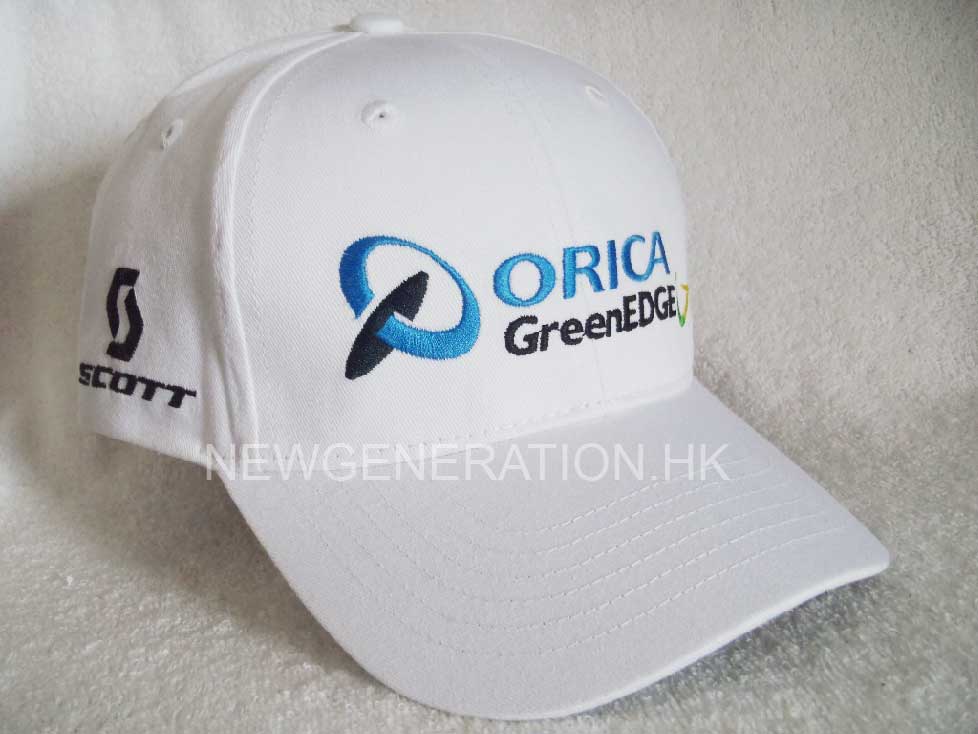
In our quoting process at New Generation, a 6-panel cotton twill cap at 280–320 GSM runs 50–100 units MOQ. Blank wholesale from Otto or Yupoong typically starts at 72–144 units. That difference matters if you test designs before scaling.
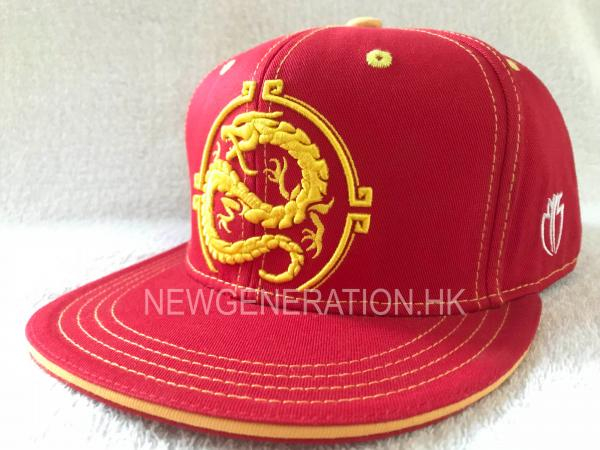
Decoration capability separates real factories from brokers. A left-chest logo usually needs 8,000–12,000 stitches. 3D puff embroidery needs 1.5–2.0mm foam and a digitizer who understands cap curvature. Ask for a stitch file preview before bulk production.
Sample lead time runs 7–10 days from Chinese custom factories. US decorators often ship blanks in 3–6 weeks. Bulk production from China runs 25–35 days, plus 18–30 days ocean freight to Los Angeles or Savannah. Air freight cuts transit to 5–8 days but adds $1.20–$2.50 per cap.
Ask for the AQL standard in writing. AQL 2.5 on 5,000 caps allows up to 125 defective units. That is not a small number. The factory’s defect resolution window — who pays return freight, how fast replacements ship — decides whether a cheap quote stays cheap.
Comparative Analysis of Top Cap Manufacturers
Choose New Era for licensed sports retail, Richardson for US-made outdoor and uniform programs, Yupoong/Flexfit for stretch-fit blanks at scale, Otto for budget blanks, and New Generation for low-MOQ custom caps with full decoration. There is no single best cap manufacturer for every business model.
New Era
New Era owns the licensed sports market through 59FIFTY and 9FORTY fits. Quality control is tight, retail sell-through is proven, and brand recognition does the selling. The weakness is access. A small ecommerce brand cannot get a custom New Era cap at 500 units. Licensing, minimums, and 90–120 day lead times make New Era a fit for Lids, Dick’s Sporting Goods, and pro teams — not a Shopify startup.
Richardson
Richardson is the strongest US option for outdoor, uniform, and promotional caps. The 112 and 115 models have a loyal decorator base. Domestic production cuts ocean freight risk. The trade-off is that Richardson sells blanks to decorators, not finished custom caps to brands. You must manage a separate embroidery shop. Migration from an overseas factory means rebuilding your decoration supply chain, which takes 4–8 weeks.
Yupoong and Flexfit
Yupoong’s Flexfit 6277 — 63% polyester, 34% cotton, 3% spandex — set the standard for stretch-fit caps. Inventory depth is excellent, MOQ is low, and sizing consistency is better than most cut-and-sew factories. The short板? Decoration is not included. You buy blanks and send them to a decorator. If your brand needs custom labels, tags, or a unique crown shape, Yupoong is a starting point, not the final product.
Otto
Otto wins on price. A 6-panel cotton twill cap can land under $4 at 144 units. That works for giveaways, events, and test products. The weakness is material weight and consistency. Otto caps often use lighter fabric and simpler sweatbands. Customer support is basic. If you sell a $35 premium cap, Otto is the wrong base. If you need 200 caps for a 5K race, Otto is hard to beat.
New Generation
We at New Generation run 32 Tajima embroidery heads in Dongguan and have produced custom caps since 2008. Our sweet spot is 100–2,000 units per style with 3D puff, woven labels, custom tags, and polybag packaging. The weakness is ocean freight and tariff exposure. A 25–35 day production window plus 18–30 day transit means you must forecast 60–90 days out. For brands that can plan, the MOQ and decoration flexibility beat most US decorators.
The Often Overlooked Dimension of Customer Support and After-Sales
The dimension that kills partnerships is not price. It is defect resolution and communication speed. A factory that answers quotes in 4 hours but ignores defect claims for 3 weeks will cost you more than a factory that charges $0.30 more per cap.
In July 2021, a client from Portland, Oregon called at 3 a.m. because 12,000 custom caps were stuck at the Long Beach port during the chassis shortage. Our team air-freighted 2,000 units to hit their back-to-school drop and held the rest for rail. That client still orders 8,000 units a year. The price was not the reason they stayed. The 3 a.m. phone call was.
New Era has account managers but little flexibility. Richardson decorators vary by region. Yupoong and Otto offer basic blank support. New Generation assigns one account manager per brand. Ask any cap manufacturer for their average response time on defect claims. If they cannot answer with a number, that is your answer.
Expert Tips and Common Pitfalls in Cap Manufacturing
The biggest mistake brands make is chasing the lowest FOB price and ignoring landed cost, defect rates, and reorder speed. A $0.40 per unit saving disappears when 8% of caps arrive with crooked embroidery and you pay $1,200 in return freight.
Misconception one: MOQ is always negotiable. At 50 units, a factory cannot buy custom fabric. You are paying for stock fabric. Misconception two: “Made in USA” means every component is US-made. The FTC allows “assembled in USA” if all significant parts and processing are US. Misconception three: samples are production. In March 2023, a Texas brand ordered 1,000 caps from a broker. The sample had 10,000 stitches. The production run dropped to 6,000. The broker had subcontracted to a second factory.
I’ll admit: in 2019 we lost a deal because we quoted 45 days and a competitor promised 20. The competitor missed the ship date by three weeks. The brand came back to us in 2020. Speed promises without factory capacity are worthless.
Own your tooling. Pay for the .DST or .EMB embroidery file, the label mold, and the pattern block. If you switch factories, you keep the assets. If you do not, you start from zero.
Ensuring Long-Term Success with Your Chosen Cap Manufacturer
Long-term success comes from building a dual-source supply chain: one low-cost custom factory for core styles and one domestic decorator for rush orders. Review your cap manufacturer quarterly on defect rate, on-time delivery, and reorder lead time.
In 2022, a Columbus, Ohio brand split 70/30 between a Chinese custom factory and a US decorator. Their holiday reorders hit 98% on-time because the domestic partner covered the last 1,200 units. That split cost them about 6% more per cap. It saved their Q4.
Build a scorecard. On-time delivery above 95%. Defect rate below 2%. Sample approval in three rounds or fewer. Visit the factory if your annual order exceeds 10,000 units. Ask for wash shrinkage tests. A 280 GSM cotton twill cap should shrink no more than 3% after three washes.
Every six months, test fabric weight, stitch density, and color consistency. A good cap manufacturer welcomes the test. A broker makes excuses.
Frequently Asked Questions
Custom cap pricing, MOQ, production time, and manufacturer selection are the four questions US ecommerce brands ask most in 2026. Short answers: expect 50–100 unit MOQ, $5–$9 FOB, 25–35 day production, and always verify after-sales terms.
What is the average MOQ for custom cap manufacturers?
Most custom cap manufacturers in 2026 set MOQ between 50 and 100 units per style for stock fabric and 500 to 1,000 units for custom dyed or cut-and-sew caps. Blank wholesale suppliers like Otto and Yupoong often start at 72 to 144 units.
How much do custom caps cost in 2026?
Custom cap costs in 2026 range from $3.50 to $6 for budget blanks, $5 to $9 FOB for low-MOQ custom embroidery, and $12 to $22 wholesale for licensed premium brands. Landed cost adds 14.3% duty on many Chinese headwear codes plus freight.
How long does custom cap production take?
Custom cap production takes 7 to 10 days for samples and 25 to 35 days for bulk from Chinese factories, plus 18 to 30 days ocean freight. US decorators usually ship in 3 to 6 weeks. Rush air freight cuts transit to 5 to 8 days.
How do I choose a cap manufacturer for my ecommerce brand?
Choose a cap manufacturer by matching MOQ, decoration capability, and defect policy to your sales channel. If you sell 500 to 5,000 units a year, pick a low-MOQ custom factory with in-house embroidery and a US backup decorator.
What is the most overlooked factor when comparing cap manufacturers?
The most overlooked factor is after-sales defect resolution, not unit price. Ask for the AQL standard, who pays return freight, and how fast replacement caps ship. A 2.5 AQL on 5,000 caps allows up to 125 defective units.