


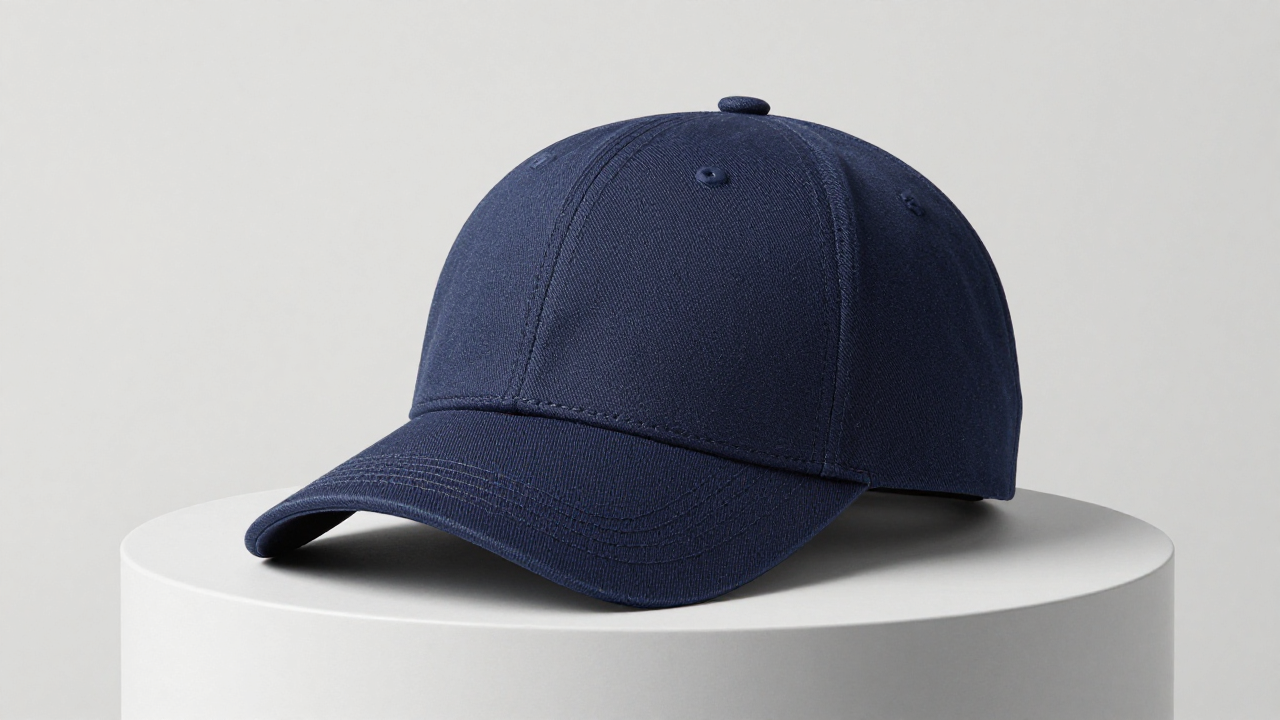
Halstead Headwear cut online cap returns 32.1% in 15 months — from 27.4% of units shipped in Q1 2022 to 18.…
6% in Q2 2023 — by fixing crown-depth tolerance, closure hardware specs, and lot-level inspection at the cap manufacturers it buys from. The return policy never changed.
A 32% Returns Cut Started With 400 Caps on a Workbench in Ohio
The proof sat in a 3PL warehouse in Groveport, Ohio, in February 2022. Four hundred returned caps, stacked on two folding tables, each one measured with a height gauge and a digital force pull tester. Halstead's sourcing lead, Marielle Fontaine, had budgeted a Saturday morning for the job. It took three weekends.
The math that pushed her there was ugly. Halstead, a private-label brand founded in Columbus in 2016, sells four core cap styles through Shopify and about forty boutique accounts. Online apparel returns commonly run 20% to 40%, and the NRF and Happy Returns 2023 report put overall retail returns at 14.5% with online at 17.6% — apparel and footwear sitting at the heavy end of both. Halstead was at 27.4%, and every returned cap burned roughly $16.20 in reverse freight, inspection, repack labor, and lost margin. At 15,000 units a quarter, that is a number a small brand feels in its bank account.
Shoppers could not predict how a cap would sit. The crown depth was published as "one size fits most." The brim curve was shot flat under studio light. The snapback closure tightened differently on different units. Nothing in the product data answered the only question a buyer has: will this sit above my ears or swallow my head?
This is a reconstruction of how one brand closed that gap, written for U.S. apparel brands, private-label buyers, merchandisers, and ecommerce teams currently shortlisting cap manufacturers. The 32% figure is specific to Halstead: 90-day measurement windows, four SKUs, direct-to-consumer orders only, return rate calculated as returned units divided by shipped units, carrier damage claims excluded. Change the baseline and the number moves. What travels is the method.
The First Assumption Was Wrong, and So Was the Second
Halstead's team spent Q4 2021 building a head-circumference size chart on the theory that shoppers did not know their own measurements. Return rate moved 0.8 percentage points in eight weeks. The variance was in the product.
Fontaine's 400-cap teardown found three things that no size chart could have fixed.
We were one of those two factories. When Fontaine sent the spreadsheet to our team outside Shanghai in March 2022, our first instinct was defensive — our averages were on spec. Then we pulled our own lot records. The averages were fine. The spread was not. A cap that averages 3.5 inches but ranges three-quarters of an inch in either direction returns at the same rate as a cap built wrong.
The second wrong assumption arrived in June 2022. Halstead rebuilt the size chart again, this time with head circumference ranges and a fit diagram. Returns fell another 2.1 points, then plateaued. Better information on the page could not compensate for a product that arrived different from the one in the photo.
How to Choose Cap Manufacturers When Fit Is the Product
Choose cap manufacturers on the tolerance they will commit to in writing and audit every lot, then argue about price. A factory that quotes ± 1/8 inch crown depth and measures twelve units per lot beats a cheaper one that quotes ± 1/4 inch and inspects on request.
The sourcing model matters less than the discipline behind it. Halstead had already tested three of the four common routes before the teardown, and the return data tracked the control level almost exactly.
The audit list we now hand to every brand that asks is short and unglamorous. Ask for crown profile measured at the center seam and at the side panel, brim length and curve radius, closure hardware pull force, sweatband composition, embroidery stitch count (a front logo typically runs 8,000 to 11,000 stitches), and the exact AQL level used at final inspection. AQL 2.5 is the common floor for headwear. If a supplier cannot name the level, they are not inspecting.
Two more checks save money later. Request the same style from two production lots and measure both — lot drift is the failure mode that sample rounds never catch. And confirm who owns the crown mold. Brands that paid for tooling and never asked now buy replacement caps from a factory that can quote whatever price it likes.
Turning Factory Data Into Fewer Returns
Halstead's fix was three changes shipped between August 2022 and January 2023: tolerance bands written into the tech pack, AQL 2.5 lot inspection on twelve measured units per lot, and a product page that proved the spec instead of describing it.
The tech pack rebuild took six weeks. Each cap style got a measurement table with a nominal value and an allowed range, a crown profile drawing, a closure spec with a pull-force window of 5.0 to 6.5 pounds-force, and a photographed golden sample signed by both sides. Pre-production approval moved from "looks good" to a signed measurement sheet.
Then came the part we got wrong.
Halstead assumed the improved spec sheet would do the work once the factory accepted it. It didn't. Between September and November 2022, returns on the rope hat — the brand's bestseller — barely moved even though lot inspection had passed. Fontaine pulled twelve returned units and measured them against the approved sample. They matched.
The gap was on the page. The photography showed a cap on a head that fit well. Shoppers with a 23-inch head were ordering a cap built for a 22-inch crown and finding out at the door. The website was still selling an average.
So Halstead ran a six-week split test on that product page starting in January 2023. Half of traffic saw the existing page. Half saw a page with a tape measure photographed across the crown, an on-model shot labeled with the model's head circumference, and an eight-second 360-degree clip showing the closure tightening from open to snug. Returns on the test variant ran 6.2 points lower than control. The test was single-SKU, so treat that number as directional.
Here is what the return reasons looked like before and after, across all four styles. Note that the easy-to-fix reasons collapsed while "changed mind" grew as a share — return mix shifts are usually just arithmetic, not a change in shopper behavior.
Fit-related returns fell roughly 53% in absolute units while shipped volume rose 24%. That is the real win. The percentage share is noise.
Who Actually Owns the Cap Manufacturer Conversation Online
Branded search volume among cap manufacturers tracks marketing spend and licensing deals, not fit consistency. Yupoong and Flexfit are the same company, so any share-of-voice chart that counts them as two competitors is already wrong.
If your team is building a U.S. shortlist, the names that surface will be Yupoong, Flexfit, Richardson, New Era, Pacific Headwear, Otto Cap, and MFG Merch. Their visibility comes from different engines. New Era's search presence rides MLB and NFL licensing. Richardson's rides team dealers and the pro-style silhouette. Pacific Headwear holds the team and school channel out of Portland. Otto Cap owns the value blank conversation out of San Diego and shows up constantly in S&S Activewear and Faire listings. Yupoong and Flexfit dominate the decorated-blanks category through distributors, which is why they appear in nearly every screen printer's forum thread on r/SCREENPRINTING. MFG Merch circulates in merch-agency discussions more than in blank-goods directories.
Run the audit yourself rather than trusting a list. Pull the top ten Google results for twenty unbranded queries — "custom cap manufacturer," "custom snapback manufacturer USA," "blank 6 panel cap wholesale," "embroidered dad hat supplier" — and tally brand mentions weighted by position. Then add review-platform mentions on Trustpilot and Google Business, Reddit threads, trade press citations in Impressions and Printwear, and wholesale directory placement. The composite tells you who owns the conversation.
It does not tell you who builds a better cap. Those are different questions. Several of the loudest names in that audit sell blanks you cannot modify, and the quietest contract shops are the ones writing tolerance bands into their purchase orders.
What the 32% Reduction Teaches Sourcing Teams
Variance beats averages. A crown that averages on spec and ranges three-quarters of an inch will return like a defect. Write tolerance ranges into the tech pack and measure the spread, not the mean. A size chart is a claim. Prove it with a tape measure in the photo and a head circumference on the model, or do not publish it. Halstead's chart did nothing until the product page matched it. Inspect by lot. Sample rounds pass. Lot three drifts. Twelve measured units per lot at AQL 2.5 costs almost nothing and catches the failure mode that destroys a return rate. Score suppliers on return reasons. Halstead now sends each factory a quarterly sheet breaking returns down by cause and tying the fit-related percentage to next season's allocation. Two factories improved. One lost the rope hat.Frequently Asked Questions
What is the best cap manufacturer for a small U.S. brand?
There is no single best. Brands under 50,000 units a year usually do best with an overseas custom factory that commits to written tolerances and lot inspection, paired with a domestic contract shop for rush programs. Judge candidates on measurement ranges and AQL practice, not on directory rankings.
What MOQ should a buyer expect from cap manufacturers?
Custom cap production typically starts at 144 to 300 units per colorway, with embroidery programs often requiring 500 to 1,000 pieces for the best pricing. U.S. contract shops generally quote 300 to 600 minimums. Private-label blanks from domestic warehouses ship as low as 12 units per style.
How long does custom cap production take?
Overseas production runs 25 to 35 days after sample approval, plus 28 to 35 days of ocean freight to a U.S. West Coast port and another week for customs and inland delivery. Domestic contract manufacturing takes 3 to 5 weeks. Budget 10 to 14 days for sample rounds before production starts.
How can I verify cap fit before placing a large order?
Order pre-production samples in the exact crown profile you plan to sell, measure crown depth and brim length against your spec sheet, and have three to five people with different head circumferences wear them for a full day. Ask the factory for lot measurements from the previous production run.
Why do caps still get returned when a size chart is published?
Because shoppers cannot translate numbers into how a cap sits, and because the delivered product may differ from the spec. Returns fall when the product page shows the cap on a labeled head, the closure in motion, and a tape measure across the crown — and when lot inspection keeps the shipped cap matching the photographed one.








