


The biggest change in 2026 is that U.S. cap manufacturers are being bought on resilience and compliance, not piece price. The U.S. plastic caps and closures market grows from $12.…
09 billion in 2025 to $12.42 billion in 2026, per a 2025 market sizing update, and screw closures still account for 47.12% of unit shipments.¹
The U.S. Cap Manufacturers Market in 2026: What Buyers Need to Know Before Choosing a Supplier
Read that growth rate twice. Roughly 2.7% is not a boom. Volume is basically flat against a beverage and household-products base that has been flat for three years, which means every dollar of new revenue in this category is share taken from somebody else. Suppliers know it. That is why quotes coming back in Q1 2026 look more flexible on MOQ and tooling amortization than anything I saw in 2023 or 2024.
Two things need separating before you shortlist anyone.
Already happened. Resin contracts are quarterly or monthly indexed by default. Tethered caps cleared the EU Single-Use Plastics deadline of July 3, 2024 and are now a standard tooling option, not a specialty. Compression molding has taken the high-volume dairy and CSD work it was always going to take. Three state recycled-content statutes are live and being enforced against brand owners, not molders. Forecast, not fact. Tethered closures growing at a 3.67% CAGR through 2031 is a projection built on European replacement cycles and a U.S. assumption that has no federal mandate behind it. Treat it as a planning scenario. The metric that actually matters for a U.S. buyer is your own line's changeover cost, which no market report will ever give you.Matching closure format to product risk
The wrong way to buy caps is to spec by catalog page. Spec by failure mode. Every closure type fails in a predictable way, and the RFQ should force the supplier to address that failure directly.
The 2026 shortlist, and what the list hides
AptarGroup, Berry Global (now folded into Amcor following the late-2024 merger announcement), Silgan Closures, Closure Systems International, Crown Holdings, BERICAP, Guala Closures, Phoenix Closures, Drug Plastics, United Caps. Solid names. Also a trap.
Corporate revenue tells you nothing about whether a specific plant can run your neck finish at your line speed. Berry's global closure footprint is enormous, and there are still individual plants inside it that cannot hold a ±0.15mm dimensional window on a 38mm thread. Ask for the plant, the press, and the cavitation count. Not the logo.
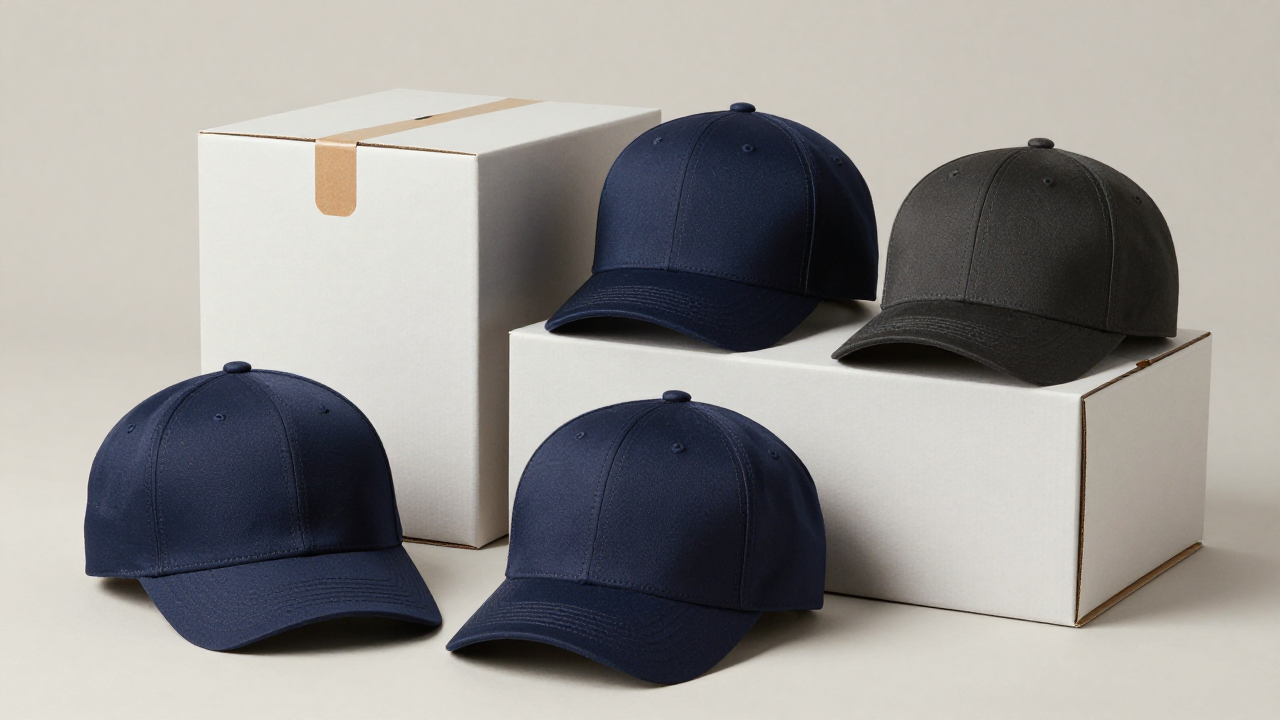
One practical note on search intent: "cap manufacturers" pulls in two completely different buyer groups. Closure buyers want molding capacity and resin spec. Branded headwear buyers want cut-and-sew and embroidery capacity, which is the lane New Generation has worked in from China since 2008. If you landed here looking for a baseball cap supplier, the closure economics below still apply to you. The tooling and MOQ logic is nearly identical.
Five Trends Reshaping U.S. Cap Manufacturing and Supply Chains in 2026
The five forces below are ranked by how much they will actually change a buyer's landed cost over the next 18 months. Two are already priced in. Three are not.
Trend 1. Dual sourcing is now about duplicated tooling, not split POs
Dual sourcing in 2026 means two qualified molds in two qualified plants, and brands that treat it as splitting a purchase order across two suppliers are getting caught. When Winter Storm Uri froze Texas crackers in February 2021, polypropylene spot pricing roughly doubled inside three weeks and allocation followed. In August 2022 a beverage brand in Columbus, Ohio lost nine days of filling when its single molder's 64-cavity press threw a hydraulic fault with no backup tool in existence. Nine days of a 400-bottle-per-minute line is the kind of number that ends a procurement career.
The uncomfortable math: a 64-cavity cap tool runs $110,000 to $180,000 depending on cavitation, hot-runner design, and whether you want sliders for a tethered band. Duplicating it feels wasteful at $150,000. It is cheaper than nine days of downtime. We quote tooling duplication into headwear programs for the same reason, and buyers push back on it every single time until the first missed ship date.
Trend 2. Recycled content moved from marketing claim to purchase order language
Food-grade post-consumer resin availability, not brand ambition, now sets the ceiling on what you can actually specify. New Jersey's recycled-content law requires 30% post-consumer resin in rigid plastic containers by 2029; California's SB 54 targets 30% by 2032 with enforceable penalties attached to producers. Those dates are close enough to be a 2026 sourcing decision.
What nobody tells you is that the practical spec is not "30% PCR." It is "30% PCR in HDPE with a written color waiver and a ±3% melt index tolerance." PCR lots drift. A brand that writes 30% into a purchase order without a color and odor waiver will reject perfectly functional caps in month two. Write the waiver before you write the percentage.
Trend 3. Tethered and child-resistant formats are line-integration problems, not design problems
Tethered caps are a done deal in Europe and a slow-burn option in the U.S., where no federal mandate exists and the growth case rests on state litter policy and retailer pressure. The cost of a tethered conversion rarely shows up in the cap price. It shows up in the capper. Running a tethered band at 600 bottles per minute on a chuck designed for a free cap produces tether fractures that your QA team will discover as consumer complaints four weeks later.
Child-resistant formats follow a harder rule. 16 CFR 1700.20 is a pass/fail protocol, not a guideline, and a supplier that has never run a senior-friendly panel will burn six weeks of your launch calendar learning that the opening force that satisfies the child panel often fails the adult one.
Trend 4. Throughput economics beat machine-hour rates every time
Compression molding dominates high-volume dairy and beverage closures because cycle time and dimensional consistency compound across millions of units. A 96-cavity compression tool running 0.3% scrap against an injection tool running 1.5% scrap does not look dramatically different on a quote sheet. On a 50-million-cap annual program, that gap is roughly 600,000 caps, plus the labor to handle them.
Inline vision inspection at 1,200 caps per minute is now table stakes at the top tier. Ask any prospective supplier for their scrap rate at the press and their false-reject rate on the vision system. If they can only give you one number, they do not have the second system.
Trend 5. Smart and digitally printed closures will stay a niche in 2026
Printed QR codes on caps work beautifully in pilot programs and die in market when the campaign ends and the code goes dead. The closures that survived 2024 and 2025 were the ones tied to a permanent function, like a dosage reminder or a lot-level traceability code for pharma. Novelty codes on beverage caps are a promotional spend, not a supply-chain strategy. Budget accordingly.
We mold nothing ourselves, our shop runs embroidery heads and sewing lines, so treat our press-floor takes as buyer-side observation rather than gospel. The qualification discipline that follows, though, we have run hundreds of times.
How Do You Choose a Cap Manufacturer? A Buyer's Scorecard for Cost, Quality, Capacity, and Risk
You choose a cap manufacturer by scoring tooling ownership, MOQ flexibility, quoted lead time, resin options, certifications, test capability, redundancy, and total landed cost, then validating the winner with a line trial before signing a volume commitment. Price ranks eighth. Buyers who rank it first pay for it later.
The six items that actually separate good suppliers from cheap ones:
Typical qualification runs 10 to 14 weeks: specification sheet, sample approval, line trial of 5,000 to 20,000 units, stability or drop testing, then a graduated production ramp. Compress it and you skip the line trial that would have caught the capper incompatibility.
The Contrarian 2026 Outlook: Why the Cheapest Cap Is Likely to Become the Most Expensive Supply-Chain Decision
The cheapest cap quote in 2026 is usually a bet that somebody else absorbs the risk, and the buyer who accepts it is that somebody. My contrarian call is narrower and more specific than "quality costs money": the lightweighting race in beverage closures is finished, and brands still chasing gram-weight savings are now paying more per case.
Here is the reasoning. Below roughly 1.9 grams on a 28mm CSD closure, removal torque retention and top-load performance start moving outside the band that high-speed cappers can tolerate. The savings on a 0.15-gram reduction on a 40-million-cap program is real money at the resin level and roughly zero after you price in capping-head misalignment, increased line stoppages, and the QA labor to investigate them. The industry will keep publishing lightweighting case studies because they photograph well. Procurement teams that keep buying them will keep eating the downtime.
The second half of the contrarian position: reshoring announcements in closures will keep outpacing actual molded capacity. Much of what gets announced as U.S. manufacturing is warehousing, decorating, and assembly with the cap itself still molded offshore. That is not a scandal. It is what the capital math supports when a new U.S. line costs $8 to $12 million and domestic resin carries a premium. Plan for a North American supply base that is more distributed but not more domestic.
What is already happening versus what is likely next
Confirmed: quarterly resin indexing, EU tethered standardization, enforced state recycled-content statutes, and compression molding dominance in high-volume dairy. Likely next, with signals you can watch: PCR premiums compressing as new food-grade capacity in the Southeast comes online through 2027, and mid-size brands moving to duplicated tooling in Mexico rather than the U.S. because of transit time and tariff math.
Your action timeline
Next 3 months. Pull your actual downtime cost per minute for every filling line. Audit tooling ownership across your current cap supply. Any mold you do not hold title to is a supply risk you have not priced. Next 6 months. Qualify a second plant for your top two SKUs, including a full line trial. Start the recycled-content conversation with your resin supplier now, while you still have leverage on allocation. Next 12 months. Lock a 24-month resin index formula with a cap on pass-through. Re-run total landed cost per 1,000 filled units across your entire closure portfolio. Expect the ranking to move. Ours did.Frequently Asked Questions About Cap Manufacturers
What is the difference between a cap manufacturer and a closure manufacturer?
Nothing functional. "Cap manufacturer" is the everyday term for companies that mold plastic or metal closures, while "closure manufacturer" is the industry and trade-press term covering caps, lids, pumps, sprayers, and dispensers. U.S. buyers use both interchangeably when searching for suppliers.
How much does a custom cap mold cost?
A 64-cavity injection tool for a standard 28mm closure runs roughly $110,000 to $180,000 in 2026. Costs rise with cavitation count, hot-runner design, tethered-band sliders, and child-resistant mechanisms. Compression tooling for high-volume dairy and beverage work sits at the upper end of that range or above.
How long does it take to qualify a new cap supplier?
Plan on 10 to 14 weeks from specification sheet to production ramp. The sequence is sample approval, a line trial of 5,000 to 20,000 units, stability or drop testing, then graduated volume. Cutting the line trial is the most common cause of capper incompatibility discovered after launch.
Are tethered caps required in the United States?
No federal mandate exists as of early 2026. The EU requirement took effect July 3, 2024 for beverage containers up to three liters. U.S. adoption is being driven by state litter and extended producer responsibility policy, retailer pressure, and brand commitments rather than federal regulation.
How do I choose a cap manufacturer for a beverage line?
Score the plant, not the company: named facility, press cavitation, quoted lead time, scrap rate, vision-inspection capability, and a redundancy plan for your tool. Then run total landed cost per 1,000 filled units, including downtime and rejects, before comparing piece prices.








