
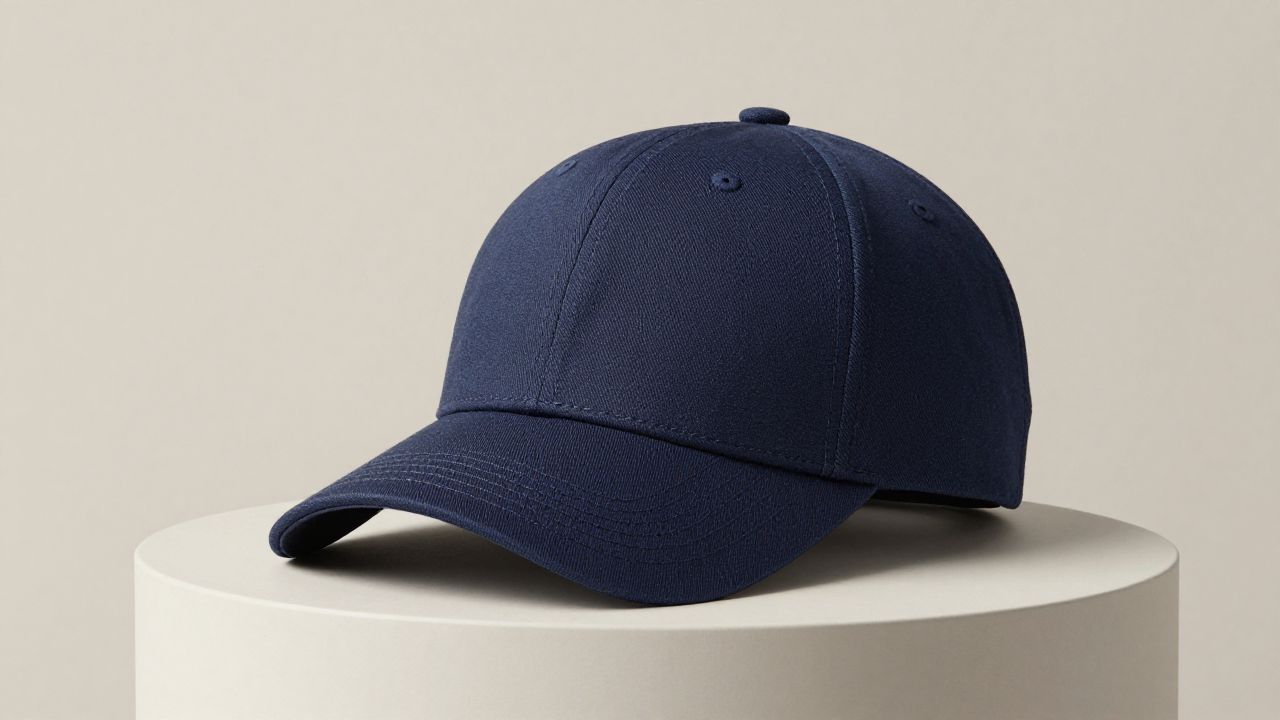
Buyers who type "cap manufacturers" into a search bar in 2026 get a wall of directory listings and almost no way to tell a Newark union sewing floor from a Los Angeles distributor with a laser etcher.…
The product photographs identically. Everything that actually decides your margin — production model, minimum order quantity, lead time, decoration method, domestic versus overseas sourcing — stays invisible until you ask. Here are the seven questions brand owners and merch buyers ask us first, answered in the order they usually come up.
What do cap manufacturers do, and how are they different from hat suppliers in the United States?
A cap manufacturer owns cut-and-sew: pattern making, panel cutting, sewing, taping, sweatband attachment, and decoration under one roof. A hat supplier buys finished blanks and either resells them or embroiders on top. Those two businesses quote differently, schedule differently, and fail differently.If you need your own pattern, your own label, and a fabric you picked out, you need the first. If you need 36 embroidered caps for a trade show next Thursday, you need the second and you should stop reading about factories.
The domestic side splits in ways most search results never explain. Unionwear in Newark, New Jersey runs a unionized cut-and-sew floor and decorates in-house. Cap America in Fredericktown, Missouri manufactures and decorates promotional headwear. OTTO CAP in Los Angeles manufactures and imports at volume and sells decorated low-minimum orders. Yupoong America in Jacksonville, Florida and Richardson sell through dealer networks. SanMar, alphabroder, and S&S Activewear are distributors — they don't cut a single panel.
Overseas OEM factories, which is where our own line sits — New Generation has been running cut-and-sew in China since 2008 — handle 6-panel development, in-house embroidery, patch application, and retail packaging. The trade is 25 to 40 days of ocean transit on top of production.
How do you choose the right cap manufacturer for private label, promotional, or retail orders in 2026?
Match the factory to the order, not the other way around. Promotional runs under 500 pieces need a decorator with a 12–24 piece minimum and a 10-day clock. Private label above 1,000 pieces needs a cut-and-sew factory that controls its own patterns. Retail accounts need audit paperwork, Prop 65 and CPSIA documentation, and UPC-ready packaging.Five criteria do most of the sorting:
Rough decision line we use with clients: under 500 units, buy decorated domestic blanks and move on. Between 500 and 2,500 with a stock silhouette, run the landed-cost math both ways. Above 2,500 with a custom pattern, patch work, or retail packaging, overseas OEM usually wins on unit cost even after duty.
Caveat worth repeating: tariff treatment on HTS 6505.00.20 shifted several times through 2025. Verify current rates before you build a model.
How much do custom caps cost from U.S. cap manufacturers in 2026?
Expect $16–$24 each at 24–72 pieces for decorated domestic blanks, $8.50–$13 each at 1,000 pieces, and $4–$6.50 each at 10,000-plus from an overseas cut-and-sew line. U.S. cut-and-sew runs roughly 60–80% above the same quantity produced offshore, before freight and duty.Four things move those numbers more than anything else. Stitch count is the biggest lever on an embroidered front — a 2.5-inch logo runs 6,000 to 12,000 stitches, and 3D puff adds roughly 1,500 to 3,000 more plus $0.40–$0.90 per cap. Patch type is second: a woven patch lands around $0.60–$1.40, a debossed leather patch $1.20–$2.50. Fabric choice, brushed cotton twill versus recycled performance poly, swings another $0.80–$2.00. Packaging quietly eats $0.35–$1.20 per unit once you add hangtags and retail polybagging.
In February 2024 a coffee roastery in Denver priced 600 dad hats. Two quotes came back at $11.40 and $9.80 for what looked like the same spec. The gap was 6,800 stitches versus 11,200 for the same 2.5-inch logo. The cheaper version turned a thin script monogram into a grey smear on heather twill. They paid the extra $1.60.
What cap styles and decoration methods do manufacturers offer today?
Five silhouettes cover most of the 2026 catalog: 6-panel structured mid-crown, unstructured dad hat, trucker with a mesh back, performance cap in polyester or recycled poly, and low-profile 5-panel camper. Factories also run foam-front and fitted styles on request. Decoration spans seven common methods, and picking the wrong one costs more than picking the wrong factory.The decoration menu: flat embroidery, 3D puff, woven patch, leather patch (debossed or laser-etched), screen print, heat transfer or DTF, and chenille or PVC patch.
Pairings that matter. 3D puff needs bold shapes with 4mm-plus strokes — thin script collapses. Heat transfer beats embroidery on laser-perforated performance poly, because needle perforation weakens the panel grid. Woven patches handle gradients and text under 4mm that no embroidery head can reproduce cleanly. And if your logo has more than six colors, screen print or a woven patch will save you an argument with the art department.
How long does cap manufacturing take, and what causes delays?
Plan 7–15 business days for decoration on U.S.-stocked blanks, 5–8 weeks for U.S. cut-and-sew, and 10–16 weeks door-to-door from an overseas factory using ocean freight. Art approval loops, sample revisions, fabric shortages, the August–October booking crunch, and Chinese New Year push those numbers out.Chinese New Year 2026 falls on February 17. Factories in China typically close two to three weeks, and the ramp-back runs slower than the shutdown — machines restart before the full crew returns.
In October 2023 a skate brand in Los Angeles placed a 4,800-piece 5-panel order for a March 2024 drop. Production was scheduled to close February 5, 2024. The factory shut for Lunar New Year on February 10 and didn't hit full output again until February 26. The order shipped March 4 and the drop moved to April. Nobody did anything wrong. The calendar just never made it onto the timeline. (That one still stings.)
Book overseas production by June if you need it before the Q4 retail window.
Which cap manufacturers in the United States are worth shortlisting in 2026?
Shortlist by order type. Unionwear and Custom Cap Co for U.S. cut-and-sew. OTTO CAP and Cap America for low-minimum decorated blanks. Richardson and Yupoong America for dealer-channel programs. New Era in Buffalo, New York only if you're licensing pro sports marks.Vetting matters more than the shortlist. Ask for the physical production address, not the sales office. Ask who owns the digitized embroidery file after the order ships. Ask for the three most recent audit reports with dates attached. Ask for a pre-production sample pulled off the actual production line rather than a hand-sewn bench sample. If a supplier can't tell you which building sews the crown, you're talking to a broker.
Few named factories surface in search because most are B2B and publish almost nothing. That's why directory aggregators outrank them. Real ones show up at PPAI Expo in Las Vegas each January and through referrals from decorators who've already burned a bad vendor.
What mistakes do buyers make when ordering from cap manufacturers for the first time?
The expensive mistakes are artwork and packaging, not unit price. A logo supplied as 72 dpi raster art forces redigitizing. A hangtag designed two weeks before ship date adds 10–14 days. Skipping the pre-production sample on a 5,000-piece run turns a $200 fix into a $30,000 problem.Send vector art — AI, EPS, or SVG — or a 300 dpi-plus file at final print size. Never approve a thread color off a Pantone number alone; ask for the physical thread chart, and Madeira and Isacord are the two standards most factories stock. Read the spec sheet for undervisor color, closure type, and sweatband material, because those three lines are where two "identical" quotes actually diverge.
In March 2019 a brewery in Milwaukee ordered 500 unstructured dad hats with a three-color crest scaled to 1.5 inches wide. The artwork arrived as a 72 dpi JPEG. The digitizer rebuilt it, but at that width two of the colors bled together on heather grey twill. The rework quote came to $2,100 plus three weeks. They dropped to two colors at 2.25 inches and shipped on time.
One last habit worth building: ask for a live video call from the production floor mid-run. It costs a supplier 15 minutes and tells you more than any capability deck.
Frequently Asked Questions
What is the minimum order quantity for custom caps?
Typical 2026 minimums run 12–24 pieces for decorated U.S. stock blanks from OTTO CAP or Cap America, 144–288 pieces for a small U.S. cut-and-sew run, and 300–500 pieces for overseas OEM production with custom packaging. MOQ usually applies per style, color, and decoration location rather than per total order.
How long does custom cap production take from art approval to delivery?
Decorated U.S. stock blanks ship in 7–15 business days. U.S. cut-and-sew runs 5–8 weeks. Overseas production takes 30–50 days plus 25–40 days of ocean transit, so 10–16 weeks door-to-door. Air freight cuts transit to 7–12 days and adds roughly $1.80–$3.50 per cap at 1,000 pieces.
Can I get custom caps made with my own brand label and packaging?
Yes. Private label usually means a custom woven or printed neck label, a custom hangtag, and retail-ready polybagging or a printed box. Budget $0.35–$1.20 per unit for packaging, add 10–14 days to the schedule, and expect a separate 500–1,000 piece minimum on custom hangtags at most factories.
Are U.S.-made caps more expensive than imported caps?
Yes, typically 60–80% more per unit at the same quantity. A 1,000-piece decorated cap runs $8.50–$13 from a domestic supplier versus $5.50–$8.50 landed from an overseas OEM. The premium buys shorter lead times, Berry Amendment and TAA compliance for government contracts, and a Made in USA claim that meets FTC standards.
What is the difference between embroidery and a woven patch?
Embroidery stitches thread directly into the cap fabric, so it survives washing and gains dimension with 3D puff. A woven patch is a separate jacquard-woven piece sewn or heat-sealed onto the crown, which handles gradients, text under 4mm, and more than six colors — details embroidery cannot reproduce cleanly.