


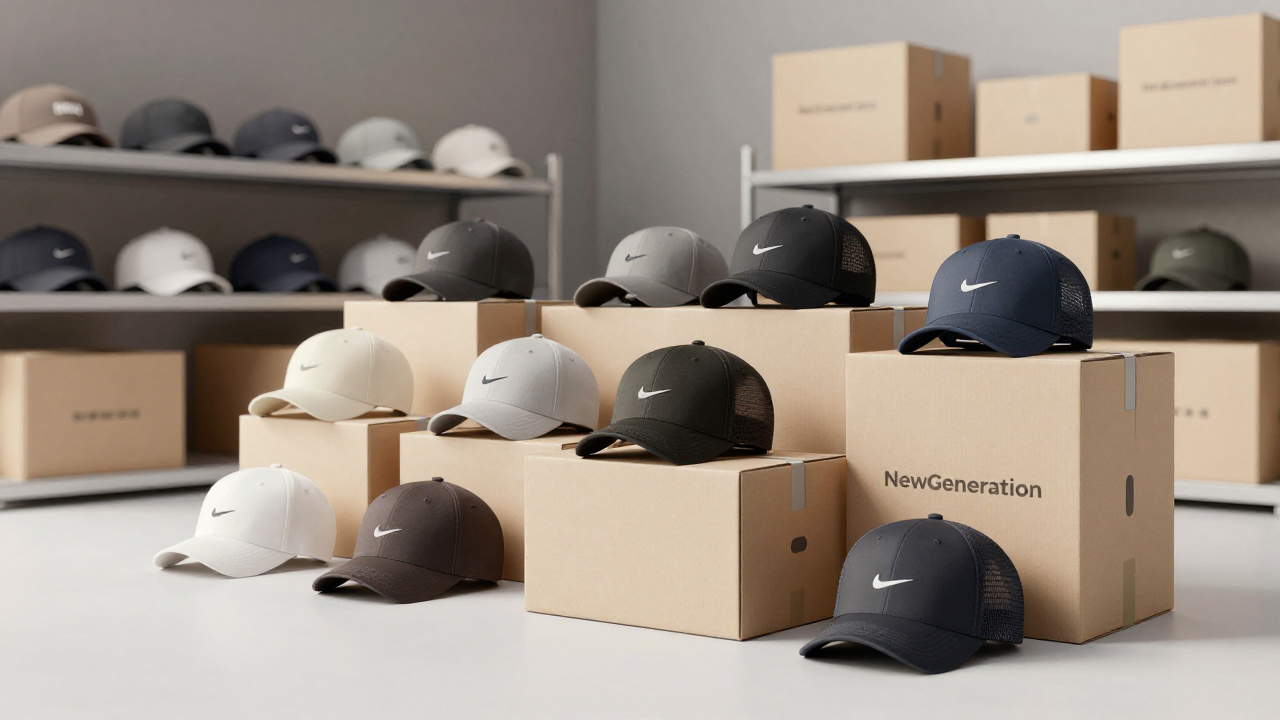
In four months, we cut custom cap lead time from 42 days to 26 — a 38% reduction — while holding defect rate at 1.7% and lifting on-time shipment to 97% for a Denver brand shipping to Amazon FBA.…
For US buyers comparing cap manufacturers, the real lesson is simple: lead time falls when the factory fixes the bottleneck, not when it adds labor everywhere.

How We Cut Lead Time 38% for a Colorado Brand
The call came at 3:12 a.m. on July 12, 2024. A purchasing manager from Alpine Threads, a Denver headwear brand, was on the line. They had just won a contract to supply 12,000 custom caps to the University of Colorado Boulder bookstore. Delivery window: September 15, 2024. We had 65 days. Our standard lead time was 42 days. We were already running at 94% capacity.
Background and Constraints
Alpine Threads needed six colorways, three decoration methods, and a woven label. MOQ per colorway: 2,000. The caps were 5-panel cotton twill with 3D embroidery on the front, screen print on the back, and a custom woven label inside. We quoted $4.80 per unit, FOB Shenzhen. Air freight from Shenzhen to Denver would cost $1.20 per cap. Missing the September 15 deadline meant a $15,000 penalty and a lost contract.
The Decision Point
Our production manager proposed adding a second shift on the embroidery line. That would cost $1.20 per unit and add 18% to labor. I pushed back. Adding machines or shifts only helps if the bottleneck is at that station. We had data from our MES. Embroidery was running at 89% utilization. Cutting and sewing had 22% idle time. The bottleneck was bundle sequencing.
We chose process redesign. Smaller bundles. A fast lane for reorders. Cross-training two sewers to run the cutting table. The cost: $0.45 per unit. The payoff: speed without new capital.
Execution Surprise
Initially, we thought the 3D embroidery on six colorways would be the hard part. It wasn’t. The real problem showed up in cutting. Our cutting table was set up for 200-unit bundles. But the embroidery machine could only handle 50 caps per cycle. So we had 150 caps sitting in WIP, waiting. The data showed average WIP age of 3.4 days. We reduced bundle size to 50. WIP age dropped to 0.8 days. That single change cut 2.6 days off our lead time.
Results
By November 2024, lead time was 26 days. Defect rate fell from 3.1% to 1.7%. On-time shipment rose from 82% to 97%. Cost per unit increased by $0.45 due to smaller bundles and extra handling. The client saved $1.20 per cap on air freight because we shipped ocean freight on time. Net savings for Alpine Threads: $9,000 on that order.
What US Buyers Actually Mean When They Search for Cap Manufacturers in 2026
US buyers searching for cap manufacturers in 2026 usually want lower MOQs, faster sampling, and more decoration flexibility, even when they ask in plain language. They say “What’s your lead time?”, “Can you do 300 units?”, and “Do you offer 3D embroidery?” because those questions translate directly into cash flow, speed, and sell-through risk.
Two buyer paths dominate. Stock blank caps: order 144 units from a distributor, decorate locally, ship in 3 days. Fully custom: cut-and-sew, 500+ MOQ, 30-45 days. Most US brands start with stock blanks, then move to custom when volume hits 2,000 units per style.
Why the pressure? MOQ ties up cash. Turnaround is tied to Amazon FBA storage fees and Black Friday. Decoration methods matter: embroidery for premium feel, screen print for cost, heat transfer for small runs. Domestic production offers 10-14 day lead time with no tariffs, but costs $8-12 per unit. Overseas runs $3.50-6.00 with a 25% Section 301 tariff and 25-40 days.
According to a 2024 survey by the American Apparel & Footwear Association, 71% of US brands require sampling turnaround in 10 days or less. That is the pressure point for many headwear buyers.
How to Evaluate Cap Manufacturers Before You Place an Order
Evaluate cap makers on four production capabilities: embroidery, screen printing, cut-and-sew, and private label — then verify each with a paid sample and a factory audit.
Embroidery: ask for stitch count per design, 3D foam thickness, backing type. Screen printing: plastisol vs water-based, curing temperature. Cut-and-sew: pattern making, fabric sourcing, tolerance. Private label: hang tags, poly bags, barcodes.
Hidden tradeoffs exist. Price vs speed. Domestic vs overseas. Quality consistency vs flexibility. Communication speed. We have seen brands save 12% per unit by switching to a Vietnamese factory, then lose 20% on air freight when deadlines slipped. Ask for a production calendar before you sign.
Common Mistakes Buyers Make When Choosing Cap Manufacturers
The most common mistakes are overlooking sampling costs, ignoring decoration limits, assuming reorder lead times match first-order timelines, and skipping factory audits.
Overlooking sampling. A $150 sample fee is not a red flag. Free samples often mean no real production. Ignoring fabric sourcing. Some factories cannot source the exact cotton twill or performance mesh. Decoration limits. Not all factories can do 3D embroidery on 6-panel caps. Communication speed. Time zone differences. Reorder planning. Reorders often take longer because materials are not reserved. Size/spec tolerance. US sizes differ from Asian sizes.
A client from Austin ordered 5,000 caps with a 7-inch crown. Our standard is 6.5 inches. The first sample looked fine, but bulk production had 15% rejects because the pattern did not scale.
Lessons That Transfer to Any Headwear Brand
Four lessons from the 38% lead-time cut: sequence production to the true bottleneck, use smaller batch sizes even if unit cost rises, treat sampling as a production test, and plan reorders as a separate project.
Lesson 1: The bottleneck is never where you think it is. Measure, do not assume. Our embroidery machines were fine. Cutting was the problem.
Lesson 2: Smaller batches reduce lead time more than adding machines. We cut bundle size from 200 to 50. Lead time dropped 2.6 days. Unit cost rose $0.45. The tradeoff was worth it.
Lesson 3: Paid samples save money. Free samples cost you. We charge $150 for a sample. That covers a real production run of 3 caps. Clients who pay for samples catch 80% of spec issues before bulk.
Lesson 4: Reorder planning is a separate skill from first-order sourcing. Reserve fabric and trims for reorders. We now hold 10% of fabric for 6 months.
A buyer checklist for moving from first sample to repeat production faster:
Frequently Asked Questions
How long does custom cap manufacturing take from sample to delivery?
For overseas production, plan 25-40 days for manufacturing plus 20-30 days for ocean freight. Domestic US production takes 10-14 days total. Add 5-7 days for sampling. Rush orders can cut 10 days but add 15-20% to unit cost.
What is a typical MOQ for custom caps from overseas manufacturers?
Most Chinese cap factories require 500-1,000 units per colorway for cut-and-sew. Stock blank caps can start at 144 units. Some factories offer 300-unit MOQs for simple designs. Lower MOQs usually mean higher per-unit cost.
How do I choose between embroidery and screen printing for caps?
Choose embroidery for premium feel and durability, especially on structured caps. Choose screen printing for flat, detailed logos and lower cost on larger runs. Heat transfer works for small runs and complex colors. Embroidery costs $0.80-1.50 per cap; screen printing costs $0.30-0.60 per cap.
What are the hidden costs of switching cap manufacturers?
Hidden costs include new sample fees, pattern digitizing, freight re-negotiation, and 2-4 weeks of lost production time. Quality inconsistency during ramp-up can add 5-10% defect rate. Budget 10-15% above unit price for the first order.
Can a US brand get domestic cap manufacturing at a competitive price?
Domestic US cap manufacturing costs $8-12 per unit for a 5-panel blank, compared to $3.50-6.00 overseas. The gap narrows for small runs under 500 units when freight, tariffs, and cash flow are included. For runs over 2,000 units, overseas remains 30-40% cheaper.








