


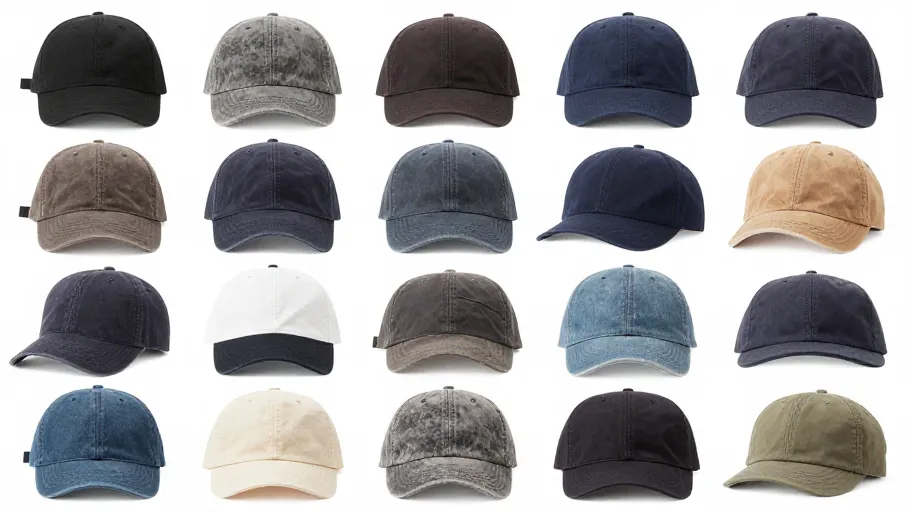
Cap terminology is the working vocabulary of headwear sourcing: the named parts, construction types, closures, trims and decoration methods that make up a finished cap. When buyers and manufacturers use these terms precisely, quotations become comparable, samples match intent, and approvals leave a documented trail. Use this glossary to write specifications a supplier in Shenzhen — or anywhere — can quote without guessing.
The SPEC-Check™ framework
Before sending any cap enquiry, run it through SPEC-Check™:
- S — Structure: structured, unstructured or semi-structured; buckram presence.
- P — Panels: five-panel, six-panel, constructed seams.
- E — Exterior trims: eyelets, piping, button (squatchee), visor binding.
- C — Closures: closure type and adjustability range.
- C — Crown and interior details: sweatband material, seam taping, lining.
Each letter is a specification line. Anything left blank is an assumption the supplier will fill in — and assumptions are where mismatched samples begin.
Structure and panels
Structured cap. The crown holds its shape because of a stiffening material (frequently buckram) bonded behind the front panels. Confirm with the supplier which stiffening material they use and how it behaves after washing.
Unstructured cap. The crown collapses softly when not worn; no stiffener behind the front panels. Ask the supplier to confirm in writing whether "unstructured" in their quotation means zero stiffener or a light interlining.
Semi-structured. A partial stiffener. Because this term carries different meanings across factories, request a physical reference or photo approval before production.
Five-panel cap. Five fabric panels, with a single broad front panel — a favoured canvas for large front prints.
Six-panel cap. Six panels meeting at a centre seam with a button on top; the silhouette behind the classic baseball cap.
Seam types. Materials can be joined in different ways (for example, with exposed or hidden seams); ask which seam construction the quotation includes, because it changes both look and cost.
Crown, visor and exterior trims
Crown. The dome of the cap above the band.
Visor (bill/brim). The horizontal shield. Specify visor curvature (flat, pre-curved, or curved-to-order) and whether the visor rows of stitching should be visible — stitching rows are a visible detail worth approving on a sample, not a photo alone.
Button (squatchee). The fabric-covered button where panels meet. Confirm it is covered in the same fabric as the crown if that matters to your design.
Eyelets. Small holes in panels for ventilation. Specify stitched versus punched, and where you want them placed — or state "no eyelets" explicitly.
Piping and binding. Decorative trims along seams or the visor edge. Name the trim material and colour in the spec, not just "matching trim."
Closures
The closure is the adjustable mechanism at the rear. Common named types you may specify include:
- Plastic snapback — rows of studs and holes for adjustable sizing.
- Strap-and-metal buckle (slider) — a fabric strap through a metal or plastic buckle.
- Velcro (hook-and-loop) strap.
- Fitted — no closure; sized precisely to the wearer.
- Stretch band (flex-fit style) — elasticised interior band; confirm the exact band construction with the supplier.
- Elastic closure with toggle.
For any closure, ask the supplier for the adjustable size range and how it will be documented on the tech pack. Do not accept a closure name alone.
Interior and trims buyers forget to specify
Sweatband. The interior band contacting the forehead. Specify material (cotton, PU, terry, or another option the supplier offers) and whether logos or care labels are printed or woven inside it.
Seam taping. Protective tape covering interior seams. State whether you require it, on which seams, and in what colour.
Lining. Some crown constructions include an interior lining layer; others do not. Ask the supplier to state in the quotation whether lining is included.
Labels and tags. Specify woven label, printed label, heat-transfer, or none; placement (rear seam, sweatband, under visor); and whether the supplier attaches your brand labels or ships them loose. Confirm current labelling and marking requirements for your destination market with the supplier and your own compliance advisers.
Decoration terminology
Flat embroidery. Stitches lie flush with the fabric.
3D puff embroidery. Foam under the stitching raises the design. Ask to approve the foam height on a physical sample, as visual result varies with design and fabric.
Appliqué. A separate fabric piece stitched onto the cap.
Woven patch / leather patch. A pre-made patch attached by stitching or other method. Specify attachment method and border style (for example, merrowed or laser-cut — confirm the options your supplier offers).
Screen printing, heat transfer, sublimation. Ink or transfer-based decoration; suitable panels and durability differ by method. Ask the supplier which decoration methods they perform in-house versus outsource, and how that affects quality control.
Decision table: from buyer language to specification language
| Buyer says | Supplier may interpret as | Specification you should write |
|---|---|---|
| "A normal baseball cap" | Any of several constructions | "Six-panel, structured front, pre-curved visor, plastic snapback closure" |
| "A soft cap" | Unstructured or lightly interlined | "Unstructured crown, no front stiffener — confirm in writing" |
| "Embroidered logo" | Flat or 3D puff, any placement | "Flat embroidery, front centre, stitched on structured front panel — approve stitch sample" |
| "Flat brim" | Flat visor, stitching rows unspecified | "Flat visor, visor stitching rows per approved sample photo" |
| "Comfortable inner band" | Cotton, PU or terry sweatband | "Sweatband material: [state material], interior label: [state method and placement]" |
| "Good quality cap" | Supplier's default grade | Reference a physical approved sample number in the purchase document |
Approval questions to send any supplier
Before approving any cap specification, send these questions in writing:
- Please confirm the panel count and whether the front panel(s) include stiffening, and which material.
- Which closure exactly, and what adjustable size range does it provide?
- Is seam taping included, on which seams, and in what colour?
- Which decoration methods are performed in-house, and can I approve a physical decoration sample before bulk production?
- What is your current sample policy, fees, and shipping arrangement — confirmed directly in writing?
- How are approved samples referenced in production and inspection documents?
- What are your current MOQ, pricing and lead time for this exact specification — confirmed directly?
Every answer should be documented in the tech pack or purchase file, not left in a chat thread.
FAQ
Why does cap terminology matter for B2B sourcing? Precise terms make quotations comparable across suppliers and give you a documented reference if production differs from the approved sample. Vague language shifts interpretation to the supplier.
What is the difference between a five-panel and six-panel cap? A five-panel cap has five panels with one broad front panel; a six-panel cap has six panels meeting at a centre seam topped by a button. The choice affects front decoration area and silhouette.
What is the difference between structured and unstructured? Structured caps hold their crown shape with a stiffener behind the front panels; unstructured caps collapse when unworn. Because factories may interpret "semi-structured" differently, confirm construction in writing or on a physical sample.
Which cap terms should appear in every tech pack? Panel count, structure type, closure type with size range, visor curvature and stitching, sweatband material, seam taping, labels, decoration method and placement, and the approved sample reference number.
Do decoration terms affect quality approval? Yes. Flat embroidery, 3D puff, appliqué, patches and printing methods each look and perform differently. Approve decoration on a physical sample and reference that sample in production documents.
Download the terminology checklist
[下载术语核对表 — Download the Cap Terminology Checklist] and attach it to every RFQ you send. It converts this glossary into a line-by-line specification and approval sheet, so quotes arrive comparable and samples arrive closer to intent.
Prefer to start with a conversation instead? Use the approval-question list above as your first low-friction checklist — copy it into your next supplier email and document every answer before approving a sample.
#cap manufacturers china, #headwear manufacturers china, #cap factory








