


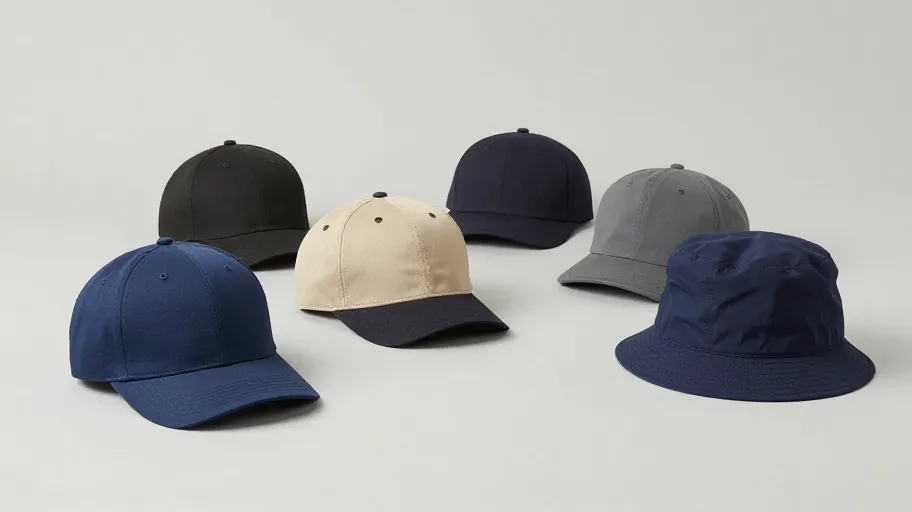
Why free samples actually reduce buyer risk
Offering free hat samples isn’t a marketing gimmick—it means you can evaluate real production-quality units without upfront costs, because Xiongxian Kaixin has already standardized its materials, cutting, and stitching processes across hundreds of prior runs. This eliminates the financial barrier to testing new suppliers, so you can validate quality early and avoid costly mistakes later.
Unlike traditional vendors who charge $150–$200 per sample and require physical returns, Kaixin absorbs that cost to accelerate trust. That’s possible because their system minimizes rework—tolerances are pre-calibrated, dye lots are verified, and trim placements are documented. When you receive a sample, it’s not a prototype; it’s a near-final product built to spec. For a mid-sized outdoor brand finalizing a summer bucket hat line, this means they can confirm color fidelity, stitch density, and brim shape in under 10 days—with zero financial exposure.
This approach directly addresses one of the biggest pain points in apparel sourcing: iterative delays. A 2024 McKinsey report found that 68% of soft goods launch delays originate in sampling cycles. By removing payment friction and shipping speed bumps, Kaixin helps buyers compress what used to take three weeks into fewer than five business days post-feedback.
Digital spec sheets replace messy email chains
Digital specification tracking means faster, error-free revisions because every change is mapped—not described—so designers and technicians work from the same live document. This eliminates version confusion, lost markups, and miscommunication that plague traditional suppliers relying on email attachments and photo annotations.
Xiongxian Kaixin pairs each physical sample with a structured digital spec sheet containing exact measurements, material codes, thread types, and trim placements down to the millimeter. If you request a brim adjustment from 7.5 cm to 8.0 cm, that update appears instantly in the shared file. Pattern makers see it immediately. QA inspectors reference it during review. No more guessing what “slightly wider” meant in a two-week-old email.
The result? One European activewear brand reduced their approval cycle from three paid rounds (10–14 days each) to just two revisions—one free initial sample delivered in nine days, followed by approval on day 18. That three-week gain didn’t just avoid air freight—it aligned production with retail sell-in windows, protecting margins through full-price sell-through.
End-to-end control enables faster scaling
Having full control over fabric sourcing, cutting, sewing, and packaging means faster decision-making and fewer handoff errors, because adjustments flow seamlessly from design to production without external dependencies. This vertical integration allows Kaixin to offer free samples confidently—they know their supply chain won’t derail at the last minute.
When a buyer switches from cotton twill to recycled polyester canvas, that change triggers automatic alerts across departments—from purchasing to sewing line supervisors. The bill of materials updates in real time, syncing with production planning tools. That level of coordination is rare among tier-two suppliers but increasingly required by retailers enforcing speed-to-shelf mandates.
For merchandising teams in New York or design leads in Berlin, this transparency builds confidence. They can audit material choices, verify compliance data, and track changes over time—all within a single source of truth. If a seam allowance is off, the spec history shows whether it was a pattern error or machine calibration issue, making root cause analysis faster and more accurate.
Faster approvals unlock smarter design choices
Low-risk sampling means brands experiment more freely, because testing new silhouettes or fabric blends carries no financial penalty. This encourages innovation instead of defaulting to safe, proven designs out of fear of sunk costs.
A U.S. children’s wear label used Kaixin’s program to test five variations of a foldable bucket hat—each with different brim stiffness and closure mechanisms—all within one month and at no cost. They selected one for mass production and archived the others digitally for future use. Without this flexibility, they’d likely have chosen a standard design. Instead, their top-selling SKU now features a patented roll-up mechanism developed through rapid iteration.
This shift reflects a broader industry trend: agile fashion is replacing fast fashion. Responsiveness matters more than volume. Factories still using paid sampling models will lose access to collaborative design projects and expedited tenders. Partners like Xiongxian Kaixin aren’t just vendors—they’re launch accelerators.
The first sample should trigger the launch
The goal isn’t just faster sampling—it’s turning the first sample into a launch catalyst, because when feedback loops shrink and revisions sync digitally, approval becomes the starting gun, not a roadblock. This model doesn’t cut corners; it cuts waste.
By absorbing the upfront cost of sampling, Kaixin invests in relationship velocity—the speed at which trust, alignment, and execution converge. Every free sample is a strategic move toward securing long-term contracts based on performance, not price haggling.
Looking ahead, brands that leverage this system gain more than time—they gain optionality. They can test bolder designs, respond faster to trends, and enter markets with confidence. Ready to cut your headwear development cycle by up to 40%? Try a free sample and see how close to production-ready it really is.
#cap manufacturers china, #headwear manufacturers china, #cap factory








