


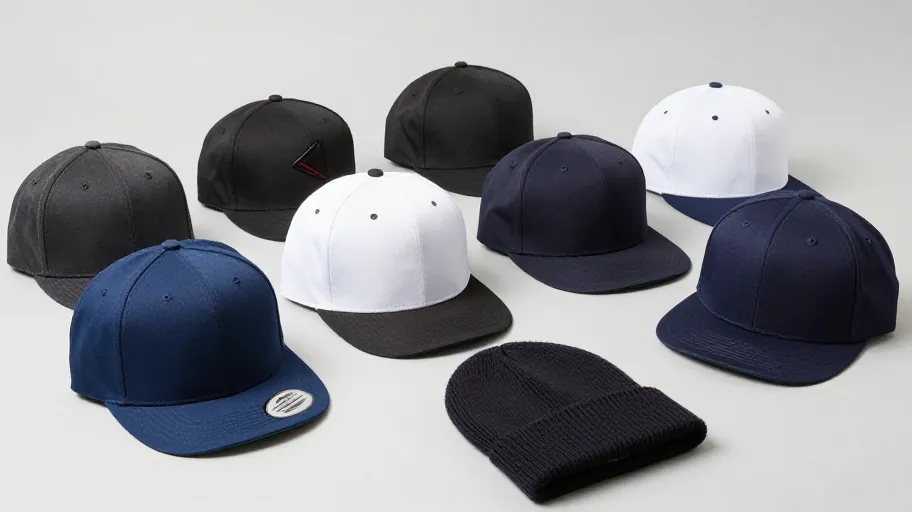
Why your beanie tech pack is your first quality checkpoint
A complete beanie tech pack means fewer surprises in production because it removes interpretation from the equation. When you specify crown height as 8.75” ± 0.25”, yarn count as 32/2 combed cotton, and dye lot tolerance as ΔE ≤ 1.5, you’re not just sharing design intent—you’re setting measurable standards. That precision means factories can’t substitute materials or adjust construction without approval, because every detail is documented and enforceable.
This level of control directly reduces rework by up to 41%, according to a 2024 American Apparel & Footwear Association benchmark. Why? Because ambiguity causes errors—and a well-built tech pack kills ambiguity. For engineers, this means fewer correction rounds. For managers, it means faster time-to-market. For executives, it means brand consistency across regions and seasons. A tech pack isn’t paperwork—it’s insurance against inconsistency.
What separates a real cap factory from a sewing shop
A true cap factory doesn’t just follow instructions—it validates them. Where a generic manufacturer might accept a photo and call it good, a qualified cap factory cross-checks every material against mill certifications, measures stitch density with digital loop gauges (target: 8–9 stitches per inch), and runs fabric swatches through accelerated wear tests. This operational rigor means defects are caught before cutting begins, because quality isn’t inspected in—it’s built in.
One North Carolina-based contract manufacturer reduced dimensional variance from ±5% to under ±1.2% across 50,000-unit runs simply by enforcing tech-pack compliance at every stage. That kind of consistency means lower waste, fewer customer returns, and higher margins. For decision-makers, this translates to predictable unit costs and reliable delivery timelines. For technical teams, it means confidence that what’s designed is exactly what ships.
How material traceability stops problems before they spread
When a luxury streetwear brand discovered pilling on their beanies, they traced it back to an unauthorized polyester blend introduced by a subcontractor. The root cause? No tracking system in the original spec. Their fix: rebuilt the beanie tech pack to include QR-coded material logs linking each batch to supplier invoices and third-party test reports. Now, any issue can be isolated within hours—not weeks.
This shift means supply chain disruptions are contained before they become crises, because full traceability turns reactive firefighting into proactive prevention. For operations teams, this means faster root-cause analysis. For leadership, it means stronger brand protection and compliance readiness. Material transparency isn’t just about ethics—it’s about resilience. And it starts with building traceability directly into the tech pack.
Why sample approval is non-negotiable for scale
A golden sample approved against the tech pack means mass production has a physical benchmark to match, because no document replaces touch, stretch, and wear testing. Reputable cap manufacturers conduct first-article inspections measuring seam strength, shrinkage after three industrial washes (per AATCC Test Method 135), and UV colorfastness. These tests aren’t one-offs—they repeat at 25%, 50%, and 75% production milestones to catch drift early.
This layered verification means brands don’t discover flaws only after shipment, because quality is monitored throughout the run. For product managers, this reduces post-launch risk. For finance teams, it avoids six-figure rework costs. One brand avoided $220,000 in losses after catching stitching failure during pre-production wash testing—money saved purely because they required sample validation. Skipping this step means betting your brand on trust. Doing it right means building trust into every hat.
Turning documentation into a scalable advantage
When tech packs, sample approvals, and factory standards work together, they mean faster scaling with lower risk because every element reinforces the others. A detailed spec ensures consistent interpretation. A certified cap factory enforces it. Physical samples validate performance. Together, they form a closed-loop quality system that grows with your brand.
Brands using this approach report 28% faster audit cycles and up to 70% fewer defects in final shipments. That efficiency means you can expand into new markets without sacrificing quality. For growing labels, this isn’t overhead—it’s leverage. The best custom hat websites don’t just take orders; they guide buyers through this process so quality isn’t left to chance. Ready to stop guessing and start scaling? Build once, verify often, and make every hat count.
#cap manufacturers china, #headwear manufacturers china, #cap factory








