


Why hat factories aren’t just another apparel supplier
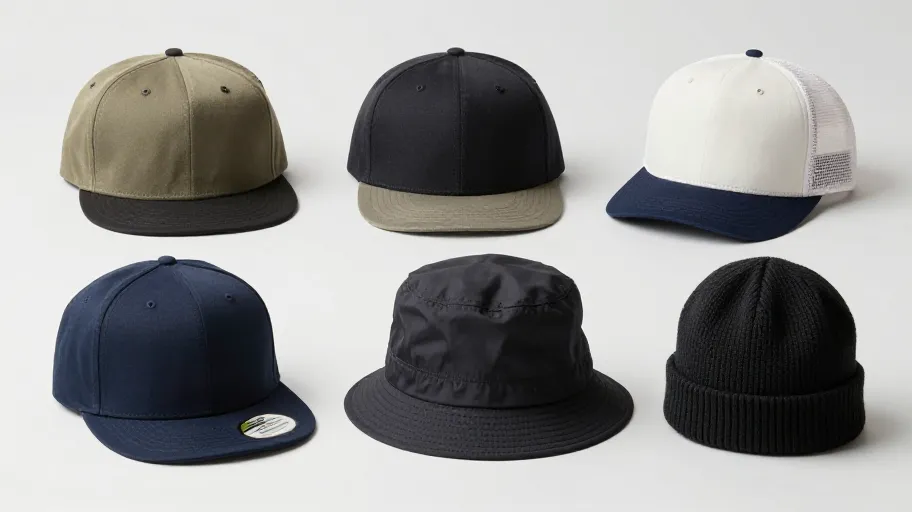
Manufacturing baseball caps and bucket hats isn’t like making t-shirts—it’s precision work that blends textile engineering with structural design. A structured cap relies on internal components like buckram stiffeners, foam front panels, and multi-layer visor stitching, all of which demand specialized tools and trained operators. When you partner with a factory that treats caps as an afterthought, you risk inconsistent crown shape, misaligned panels, or visors that warp after two wears.
Specialized cap factories use automated sewing heads and 3D form presses to maintain tight tolerances across production runs. That means every stitch aligns within ±0.2 inches, reducing size-related returns by as much as 60%. For your brand, this translates directly into fewer customer complaints, higher retention, and stronger margins because you’re not constantly remaking defective units.
The same goes for bucket hats. Their circular cut, bias-seam brims, and stretch fabric integration require rotary cutting tables and ultrasonic welding—equipment rarely found in standard garment plants. Without it, you’ll see puckering, twisted brims, or UV coatings that peel after one wash. Choosing a dedicated bucket hat factory means your product performs as promised, every time.
How free hats samples protect your brand
Requesting free hats samples isn’t a courtesy—it’s your first line of quality defense. Digital catalogs lie. Two suppliers might show identical designs, but only physical samples reveal whether the foam front holds its shape or caves under light pressure.
We’ve seen brands get burned by skipping this step. One lifestyle startup ordered 5,000 units based on photos alone—only to discover the sweatbands disintegrated after three uses. The fix? Go hands-on. Test the buckram stiffness, count the embroidery stitches per square inch (aim for 10,000+), and flex the visor to check durability. These details determine long-term wearability, not just first impressions.
Factories that offer free hats samples typically have confidence in their output. They also streamline sampling logistics, often delivering prototypes in 7–10 days with full material traceability. That speed lets you validate designs early, avoid costly mid-run changes, and hit market windows competitors miss.
Why ASTM and ISO standards matter more than you think
ASTM D5034 compliance means the twill fabric in your caps resists tearing under stress—30% less likely to deform during regular use, according to the American Apparel & Footwear Association’s 2024 review. Fewer blown-out seams mean fewer returns and more repeat buyers. But fewer than half of general apparel factories in China test against this standard, especially those without dedicated headwear lines.
ISO 9001 certification is equally critical. It verifies the factory has documented quality control systems—not just for one batch, but consistently across reorders. In practice, ISO-certified cap factories maintain tighter seam alignment and panel symmetry, cutting circumference variance to ±0.2 inches. For a brand selling thousands of units, that precision reduces fit complaints and builds trust in your sizing.
Don’t take certifications at face value. Ask for audit reports or third-party verification. A real ISO 9001 facility will provide them without hesitation. If they won’t, that’s a red flag worth heeding before signing a contract.
How technical vetting turns cost savings into brand equity
Cutting production costs by up to 40% only matters if quality stays high. The right manufacturer doesn’t just save you money—it protects your reputation. One outdoor brand slashed returns from 22% to 6% simply by switching to a specialized cap factory with ASTM-compliant materials and ISO oversight. Customer satisfaction jumped 37 points in six months. That’s not just a win for operations—it’s a direct boost to lifetime customer value.
Beyond defect reduction, technical due diligence accelerates time-to-market. One client reduced their concept-to-delivery cycle from 14 weeks to 9 by working with a factory that delivered accurate first-time-right prototypes. That five-week edge let them launch ahead of summer demand and capture early-season sales competitors missed.
With stable production, you gain leverage to scale confidently, negotiate better pricing, and invest in upgrades like recycled fabrics or waterless dyes—features that resonate with eco-conscious buyers. Quality isn’t a cost center. It’s your most scalable growth lever.
Next steps: turning insight into action
You now know the difference between a factory that makes hats and one that engineers them. The next move? Request free hats samples from at least three specialized manufacturers—one focused on structured caps, one on bucket hats, and one offering both. Run your own tests: press the crown, flex the visor, inspect the stitching. Compare material certifications and ask for proof of ASTM and ISO compliance.
Use what you learn to build a shortlist of partners who meet your technical and ethical standards. Then run a small pilot order—300 to 500 units—to validate performance at scale before going all-in.
See how this works for you—start with a sample, not a spreadsheet.
#cap manufacturers china, #headwear manufacturers china, #cap factory








