Before committing to a white trucker cap order, document the exact material specifications, production capabilities, evaluation steps, and compliance requirements. Use the S.P.E.C. framework to align your expectations with your supplier, verify structural details like foam density and mesh weave, and approve all physical samples before mass production begins.
The S.P.E.C. decision framework for headwear sourcing
When sourcing a white trucker cap, overseas buyers face communication gaps that lead to incorrect crown profiles, incompatible decoration methods, and supply chain delays. To mitigate these risks, implement the S.P.E.C. framework before issuing a purchase order.
| Framework stage | Focus area | Documentation action required |
|---|---|---|
| Specifications | Materials, structure, and design | Document foam panel weight, mesh weave type, crown profile, and closure dimensions. |
| Production | Manufacturing and decoration | Confirm available decoration methods, machinery capabilities, and pre-production sample approval gates. |
| Evaluation | Quality and inspection | Define inspection criteria, defect thresholds, and physical sample evaluation protocols. |
| Compliance | Testing and logistics | Document required testing standards, packaging specifications, and shipping incoterms. |
Specifications: Documenting the white trucker cap structure
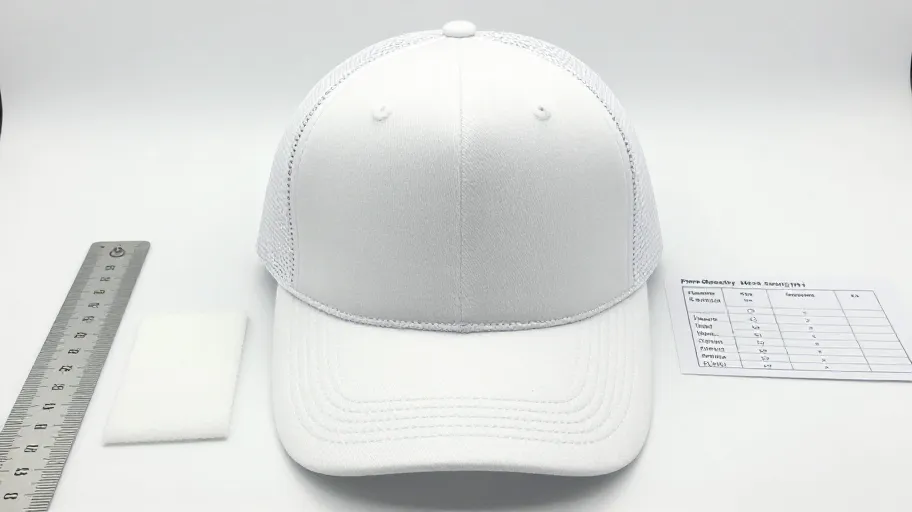
A white trucker cap appears straightforward, but the visual perception of "white" varies based on material composition and manufacturing techniques. You must document exact parameters to avoid receiving a product that looks different from your reference sample.
Foam front panel evaluation
The front panels of a trucker cap dictate the structure and decoration surface. Document the following questions for your supplier:
- What is the exact weight and density of the foam backing in the front panels?
- Does the supplier apply a fused lining to support the structure, and what is the bonding method?
- How does the supplier ensure the white fabric remains opaque enough to prevent the foam colour from bleeding through?
- What fabric composition is used for the front panels, and how does it affect embroidery density or print adhesion?
Mesh back panel specifications
The back mesh determines breathability and visual contrast. Document these structural questions:
- What is the exact hole size and weave pattern of the mesh?
- Is the mesh colour pure white, or does it have a specific tint?
- How does the supplier cut and stitch the mesh to prevent fraying at the seams?
- What is the thread composition, and how does it match the front panel colour under different lighting conditions?
Crown profile and closure details
The fit and adjustability rely on the crown structure and back closure. Verify these elements:
- Is the crown profile structured or unstructured, and how does the supplier maintain this shape?
- What are the exact dimensions of the bill, and does it feature a pre-curved or flat design?
- What material comprises the snapback closure, and how many adjustment holes are included?
- What is the tensile strength of the closure snaps to ensure they do not detach under tension?
Production: Manufacturing and decoration alignment
Once you document the physical specifications, align those details with the supplier's production capabilities. The decoration method you choose dictates the required machinery and material preparation.
Decoration method constraints
Different artwork applications require specific fabric treatments. Document your decoration questions:
- Which embroidery needle sizes and backing types does the supplier use for high-stitch-density logos on foam panels?
- What printing methods are available, and which methods adhere best to the specific fabric composition you documented?
- How does the supplier cure printed inks to prevent cracking or fading on white fabric?
- Does the supplier offer three-dimensional embroidery or puff embroidery, and how do they manage foam distortion during application?
- What are the artwork size limitations for the front panels without causing structural warping?
Pre-production sample approval
Mass production requires a verified physical sample. Document your approval gates:
- Will the supplier provide a pre-production sample that uses the exact bulk materials?
- How does the supplier record and sign off on the approved sample to ensure bulk production matches it?
- What is the procedure if the bulk production deviates from the approved pre-production sample?
- Does the supplier provide a digital tech pack alongside the physical sample for cross-reference?
Evaluation: Quality inspection protocols
Establish evaluation criteria before production begins. Relying on post-production inspection without agreed-upon criteria creates disputes over acceptable quality levels.
Inspection criteria documentation
Define what constitutes a defect and how the supplier measures it. Document these questions:
- What is the supplier's maximum acceptable tolerance for stitching misalignment?
- How does the supplier measure and document fabric tension to ensure consistent crown shape across the order?
- What is the procedure for identifying and removing caps with visible dirt or handling marks on white fabric?
- How does the supplier test the durability of the snapback closure during the inspection phase?
- What documentation does the supplier provide to verify the inspection results of the final batch?
Physical sample evaluation
Before approving the bulk order, evaluate the physical sample against your documented criteria:
- Does the fabric weight match the agreed-upon specifications?
- Does the white colour match your brand's specific Pantone or visual reference?
- Is the embroidery backing tight and secure without excessive puckering?
- Does the mesh tension hold securely when the closure is adjusted?
Compliance: Testing, packaging, and logistics
The final stage of the S.P.E.C. framework involves compliance and shipping documentation. White fabric is susceptible to transit damage, making packaging and handling protocols critical.
Material testing and certification
Document your testing requirements to ensure market compliance:
- Can the supplier provide documentation for fabric composition and safety testing?
- What washing and colourfastness tests does the supplier perform on white fabric?
- Can the supplier customize the inner care labels with your brand's specific compliance information?
- Does the supplier maintain records of restricted substance testing for all dyes and treatments used on the white fabric?
Packaging and shipping preparation
White trucker caps require specific packaging to prevent crushing and soiling during transit. Document these logistics questions:
- What inner packaging materials does the supplier use to prevent the caps from crushing or deforming?
- How does the supplier separate individual caps to prevent friction marks on the white fabric?
- What are the outer carton dimensions, and how many units does each carton contain?
- Does the supplier apply a protective layer to the embroidery or printed areas before packing?
- What shipping incoterms does the supplier support, and how do they handle export documentation?
By documenting these questions before you commit, you transform a vague sourcing inquiry into a measurable production plan. This approach reduces the risk of receiving a white trucker cap that fails to meet your brand's structural and visual standards.
FAQ: Sourcing preparation questions
1. Why does the colour of a white trucker cap vary between suppliers? The perception of white varies based on fabric composition, dye lots, and foam backing colour. Document the exact fabric composition, request physical reference samples, and compare them under standardized lighting to verify consistency.
2. How do I document the correct snapback closure mechanism? Specify the material, the number of adjustment holes, and the required tensile strength. Ask the supplier how they test the closure snaps to ensure they do not detach under tension, and verify these details on a physical sample.
3. What questions should I ask about embroidery on foam front panels? Document the needle size, backing type, and stitch density. High-density embroidery on foam requires specific backing to prevent puckering and structural distortion. Ask the supplier for examples of similar previous work and evaluate the physical sample carefully.
4. How do I prevent transit damage on white fabric? White fabric is susceptible to friction marks and dirt. Document your packaging requirements, including inner separators, protective layers over decorated areas, and carton dimensions that prevent excessive compression during transit.
5. What pre-production documents must I approve before mass production? Approve a physical pre-production sample that uses the exact bulk materials, a digital tech pack detailing all measurements and materials, and a documented agreement on how the supplier will handle any deviations found during final inspection.
To ensure you have every necessary question documented before issuing a purchase order, access our comprehensive preparation template. Download the checklist to guide your supplier communications and secure your production specifications.
下载核对清单
[Low-friction checklist CTA: Click here to download the white trucker cap sourcing checklist and document your project specifications today.]
#cap manufacturers china, #headwear manufacturers china, #cap factory