

Comparing custom hat embroidery suppliers comes down to three things you control: a written specification, a physical sample you inspect against that specification, and a documented approval before production starts. Use the Spec–Sample–Signal–Sign-off (4S) framework to structure each quotation round the same way, so quotes from different factories become genuinely comparable instead of a confusion of promises.
Why comparison fails without a shared spec language
Most sourcing disputes in custom headwear trace back to one root cause: the buyer and the manufacturer never agreed on what "good" meant in writing. Embroidery is a physical process with real variables — stitch type, density, thread, backing, placement, and how the design interacts with the cap's panels and seams. When those variables are not specified, each supplier quotes its own interpretation, and the lowest price wins by quoting the loosest spec.
The fix is not to become an embroidery engineer. It is to send every supplier the same specification sheet, ask the same approval questions, and compare answers rather than prices alone.
The 4S framework: Spec, Sample, Signal, Sign-off
- Spec. Document the cap construction, the decoration method, the artwork format and the placement in writing before requesting quotes.
- Sample. Require a physical pre-production sample and inspect it against your written spec, not against your memory of the digital mock-up.
- Signal. Read how each supplier handles your questions — clarity, documentation and willingness to put things in writing are decision inputs.
- Sign-off. Approve in writing, retain the reference sample, and define what happens if bulk production differs from the approved sample.
Spec: what to document before requesting a quote
Prepare a one-page spec sheet covering:
- Cap construction: closure type, crown structure, panel count, material, and any structuring that affects embroidery placement (a six-panel front seam changes how a logo can sit).
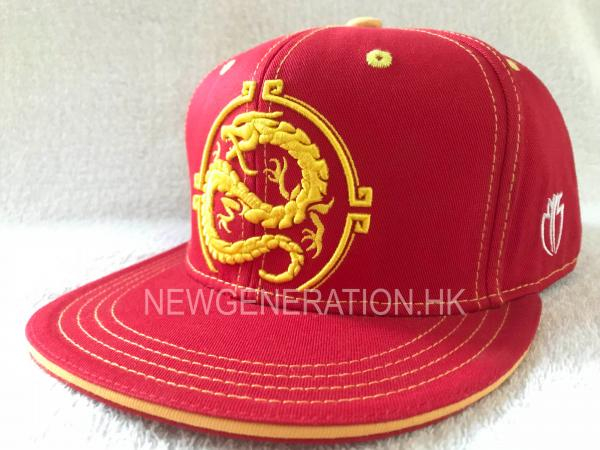
- Decoration method: direct embroidery, 3D puff, patch application, or a combination — confirmed per position.
- Artwork: vector source files, exact dimensions of the stitched area on the cap, and the number of thread colours.
- Digitising: who creates the embroidery file, who owns it, and whether you can review a sew-out before the cap sample is made.
- Placement: front, side, back, under-visor — each with measured position references, expressed as project-specific values your supplier confirms.
- Labelling and packaging: inner labels, hangtags, folding and carton marking, if these matter to your programme.
Every one of these should end in a question to the supplier, because none has a single correct value across all factories. Ask, for example: "What stitch density and backing do you recommend for this logo on this cap fabric, and can you sew a swatch for review before making the full sample?"
Decision table: comparing embroidery approaches for headwear
| Factor | Flat (standard) embroidery | 3D puff embroidery | Woven/printed patch, stitched on |
|---|---|---|---|
| Best suited to | Fine detail, small text, multi-colour logos | Bold, simple logos with raised impact | Very small text, gradients, photographic detail |
| Detail handling | Good for moderate detail | Poor for fine detail and thin lines | Strongest for micro-text and complex colour |
| Durability on caps | Withstands daily wear; check backing on sample | Foam core can degrade if crushed; inspect sample edges | Patch edges are the risk point; inspect stitching |
| Cost drivers | Stitch count and colour count | Higher thread and foam usage | Patch production plus application step |
| Approval focus | Stitch density, thread colour match, registration | Raise height, edge crispness, corner definition | Patch clarity, edge stitching, attachment strength |
| Key question to supplier | What density do you recommend for this logo and fabric? | What logo complexity do you accept for puff? | Do you produce the patch in-house or source it? |
Use this table to frame each quotation request so suppliers answer the same questions in the same categories.
Sample: what to inspect on the physical pre-production sample
When the sample cap arrives, inspect it against your written spec with the sample in one hand and the document in the other. Check:
- Registration: are colour boundaries sharp, with no unwanted gaps or overlaps between thread areas?
- Density and coverage: does the fabric show through the stitching anywhere it should not?
- Backing: does the embroidered area sit flat without puckering, after the cap is flexed a few times?
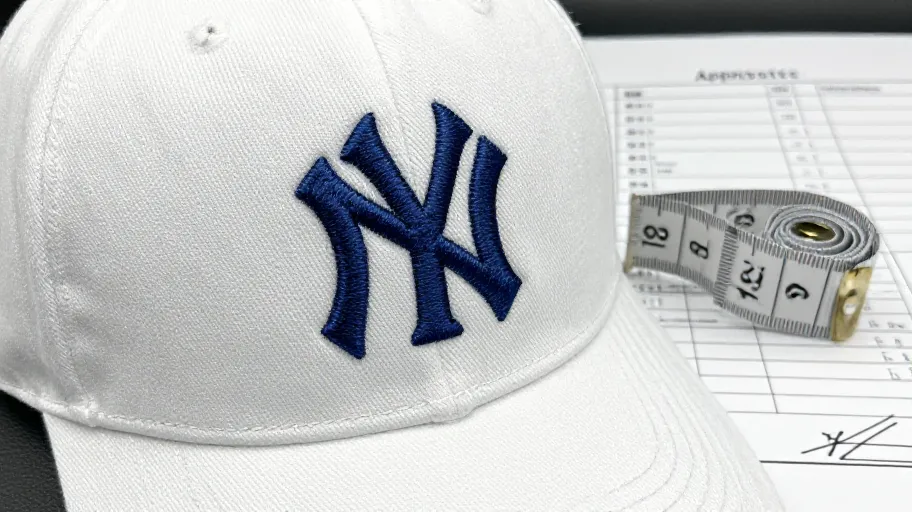
- Placement and alignment: measure the logo position against your spec values — never accept "it looks right".
- Colour match: compare thread colours to your brand reference under daylight, not under warehouse lighting.
- Function test: adjust the closure, squash the crown and check whether the embroidery area distorts.
Photograph everything, mark defects physically on the sample, and send corrections as a numbered list. Ask the supplier to confirm each item individually rather than replying "all fixed".
Signal: reading the supplier, not just the sample
The pre-production process itself tells you how a production relationship will run. Positive signals include: written answers to written questions; willingness to state a revision process; clear ownership terms for your digitised files; and proactive flags about what your design cannot achieve on the chosen cap. Signals to weigh carefully include: verbal assurances with no documentation, refusal to provide a sew-out, and answers that change between conversations.
None of these signals proves anything on its own. Document them, and treat the pattern — not any single interaction — as your comparison input alongside spec quality and sample results.
Sign-off: approval questions to put in writing
Before approving bulk production, get written answers to:
- Is this exact sample the reference standard for the full production run, and will a retained duplicate be kept on file?
- If bulk output differs from the approved sample, what is the agreed correction process?
- How many sample revision rounds does the quotation include, and what happens beyond that? (Confirm current policy directly.)
- What are your current MOQ, sampling fee, lead time and payment terms for this specification? (Project-specific; confirm directly.)
- Who holds the digitised embroidery file, and can it be reused on reorder without a new digitising charge?
- What QA checks are performed during production, and can inspection photos or a third-party inspection be arranged?
- What defect tolerance and remediation terms are written into the order confirmation?
Every policy answer above is commercial and changes over time and between order profiles — never rely on a generalisation; require the supplier's current written confirmation for your specific order.
Small batches and reorders
If you are testing the market with small batch custom caps, frame the conversation explicitly: state your target quantity, ask which decoration methods and cap styles fit that quantity, and ask how reorder consistency is maintained — retained digitised files, kept reference samples and documented colour references are the mechanisms to verify. Do not assume a minimum order figure; ask for it in writing for your exact specification, and compare answers as part of your supplier evaluation.
Frequently asked questions
What file format does custom hat embroidery need? Suppliers need vector artwork (such as AI or EPS) to digitise from, plus exact finished dimensions. Confirm with each supplier which formats they accept and whether they digitise in-house — then ask who owns the resulting embroidery file.
How many colours can be embroidered on a cap? Multi-colour embroidery is achievable, but every colour adds a thread change and cost, and small logos limit how many colours read clearly. Ask each supplier how many colours they recommend for your logo at your stated size, and compare answers.
3D puff or flat embroidery — which should I choose? Use the decision table above: bold and simple favours puff; detailed and multi-coloured favours flat. Request a sew-out of each from shortlisted suppliers and compare the physical results side by side before choosing.
What should I check before approving production? Work through the sign-off questions: reference sample retained, revision policy stated, MOQ and lead time confirmed in writing for your spec, file ownership defined, and QA/inspection terms agreed. Approve only when every answer is documented.
How do I keep reorders consistent with the first batch? Confirm that your digitised file and a physical reference sample are retained by the manufacturer, and specify thread colour references in the order documents. Verify reorder samples against the retained reference before approving each new run.
Get the sourcing brief
Want this framework as a working document? 获取采购 Brief — a sourcing brief containing the spec-sheet template, the sample inspection checklist, the sign-off question list and the supplier comparison table, ready to send to shortlisted manufacturers.
Prefer to start smaller?
Take just one step: copy the seven sign-off questions above and send them to your current supplier candidate today. A written answer to those questions is the lowest-effort, highest-information move you can make this week.
#cap manufacturers china, #headwear manufacturers china, #cap factory