NEWS

ALWAYS ON TOP

Cap Manufacturers: The Ultimate Guide to Choosing the Best in 2026


Sourcing Retail-Ready Headwear in 2026

In the competitive ecommerce landscape, headwear is not a disposable commodity; it is a highly visible brand asset. The gap between a promotional cap that collapses after two weeks and a retail-ready structured hat is entirely determined by your sourcing protocol. Having manufactured custom caps since 2008, it is evident that recent supply chain disruptions have clearly separated actual production facilities from trading offices acting as middlemen. Brands cannot afford high return rates caused by warped snapbacks, inconsistent embroidery density, or out-of-tolerance panel alignments.

Professional European brands and technical buyers no longer rely on glossy vendor storefronts. They audit the gap between a sales pitch and the actual manufacturing floor. Here is how to evaluate a cap factory based on production realities rather than marketing claims.

The Diagnostic: Factory-Direct vs. Middleman

Many entities listed in online directories do not own a single sewing station. They are aggregators floating orders to various workshops based on idle capacity. This creates severe inconsistencies, such as fluctuating fabric weights (e.g., mixing crisp 290gsm cotton twill with loose 240gsm batches) across the same SKU.

To accurately distinguish a legitimate facility from a trading company, evaluate their operational metrics using the following diagnostic criteria:

Operational IndicatorFactory-Direct CapabilityMiddleman / Trader Limitation
Sample Turnaround 2-4 days (Utilizes in-house pattern room) 7-12 days (Relies on external sample shops)
MOQ Structure Can split structures (e.g., 200 pcs per style) Insists on 1,000+ per design; no mix-and-match
Fabric Consistency High (Single-source locked material batches) Low (Variable inventory across multiple workshops)
Custom Hardware 15-20 days (Owned partnerships for molding/stamping) Avoids custom components citing "delays"

Additionally, request visibility into their daily QC reject bins during a virtual audit. A pristine floor without visible wastage is staged. Real facilities will show rejected panels—often cut against the grain—demonstrating active quality control before final assembly.Cap Manufacturers: The Ultimate Guide to Choosing the Best in 2026

Material Specifications and Precision Tolerances

Experienced buyers can reverse-engineer a supply chain strategy simply by examining fiber content and assembly tolerances. For structured 6-panel caps, specifying minimum material weights is non-negotiable. Using a 290-320gsm cotton twill provides necessary rigidity, but exceeding 320gsm requires the facility to utilize specific 18-gauge needles to prevent frequent machine breakage.

Performance fabrics require even deeper scrutiny. Relying on generic "moisture-wicking polyester" is insufficient. A competent supplier will specify the denier per filament (e.g., 2/72 or 1/150 dpf). Furthermore, technical tech packs must establish strict manufacturing tolerances. For professional buyers, establishing a strict ±1.5mm tolerance on panel seams is standard practice to prevent structural distortion during the panel-joining phase. A cap factory that cannot confidently hold a ±1.5mm margin will invariably deliver asymmetrical crowns.

Embroidery requires similar vigilance. A logo requiring 14,000 stitches for proper 3D puff (utilizing 5mm EVA foam) is frequently under-stitched at 8,000 stitches by budget suppliers using thinner 2mm foam to save fractional costs. The result is a threadbare appearance under retail lighting.

The True Economics of MOQs and Cutting Dies

Inflating volume projections to bypass MOQs is a flawed strategy in headwear manufacturing. The true cost barrier for small runs is hardware-based, specifically the custom cutting die. A structured 6-panel custom die costs approximately $80-$150. Spread across 2,000 units, it adds negligible cost; applied to 200 units, it drastically inflates the unit price. Facilities offering atypically low prices for small runs are likely bypassing custom dies entirely and substituting generic, ill-fitting crown profiles.

Material minimums also dictate pricing. A standard dye lot for cotton twill is 50 yards, yielding approximately 400-450 caps. Ordering below this threshold forces the manufacturer to absorb dead inventory or charge premium batch-dyeing rates. Transparent cap manufacturers will explain these material economics rather than simply rejecting the PO.

Pre-Production Audit Checklist

To eliminate high-risk suppliers before initiating a wire transfer, enforce the following audit points:

  • Distribution Awareness: Verify their familiarity with your end-user logistics. A manufacturer must understand dimensional weight restrictions (e.g., Amazon FBA carton standards) to prevent oversized packaging from destroying your freight economics.
  • Recent Production Evidence: Demand photos of active production lines from the last 30 days. Curated sample walls show isolated craftsmanship; active floor photos reveal standard thread trimming and inline consistency at speed.
  • In-House Digitizing: Ensure embroidery digitization is not outsourced. In-house teams can execute precision design tweaks in hours, whereas outsourced revisions cause multi-day delays and degradation of detail.
  • Trim Supplier Transparency: Ask for the specific origins of structural components (sweatbands, visors, interlining). Reliable facilities have locked contracts with regional supply clusters, insulating them from spot-market shortages.

Timeline Realities and Defect Control

A realistic timeline for a 3,000-piece structured order—featuring custom woven labels, multi-location embroidery, and custom closures—averages 35-45 calendar days from deposit to FOB port. This assumes lab dips and thread matching are already approved.

Crucially, production quality is managed through inline QC stations situated between every operational phase (cutting, embroidery, seam joining, sweatband attachment). Relying solely on final spot-checks allows critical structural errors, such as misaligned center seams, to reach the finished inventory stage. A $300 cost-reduction on hidden components, like downgrading from a laminated cotton sweatband to a cheap tissue-backed PU, easily results in thousands of dollars in downstream retail returns.

Finally, evaluate the facility's Defects Per Production (DPP) metric. A world-class bulk run in 2026 maintains a DPP under 1.5%, supported by an AQL 2.5 final inspection. If a facility does not track yield and defect rates instantly by order, they lack the data infrastructure necessary to protect your brand's reputation.

Cap Manufacturers: The Ultimate Guide to Choosing the Best in 2026

For 500–5,000 custom caps, choose a mid-size Asian cap manufacturer with in-house embroidery. For 50,000+ retail programs, pick a vertically integrated factory in Vietnam or China.…

Cap Manufacturers: Top 5 Trends Shaping the Industry in 2026

Cap Manufacturers: Top 5 Trends Shaping the Industry in 2026

Why 2026 Looks Different for Cap Manufacturers

In March 2024, a mid-sized promotional products distributor in Dallas sent us an email that stopped our production team cold. They needed 8,500 custom snapbacks—full-color embroidery, organic cotton twill, biodegradable packaging—turned around in 14 days. Three years ago, that timeline would have been laughable. We hit ship date on day 13.

That moment crystallized something we've been watching build since 2021: the rules for cap manufacturers are being rewritten faster than most shops can retool. Materials, machinery, customer expectations, supply routes—every layer of this industry is shifting simultaneously. The shops stuck debating whether to upgrade their embroidery machines are already behind. The ones asking different questions entirely will own 2026.

Here's what we're seeing from the production floor, the sourcing calls, and the late-night logistics fire drills.

---

1. Sustainable Materials Are No Longer Optional—They're Table Stakes

By late 2025, three of the five largest promotional product distributors in the U.S. will require verified sustainability documentation in every apparel RFP. We know because two of them sent us their updated vendor qualification packets in January 2025, and the language is blunt: no recycled content proof, no contract.

The shift isn't theoretical. At our facility, organic cotton usage jumped from 12% of total yardage in 2022 to 41% by Q4 2024. Recycled polyester—primarily from post-consumer PET bottles—now accounts for 28% of our structured cap production. These aren't experimental runs anymore. They're the default.

What's actually working right now:

  • Recycled polyester (rPET) delivers near-identical durability to virgin poly. In tensile strength testing we ran with a third-party lab in Guangzhou in October 2024, 100% rPET twill held within 4% of virgin material across 10,000-cycle abrasion tests. The cost premium has compressed from roughly 25% in 2021 to 8-12% today.
  • Organic cotton twill has become the entry point for brands wanting "sustainable" on their spec sheet without re-engineering everything. The catch: consistency is still a headache. One lot from a certified mill in Tamil Nadu arrived in August 2024 with a face-side slub count 3x what our QC standard allows. We ate the reorder. Point is, certification doesn't guarantee weave quality.
  • Hemp blends get talked about constantly, but actual orders remain tiny. We ran 1,200 units for a California lifestyle brand in 2024, and the fabric's hand feel polarized their customer base. Return rate was triple their cotton line. The material has potential, but the supply base for garment-grade hemp twill is still too thin for reliable production.

There's also a compliance layer that catches newer shops off guard. If you're exporting finished caps into the U.S. under HTS heading 6505.00, customs brokers are increasingly asking for material composition certificates. One freight forwarder we work with in Long Beach told us in December 2024 that CBP holds on headwear shipments with incomplete fiber documentation tripled year-over-year. The paperwork matters now in a way it simply didn't in 2019.

---

2. Automation Is Changing the Math on Domestic vs. Offshore Production

The loudest conversation in cap manufacturing right now isn't about sustainability. It's about where the machines go.

Automated sewing lines have been around for years, but the economics shifted meaningfully in 2023-2024. A 6-head embroidery machine paired with a robotic panel handler can run 18 hours unattended. Labor cost per cap on an automated line in a U.S. facility now sits around $0.85-1.10 for structured cotton caps, compared to $0.25-0.40 in a well-run overseas plant. That gap was $1.50+ in 2019.

But the real story isn't unit cost. It's speed-to-market. A cut-and-sew facility in Georgia running automated lines can turn a 5,000-unit custom order in 8-10 business days from fabric to finished goods. Ocean freight from Asia adds 28-35 days. Air freight closes the gap but wipes out the offshore cost advantage entirely.

Here's the breakdown we've been tracking internally:

Production ModelUnit Cost (structured cotton, 6-panel)Typical Lead TimeMOQ FeasibilityOffshore, manual-heavy$1.80-2.2035-50 days500+ unitsOffshore, semi-automated$1.50-1.8530-40 days300+ unitsU.S. domestic, automated$3.50-4.808-14 days100-250 unitsNearshore (Mexico), semi-automated$2.40-3.2014-21 days250-500 units

Data reflects typical FOB pricing for mid-range structured cotton twill caps as of Q1 2025. Actual quotes vary heavily by decoration complexity.

The upshot: automation isn't killing offshore production, but it's eating the middle. Orders between 250-1,000 units with short timelines are increasingly going domestic or nearshore. Orders above 3,000 units with flexible delivery dates still flow overseas. The smart cap manufacturers we compete with are positioning for both tracks—automated lines in multiple regions, not just one low-cost base.

*Brief aside: this dynamic mirrors something the gaming industry discovered years ago. Capcom's pivot to team-driven development models—where smaller, autonomous squads own entire projects—crushed their old waterfall approach and produced a string of hits. Cap manufacturing isn't so different. The shops winning right now are organized into small, flexible production cells that can pivot between order profiles without retooling the whole floor.*

---

3. Personalization Has Outgrown Its "Trend" Label

Calling personalization a "trend" in 2026 feels dishonest. It's the water we're all swimming in.

In November 2021, a customer—Jason, runs a small outdoor gear brand out of Bend, Oregon—asked if we could do 50 caps with individual trail names embroidered on the side panel. We said yes, charged a premium, and manually programmed each file. By 2023, that same request had scaled to 2,000 units per month, and manual programming was no longer viable.

We invested in variable-data embroidery software that pulls customer-submitted names from a CSV file and auto-generates stitch files. The per-unit cost for individualized embroidery dropped from $4.25 to $1.80. Today, roughly 22% of our total decoration work involves some degree of personalization—names, numbers, custom interior labels, even individualized sweatband printing.

What's driving this:

  • Direct-to-consumer brands want packaging and product that feels one-to-one. A plain cap with a logo is background noise. A cap with the customer's dog's name stitched inside? That gets unboxed on Instagram.
  • Corporate merchandise buyers have discovered that personalized gifts outperform generic swag 3-to-1 on employee retention metrics. We heard that stat from a Chicago-based HR consultancy that ordered 4,500 custom caps with individual employee names in Q3 2024. They reordered within 60 days.
  • Youth sports and events remain a monster category. Tournament caps with player numbers and team names printed on the undervisor are now standard, not premium. The margin on these runs has compressed, but the volume keeps growing.

The bottleneck for most shops isn't the decoration technology—it's the order management. Processing 2,000 individual name variations without data errors requires backend systems that most cap manufacturers didn't build for. We learned that lesson the hard way: a corrupted CSV file in June 2023 led to 300 caps with scrambled names, which cost more in rework and freight than the entire order's margin. We now run validation scripts on every personalization file before it hits production. If your shop isn't doing that yet, start.

---

4. The Supply Chain Isn't "Broken"—But It's Permanently Different

Anyone still waiting for container rates to go back to 2019 levels needs a different strategy. The global supply chain for headwear has restructured, and some of the changes are structural, not cyclical.

Three shifts we've had to absorb:

First, yarn and fabric sourcing is consolidating. The number of mills producing certified organic cotton twill at scale for headwear applications has actually shrunk. We counted 14 reliable suppliers globally in 2020. By January 2025, that number was seven—and two of them had 18-month backlogs on certain base colors. When a mill in Pakistan dropped our allocation unexpectedly in August 2024, we scrambled for six weeks to re-source black organic twill at a 22% cost increase. Having backup suppliers isn't advice anymore; it's survival math. Second, freight cost volatility is the new baseline. Spot rates from Shanghai to Los Angeles swung from $1,400 to $4,100 and back down to $1,600 between January 2024 and January 2025. Contract rates have stabilized somewhat, but the days of predictable $2,000-per-FEU pricing are gone. We've started building freight cost buffers into every quote—typically 8-12% above current spot—and refunding the difference if rates hold. Customers have generally accepted this. The alternative is requoting every order, which nobody wants. Third, domestic warehousing in the U.S. has gotten tight and expensive. A 3PL we use in Dallas raised storage fees 15% in 2024 and still ran at 96% capacity during peak season. The proximate cause is straightforward: importers are holding more buffer inventory stateside, which increases demand for warehouse space, which increases cost. The circular logic is frustrating but real. We're now pre-booking warehouse slots 90 days out for peak months, which feels absurd for a product category that used to run on just-in-time inventory.

---

5. SEO for Cap Manufacturers Isn't About Keywords Anymore

I'll be direct: Google stopped ranking headwear suppliers based on keyword density years ago. The search landscape in 2026 rewards *topical authority*—demonstrating deep, structured knowledge about cap manufacturing across your entire digital presence.

We rebuilt our site architecture in early 2024 after watching organic traffic flatline for 18 months despite posting regular blog content. The problem wasn't volume. It was that our content answered surface-level questions without ever showing the search engine that we actually made caps. Google's algorithms (and increasingly, AI-powered search engines like Perplexity and Google's own SGE) evaluate whether a site demonstrates entity-level knowledge. That means:

  • Do you discuss materials like cotton twill, polyester mesh, and brushed canvas with the specificity of someone who buys them?
  • Do you reference manufacturing parameters like stitch density (typical range: 8-12 stitches per inch for structured caps), panel construction, and buckram weight?
  • Do you publish content that answers the questions actual buyers ask—MOQs, turnaround times, decoration method trade-offs—with real data, not marketing fluff?

When we shifted our content strategy to include detailed production guides, material comparison tables, and case studies with actual timelines and costs, organic traffic turned around within roughly 4 months. More importantly, the traffic started converting. A buyer searching "custom embroidered hats wholesale minimum order" in October 2024 spent an average of 4 minutes 22 seconds on our site, compared to 1 minute 8 seconds under the old content strategy. They were reading because the information was useful, not because we gamed a meta description.

Quick tactical things that moved the needle for us:

  • Glossary pages covering industry terms (crown height, sandwich bill, taping, etc.) pulled surprising search volume from buyers trying to spec their first order correctly. One page published in May 2024 now gets 1,400 monthly visits from the U.S. alone.
  • Comparison content—ZhuoZhou embroidery vs. Barudan, screen printing vs. heat transfer for caps, structured vs. unstructured profiles—ranks consistently because it answers decision-stage questions. Google's BERT and MUM models understand comparison intent and reward thorough, balanced treatment.
  • Case studies with real constraints: don't write "we helped a client succeed." Write "a client needed 3,000 caps in 10 days during Chinese New Year, and here's exactly which corners we couldn't cut and which ones we got creative on." AI search engines can't cite a story that specific, but human buyers can smell the difference between template content and something written by someone who actually solved the problem.

---

Where the Industry Is Actually Headed

The cap manufacturers that make it through 2026 won't be the ones with the lowest per-unit cost or the shiniest website. They'll be the shops that built real flexibility—sourcing redundancy, production automation scaled to the right order profiles, backend systems that handle complexity without breaking, and enough industry knowledge baked into their digital presence that buyers find them before the RFP even goes out.

The window to figure all this out incrementally has closed. The shops moving now are the ones setting the terms for the next five years.

Cap Manufacturers: Unveiling the 7 Key Strategies for 2026 Success

Cap Manufacturers: Unveiling the 7 Key Strategies for 2026 Success

Why are you still guessing what your customers want in 2026?

Most cap manufacturers I talk to plan their next year’s catalog the same way they did in 2018—scroll through Pantone books, pick a few new colors, call it a strategy. That approach has a shelf life, and it’s already expired.

In late 2023, a distributor we work with out of Austin noticed something odd. His orders for unstructured dad caps in organic cotton jumped 34% over six months while his classic wool-blend fitteds kept gathering dust in a warehouse out in Mesquite. Nobody predicted that shift by staring at last season’s sell-through reports. The data was hiding in plain sight on TikTok—where a few niche outdoor influencers had been running vintage-core fit checks for months.

Cap manufacturers who made money on that wave weren’t the ones with the fastest embroidery machines. They were the ones paying attention to signals before they turned into purchase orders. That means tracking Google Trends for terms like “blank sustainable hats” or “golf cap with magnetic closure,” not just “wholesale cap suppliers.” It also means checking what’s selling at retail on platforms like Zumiez or REI before those styles trickle down to your B2B inbox.

One practical move we’ve adopted is running small-batch test runs—usually 300 to 500 pieces of a design we’re unsure about—and offering them to three trusted accounts in different regions. If a 5-panel corduroy cap moves fast in Portland but flatlines in Nashville by March 2024, we cut the line within 60 days and re-allocate fabric. It’s not elegant, but it saved us from sitting on 8,000 dead-stock caps in 2022 that would’ve gone straight to a liquidator.

Honestly, I almost didn’t include this section because talking about trend-spotting feels obvious, but the number of factories still running 10-year-old shape templates tells me it’s not.

Still running a shop floor that peaked in 2016?

Walk into a typical cut-and-sew facility and you’ll see the same bottleneck every day: a 12-head embroidery machine running at 800 stitches per minute while a worker two stations down hand-trims loose threads under a fluorescent light. That’s not production—it’s burning dollars with the lights on.

In February 2024, we replaced two of our older single-head machines at our facility with 6-head automatics that do on-the-fly thread trimming and color-change without stopping the frame. Cycle time for a standard 8,000-stitch logo on a structured cap dropped from 7.2 minutes to 4.1 minutes. Across a run of 10,000 caps, that’s over 500 hours of machine time saved—enough to take on a whole extra PO without adding a single shift.

Digital cutting is another area where the math gets stupid if you ignore it. Most cap manufacturers still use hand-cut patterns and pneumatic presses for multi-panel crowns. A laser cutter paired with nesting software can improve fabric utilization by roughly 8-11%, and on a 7.5 oz cotton twill running at $3.20 a yard, that’s real margin back in your pocket.

The table below isn’t rocket science, but it’s the kind of thing I wish someone had put in front of me in 2015.

Decoration MethodDurabilityTypical Cost Per CapBest For EmbroideryHigh$1.50–$3.00Corporate, premium outdoor, sports team Screen PrintingMedium$0.80–$1.50Bold one-color designs, event caps Heat TransferLow-Medium$0.50–$1.20Full-color photos, short runs Woven PatchVery High$2.00–$4.00Heritage brands, outdoor labels

One thing people ask a lot is whether all this tech is worth it for small shops. The honest answer—and this might ruffle some feathers—is no. If your typical MOQ is 144 pieces, a $45k laser cutter won’t pay back before you’d rather retire. But cap manufacturers hovering around that 5,000–15,000 piece per month sweet spot? The ROI is tight, but it usually comes through in under 18 months. We saw it hit at month 14 on our floor.

How do you stop a single thread supplier from holding your entire Q4 hostage?

Write this down somewhere: a supply chain isn’t lean when you have one great supplier. It’s fragile.

September 2022 taught a lot of cap manufacturers that lesson the hard way. Flooding in Bangladesh disrupted cotton yarn exports across multiple mills, and a whole route of combed cotton shipments fell two to three weeks behind. One Texas-based brand we manufacture for called in a panic—their 14,000 piece trucker cap order, already tagged for a holiday promo with a major outdoor chain, was sitting with no shell fabric. Because we’d pre-purchased 6 tonnes of the exact ring-spun cotton from a back-up mill in Shandong two months prior, we managed to reroute production and ship just 6 days late instead of 28. The client didn’t even know there’d been a global issue until I mentioned it in passing three months later.

That kind of buffer isn’t free—carrying extra inventory bloats working capital, and there’s no getting around it. The way we offset that is by aligning fabric resourcing with our highest-probability forecast, not the whole book. We buffer for the 80% likelihood, not the 100%, and we run that model with clients twice a year—March and September—so they aren’t surprised.

Another ugly detail I’ve learned? Auditing suppliers only once is about as useful as reading a restaurant inspection from 2019. We re-audit our top three fabric mills every 9 months—not just for quality, but for their own upstream risk. If a Taiwanese mill’s greige fabric source suddenly shifts from four origins to one, we ask why. That’s saved our neck twice, including catching a subcontracting issue before it contaminated a batch of 20,000 cap crowns in 2023.

Why does one snapback sell out at $44.95 while yours collects dust at $24.99?

Customer engagement for cap manufacturers doesn’t start with a Facebook ad. It starts with a decision that happens six months before launch: does this cap have a story, or is it just another blank with a logo?

In early 2023, a streetwear brand out of Atlanta came to us with a simple ask—they wanted to show their audience how their caps were actually made. We helped film 45-second factory snippets: cotton panels being cut, the embroidery frame locking in, a worker inspecting seam symmetry by hand. They posted the raw footage to TikTok and Instagram with no polished editing. Two videos each cleared 1.8 million views. In the six weeks after, they sold 8,200 caps at full price—no discount, no influencer gifting, no retargeting pixel wizardry. The product didn’t change. The mechanism by which a customer felt connected to it did.

Too many cap manufacturers assume their job ends when the bill of lading is signed. It doesn’t. If you can provide your brand clients with behind-the-scenes assets—even just 30 seconds of well-lit, shaky iPhone footage—you’re suddenly not a vendor, you’re a partner they’ll hesitate to fire. We now include a small “content kit” as standard for clients doing co-branded or private label runs above 2,500 pieces. It costs us next to nothing relative to a lost reorder.

A quick thing I should admit: not every brand knows what to do with that kind of asset. About 20% of our clients never use them. But the ones that do reorder, on average, 40% faster than those who don’t, based on our internal account tracking from 2021 to early 2024.

Are you one failed lab test away from a CPSC recall notice?

In 2018, we shipped a 5,000-piece order of youth-sized caps to a distributor in Southern California. A random compliance check caught the metal buckle on the back strap exceeding lead content limits by a margin that made my stomach turn—over 130 ppm above the CPSIA threshold. The recall cost us just under $85,000 between refunds, disposal fees, and freight. What stung more was losing a shelf spot with a retailer we’d spent two years cultivating.

That one experience made compliance less of a checkbox activity and more of a religion. Cap manufacturers shipping into the U.S. now have to contend with a messy patchwork: CPSIA for children’s products, California Proposition 65 for adult headwear with embellishments, plus specific retailer requirements that often go beyond federal regs. A major outdoor chain, for instance, requires third-party lab testing for every production batch if the finished cap includes a metal snap, not just the initial sample.

We shifted to a protocol in 2019 that I’d recommend to anyone on the production side: pre-production testing on all trim components—snaps, grommets, sliders—from incoming shipments, not just finished goods. Every 3,000 pieces, we pull a random sample and send it to an EPA-recognized lab (we use Intertek in our supply chain). Turnaround’s about 5 business days, and it adds roughly $0.12 per cap. That’s cheap insurance when you compare it to the alternative.

If you’re a cap manufacturer reading this and thinking you’ll just forward your client’s compliance request to your trim supplier and call it done, you’re building a compliance house on sand. Don’t. The legal liability isn’t on the buckle factory—it’s on you.

You wrote a blog post in 2020. Are you surprised nobody reads it?

Cap manufacturers don’t think of themselves as publishers, and it shows. The typical factory website has three pages—a grainy About Us, a PDF catalog from 2019, and a contact form that nobody’s tested in months. Meanwhile, the brand manager in Los Angeles searching for a new headwear partner at midnight is trying to figure out if you can do 3D puff embroidery on recycled polyester without warping the crown. If your site doesn’t answer that, they’re gone in under 11 seconds.

October 2022, we stopped treating our blog like an afterthought and ran a simple experiment. We published an article titled *“How 7.5 oz Cotton Twill Holds Up After 100 Industrial Wash Cycles”* with actual photos of seam integrity, crown shrinkage, and colorfastness. We didn’t promote it anywhere except our existing email list. Three months later, a sourcing agent at a major promotional products firm referenced it in a long email thread that ended with a 30,000 cap annual contract. The only thing that article cost us was two hours of time, a batch of test caps, and a laundromat trip.

Content for B2B cap manufacturing doesn’t need to be poetic. It needs to answer the exact technical questions your buyer is typing into Google. “Trucker cap foam front thickness durability” is a real query with real purchase intent. If you can be the factory that explains why you use 3mm vs 5mm foam, you win the top-of-funnel trust before a human ever sends an RFQ.

Backlinks follow that same logic. Nobody links to a generic “We are the best cap manufacturers” page. They link to pages that helped them make a decision. We’ve gotten some of our strongest referring domains—trade blogs, a small textiles journal, even a university fashion program buying guide—by giving them a set of raw data on stitch density and fabric tear strength that they could cite in their own content. That’s not backlinking strategy, that’s just being useful in public.

After 15 years in stitching, what’s the most expensive mistake I’ve seen repeat itself?

There’s a specific kind of pain that comes from watching a promising startup implode because they skipped the pre-production sample approval. February 2024, a brand in Nashville launched a kickstarter for a laser-perforated running cap. They were in a hurry—kickstarter deadline, pre-hype, the whole thing. They waved off the final PP sample, which we usually require sign-off on color, stitching thread match, and interior seam tape placement.

We shipped 8,000 units. The heat-pressed logo inside the sweatband started peeling within two wears because the adhesive spec they’d chosen didn’t bond to the moisture-wicking liner the way it did to cotton. The brand ate a 32% return rate and a pile of bad reviews that’s still the #1 result when you Google their name. We shared part of the blame—we should have pushed back harder—but the root cause was skipping a step that exists exactly for this reason.

The pitfall I see across this industry isn’t a lack of equipment or design talent. It’s treating new relationships the same as mature ones. A brand you’ve done 20 runs with can sometimes self-certify a pre-production sample without issues. A brand on its second order cannot. Another trap: letting a single client become more than 22% of your revenue. In 2021, one of our largest accounts—a promotional distributor—shifted sourcing to a cheaper regional player with two weeks’ notice. We took a 19% revenue hit in Q3 that year. Since then, we’ve capped single-client exposure at 18% of total capacity, review it quarterly, and it’s already stopped another similar bullet in early 2023 when a fashion label abruptly pivoted their line.

Every cap manufacturer will tell you they stress “relationships.” The ones who stay alive stress structure—clear sample approval gates, concentration limits, and documented spec sheets that hold both sides accountable when things go sideways. None of this is rocket science, but watching a business you built toss it aside because a shiny new PO was too tempting is a lesson that costs more than any machine on your floor.


Cap Manufacturing Delays Costing You Revenue? Here's How Top Brands Slash Lead Times

Long lead times from cap manufacturers are costing brands up to 18% in lost Q4 revenue. But the top players aren’t waiting—they’re slashing delays by half through smarter sourcing, logistics alignment, and proactive planning.

Cap Manufacturing, Materials used and Types in China

Cap Manufacturing, Materials used and Types in China

People have used hats in their daily life for centuries because hats always display a definite fashion statement. We all know that if you want to buy caps for business purposes, there is no better place than China. Like any other product; you can get top-quality hats in China made from a wide variety of materials. Cap Manufacturers are one of the top revenue-generating companies in China.

Cap Tech Pack: Questions to Document Before You Commit

Cap Tech Pack: Questions to Document Before You Commit

A comprehensive cap tech pack is your primary tool to prevent production errors and bridge geographical distance with your manufacturer. By documenting every specification, material, and compliance requirement before you commit, you force clarity, create an objective approval standard, and protect your investment. Defining these details eliminates guesswork and reduces the risk of unverified prototypes entering mass production.

Caps Manufacturer: A Documentation-First Supplier Comparison

Caps Manufacturer: A Documentation-First Supplier Comparison

Evaluating a caps manufacturer requires shifting focus from sales pitches to verifiable documentation. Use the Documentation-First Sourcing Framework to compare suppliers: request evidence of operational capacity, quality control processes, and compliance standards before discussing specific product details. Buyers must confirm all production, sample, and shipping policies directly with the supplier to ensure alignment with their project requirements.

Caps Unleashed: The Creative and Technical World of Hat Making

The cap manufacturer is a fascinating blend of creativity, craftsmanship, and technology. It's where raw materials are transformed into stylish and functional headwear that people around the world wear every day. The process of cap production in a cap manufacturer is a complex one, involving various stages such as material selection, design, cutting, sewing, and quality control.

China Cap Manufacturers: A Documentation-First Supplier Comparison

China Cap Manufacturers: A Documentation-First Supplier Comparison

When comparing china cap manufacturers, shift your evaluation from marketing statements to verifiable documentation. A documentation-first approach requires overseas buyers to demand physical evidence of facility operations, quality control processes, and commercial policies before issuing purchase orders. This method minimizes procurement risk by establishing clear approval gates based on confirmable facts.

Choosing the right hat manufacturer proves important

In the highly competitive fashion and apparel industry, choosing the right cap manufacturer is critical for building a distinctive brand presence. As a business looking for premium quality customized hats or innovative hat designs, partnering with a reliable cap factory that delivers excellence can make all the difference. From personalized hats to bulk orders, selecting the right supplier ensures you meet customer demands, maintain quality, and achieve a competitive edge in your market.

Come get custom hat designs for your brand

In the business world, hats are no longer optional but required. Among the new generation, some of the leading hat manufacturers and trusted hat factory, we understand the importance of quality, customization and creativity in creating a perfect fit of hats along with your business goals.

Crafting Your Corporate Identity: Custom Sports Caps and Personalized Hats from a Leading Cap Manufacturer

In today's highly competitive B2B landscape, establishing a recognizable corporate identity is more crucial than ever. A cap manufacturer who understands this need can become a powerful ally. New Generation, a premier cap factory, specializes in creating custom sports caps and personalized hats that enable businesses to project a strong and cohesive brand image.

Creativity Customized Hats

 Hat become has customization a trend popular in industry fashion the individuals allowing, to express their unique style and personality.


Creativity Customized Hats: The Key to Brand Differentiation from Leading Cap Manufacturers

In the fast-paced and competitive world of headwear, standing out is essential for success. For businesses seeking to make a lasting impression, creativity customized hats have become a powerful tool. These hats are more than just stylish accessories—they are innovative, personalized solutions that help businesses express their brand identity and connect with their target audience. As the demand for customized hats grows, leading cap manufacturers and cap factories like New Generation are stepping up to offer businesses unique opportunities to create distinctive, market-ready products.

Creativity is the key to successful hat design

In today's competitive marketplace, effective branding is more crucial than ever. Businesses are continually looking for creative ways to connect with their audience and make a lasting impression. One of the most effective strategies is partnering with reputable cap manufacturers to create customized hats that resonate with your brand’s identity.

Creativity Unleashed: Custom Sports Caps for Active Individuals

Sports ... ... ... are not just about physical activity; they are also a way of life for many individuals. Whether you're a professional athlete or a recreational sports enthusiast, having the right gear is essential. Custom sports caps offer a unique opportunity to showcase your personal style while staying protected and comfortable during your favorite activities. In this article, we will explore the world of custom sports caps and how they can unleash your creativity on and off the field.

Creativity Unleashed: Customized Fisherman Beanies for Fashionable Individuals

In the world of fashion, accessories play a crucial role in expressing individuality and making a style statement. One accessory that has gained popularity in recent years is the fisherman beanie. Known for its cozy and versatile design, the fisherman beanie offers a perfect blend of fashion and functionality. However, to truly stand out from the crowd, many individuals are turning to customized fisherman beanies. This article will explore the world of customized fisherman beanies and how they allow fashionable individuals to unleash their creativity.

custom 6 panel cap intent: product comparison / sourcing preparation status

The choice between a 5-panel and a 6-panel cap is not only a styling decision. It affects the reference images you collect, the way a front logo is discussed and the questions you need answered before sampling.

Neither construction is automatically the better choice. The useful question is: which silhouette helps your brand, wearer and product brief line up with fewer assumptions?

What the panel count tells you

A 5-panel cap uses five main crown panels. It is often associated with a cleaner, more continuous front area and a lower-profile or camp-cap direction, although the final look still depends on fabric, brim, crown shape and closure.

A 6-panel cap uses six crown panels and is commonly associated with classic baseball-cap and structured-cap references. Its front construction can create a more familiar sportswear or promotional silhouette, but the actual effect depends on the specific pattern and material.

Panel count is therefore a starting point, not a complete brief. Two 6-panel caps can fit and feel very differently. Two 5-panel caps can use different brims, fabrics and decoration methods. Your sourcing brief needs to describe the product, not just name the category.

Use the Wear–Brand–Build Matrix

Before choosing a style, review three areas together.

LensQuestions for a 5-panel or 6-panel decisionWhy it matters
Wear Who will wear it, and in what context? Do you want a casual, performance, workwear or classic-cap direction? A reference that suits one audience may not fit another.
Brand Where does the logo sit? Does the identity need a broad front field, a patch, embroidery or a quieter mark? Decoration should be considered with the crown, not added at the end.
Build What brim, closure, material and internal details need confirmation? These decisions affect the sample conversation and quotation assumptions.

The matrix avoids a common mistake: selecting a hat only because the front view looks good in a mood board. A product image may not reveal the crown profile, back closure, fabric weight or inside branding needed for a complete brief.

When a 5-panel direction may be worth exploring

Consider a 5-panel reference when your collection leans toward a compact, casual or contemporary shape and you want the front panel to be considered as a single visual area. It can work well for brands that are building a more editorial, outdoor, skate or lifestyle direction, provided the other construction decisions support that look.

Before sampling, ask:

  • What crown height and front profile are shown in the reference?
  • Is the brim flat, curved or otherwise shaped?
  • Does the logo need embroidery, a woven patch, a printed treatment or another method?
  • Which fabric and colour decisions are essential to the intended look?
  • What closure and inside-label details need to be visible in the sample?

When a 6-panel direction may be worth exploring

Consider a 6-panel reference when the collection calls for a more familiar baseball-cap profile or when your team wants to compare structured and unstructured options. The panel count alone does not decide the logo method or fit, but it gives the team a common starting vocabulary.

Before sampling, clarify whether the reference shows a structured front, the desired crown height, the brim shape and the expected closure. If a central seam affects your logo placement, make that a discussion point rather than discovering it after artwork is applied.

Build a comparison brief before you ask for a quote

Use the same brief for both options if you are still deciding. That makes the comparison meaningful.

Brief fieldWhat to include
Reference images Mark which image shows shape, which shows colour and which shows decoration.
Style options State that you are comparing 5-panel and 6-panel constructions, if both are in scope.
Branding Supply logo files and identify placement questions that require a sample.
Materials Describe the intended look or performance need; mark unknowns clearly.
Trims Note closure, eyelets, labels, packaging and any non-negotiable details.
Approval Identify who will consolidate comments on the sample.

Do not ask a manufacturer to infer a complete product from one front-facing photo. A better brief produces a better discussion, even when some decisions remain open.

Use a sample to answer specific questions

A sample can help a team compare silhouette, decoration placement and material feel. Decide in advance what the sample must answer. For example: "Does the logo sit correctly on the selected front panel?" or "Does this brim and closure combination match the intended wearer?"

Record the answers in a sample approval sheet. If the 5-panel and 6-panel options are both viable, compare them against the same criteria rather than choosing only from a product photograph.

Choose the construction that supports the brief

The right cap construction is the one your team can explain clearly: who it is for, what it should look like, how the branding works and which details need approval before bulk production. That is a stronger basis for sourcing than a label such as "trendy" or "premium."

Primary CTA: Get the Cap Style Selection Sheet

Bring your 5-panel and 6-panel references, logo artwork and open questions into one brief. The first review can then focus on the decisions a sample needs to validate.

FAQ

Is a 5-panel cap better for embroidery than a 6-panel cap?
It depends on the specific crown, front construction, logo size and decoration method. Treat placement as a sample-review question and provide marked artwork rather than assuming the panel count decides it.

Can I compare both styles in one project brief?
Yes. Use the same intended wearer, branding, material direction and approval criteria. Make the style choice an explicit comparison rather than mixing details from two different references.

Does panel count determine price or production time?
Do not assume so. Cost and timing depend on the complete product specification, materials, decoration, order assumptions and approval path. Confirm project-specific details in writing.

Custom Baseball Cap Manufacturing in SHENZHEN CHINA

Custom Baseball Cap Manufacturing in SHENZHEN CHINA

Those who are tired of wearing old hats should buy a personalized large baseball cap. This is a good place to invest. Many people may be tired of the commercial caps that are usually on the market. People of all ages, from infants to the elderly, enjoy wearing baseball caps. Check out more about the custom cap manufacturers and baseball caps manufacturers.

Custom Cap Decoration: Embroidery vs Woven Patch vs Leather Patch

The P.A.T.C.H. Framework

Use these five levers before you commit to a decoration method. They are designed to be answerable inside a normal sourcing conversation, and to give procurement something they can document.

P
Precision
Artwork detail tolerance
A
Application
Where the logo sits
T
Tactile Identity
What the brand feels
C
Cost Ceiling
Per-unit budget
H
Hand-off & Approval
Sign-off artifacts

P — Precision of the Artwork

How small is the smallest legible element? Logos with thin strokes, serifs, 4-point-equivalent text or registered marks usually fail under thread but resolve cleanly in a woven patch or an engraved leather patch.

A — Application on the Cap

Where does the logo sit — front crown, side, back closure, or above the visor? A curved front panel tolerates a different size and method than a flat side panel or a strap. Confirm the seam allowance and panel structure before specifying the method.

T — Tactile Identity

What should the brand feel in the hand? Embroidery is raised and textural; a woven patch is flat, thin and crisp; a leather patch can be debossed, embossed or flat-laid. The tactile choice is a brand decision, not a sourcing one — surface it early.

C — Cost Ceiling Per Unit

Each method carries a different cost geometry: thread count and stitch density for embroidery; patch size and edge finish for woven; hide use, deboss tooling and attachment for leather. Document what your program can absorb before you sample.

H — Hand-off and Approval

How will your stakeholders sign off? Embroidery needs a sew-out approval; woven needs a physical patch sample; leather needs color and deboss depth approval. Pick the method whose approval artifacts your team can actually review in time.

Three Methods — Side by Side

Embroidery

Thread stitched directly into the cap panel. Embroidery is the default for structured caps with bold, brand-forward logos. Its weaknesses are small text (typically anything below a legibility threshold you should confirm with your sewing team), gradients that thread cannot reproduce, and distortion on lightweight or unstructured panels where the fabric puckers under stitch tension. For a custom embroidered caps wholesale run, embroidery is the right starting point when the artwork is geometric, the panel is structured, and the brand wants texture over precision.

Woven Patch

A separate label woven from yarn, then attached to the cap. Because the patch is woven as a single piece, it holds fine lines and small text that embroidery cannot. The patch is thinner and flatter than embroidery, sits neatly on smaller panels and side placements, and the attachment edge can be sewn, heat-sealed or merrowed. The risk to verify is attachment integrity after washing and the visual difference between patch color and cap fabric under daylight.

Leather Patch

A separate label cut from leather or a leather-grade substrate, then debossed, embossed or printed and attached — usually with a lockstitch, rivet or adhesive bond. Leather patches signal premium, workwear and outdoor positioning. They suit logos with bold silhouettes rather than intricate detail, and they pair naturally with dad caps, snapbacks and five-panel caps where the brand wants a tactile anchor. Confirm hide origin and any compliance claims with your vendor before spec; do not assume a generic "leather" label is acceptable to your compliance team.
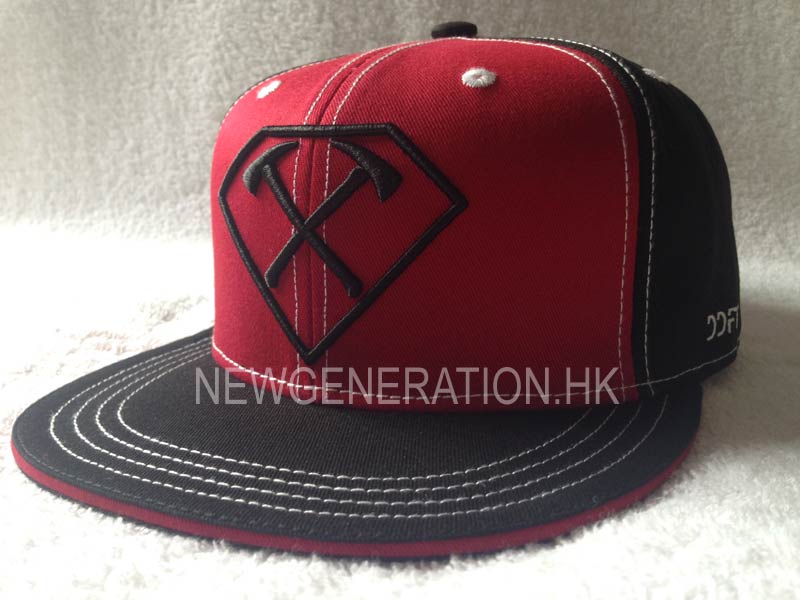
Decision Table

CriterionEmbroideryWoven patchLeather patch
Best artwork fit Bold, mid-detail logos Fine lines, small text, multi-color Bold silhouettes, monochrome, premium feel
Typical cap placement Front crown, structured panel Side, back, small front panel Front crown, sometimes side
Tactile result Raised, textured Flat, thin, crisp Debossed or embossed, firm
Durability risk to verify Thread thinning at high wash cycles Attachment edge after industrial wash Bond or stitching integrity, hide cracking
Sample to approve before bulk Physical sew-out on the actual cap Physical patch sample, attached Color and deboss depth sample
Common approval failure Small text unreadable in thread Patch color mismatch with cap fabric Compliance or hide-origin question
Best when… Brand wants texture and the artwork supports thread Logo has detail thread cannot reproduce Positioning is premium, workwear or lifestyle

Approval Questions to Use Before Sampling

These questions are written so you can hand them to design, procurement and compliance in one document. Use them as a checklist on the first sample round.

  1. Precision: What is the smallest text or thinnest line in the logo, and is it within the legibility threshold for the chosen method?
  2. Application: Which cap panel will carry the logo, and is that panel structured, unstructured, curved or flat?
  3. Tactile identity: Has the brand owner confirmed whether the touch-feel should be raised, flat or debossed?
  4. Color match: How will color be matched across the decoration, the cap fabric and the sweatband? Has the brand owner signed off on the color reference?
  5. Attachment: For patches, which attachment method will be used, and how does it behave after the cap's expected washing routine?
  6. Compliance: For leather, has the hide origin and any associated documentation been requested from the vendor in writing?
  7. Approval artifacts: Which physical sample (sew-out, patch sample, deboss sample) does the brand need before bulk, and who signs off?

Frequently Asked Questions

Which method lasts longest after industrial or repeated washing?

Durability depends on two things: the decoration itself and the attachment. Embroidery thread can thin at high-density stitch points; woven patches can fail at the attachment edge; leather can crack or delaminate if the bond is wrong. Ask your vendor for documented wash behaviour for the specific method and attachment you plan to use, and confirm it on the actual cap fabric before bulk.

Can the same logo be produced in all three methods?

Often yes, but not always with equal results. A logo designed for thread may look heavy as a debossed leather patch; a logo designed for fine woven detail may lose presence when embroidered. If the same logo must run across multiple cap programs and methods, design a primary version and a method-specific simplified version, and document both in your brand book.

How do I confirm colors will match across methods?

Match each method to a physical color reference — a thread card for embroidery, a yarn card for woven, a hide swatch for leather — and approve a physical sample for each. Do not approve color from a screen alone. Document the approved reference so bulk production has a single source of truth.

What artwork file should I prepare?

Prepare a vector source file with all text outlined, plus a separate file showing the exact size on the cap panel. Include Pantone references, the minimum legible element, and a note on the smallest size at which the logo must stay readable. The richer the spec, the lower the sample risk across all three methods.

Get the Craft Brief

The working document behind this article: the P.A.T.C.H. framework, the decision table, the approval questions and a pre-spec checklist your design, procurement and compliance stakeholders can share. Use it to align internal teams before you sample, and to keep a record of what was approved.

Get the Craft Brief →

Pre-spec checklist (no sign-up, low friction): before you request any sample, write down the logo's smallest element, the target cap panel, the expected wash routine, the approved color reference and the named approver. Five lines, one page — and you will catch most sampling mistakes before they cost a production slot.
Custom Cap: From Design Brief to Approval Checklist

Custom Cap: From Design Brief to Approval Checklist

To source a custom cap successfully, overseas buyers must transition from a general design idea to a detailed, document-ready specification sheet. This preparation involves defining structural parameters, selecting materials, documenting construction methods, and establishing a strict visual approval checklist. By aligning these variables before contacting an OEM/ODM manufacturer, brands and wholesalers can reduce quotation delays and mitigate production miscommunications.

Custom Caps Without the Inventory Risk: How Digital Factories Are Changing the Game

You no longer need 1000 units to get custom logo caps. Digital-first cap factories now offer zero minimums, real-time sampling, and full spec control—so you launch faster with less risk.

Custom Embroidered Trucker Hats Wholesale: Technical Specification Checklist

The HEAD-FRAME Protocol for Specification

When communicating with manufacturers, vague requests lead to inconsistent results. For custom embroidered trucker hats wholesale, which involve hybrid materials (foam, mesh, and fabric) and complex assemblies, precision is critical. We use the HEAD-FRAME protocol to structure specifications:

H
Headwear Shape
Profile height and crown structure
E
Embroidery Area
Decorated zone limits and stitch density
A
Adjustment Type
Closure mechanisms and sizing ranges
D
Dimensions
Brim length and crown circumference
F
Fabric Composition
Front panel, bill, and mesh materials
R
Requirements
Color fastness and packaging standards
A
Approval
Physical sample sign-off criteria
M
Manufacturing Tolerances
Accepted variance in stitching and sizing
E
Export Readiness
Packaging compliance for your destination market

1. Structural Specifications: Defining the Profile

A common point of friction in custom embroidered trucker hats wholesale is the definition of "profile." The profile determines the slope of the front panel and significantly impacts how the logo sits on the hat.

  • High Profile: Typically features a steep slope from the bill to the top of the crown. This creates a prominent front canvas, ideal for large, bold logos. However, it may sit higher on the forehead.
  • Mid Profile: Offers a more balanced slope, often preferred for a classic, streetwear aesthetic. It generally accommodates medium-sized embroidery well.
  • Low Profile: Features a shallow slope and closer fit to the head. This restricts the embroidery area and requires checking that the design does not curve into the seam.

Action Item: Request a technical diagram from your supplier indicating the angle of the front panel relative to the brim. Do not rely solely on profile names, as "Mid" can vary between factories.

2. Material Composition: Foam and Mesh

Trucker hats are defined by their hybrid construction. Specifying the wrong weight or material type can alter the breathability and stiffness of the final product.

Front Panel Foam: Traditionally, trucker hats use a polyurethane foam front. You must specify the density.

  • Standard Foam: Soft and flexible, creates a vintage, relaxed look.
  • Structured Foam: Stiffer, maintains shape rigidly, suitable for high-definition embroidery.

Question for Supplier: "What is the density (g/cm²) of the front panel foam, and does it contain a buckram backing for rigidity?"

Mesh Back: The open weave allows for ventilation.

  • Polyester Mesh: Durable and colorfast. You should specify the "denier" or yarn thickness. A thicker denier provides a premium feel and better opacity.
  • Nylon Mesh: Softer but may have different dye lot characteristics.

Question for Supplier: "Is the mesh nylon or polyester, and what is the gauge of the mesh holes (measured in holes per inch)?"

3. Decoration and Artwork Limits

When purchasing custom embroidered trucker hats wholesale, embroidery is the primary decoration method, but the interaction between needle and fabric is complex.

Stitch Count vs. Area: A high stitch count on a low-density foam can cause "puckering" or the foam to tear.

Recommendation: Ask the factory for a "stitch count limit" relative to the specific foam backing you selected.

3D Puff Embroidery: This technique adds height to the logo. It requires a specific foam underlay that is dissolved or cut away.

Critical Spec: You must define the maximum height of the puff (e.g., 2mm vs. 4mm). Not all mesh or foam combinations support 3D puff equally.

Placement: Standard placement is 2.5" to 3.5" inches down from the top of the crown center.

Verification: Always request a "digitized placement map" showing the center point relative to the seam lines.

4. Decision Framework: Selecting Your Configuration

To streamline your sourcing, use the following table to compare the three most common configurations in the market. Use this as a reference during your consultation.

FeatureOption A: Classic RetroOption B: Modern StreetwearOption C: Performance
Front Panel 5-Panel, Foam Front, Hard Buckram 5-Panel, Foam Front, Medium Buckram 5-Panel, Synthetic Performance Fabric
Mesh Type Wide-open Nylon or Polyester Tighter-weave Polyester Quick-dry Spacer Mesh
Brim Flat, Pre-cured Slightly Curved or Flat Pre-curved, Sweat-wicking
Best For Vintage brands, Promotional events Fashion retailers, Streetwear labels Outdoor sports, Corporate uniforms
Embroidery Limit Medium density (risk of tearing foam) High density (good structure) Low density (prevents

Custom Embroidery, Woven Patch or Leather Patch: Which Works for Your Cap Logo?

Choosing a logo treatment for custom caps is not simply a choice between embroidery and patches. The right option depends on the logo itself, the cap material and the moment in which the wearer will see it.

Start with the Mark–Material–Moment test. It gives a product team a clearer discussion than asking which option is "best."

The Mark–Material–Moment test

Mark: what does the logo need to communicate?
Look at the number of small details, the line weight, the colour changes and the role of the logo. A simple mark may need a different treatment from an illustrated badge. If the artwork includes tiny text or fine lines, do not assume every treatment will reproduce it in the same way. Mark those details for sample review.

Material: what is the cap made from?
The front construction and material affect how a logo appears and feels. A cap can have a structured or softer front, a smooth or textured fabric, and different areas available for branding. State the material direction and the intended placement in the brief, then ask what needs confirmation on the sample.

Moment: where and how will the cap be worn?
Is the cap intended as a uniform item, a retail product, a club piece or an event giveaway? The intended context shapes the visual direction. A subtle branded mark and a bold collectible patch may solve different brand problems even when they use the same artwork.

Compare the three common directions

DirectionOften useful whenQuestions to approve on a sample
Embroidery The logo benefits from visible thread texture and a direct application to the cap. Thread colour, edge definition, position, scale, density and how the mark sits on the front panel.
Woven patch The identity works as a badge and needs a defined patch boundary. Patch size, border, backing, attachment method, colour detail and position.
Leather patch The brand direction calls for a material contrast or a more tactile label-like detail. Patch material, finish, mark treatment, edge, attachment and appearance against the cap fabric.

This table is not a production guarantee. It is a briefing tool. The physical sample is where a team confirms whether the actual artwork, cap and treatment work together.

Do not separate placement from construction

A logo can be centred on a screen and still feel wrong on a finished cap. The front panel shape, seam position, crown height and brim relation all affect the result. Add a marked front, side and back view to the brief when placement matters.

Use a short placement note:

  • identify the cap reference and view;
  • show the intended logo area;
  • mark approximate width and vertical relationship to visible features;
  • identify whether the treatment is fixed or still being compared;
  • record who approves the final sample placement.

The note does not need to replace a full tech pack. It simply prevents the word "front" from carrying too many assumptions.

Review a sample with evidence, not memory

During sample review, compare the cap to the approved artwork and placement reference. Ask:

  • Does the logo remain legible at the intended scale?
  • Does the treatment match the intended brand direction?
  • Does the placement look correct from the front and side views?
  • Are cap construction, fabric and decoration being reviewed as one product?
  • What must be recorded before a bulk handoff is considered?

If a revision is needed, write it as an instruction tied to the sample and marked image. Avoid vague feedback such as "make it cleaner." A clearer record gives the team something it can verify at the next review.

Prepare artwork for a useful first conversation

Bring the most complete artwork you have, reference images, colour direction and a list of open questions. If you do not know the final treatment yet, say that directly. Ask the manufacturer which details need to be clarified before a sample is discussed.

This is a better starting point than choosing a patch or embroidery method solely from a product photo. It makes the uncertainty visible and gives the sample a real decision to answer.

Primary CTA: Get the Cap Decoration Brief

Use the brief to collect logo files, placement references, cap images and sample-review questions in one place. Then send one consistent version to each supplier you are comparing.

FAQ

Is embroidery always the best option for a cap logo?
No. The best fit depends on the logo, cap material, placement and intended visual direction. Use a sample to assess the combination instead of relying on a mock-up alone.

Can one cap use both embroidery and a patch?
It may be possible for a project, but the design needs a clear hierarchy. Document the placement and purpose of each element, then review the combination on a sample.

What should I send before requesting a logo sample?
Send the artwork available, cap references, placement notes, colour direction, the intended use context and the decisions the sample must help you make.

Custom Hat Embroidery Tips

Custom Hat Embroidery Tips

Hats that have been personalised or embroidered are usually great promotional goods. They're useful for event attendees and make terrific giveaways. Businesses who give free hats have a slightly different perspective.


Custom Hat Manufacturer For Cost-Effective Promotional Customized Caps

Custom Hat Manufacturer For Cost-Effective Promotional Customized Caps

The current competitive business era majorly depends on the worth and effectiveness of advertising and marketing your brand name. You just cannot neglect this considerable tool when it comes to achieving success. Seek the assistance of a specialized Custom Hat Manufacturer to obtain promotional customized caps for advertising and marketing.

Custom Hat Manufacturer for Different Sorts of Caps

Custom Hat Manufacturer for Different Sorts of Caps

Indubitably, employing an expert and skilled Custom Hat Manufacturer can make this process easier for you. Combining their wealth of experience they can efficiently produce caps and handle your bulk orders as well.

Custom Hat Manufacturer, Hat Tech Pack and China Manufacturing

Custom Hat Manufacturer, Hat Tech Pack and China Manufacturing

Tech packs are typically documents created by designers, technical designers, and product developers. This document includes information about the below:

Custom Hat Manufacturer: A Documentation-First Supplier Comparison

Custom Hat Manufacturer: A Documentation-First Supplier Comparison

Comparing a custom hat manufacturer should not start with a website or a catalogue. It should start with documents. The EVIDENCE framework turns supplier selection into a verification exercise: you request the same written proof from every candidate — capabilities, commercial terms, quality controls and references — then compare the answers side by side. This article shows you how to run that comparison, which questions to ask, and how to build a defensible record before you approve any supplier.

Custom Hat Manufacturers For Custom Flexfit Hats

Custom Hat Manufacturers For Custom Flexfit Hats

When it comes to a hat, it is an accessory worn on the head for different purposes, be it for decorative purposes or to protect you from the heat or cold or as an ornament, as a social status symbol, or as protection.

Custom hats and designs to enhance your brand

Whether you are attending a retail, sporting or corporate event, custom hats are an effective way to promote your brand. At our new generation of worthy and trusted hat manufacturers and hat factories, we focus on providing high quality custom hats customized to your needs. From custom sports caps to innovative hat designs, we provide solutions that not only meet your expectations but enhance your brand image.

Custom Hats as a Tool for Personal Expression and Employee Well-being

As the modern workplace continues to evolve, businesses are finding innovative ways to boost employee morale, promote individuality, and reinforce team spirit. While many organizations focus on traditional benefits like health insurance and retirement plans, there's a growing trend of offering more personalized perks—one of the most unique being customized hats.

Custom Hats Low MOQ: A Sourcing Guide for New Brands

Defining Your Customization Level

For new brands and corporate buyers, the term "Low MOQ" (Minimum Order Quantity) is often misunderstood. It is not merely a small number; it is a supply chain strategy that involves trade-offs between customization depth, unit cost, and speed. When sourcing from Shenzhen, the manufacturing hub for global headwear, success depends on how well you communicate your constraints and technical requirements to the cap factory.

The first step in planning without guessing is to categorize what "custom" means for your project. In OEM/ODM manufacturing, customization exists on a spectrum. Understanding where you sit on this spectrum dictates the MOQ.

  • Stock Decoration: This involves purchasing pre-made base hats (blanks) and applying your logo via screen printing, heat transfer, or embroidery. This generally offers the lowest possible entry threshold because the raw materials are already produced.
  • Semi-Custom: Here, you select a factory's existing silhouette but customize the fabric, color, or labeling. This requires the factory to source or dye specific materials for you, which typically triggers a higher minimum than stock blanks due to material run lengths.
  • Full Custom (OEM): This involves creating a new mold, developing a unique shape, or using custom yarns. This is the deepest level of customization and traditionally carries the highest MOQs.

To plan effectively, you must verify if your brand identity can be achieved through Stock Decoration or Semi-Custom solutions before insisting on Full Custom manufacturing. This decision alone can determine project feasibility.

The Prototype-to-Production Framework

To remove uncertainty, use the Prototype-to-Production Matrix. This framework separates the project into distinct phases, ensuring you do not pay for bulk production until the prototype meets your standards.

Phase 1: Technical Specification

Before contacting a supplier, document your requirements. Guesswork leads to expensive mistakes. You need to define:

  • Profile: Dad hat, trucker, bucket, or beanie?
  • Material: Cotton twill, polyester blends, or performance fabrics?
  • Closure: Snapback, buckle, or stretch-fit?
  • Artwork: Vector files (AI or PDF) are essential. Note the dimensions and location of the logo.

Phase 2: The Pre-Production Sample (PPS)

Never approve a project based on a digital photo alone. You must require a physical pre-production sample. This sample confirms the stitching density, the color accuracy of the fabric (Pantone matching), and the overall fit. This phase is where custom hats low moq planning is critical—you are negotiating the cost and speed of this specific validation step.

Phase 3: Pilot Batch

Instead of jumping to your ideal annual volume, negotiate a pilot run. This serves as your first commercial order. It allows you to test the market with a lower risk while establishing a production history with the factory.

Strategic Batching for Volume Efficiency

One of the most effective ways to navigate MOQ requirements is through "Strategic Batching." Cap manufacturers often set minimums based on the efficiency of their machinery and dye lots. You can leverage this by grouping your requirements.

  • Color Grouping: If you require three different hat colors, ask the factory if they can be dyed in the same lot or if the fabric is sourced from the same supplier. Sometimes, using the same base fabric color but different thread colors for logos can streamline the process.
  • Style Consolidation: Reducing the variety of base styles can lower your per-unit minimum. For example, ordering 500 units of one style is generally easier and cheaper than ordering five different styles of 100 units each.
  • Decoration Consistency: Keeping the logo size and placement consistent across different hat colors allows the factory to set up the embroidery machines once, saving time and potentially reducing setup fees.

Decision Table: Trade-Offs in Low-MOQ Sourcing

When planning your project, use this table to decide where you can be flexible to achieve your volume goals.

Priority optionCustomization depthLead timeUnit costBest for
Speed to market Low (Stock Blanks) Fastest Higher Events, promotional giveaways, trend testing.
Brand uniqueness High (Custom Yarns/Molds) Longest Lowest (at high volume) Established brands launching flagship collections.
Balanced approach Medium (Semi-Custom) Moderate Moderate Growing brands needing specific colors/fits without huge inventory.

Critical Approval Questions for Your Supplier

To move from planning to execution without guessing, you must ask the following questions. Do not assume the factory will volunteer limitations.

  1. Material sourcing: "Do you source these specific fabrics in-house, or is there a longer lead time for raw material procurement?"
  2. Sampling costs: "Is the cost of the pre-production sample credited back to the bulk order if we proceed?"
  3. Tolerance standards: "What are your accepted dimensional and color tolerance variances for a run of this size?"
  4. Quality assurance: "Can you provide a quality control checklist that will be used during the production of my order?"
  5. Scalability: "If this pilot run sells out, what is the turnaround time for a repeat order, and will the price tier change?"

Pre-Production Checklist

Before signing off or issuing a purchase order, ensure you have the following confirmed:

  • Vector Artwork: Confirmed in .AI or .EPS format.
  • Pantone Codes: Defined for both fabric and thread colors.
  • Size Chart: Verified against the target market (e.g., US vs. EU sizing).
  • Sample Approval: Written sign-off on the physical pre-production sample.
  • Packaging Specs: Instructions for individual polybagging or retail boxes.

Frequently Asked Questions

Does "Low MOQ" mean I can order just one hat?

Generally, no. In a B2B manufacturing context, "Low MOQ" refers to a minimum threshold significantly lower than industry standards (which might be thousands of units). It typically refers to small batches ranging from dozens to a few hundred units, depending on the customization level.

Why is the unit price higher for smaller orders?

Manufacturing involves fixed costs. Setting up embroidery machines, preparing patterns, and sourcing fabrics take the same amount of time regardless of whether you produce 50 or 5,000 hats. Smaller orders spread these fixed costs over fewer units, resulting in a higher per-unit price.

Can I mix different styles to reach the MOQ?

This depends on the factory's policy. Some manufacturers allow "assortment" where you can mix colors of the same style to reach a total count. Mixing entirely different styles (e.g., beanies and bucket hats) is rarely counted toward a single MOQ because they require different materials and machinery setups.

How do I handle shipping costs for small orders?

For smaller batches, air freight or express courier services are often the only viable options to meet deadlines, though they are more expensive per kilogram than sea freight. Planning your logistics timeline is as important as planning the production.

What if the sample looks different from the bulk order?

This is why a "Golden Sample" is vital. You must retain a physically signed sample from the factory. When the bulk production arrives, you compare it against the Golden Sample, not just a digital photo. Ensure your contract specifies penalties or remedies for significant deviations from the approved sample.

Get Your Inquiry Brief

Navigating the complexities of custom hats low moq requires a partner who understands the balance between quality and quantity. Don't leave your brand's reputation to guesswork.

Get Your Inquiry Brief →

Ready to validate your specifications? Download our Low-MOQ Project Checklist to ensure you have every detail covered before your first production run.

Custom Headwear Manufacturer in China

Custom Headwear Manufacturer in China

Caps are a very popular headwear used almost everywhere in the world. They are available in various shapes and sizes, colors and patterns. There are several hat variants named after their function and the occupation of the hat wearer.

Custom Military Caps: Turn a Reference Image Into a Clear Factory Brief

Why Military-Style Cap Briefs Often Become Vague

Military-style caps are easy to describe loosely and hard to brief precisely. A buyer may say "we want a military cap," while one stakeholder imagines a flatter crown, another expects a more structured front, and a third is focused only on the logo patch. That ambiguity travels directly into sampling.

The solution is not to overpromise technical detail. The solution is to create a common description for the visible project decisions before the sample begins.

The Field-Fit-Function Review

Use this three-part review before you compare suppliers or ask for a first sample.

Field
Visible shape
What the cap should look like on the table and on the head
Fit
Wearer experience
How the cap should sit on the wearer
Function
Project role
What job the cap plays in the project

Field: What Visible Shape Is the Cap Meant to Have?

Start with what the cap should look like on the table and on the head. Mark the front, side, and top views that matter. Ask:

  • Is the crown intended to look flatter, lower, taller, or more structured?
  • What brim impression matters most: flatter, more curved, firmer, or softer?
  • Which seams, panels, or front-face areas are important to the final look?

The goal is not to assume the internal build. The goal is to document the visible result the sample should help the buyer review.

Fit: How Should the Cap Sit on the Wearer?

Fit affects both appearance and approval. A military-style cap can look visually correct on a mood board and still feel wrong if the cap sits too high, too soft, or too narrow for the intended wearer use. Ask the team to define:

  • who the cap is for;
  • whether the project is fashion-led, promotional, or part of a uniform use case;
  • whether the fit should feel crisp and structured or softer and more casual.

Those decisions help the supplier understand which visible features matter most on the first sample.

Function: What Job Does the Cap Play in the Project?

The same cap style can serve very different programs. A retail collection may prioritize brand expression. A uniform project may prioritize consistency in presentation and approval. An event project may need a simpler decision path. The function of the cap determines which details must be settled early and which can wait for later confirmation.

Turn a Custom Military Cap Concept Into a Sample-Ready Brief

Use one version of the project input for every supplier you compare.

Brief areaWhat to includeWhat to confirm
Reference views Front, side, back, and detail images; mark what is inspiration versus fixed direction. Which visible features must the sample preserve?
Shape notes Crown impression, brim direction, and overall silhouette. Which shape points need explicit review on the first sample?
Branding Artwork file, patch or decoration direction, and placement references. How will placement be reviewed against seams and shape?
Wearer context Intended use and who will approve the look. Which fit or presentation questions matter most?
Review route Sample objective, review date, and feedback record. What will become the approved reference if the sample is accepted?

This table gives suppliers the same project to interpret, which is the foundation of a fair comparison.

Review Branding with Construction, Not After It

On a military-style cap, branding often interacts directly with shape. A front patch, embroidery, woven label, or print may read differently depending on the crown face, seam layout, and brim proportion. That is why the first sample should test branding as part of the visible cap design, not as an afterthought.

Instead of asking only "does the logo look good?", ask:

  • does the branding fit the visible cap shape?
  • does the placement feel balanced against the front area and brim?
  • does the sample show the scale clearly enough for approval?

Those questions produce actionable feedback instead of subjective comments.

Seven Approval Checkpoints for the First Sample

  1. Does the overall silhouette match the intended military-style direction?
  2. Does the cap sit on the head the way the team expected?
  3. Does the brim shape support the project look?
  4. Does the branding treatment fit the visible construction?
  5. Are seams, edge finishes, and visible details clean enough for review?
  6. Which changes are required before the next sample or approval stage?
  7. What document or photo set will become the reference if this sample is accepted?

These checkpoints give the buyer a practical way to approve or revise the sample without making unsupported production claims.

Frequently Asked Questions

What should I send to a supplier for a custom military cap enquiry?

Send the clearest reference images you have, note what is fixed versus inspirational, include branding files if available, and list the specific questions the sample must answer.

Do I need a full tech pack before requesting a military-style cap sample?

Not always. A focused brief with visible reference views, branding direction, and approval questions can start the process. The important part is that uncertainty stays visible rather than being treated as a hidden final spec.

How should I compare two suppliers on this cap type?

Give them the same brief, then compare how clearly they respond to the visible shape, branding, sample objective, and feedback route. The better comparison is the better-documented one.

Should branding be reviewed separately from the cap shape?

No. Branding should be reviewed against the actual construction and silhouette because the same logo treatment can look balanced on one cap face and awkward on another.

Can this article be used for compliance or military-spec approval?

No. This draft is only for visible project definition, sample review, and supplier comparison. Any compliance, testing, certification, or military-spec claim needs separate current business evidence before publication or approval.

Download the Military-Style Cap Enquiry Brief

Align shape, branding, and sample-approval questions before you send the first request.

Download the Enquiry Brief →

Not ready to download? Save the 7 approval checkpoints and use them in your next sample review.

Custom Sports Caps

Article Three: The Appeal of Snapback Hats

When talking about customizable caps, we cannot forget snapback hats – loved by many for their versatility and cool factor.

Custom Sports Caps and Baseball Caps: How New Generation Cap Manufacturers Can Elevate Your Brand with Personalized Hats

Boost Your Brand Visibility with Customized Hats: How Cap Manufacturers Can Elevate Your Business with Custom Sports and Baseball Caps


In the highly competitive world of branded merchandise, standing out is essential. One of the most effective ways to boost your brand’s visibility and engage with customers is through customized hats. Whether it's for a sports team, promotional event, or as part of your product line, hats are a timeless accessory that offers vast potential for customization. This article explores how cap manufacturers can help businesses elevate their brand through custom sports caps and baseball caps, offering personalized solutions that meet the needs of modern consumers.

Custom Sports Caps: Show Your Team Spirit in Style

Sports have always been a powerful medium for bringing people together and fostering a sense of community. Whether you're a player or a fan, showing support for your favorite team is an essential part of the sports experience. One way to demonstrate your team spirit is through custom sports caps. These personalized accessories not only allow you to proudly display your allegiance but also add a stylish touch to your overall look. This article will guide you on how to show your team spirit in style with custom sports caps.

Custom Trucker Hats for Wholesale: A Buyer's Specification Checklist

Why Vague Specs Cost Wholesale Buyers Money

Most trucker hat sourcing problems are not quality defects — they are specification gaps. A buyer approves a sample that "looks right," but the purchase order never records the stitch density, mesh gauge, or bill radius that made the sample look right. When bulk production arrives, the factory has shipped to a different, unstated interpretation.

By the time the goods sit in your warehouse, the only remedies are a discount or a re-run, and both compress your margin. The fix is not to inspect harder. It is to specify earlier. Treat the spec sheet — not the sample — as the contract.

The F.R.O.N.T. Truck Spec Framework

The framework walks the hat from front panel to label. Each dimension produces one or two numbers you can paste into an RFQ.

F
Fabric &
weight
R
Reinforcement
(panels & bill)
O
Ornamentation
(embroidery)
N
Notions
(mesh, closure)
T
Testing &
traceability

F — Fabric and Weight

The front panel and bill are typically a foam-backed woven or twill. Document the base fiber, the weave, and the fabric weight in grams per square meter (GSM) or ounces per square yard.

The same logo behaves differently on a 240 GSM foam-front panel than on a 180 GSM unstructured panel, so record the weight beside the artwork.

R — Reinforcement (Panels and Bill)

State the panel count (five, six, or seven), whether the crown is structured or unstructured, and the bill shape (pre-curved, flat, or custom-tooling).

Bill curvature is a frequent inspection failure: if the radius is not on the spec sheet, the factory ships to its default.

O — Ornamentation (Embroidery)

This is where wholesale buyers under-specify most. Record the stitch count, the coverage percentage (fill vs. running stitch), the thread type and denier, the number of colors, and the position offsets from the crown seam and the bill edge.

Stitch density — stitches per square centimeter — is the single variable that makes a logo read "premium" on one hat and "thin" on another. State it.

N — Notions (Mesh, Closure, Sweatband)

The mesh back is the visual signature of a trucker hat. Document the mesh gauge (holes per inch), the color-match standard (Pantone or approved swatch), and whether the mesh is foam or fabric.

For the closure, record the snap count and strap type. For the sweatband, specify material (foam, terry, or leatherette) and whether inner-seam taping is required.

T — Testing and Traceability

Record the country-of-origin label, the care-label content, the fiber-content label, and any third-party testing the buyer requires.

If the hats ship to multiple markets, list each market's labeling rule separately — do not assume one label satisfies every destination.


Side-by-Side Spec Comparison

When two suppliers return quotes, the F.R.O.N.T. dimensions expose hidden differences. Fill each cell from the supplier's written spec, not from memory or verbal assurance.

<td style="padding:12px 18px; border-top:1
DimensionSupplier ASupplier BRisk if left unstated
Front fabric weight (GSM) _____ _____ Logo reads thin on lighter panel
Panel count / structure ___ panel, ___ ___ panel, ___ Crown shape varies run to run
Embroidery stitch density ___ st/cm² ___ st/cm² "Premium" vs. "thin" logo
Mesh gauge & color standard ___ / ___ ___ / ___ Color drift between batches
Closure (snap count, strap) ___ / ___ ___ / ___ Fit complaints at retail
Sweatband & taping ___ / ___ ___ / ___

Contact Us

+(86) 755 2830 2782

From 8:00 AM to 20:00 PM, UTC/GMT +6h

info@newgeneration.hk

SHUZIGUIGU INDUSTRIAL PARK 89 HENGPING ROAD HENGGANG, LONGGANG, SHENZHEN CHINA

The Manufacturer

About New Generation Headwear

New Generation Headwear is a Professional Custom Cap Manufacturer in China.

Cap Sampling Process

Cap Manufacturing Process

How To Custom Hat

Facebook

Instagram