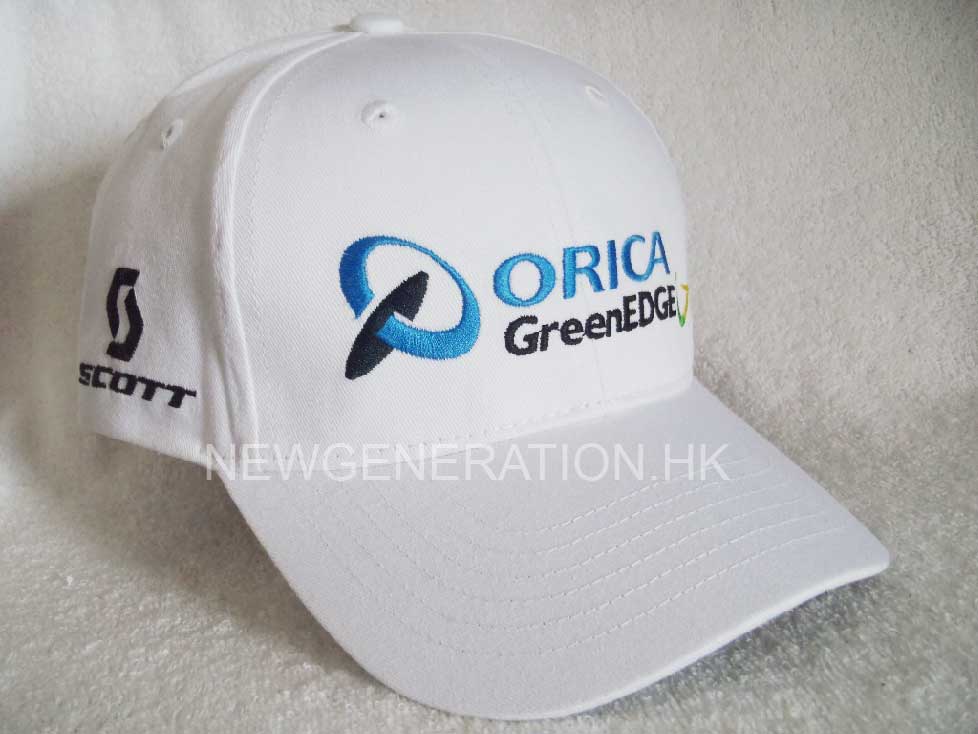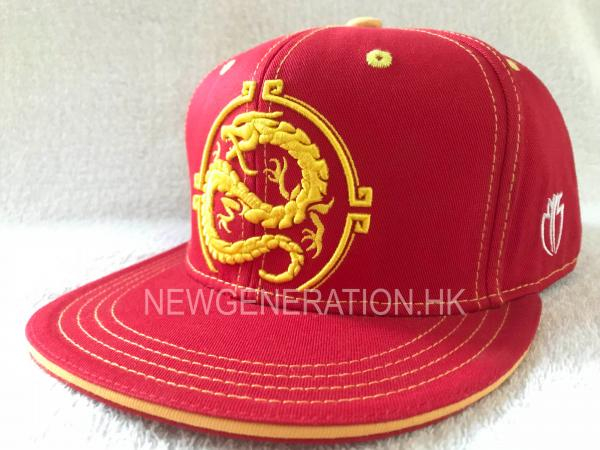


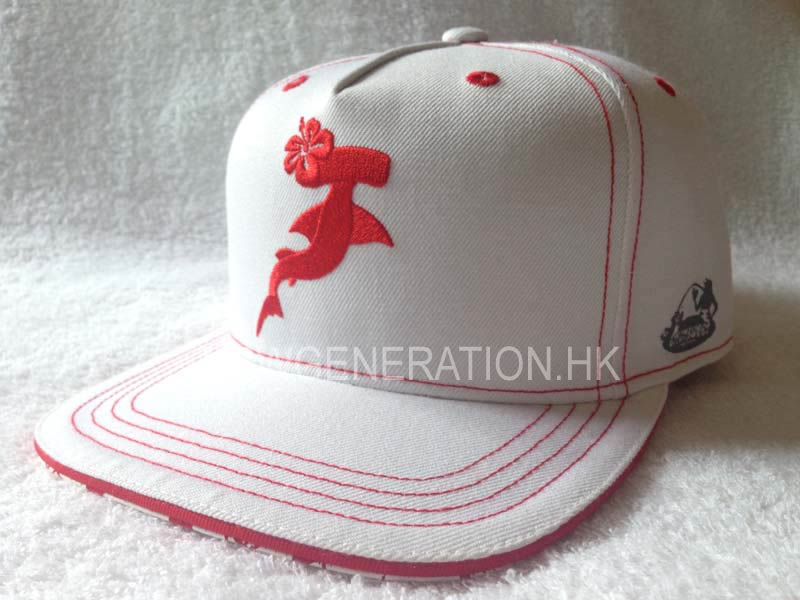
Why 2026 Looks Different for Cap Manufacturers
In March 2024, a mid-sized promotional products distributor in Dallas sent us an email that stopped our production team cold. They needed 8,500 custom snapbacks—full-color embroidery, organic cotton twill, biodegradable packaging—turned around in 14 days. Three years ago, that timeline would have been laughable. We hit ship date on day 13.
That moment crystallized something we've been watching build since 2021: the rules for cap manufacturers are being rewritten faster than most shops can retool. Materials, machinery, customer expectations, supply routes—every layer of this industry is shifting simultaneously. The shops stuck debating whether to upgrade their embroidery machines are already behind. The ones asking different questions entirely will own 2026.
Here's what we're seeing from the production floor, the sourcing calls, and the late-night logistics fire drills.
---
1. Sustainable Materials Are No Longer Optional—They're Table Stakes
By late 2025, three of the five largest promotional product distributors in the U.S. will require verified sustainability documentation in every apparel RFP. We know because two of them sent us their updated vendor qualification packets in January 2025, and the language is blunt: no recycled content proof, no contract.
The shift isn't theoretical. At our facility, organic cotton usage jumped from 12% of total yardage in 2022 to 41% by Q4 2024. Recycled polyester—primarily from post-consumer PET bottles—now accounts for 28% of our structured cap production. These aren't experimental runs anymore. They're the default.
What's actually working right now:
- Recycled polyester (rPET) delivers near-identical durability to virgin poly. In tensile strength testing we ran with a third-party lab in Guangzhou in October 2024, 100% rPET twill held within 4% of virgin material across 10,000-cycle abrasion tests. The cost premium has compressed from roughly 25% in 2021 to 8-12% today.
- Organic cotton twill has become the entry point for brands wanting "sustainable" on their spec sheet without re-engineering everything. The catch: consistency is still a headache. One lot from a certified mill in Tamil Nadu arrived in August 2024 with a face-side slub count 3x what our QC standard allows. We ate the reorder. Point is, certification doesn't guarantee weave quality.
- Hemp blends get talked about constantly, but actual orders remain tiny. We ran 1,200 units for a California lifestyle brand in 2024, and the fabric's hand feel polarized their customer base. Return rate was triple their cotton line. The material has potential, but the supply base for garment-grade hemp twill is still too thin for reliable production.
There's also a compliance layer that catches newer shops off guard. If you're exporting finished caps into the U.S. under HTS heading 6505.00, customs brokers are increasingly asking for material composition certificates. One freight forwarder we work with in Long Beach told us in December 2024 that CBP holds on headwear shipments with incomplete fiber documentation tripled year-over-year. The paperwork matters now in a way it simply didn't in 2019.
---
2. Automation Is Changing the Math on Domestic vs. Offshore Production
The loudest conversation in cap manufacturing right now isn't about sustainability. It's about where the machines go.
Automated sewing lines have been around for years, but the economics shifted meaningfully in 2023-2024. A 6-head embroidery machine paired with a robotic panel handler can run 18 hours unattended. Labor cost per cap on an automated line in a U.S. facility now sits around $0.85-1.10 for structured cotton caps, compared to $0.25-0.40 in a well-run overseas plant. That gap was $1.50+ in 2019.
But the real story isn't unit cost. It's speed-to-market. A cut-and-sew facility in Georgia running automated lines can turn a 5,000-unit custom order in 8-10 business days from fabric to finished goods. Ocean freight from Asia adds 28-35 days. Air freight closes the gap but wipes out the offshore cost advantage entirely.
Here's the breakdown we've been tracking internally:
Production ModelUnit Cost (structured cotton, 6-panel)Typical Lead TimeMOQ FeasibilityOffshore, manual-heavy$1.80-2.2035-50 days500+ unitsOffshore, semi-automated$1.50-1.8530-40 days300+ unitsU.S. domestic, automated$3.50-4.808-14 days100-250 unitsNearshore (Mexico), semi-automated$2.40-3.2014-21 days250-500 units
Data reflects typical FOB pricing for mid-range structured cotton twill caps as of Q1 2025. Actual quotes vary heavily by decoration complexity.
The upshot: automation isn't killing offshore production, but it's eating the middle. Orders between 250-1,000 units with short timelines are increasingly going domestic or nearshore. Orders above 3,000 units with flexible delivery dates still flow overseas. The smart cap manufacturers we compete with are positioning for both tracks—automated lines in multiple regions, not just one low-cost base.
*Brief aside: this dynamic mirrors something the gaming industry discovered years ago. Capcom's pivot to team-driven development models—where smaller, autonomous squads own entire projects—crushed their old waterfall approach and produced a string of hits. Cap manufacturing isn't so different. The shops winning right now are organized into small, flexible production cells that can pivot between order profiles without retooling the whole floor.*
---
3. Personalization Has Outgrown Its "Trend" Label
Calling personalization a "trend" in 2026 feels dishonest. It's the water we're all swimming in.
In November 2021, a customer—Jason, runs a small outdoor gear brand out of Bend, Oregon—asked if we could do 50 caps with individual trail names embroidered on the side panel. We said yes, charged a premium, and manually programmed each file. By 2023, that same request had scaled to 2,000 units per month, and manual programming was no longer viable.
We invested in variable-data embroidery software that pulls customer-submitted names from a CSV file and auto-generates stitch files. The per-unit cost for individualized embroidery dropped from $4.25 to $1.80. Today, roughly 22% of our total decoration work involves some degree of personalization—names, numbers, custom interior labels, even individualized sweatband printing.
What's driving this:
- Direct-to-consumer brands want packaging and product that feels one-to-one. A plain cap with a logo is background noise. A cap with the customer's dog's name stitched inside? That gets unboxed on Instagram.
- Corporate merchandise buyers have discovered that personalized gifts outperform generic swag 3-to-1 on employee retention metrics. We heard that stat from a Chicago-based HR consultancy that ordered 4,500 custom caps with individual employee names in Q3 2024. They reordered within 60 days.
- Youth sports and events remain a monster category. Tournament caps with player numbers and team names printed on the undervisor are now standard, not premium. The margin on these runs has compressed, but the volume keeps growing.
The bottleneck for most shops isn't the decoration technology—it's the order management. Processing 2,000 individual name variations without data errors requires backend systems that most cap manufacturers didn't build for. We learned that lesson the hard way: a corrupted CSV file in June 2023 led to 300 caps with scrambled names, which cost more in rework and freight than the entire order's margin. We now run validation scripts on every personalization file before it hits production. If your shop isn't doing that yet, start.
---
4. The Supply Chain Isn't "Broken"—But It's Permanently Different
Anyone still waiting for container rates to go back to 2019 levels needs a different strategy. The global supply chain for headwear has restructured, and some of the changes are structural, not cyclical.
Three shifts we've had to absorb:
First, yarn and fabric sourcing is consolidating. The number of mills producing certified organic cotton twill at scale for headwear applications has actually shrunk. We counted 14 reliable suppliers globally in 2020. By January 2025, that number was seven—and two of them had 18-month backlogs on certain base colors. When a mill in Pakistan dropped our allocation unexpectedly in August 2024, we scrambled for six weeks to re-source black organic twill at a 22% cost increase. Having backup suppliers isn't advice anymore; it's survival math. Second, freight cost volatility is the new baseline. Spot rates from Shanghai to Los Angeles swung from $1,400 to $4,100 and back down to $1,600 between January 2024 and January 2025. Contract rates have stabilized somewhat, but the days of predictable $2,000-per-FEU pricing are gone. We've started building freight cost buffers into every quote—typically 8-12% above current spot—and refunding the difference if rates hold. Customers have generally accepted this. The alternative is requoting every order, which nobody wants. Third, domestic warehousing in the U.S. has gotten tight and expensive. A 3PL we use in Dallas raised storage fees 15% in 2024 and still ran at 96% capacity during peak season. The proximate cause is straightforward: importers are holding more buffer inventory stateside, which increases demand for warehouse space, which increases cost. The circular logic is frustrating but real. We're now pre-booking warehouse slots 90 days out for peak months, which feels absurd for a product category that used to run on just-in-time inventory.
---
5. SEO for Cap Manufacturers Isn't About Keywords Anymore
I'll be direct: Google stopped ranking headwear suppliers based on keyword density years ago. The search landscape in 2026 rewards *topical authority*—demonstrating deep, structured knowledge about cap manufacturing across your entire digital presence.
We rebuilt our site architecture in early 2024 after watching organic traffic flatline for 18 months despite posting regular blog content. The problem wasn't volume. It was that our content answered surface-level questions without ever showing the search engine that we actually made caps. Google's algorithms (and increasingly, AI-powered search engines like Perplexity and Google's own SGE) evaluate whether a site demonstrates entity-level knowledge. That means:
- Do you discuss materials like cotton twill, polyester mesh, and brushed canvas with the specificity of someone who buys them?
- Do you reference manufacturing parameters like stitch density (typical range: 8-12 stitches per inch for structured caps), panel construction, and buckram weight?
- Do you publish content that answers the questions actual buyers ask—MOQs, turnaround times, decoration method trade-offs—with real data, not marketing fluff?
When we shifted our content strategy to include detailed production guides, material comparison tables, and case studies with actual timelines and costs, organic traffic turned around within roughly 4 months. More importantly, the traffic started converting. A buyer searching "custom embroidered hats wholesale minimum order" in October 2024 spent an average of 4 minutes 22 seconds on our site, compared to 1 minute 8 seconds under the old content strategy. They were reading because the information was useful, not because we gamed a meta description.
Quick tactical things that moved the needle for us:
- Glossary pages covering industry terms (crown height, sandwich bill, taping, etc.) pulled surprising search volume from buyers trying to spec their first order correctly. One page published in May 2024 now gets 1,400 monthly visits from the U.S. alone.
- Comparison content—ZhuoZhou embroidery vs. Barudan, screen printing vs. heat transfer for caps, structured vs. unstructured profiles—ranks consistently because it answers decision-stage questions. Google's BERT and MUM models understand comparison intent and reward thorough, balanced treatment.
- Case studies with real constraints: don't write "we helped a client succeed." Write "a client needed 3,000 caps in 10 days during Chinese New Year, and here's exactly which corners we couldn't cut and which ones we got creative on." AI search engines can't cite a story that specific, but human buyers can smell the difference between template content and something written by someone who actually solved the problem.
---
Where the Industry Is Actually Headed
The cap manufacturers that make it through 2026 won't be the ones with the lowest per-unit cost or the shiniest website. They'll be the shops that built real flexibility—sourcing redundancy, production automation scaled to the right order profiles, backend systems that handle complexity without breaking, and enough industry knowledge baked into their digital presence that buyers find them before the RFP even goes out.
The window to figure all this out incrementally has closed. The shops moving now are the ones setting the terms for the next five years.