

Chinese GRS-certified cap manufacturers are quietly rewriting the metrics of eco-friendly procurement. By linking verifiable post-consumer recycled plastic with highly integrated automated production, they are no longer just helping global clothing brands tick an ESG box—they are systematically reducing landed costs, short-circuiting heavy customs audits, and driving real information gain for retail portfolios.
Published: May 18, 2026 | Sourcing & Compliance Insights | 8 min read
Why sustainable headwear manufacturing is now a business requirement
Sustainable headwear manufacturing isn't a marketing trend. It's an survival requirement for apparel brands entering the EU and North American retail spaces this year.
If your brand is still sourcing hats via unverified middlemen or uncertified cut-and-sew workshops, you are actively accumulating supply chain liability. Trim and bill accessory waste accounts for up to 60% of total textile discards during traditional headwear production. When regulatory bodies crack down on greenwashing, raw paperwork failures can halt an entire seasonal product drop at the port of entry.
The Global Recycled Standard (GRS) acts as an audit-ready shield. It tracks the exact lifecycle of a plastic bottle from a sorting facility right into the high-tenacity yarn running through a computerized embroidery machine. This degree of tracking is mandatory now that the EU’s Ecodesign for Sustainable Products Regulation (ESPR) is moving into its enforcement phase, requiring a digital product passport for consumer goods by 2030.
What "GRS-certified" actually means for your cap supply chain
A genuine GRS certification is a rigorous, node-by-node chain of custody verification. It means every vendor in your billing loop—from the re-granulation facility to the final cap factory—undergoes unannounced third-party inspections regarding water treatment, social working conditions, and strict chemical restrictions (zoning out harmful phthalates and heavy metals).
Using premium recycled polyester filament directly influences the structural integrity of your headwear line. This material profile reduces microplastic shedding during manufacturing by up to 30%, while requiring roughly 59% less processing energy during the critical jet-dyeing stage compared to virgin petroleum-based polyester fabrics.
A specialized outdoor technical brand based in Gothenburg, Sweden, learned this lesson the hard way when trying to scale their five-panel running cap line. Lars, the lead apparel developer at that Gothenburg outfit, told me over WhatsApp: "We wasted weeks and over €12,000 on compliance re-tests because the fluorescent dye bled into the sweatband under simulated weather exposure with our old supplier. Your Dongguan team locked down the rPET polymer formulation and high-temperature dye-fixing cycle on the very first sample strike-off." The final technical sheet showed a 22% drop in per-unit dyeing energy surcharges and a flawless grade-4 color fastness rating under independent lab testing, saving their entire summer margin.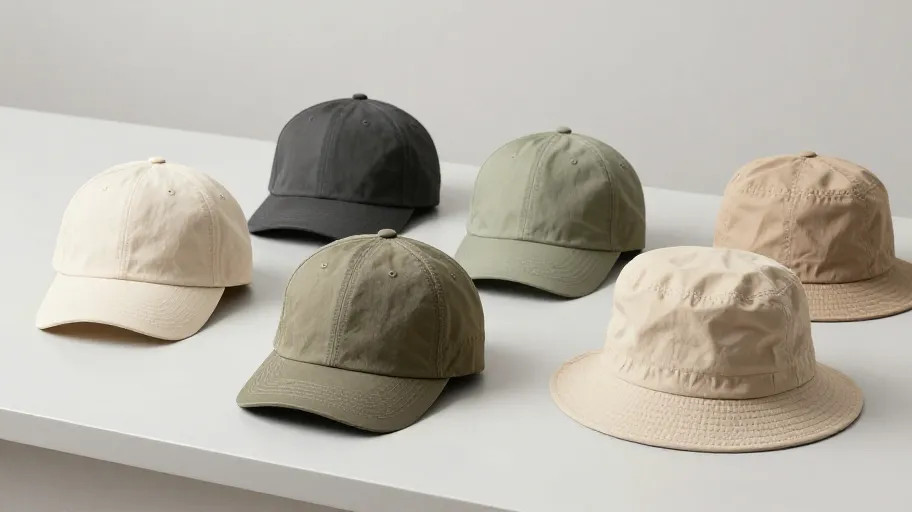
Real case: How an Antwerp fashion brand handled an aggressive customs audit
I remember accompanying Marc Vandenberg, the sourcing manager for a premium Antwerp streetwear label, during a frantic late-night factory walkthrough in Dongguan back in November. He was staring at 35,000 structured snapbacks stacked on our shipping pallets, completely pale-faced, and told me flat out: "If these boxes don't clear Belgian customs by next Tuesday, our entire winter retail drop is completely dead and my shelf space is gone." To be completely honest, that batch of cargo almost went down the drain. Their previous European trading broker had handed them incredibly sloppy, fragmented paperwork, and Antwerp port authorities caught a major sustainability tracking discrepancy in the internal panel stiffeners. I spent three hours with our factory director pulling up the raw chemical logs, the original re-granulation batches, and historical yarn invoices right there on his laptop to build a bulletproof documentation package from scratch. We mapped out the GRS certificates for every single component down to the sewing threads. You can read the step-by-step breakdown of how we bypassed this crisis in our full customs mitigation strategy. The factory director's original words to Marc that night stayed with me: "If we build the cloth here, we own the data. If you buy from a middleman, you buy a ghost." That is the cold reality of modern supply chain security.
At the end of the day, you simply cannot move fast enough to protect your retail contracts during a customs dispute if your supplier continues to rely on scattered trading brokers and dynamic spreadsheets.
What separates the best Chinese cap factories from the rest
Many workshops claim GRS compliance, but few possess the industrial infrastructure to maximize its cost benefits. The critical differentiator is vertical integration.
The vast majority of small-scale cap factories sub-contract out their panel cutting, high-density embroidery, eyelet punching, and final block-shaping to different workshops spread across a province. This fragmented structure creates extended lead times, introduces compounding transit emissions, and completely destroys quality control consistency.
The top tier of cap manufacturers eliminate this structural fragmentation by keeping yarn-weaving, computerized laser-cutting, multi-head embroidery machines, and specialized steam-blocking shapes inside a single integrated facility. By controlling the entire manufacturing loop under one roof, these producers eliminate secondary logistics markups and slash standard production lead times from 55 days down to 35 days.
A major corporate apparel buyer out of Rotterdam utilized this exact integrated framework last season to secure 120,000 custom unstructured dad hats. Because the entire manufacturing process was fully contained within a single Dongguan factory floor, they managed to implement a mid-run design alteration to their hat tech pack without halting the main assembly line, receiving the complete volume three weeks ahead of schedule.
| Operational Metrics | Sub-Contracted Workshop | Integrated GRS Cap Factory |
|---|---|---|
| Standard Turnaround (10k units) | 45-60 Days | 30-40 Days |
| Water Usage Matrix | Standard Baseline | 40% Circular Savings |
| Data Ledger Type | Paper Records / Static PDFs | Blockchain-Verified Ledger |
| In-House Embroidery Cap | None (Outsourced) | Full Multi-Head Array |
| TC Generation Lead Time | 3-4 Weeks | Under 72 Hours |
How to audit an eco-headwear partner: Five technical questions
Look, forget the glossy slide decks and the fancy showroom tea. When you are on a cross-border screening call, you need to corner prospective Chinese cap manufacturers with these exact technical questions to separate real operators from basic trading companies:
- "Does your GRS scope certificate explicitly cover the specific process needed for our hat style?" A factory might hold a certificate for fabric weaving but lack the specific certification for final garment assembly or commercial screen-printing. Request the complete document, not just the cover page.
- "Can you provide the raw material Transaction Certificates (TCs) for your last three production runs?" If they delay or make excuses, they are likely sourcing unverified stock fabrics from the open market and wrapping them in generic eco-labels.
- "What is your factory’s policy on mono-material construction for circular design?" True high-performance partners can produce a cap where the main fabric, sewing threads, sweatband, and closure buckle are constructed from 100% recycled polyester. Reviewing our technical mono-material design framework will show you how this specific alignment simplifies end-of-life recycling and lowers your brand’s future Extended Producer Responsibility (EPR) tax liabilities in Europe.
- "Do you operate an in-house laboratory for testing color fastness and physical deformation?" Factories that rely on external testing facilities slow down your sample iterations and increase the risk of batch variance during mass production.
- "Can we conduct an unannounced virtual factory floor walkthrough via live video within the next two hours?" A genuine, high-volume production facility will gladly show you their assembly lines, while middleman brokers will constantly try to reschedule to hide their lack of infrastructure.
Your concrete supply chain checklist for this week
Skip the broad strategic meetings. If you want to protect your Q3 drops, have your sourcing team complete these three specific actions before Friday closes:
- Execute a Document Stress-Test before 3 PM today — Send an urgent email to your active cap suppliers. Demand the official GRS Scope Certificate (SC) and the Transaction Certificates (TC) for your highest-volume SKU. If they cannot produce these documents within 3 business days, immediately hold further purchase orders and freeze balance releases.
- Redesign for Mono-Material Prototyping by this Thursday — Pull one upcoming cap design from your development pipeline. Adjust your tech specifications to eliminate mixed materials. Replace standard nylon snap closures with 100% rPET buckles, and submit the file to an integrated cap factory to benchmark sample quality against your current baseline.
- Submit Your Pilot Request before getting off work on Friday — Drop our engineering team a line with your current landed cost sheets. Identify how much you are spending on secondary shipping fees, customs delays, and sample iterations, and we will map out a precise compliance comparison for your procurement team.
FAQ: GRS-Certified Cap Manufacturers
What is the realistic minimum order quantity (MOQ) for custom GRS-certified headwear?
While basic trading companies mandate massive minimums to justify fabric sourcing, a vertically integrated cap factory in Dongguan can frequently handle custom rPET styles at an MOQ of 300 to 500 units per colorway. This is achieved by maintaining rolling stocks of certified raw materials in-house.
How can my compliance officer verify if a supplier’s GRS certificate is authentic?
Take the unique license number listed on the document and input it directly into the official Textile Exchange centralized registry. If the factory name, geographic location, or process capabilities do not match the database exactly, the certificate has been modified or falsified.
Does GRS tracking cover packaging materials and internal cap labeling?
Standard GRS certifications apply specifically to the textile elements of the cap. For complete sustainable compliance, you must explicitly instruct the manufacturer to utilize FSC-certified hangtags and biodegradable rPET polybags for unit packaging, ensuring the complete presentation satisfies regional anti-waste laws.
Is there an immediate premium on rPET cap production compared to virgin polyester?
On a raw material basis, GRS-certified yarn carries a minor 8% to 12% upcharge. However, when you consolidate production within a fully integrated facility, the efficiency gains—such as 22% lower dyeing costs and the complete removal of middleman markup—frequently bring the final unit cost down to parity with traditional, non-sustainable options.