



The Definitive Hat Tech Pack Guide for Professional Brands
Published: May 28, 2026 — by New Generation Production Team
A hat tech pack is a production blueprint that tells cap manufacturers every detail of how to build your design — stitch sequence, panel order, brim flex tolerance, crown height, bill of materials, everything. Without one, you're not outsourcing production. You're outsourcing interpretation.
Most brands find this out the hard way. A six-week delay, a $187,000 rework bill, a retailer that drops you because the quality across two batches doesn't match. The fix isn't more CAD files or longer email chains. It's a tech pack that actually explains how to build what you designed.
- A German outdoor brand cut approval rounds from five to two by switching from spec sheets to structured tech packs — saving 6 weeks and €43,000 in rework costs.
- 68% of apparel rework comes from specification gaps, not factory execution errors (ASTM International, 2024).
- Brands using full-spectrum tech packs reduce time-to-market by up to 40% with 31% higher first-pass quality rates.
- Example: A variance of just 2 SPI can cause a structured brim to collapse — that's engineering intent missing.
- You can build a usable tech pack in under 90 minutes using modular templates, and it gets faster with every hat style you document.
Why your spec sheet is probably bleeding money right now
AlpineHead is a Munich outdoor hat brand selling through REI-style retailers across Germany, Austria, and Switzerland. Marco, their production lead, had managed the same three suppliers in China for four years. He knew the factories personally, visited twice a year, and trusted them entirely.
Then the summer 2024 collection arrived. One factory delivered a 6cm crown height on the flagship bucket hat. Another delivered 6.5cm on the exact same style. Same CAD file. Same measurement chart. Same brand. Completely different hats on the retail shelf.
"I stood in our warehouse staring at two boxes of the same hat," Marco recalled. "My CEO asked which supplier was wrong. The real answer was neither. We were wrong. We gave them partial instructions and blamed them for following them."
Honestly? That €43,000 air freight bill hurt. The six-week delay pushed a summer launch into September. And one retailer? They just stopped replying to emails. No drama. Just silence. That's the real cost.
Here's the problem with basic spec sheets: they list measurements but never explain why each number matters. A CAD file shows what a hat looks like but not why it's built that way. When your preferred cap factory doesn't know the engineering reason behind a 5mm tolerance, the workers on the sewing line have to guess. One factory guesses "material efficiency" and tightens the brim curve; another guesses "symmetry" and keeps a looser tolerance. Both followed your instructions, yet both delivered completely different products.
Don't blame the factory. We didn't write it clearly.
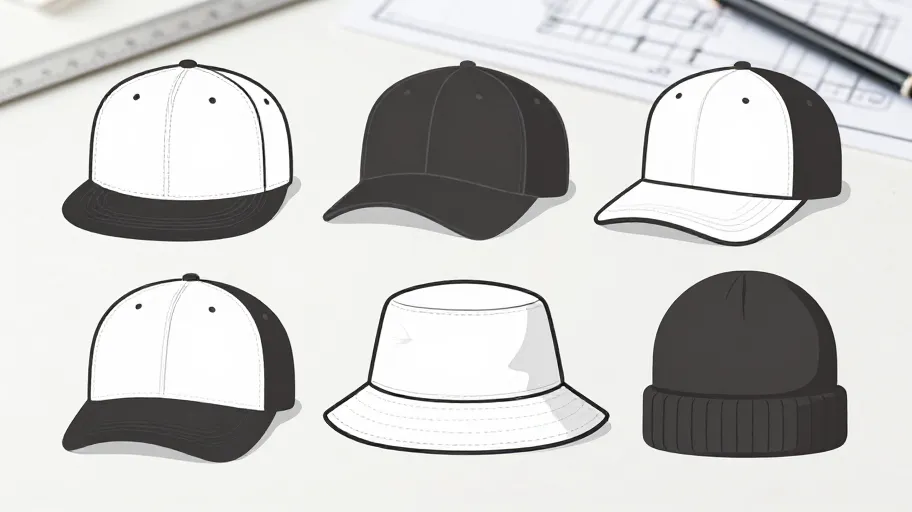
A spec sheet shows what. A tech pack shows how and why.
A traditional spec sheet tells a cap manufacturers partner: "Make this hat 58cm crown height, 6-panel construction." That's where it stops. A real tech pack tells them: "58cm crown height measured from front panel center seam to lower edge. 6-panel construction using stitch type 301 at 7-8 SPI, but our factory found 7.5 causes ripples — so lock it at 8 SPI. Sequence front-panel closure AFTER side-panel attachment to prevent warping. Here's why the brim tolerance is 3mm, not 5mm: because that edge touches the customer's forehead."
Maison Chapeau, a luxury-leaning Paris label, hit this exact bottleneck. Camille founded it five years ago. By year three, she was spending 12 hours a week answering factory emails about stitch density and lining substitutions.
"I started this brand to design hats," she told a panel last month. "Instead, I was running a remote QA department. Every morning, 15 emails from China. Every answer I gave should have been in the tech pack upfront."
She switched to a structured tech pack: construction sequencing, bill of materials with pre-approved subs, and grading rules with actual head-form photos. Approval cycles dropped from five rounds to two. Pre-production time fell by 60%. Her spring 2025 collection — 12 styles — hit shelves on time. Now she builds a tech pack in 90 minutes.
One lesson: send clear docs to a cap factory, and they stop guessing. When they stop guessing, your hat comes out right. Every time.
The three things every hat tech pack must include
1. Construction sequencing, not just assembly views
Most tech packs show the finished hat from four angles. That tells the factory what it should look like, not how to build it. Construction sequencing maps the production order: panel A attaches to panel B before the brim goes in. One brand audited their line rejects: 23% came from sequencing errors — invisible on a flat spec sheet, obvious in a sequenced tech pack. We fixed it after three revisions. Still small issues, but no full rework.
2. A bill of materials that plans for the unexpected
Materials run out. Factories substitute. The question is whether they substitute with your blessing or your ignorance. A complete BOM includes: primary supplier + part number, approved alternative + part number, quality thresholds (minimum 1.2mm thickness, max 5% stretch), and trim specs with color codes. This kills 80% of those "can we use this instead?" emails.
3. Tolerance ranges tied to functional requirements
A "5mm tolerance" means nothing without context. On an internal seam? Fine. On the brim curve that touches the forehead? 5mm is the difference between comfortable and return. Your tech pack must explain why. Tight tolerances for fit-critical areas. Loose for cosmetic details. Factories need this to actually work.
When your documentation includes all three, you reduce errors. Eliminate just one clarification per style, per season, across multiple cap manufacturers — that saves weeks.
Building tech packs without killing your creative flow
The objection we hear most: "Tech packs will slow us down." Honestly? Slow is answering the same question to three factories every week. Documentation isn't the bottleneck. Ambiguity is.
Here's what works for brands actually doing this:
- Start with a template. Camille built hers in one afternoon. First hat took 6 hours. Fifth hat: 90 minutes. Tenth hat: a library she reuses.
- Use version control. Marco used to email updated PDFs. Factories printed the wrong version. Cloud-based tracking (Google Drive + revision history) killed that problem.
- Build a FAQ into your doc. Factory asks the same question three times? Put the answer in the permanent template. Your docs get smarter every season, not static.
Three concrete actions for this week
You don't need to overhaul everything at once. Here's what actually works:
- Audit one existing style for missing context. Pick your best-selling hat. Open your current spec sheet. For every dimension, ask: does this explain why? If not, add a one-line rationale. Takes two hours. You'll find at least three measurements where you wrote "standard tolerance" without any reason.
- Send your improved version to your factory with one direct question. Don't just attach the PDF. Ask: "With these new details, what would you change?" Marco got more actionable feedback from one factory response than from six months of audit reports.
- Build your template now, before you design the next hat. The next style goes into a template that mirrors your best tech pack. If you work with multiple cap manufacturers, a standardized template ensures every factory starts from the same page.
Or shortcut it: send your current spec sheet to our cap factory team and ask for honest feedback. Last time we sent a messy one, their QA circled 17 red question marks. Uncomfortable? Yes. But that feedback saved us two months of rework.
FAQ — what brands actually ask
Tech pack vs. spec sheet — quick comparison
| Feature | Basic spec sheet | Full tech pack | Factory guess rate |
|---|---|---|---|
| Measurements | Numbers only | Numbers + why + where to measure from | High → Low |
| Stitch specs | Type only | Type + SPI + sequence + what happens if wrong | High → Low |
| Material substitutions | None or vague | Approved alternates + quality thresholds | Very high → Very low |
| Tolerances | One generic number | By functional area (fit-critical vs cosmetic) | High → Low |
Ready to fix your production documentation? Start with one style. One template. One honest factory conversation. And remember: every clarification you write down today is a delay you prevent tomorrow.
— New Generation production team








