



Published: May 7, 2026
I've been sourcing headwear from China for over a decade. The brands that get burned on their first offshore order don't get burned because cap manufacturers china are incompetent. They get burned because the instructions they sent could mean three different things to three different people on the same factory floor. A proper hat tech pack doesn't make you more creative. It makes you more precise. And in this business, precision is the only thing standing between a launch date and a write-off. Here's what that looks like in practice—drawn from two European brands that stopped the bleeding by fixing their documentation.
Your design is clear to you. It isn't clear to a factory 8,000 kilometers away.
This is the single most expensive assumption in offshore cap production.
A Berlin streetwear brand—we'll call them Kreuzberg Supply—ordered 500 six-panel caps from a cap factory in Turkey in early 2025. Small batch. High expectations. Their designer sent a tech pack with front and side views, a logo placement file, and a note that said "standard brim curve." That was the entire description of the visor. The factory in Istanbul had a default brim radius they used for all their domestic clients. The brand's designer had in mind something much flatter—a skate-inspired silhouette they'd been prototyping for months. Neither side knew they were speaking different languages until the second sample landed and the visor still looked wrong. The third sample was closer but still off by about four millimeters at the peak. Four millimeters. On a shallow-profile cap, that's the gap between a premium product and a discount rack item.
Kreuzberg Supply eventually moved the entire batch—all 500 units—to an outlet partner at a 40% markdown. Net loss after sampling rounds, courier fees, and missed full-price revenue: about €9,200. The founder told me later the most painful part wasn't the money. It was posting on Instagram that the "limited drop" they'd been teasing for weeks was going to a discounter because the caps didn't match the campaign photos. The comments were brutal. Their rebuilt hat tech pack now specifies visor curvature in degrees, with a ±1.5mm tolerance band, and a note that says "do not substitute factory default curvature without written approval." Next batch? One sample round. One approval. No Instagram apology required.
Here's the thing I keep telling brands moving production to cap manufacturers china or anywhere else offshore: your factory's operators don't wake up trying to ruin your order. They wake up trying to finish their shift. If your spec doesn't tell them exactly what to reach for, they'll reach for whatever is on the shelf closest to their station. That's not negligence. That's a system failure you can fix with a document.
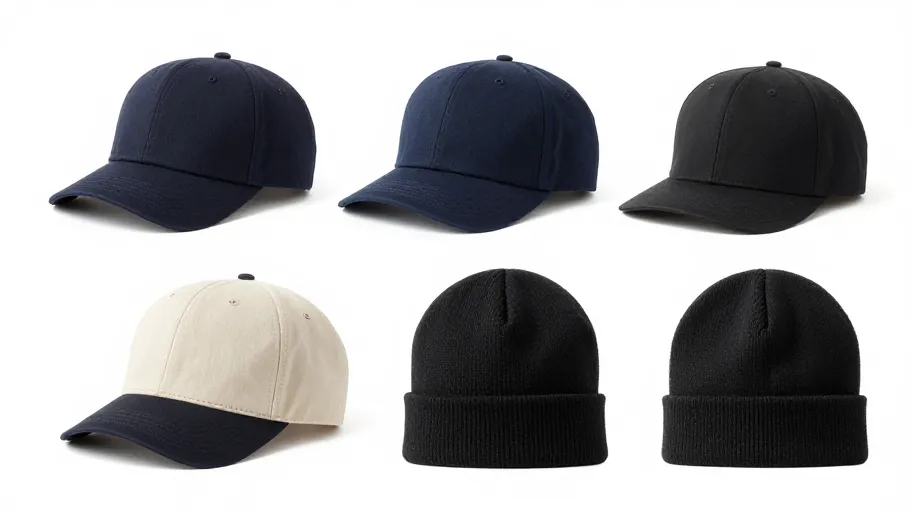
What a tech pack catches that a sketch never will
Here's another one, this time from Stockholm. Nordkapp makes outdoor performance headwear—think trail running caps and hiking snapbacks, lightweight stuff for a demanding customer base. They run production across two factories: one in Portugal for their European fulfillment, one in Estonia for Nordic drops. Same brand. Same style codes. Different factories. Or so they thought the documentation tracked.
Spring 2025. The Estonian factory's first production batch came back with sweatbands that looked fine to the naked eye but failed after two simulated wear tests—puckering and separating along the stitch line. The Portuguese factory's sweatbands passed every test. Same brand. Same supposed spec. The Nordkapp team spent six weeks troubleshooting. Multiple video calls. DHL'd samples back and forth between Stockholm, Porto, and Tallinn. Eventually I pulled both Bills of Materials and laid them side by side on my desk. The BOM sent to Portugal specified a sweatband thickness of 2.6mm. The BOM sent to Estonia—prepared four months later by a different team member covering for someone on parental leave—listed 3.1mm. A difference of half a millimeter in a spreadsheet cell. A failure rate of nearly 18% in the real world. The Estonian factory was running the same stitch density into a thicker band, causing the thread to pull unevenly during moisture testing.
Nobody caught the discrepancy because nobody had ever put the two documents next to each other. The fix was straightforward: everything moved to a single cloud-hosted hat tech pack with version locking—one file, one set of specs, visible to both factories in real time. Next production cycle: zero sweatband failures. Not fewer. Zero.
The best tech pack I've ever seen—and I mean the one I still reference when training new sourcing managers—included something almost nobody does. Next to every critical measurement, it had a one-line explanation of the consequence of getting it wrong. Not just "seam allowance 5/8 inch." That line followed by: "Reducing this width causes tunneling during automated topstitching on curved panels—do not adjust without written approval." When a floor supervisor understands what breaks if they change a number, they stop treating your spec as a suggestion.
How to find a factory that can actually read your tech pack
Not all cap manufacturers china are set up to work from detailed documentation. Some want it. Some tolerate it. Some will nod and then ignore it because their workflow is built on tribal knowledge, not written specs.
Here's how I sort them. When I walk into a cap factory for the first time, I ask the production manager one question: "Can you show me the tech pack you're working from on your most recent order for another client?" Not their internal production sheet—the client's tech pack. If they pull up a clean, annotated document with revision dates and sign-off stamps, that's a factory that works from specs. If they shrug and say the client "mostly emails instructions," that's a factory that works from guesswork. The difference shows up in your defect rate within two production cycles.
I also look for factories that push back. The best partner I've ever worked with—a mid-sized operation in Dongguan—once rejected a tech pack I sent them. Not because they couldn't build it. Because they spotted a seam allowance spec that would have caused puckering on the fabric we'd selected, given their specific machine setup. They flagged it before we'd cut a single panel. That's the factory you want. A factory that silently accepts a flawed spec is more dangerous than one that argues with you.
One more thing. I've seen ISO 9001-certified factories with terrible documentation discipline and uncertified workshops that kept better records than my accountant. The certificate tells you they have a system on paper. Only the visit tells you whether anyone on the floor actually uses it.
Your pre-PO checklist
Before you send your next purchase order to a cap factory, do three things.
First: hunt down every adjective in your tech pack. Open the last spec you sent. Search for words that require human interpretation: "medium," "standard," "normal," "clean finish," "structured." Every one of those words is a sample rejection waiting to happen. Replace each with a number and a tolerance band. "Medium-weight interfacing" becomes "55gsm non-woven fusible, pressed at 130°C for 12 seconds." Your factory doesn't need your adjectives. They need your data.
Second: run the side-by-side test. If you use multiple cap manufacturers china, open the tech pack each factory received. Put them next to each other. Compare material specs, unit systems, and revision dates line by line. If they're not identical, you're running the Nordkapp experiment live in your own supply chain. Fix the discrepancy now—before production starts, not after the test reports come back and you're explaining an 18% failure rate to your investors.
Third: ask the uncomfortable question. Get on a call with your cap factory production lead. Ask directly: "Is there anything in our tech pack that you or your team finds unclear?" Then stop talking. Listen to the silence before they answer. A long pause followed by "no, everything is fine" is the loudest warning sign in offshore sourcing. The best partners will give you a list of improvements. The worst will tell you everything is perfect and mail you an invoice for the rework three months later.








