



Published: 2026-05-29
Choosing the right production partner comes down to raw survivability: will your caps survive the first three months of wear without losing shape, fraying at the seams, or triggering costly returns? Everything else, including minimum order quantities and lead times, is secondary if the base construction fails.
The reality on the factory floor is harsher than most DTC brands realize. A cap that looks perfect in a pre-production sample can fail miserably after mass production and two washes. The brim goes limp. The front panel buckram crinkles. The embroidery thread snaps and unravels. We've been manufacturing custom headwear from our Hong Kong facility since 2008. Over the years, we've watched dozens of brands eat 20-30% return rates on what should have been their core SKUs simply because they didn't know which technical specifications to demand.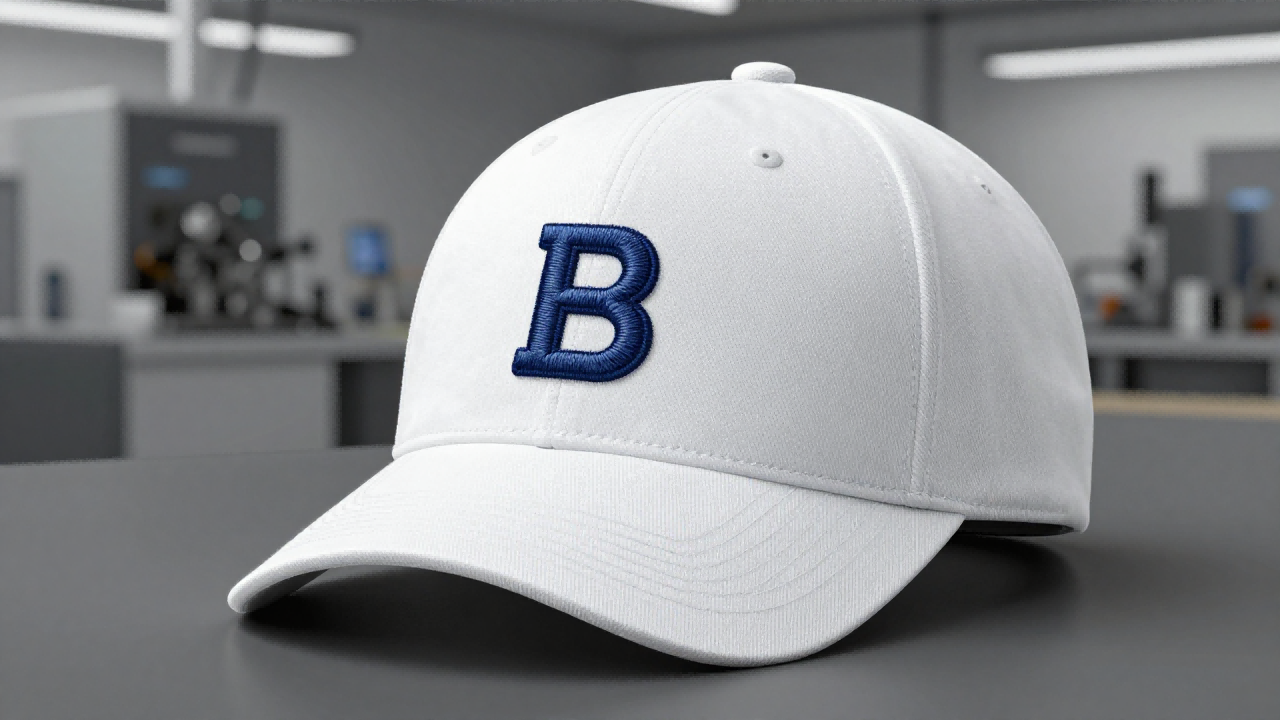
This document strips away the marketing fluff. It covers exactly what to scrutinize when auditing a cap factory. We're sharing the raw material specs usually hidden from buyers, the inspection ratios that actually impact defect rates, and the true cost breakdown behind commercial-grade headwear.
Baseline Production Benchmarks
- The most reliable predictor of output quality is the needle-time to inspection ratio. Factories inspecting 15%+ of pieces under magnification drop defect rates from the industry average of 5-7% down to under 2%.
- Pre-curved polyethylene visor inserts with a controlled melt index prevent the brim from springing flat during ocean transit.
- Upgrading to moisture-resistant coated buckram (0.25-0.30mm) costs roughly $0.10 per cap but prevents panel collapse in humid climates.
- A digital tech pack mapping specific seam allowances and exact embroidery coordinates reduces sampling rounds from 2.8 to 1.2.
The Technical Failures That Expose Poor Manufacturing
A brim that flattens out after a week. Buckram that permanently warps. Thread breaks on a snapback that leave your logo looking jagged. Every one of these issues traces back to operational shortcuts at the production level.
Walk the floor of a lower-tier facility and you'll see generic fabric rolls. A spec sheet might list 260 g/m² for a standard structured dad hat. However, paper specs ignore manufacturing execution. We've run side-by-side stress tests where two caps with identical fabric weights performed entirely differently after a month of wear. Tighter twist in the cotton yarn minimizes pilling, but more importantly, proper sanforization prevents the fabric from shrinking unpredictably and pulling the embroidery out of alignment.
Then there is the issue of SPI (Stitches Per Inch). When factories are behind schedule, the easiest way to speed up production is to lower the SPI on the embroidery machines or push the machine speed too high. If a complex logo requires 50 SPI and the factory drops it to 35 SPI, you get thread breaks, tension issues, and puckering across the front panels. The cap is ruined before it even hits the packaging line.
Buckram, the stiff interlining supporting the front panels, has its own failure thresholds. Measuring buckram thickness isn't enough to predict how it reacts to environmental moisture. We once analyzed a batch of caps shipped to Florida that buckled completely because the untreated buckram absorbed ambient humidity and softened. An experienced cap factory tests these limits. We enforce a 0.25-0.30mm buckram spec with a moisture-resistant coating for US and EU ecommerce clients. It adds $0.08-$0.12 per unit, but one of our streetwear clients saw their return rate fall from 9% to 5.8% immediately after implementing this specific upgrade.
Evaluating the Production Line
When vetting a facility, brochure photos mean nothing. You need to look at three operational realities.
First, the inspection rhythm. Embroidery machines running at 1,200 stitches per minute will inevitably make errors. If the QC team isn't pulling at least 15% of the run for in-line checks (after embroidery, after brim attachment, and at final assembly), flawed units will slip through. Magnification checks are mandatory for complex logo work.
Second, in-house thread libraries. A facility with immediate access to 200+ thread colors and the ability to custom-dye to Pantone matches on-site will save you weeks in sampling. Relying on outsourced thread matching for a single specific colorway can stall an entire production schedule.
Third, the visor memory stress test. Take pre-production samples, curve the brims aggressively, and leave them flat on a table for 48 hours. Measure the spring-back. If the visor returns to more than 30% of its flat state, the core material is inadequate. Quality cap manufacturers use specific polyethylene inserts that set under heat and retain their curve without turning brittle over time.
We recently took over production for a brand that sourced 3,000 units from a facility cutting corners on visor cores. After six weeks sitting in a warehouse, 40% of the inventory had sprung flat. We rebuilt their tech pack, swapped to a controlled melt-index visor core, and pushed 5,000 units through production. Rejection rate dropped to less than half a percent.
Costly Operational Mistakes in Sourcing
Scaling volume from 500 to 50,000 units exposes weaknesses in your sourcing strategy rapidly. Avoid these common operational traps.
Operating without strict technical documentation. Sending a mockup image guarantees inconsistent samples. Tech packs must dictate seam allowances, exact closure hardware types, and embroidery placement coordinates strictly measured from the crown seam and center front.
Ignoring hardware variance. A metal buckle with sharp stamped edges will shred a fabric strap in a month. Plastic snapbacks with prong sockets varying by even 0.5mm will refuse to snap or pop open under pressure. Caliper testing hardware batches prevents catastrophic 1-star reviews for a $0.03 component failure.
Chasing the lowest MOQ blindly. Ultra-low minimums (50 pieces) frequently rely on deadstock or leftover fabric rolls. If your SKU becomes a hit, you cannot guarantee dye-lot consistency for the restock. Production runs of 300-500 pieces generally secure dedicated lines and fresh, consistent material sourcing.
Bypassing climate wear tests. A cap tested in a dry office might fail entirely in high humidity or extreme cold. Routing pre-production samples to testers in varying climate zones catches adhesive and structural failures before bulk production begins.
Real Ex-Works Cost Breakdown
This is what you are actually paying for. The data below outlines the real-world cost breakdown for a structured cotton twill 6-panel cap (order volume 500-1,000 units), assuming the facility enforces the technical standards outlined above.
| Cost Component | Typical Range (USD) | Impact on Final Product |
|---|---|---|
| Fabric (brushed cotton twill, 260 g/m²) | $0.90 - $1.20 | Sanforization quality, dye consistency, tear strength |
| Buckram (coated, 0.25-0.30mm) | $0.10 - $0.15 | Humidity resistance, front panel structural integrity |
| Embroidery (strict SPI control, up to 7,000 stitches) | $0.50 - $0.80 | Logo definition, prevention of panel puckering |
| Visor insert (pre-curved PE) | $0.15 - $0.25 | Memory retention, spring-back resistance |
| Closure hardware | $0.20 - $0.40 | Strap longevity, tolerance accuracy |
| Sweatband (pre-shrunk material) | $0.10 - $0.18 | Shape retention after washing |
| Internal taping and branding | $0.12 - $0.20 | Seam security, brand perception |
| In-line QC and testing | $0.15 - $0.25 | Minimizing bulk defect rates |
| Packaging (shaped insert, polybag) | $0.25 - $0.40 | Crush prevention during transit |
| Labor and facility overhead | $0.80 - $1.10 | Worker execution, machine maintenance |
| Total ex-works cost | $3.27 - $4.93 |
When you receive a quote for $1.80 per unit, the factory is absorbing that cost by cutting buckram density, dropping the embroidery SPI, or eliminating in-line QC. The difference between a cap that generates high returns and a high-margin best-seller exists inside that $1.50 delta.
Mandatory Pre-Production Checklist
Execute this protocol before wiring a deposit to any cap factory:
- Verify the buckram spec sheet includes a moisture-resistant coating.
- Document the visor insert melt index and pre-curve radius.
- Establish a written agreement that in-line QC covers 15% of the production run.
- Mandate a 48-hour flat brim-memory test on the pre-production sample (must be under 30% spring-back).
- Confirm the sweatband material is pre-shrunk before attachment.
- Audit the hardware dimensions with a caliper on the first sample.
Frequently Asked Questions
Next Steps for Production Sourcing
If you are pushing a new collection to production, structure your workflow to eliminate miscommunication:
- Finalize the technical documentation. Plot your embroidery coordinates, set the SPI requirements, and lock in the seam allowances.
- Request granular quotes. Demand a line-item breakdown from potential facilities. If a supplier refuses to break out the cost of buckram versus embroidery labor, move on.
- Execute the memory and climate tests. Do not approve bulk production until the physical sample has passed the 48-hour brim stress test and a high-humidity wear test.
- Establish QC holds. Inform the factory that you require in-line inspection data at the embroidery completion stage before they move to final assembly.
We execute this exact protocol daily at New Generation. Provide your technical specifications and target volume, and our team will run the feasibility checks to start the sampling process.








