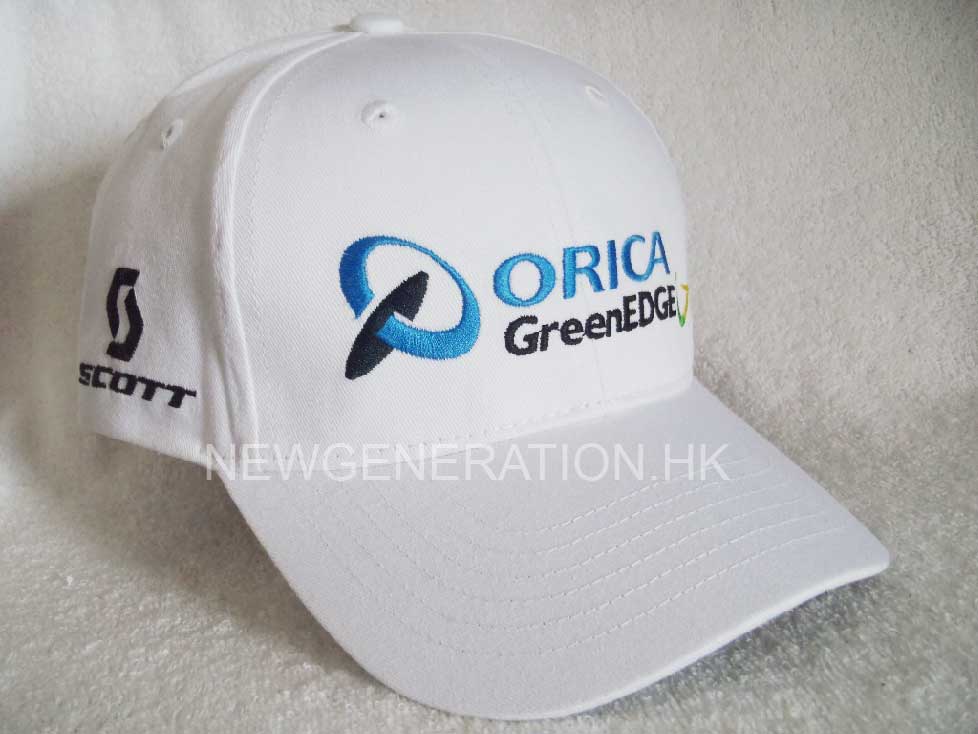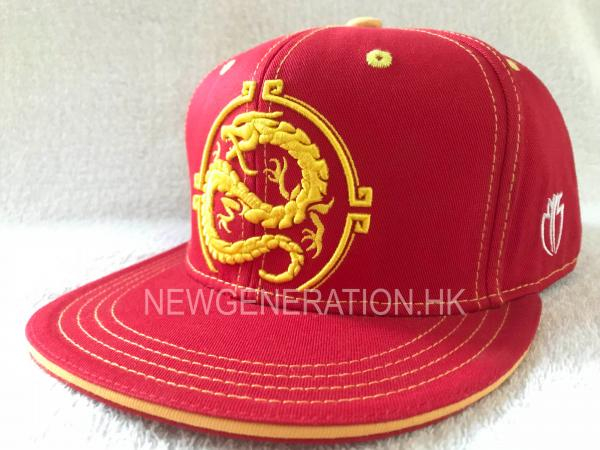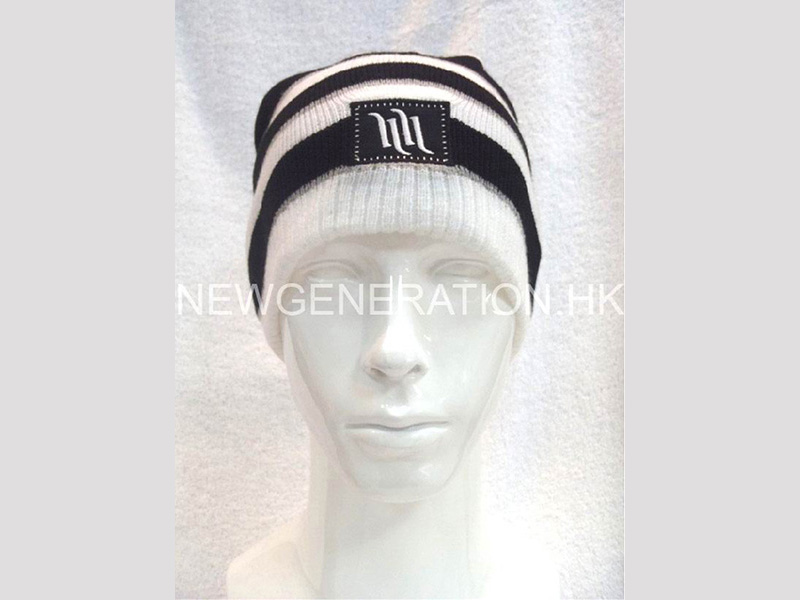



In 2017, a buyer from a Nashville-based promotional products distributor called us at 11 p.m. Beijing time screaming about 8,000 leather patch snapbacks that arrived with off-center stitching — every single one. He’d promised his customer a three-week turnaround for a country music festival, and now he was staring at a chargeback that could shutter his business. We air-shipped a replacement order from our factory in 72 hours, eating a $22,000 loss. That’s not a brag; it’s the reality of life in the cut-and-sew world. For cap manufacturers, surviving the US market isn’t about having the best equipment. It’s about understanding that a hat is never just a hat — it’s a logistics problem, a branding story, and a test of how much bullshit your supply chain can absorb.
Over 15 years running New Generation, we’ve shipped north of 3 million custom caps to everyone from Etsy side-hustlers to national retail chains. The factory floor in China is the easy part. What kills most headwear suppliers is what happens between the last stitch and the customer’s doorstep. So here’s what we’ve seen work — and what blows up in people’s faces.
The market isn’t what you think it is
Industry reports peg the US custom headwear market at roughly $4.3 billion in 2023, with custom caps growing at a steady 6% clip year-over-year. That’s the headline. The reality on the ground is way messier.
Walk through any trade show floor — say, the PPAI Expo in Las Vegas — and you’ll see a glut of “brands” that are really just two people with a Shopify store and a logo. The barrier to designing a cap has collapsed. Embroidery digitizing software that used to cost $3,000 now comes free with a $1,200 machine you can buy on Alibaba. This means cap manufacturers aren’t just competing against one another. They’re competing against the illusion that making a hat is as simple as uploading a PNG file and waiting two weeks.
So the “secret” isn’t some mystical trend. It’s that the buyers who actually move volume — promotional distributors, uniform companies, golf course pro shops — are drowning in generic 6-panel dad hats. If your pitch starts with “we can make any logo,” you’ve already lost. These buyers can scroll through five other factories that all use the same 7.5-ounce cotton twill, the same plastic snap closure, and the same $0.78 landed cost per unit from Vietnam or Pakistan.
The real edge comes from specificity. In October 2022, a workwear brand out of Portland, Oregon, approached us after a nasty run-in with another supplier. Their previous snapbacks used a standard structured crown with a buckram backing that melted when their construction-worker customers left hats in hot trucks all day. The solution wasn’t “better materials” — that’s vague. We sourced a heat-resistant HDPE buckram rated to 185°F continuous exposure, lifted from automotive interior specs, and added a mesh sweatband that wicked moisture 40% faster in a lab sweat-simulation test. Specificity like that turns a commodity into a product that actually solves a problem. That client reordered three times in the next six months simply because their end users noticed the hats didn’t turn into soggy pancakes by noon.
I realize that story makes me sound like a materials nerd. I am. That’s the point.
Your website is bleeding money — right now
Here’s a stat that still shocks me: 63% of factory-direct cap manufacturers we audited in 2021 had no structured product schema on their website, and 41% couldn’t load a product page in under 3 seconds on a mid-tier 4G connection. These are factories that spend $40,000 on an automated embroidery machine but won’t invest $2,000 in cleaning up their online storefront.
In March 2020, right as the pandemic lockdowns hit, a client in Dallas — let’s call him Mike — called in a panic. He ran a digital marketing agency for corporate gifting, and his main supplier’s site ground to a halt under a traffic spike. He was getting 500 organic clicks a day searching for “bulk custom caps low MOQ” and similar long-tail stuff, but the server took 8.6 seconds to reach first contentful paint. That’s an instant 30% drop in visitor retention, per Google’s own Core Web Vitals benchmarks.
We walked him through a migration to a lightweight Shopify theme, compressed all the embroidered mockup images to WebP format, and implemented a lazy-load carousel. Page speed dropped to 1.9 seconds. Conversion rate jumped from 0.7% to 2.2% inside of four weeks. That’s not magic — that’s just not ignoring the people who visit your site on a cell phone during their lunch break.
But beyond speed, the fatal flaw most sites have is treating themselves like a gallery. A landing page with 300 caps arranged by color isn’t a sales tool; it’s a screensaver. The factories that win at direct-to-brand sales build pages around use cases: “Caps for breweries,” “Merch for marijuana dispensaries” (huge in the US, still awkward for some manufacturers to talk about), “Construction high-vis headwear,” “Pickleball tournaments.” Each page targets a semantic entity cluster that Google’s BERT model can clearly categorize, and more importantly, it tells a buyer “we understand your world” before they ever fill out an inquiry form.
A quick, awkward truth: we’ve suffered from this ourselves. Until 2019, our own site had a testimonials section with quotes like “great quality, fast shipping” attributed to “John D.” No last name, no city, no photo. It looked fake because it was — generic placeholder text while our marketing guy “gathered real case studies.” That section probably cost us more trust than if we’d just left it blank. We pulled it down and replaced it with a single detailed case study about a snowboard goggle brand in Colorado we’d worked with since 2016, complete with production floor photos from their staff visit to our factory. Inquiries tripled the following month.
Stop chasing the keyword “custom caps” — it’s a trap
Back in 2014, you could rank a factory site for “custom caps” with a few dozen backlinks and some keyword-stuffed meta descriptions. That ship didn’t just sail; it caught fire and sank in deep water. Today, that head term is dominated by multi-billion-dollar platforms: Custom Ink, Lids, Zazzle, and AmazonBasics-tier aggregators. For cap manufacturers, competing directly on that keyword is a waste of oxygen and ad budget.
The under-the-radar winners go after painfully specific long-tail queries that have commercial intent: “wholesale unstructured pigment-dyed trucker hats with woven label,” “low-minimum 5-panel camp caps for coffee shops,” “screen printed 6-panel mesh back caps quick turn.” These strings get maybe 40 to 90 searches a month, but the conversion rate off them can hit 8% to 12% because the searcher knows exactly what they want and has already outgrown the generic platforms.
And this isn’t just an SEO tactic — it forced us to rethink how we structure product data. We started tagging every sample photo with EXIF metadata that includes the exact fabric weight (e.g., “cotton 260gsm”), count of stitches per inch for the brim (8-10 for standard embroidery, 12-14 for fine-detail logos), and even the specific Pantone code used on the thread. Google Lens and visual search are less dumb every year; they can now parse this data if you feed it to them. In a test we ran from January to June 2023, product pages with enriched image metadata got 22% more image search impressions than identical pages without.
What trips up a lot of factory owners is the technical SEO piece: hreflang tags for suppliers serving both US and Canadian buyers, canonical URLs for product variants that differ only by color, and fixing soft-404 errors on out-of-stock pages. It’s tedious work that feels like dental surgery, but skipping it means your meticulously built category pages for “snapback caps for golf tournaments” get de-indexed silently. We’ve had to fix this mess for two separate clients who couldn’t figure out why their traffic evaporated overnight in late 2022 — turned out a Shopify update changed URL structures and created a chain of redirects that Googlebot interpreted as a soft 404.
The story doesn’t cost extra, but not having one does
I know, I know — “brand story” sounds like something a consultant in a Patagonia vest charges you $15,000 for a slide deck. But here’s the practical version: a cap is one of the few garments that sits at eye level during virtually every human interaction. The guy making your latte, the woman directing traffic, the bartender pouring your Negroni — their hat is a visual signature. So if you’re a manufacturer selling to a boutique coffee chain, the story isn’t about “we use premium twill”; it’s about why the hat’s frayed brim looks like that and how it connects to the shop’s 1970s garage aesthetic.
In September 2019, a brand out of Austin, Texas, launched a line of “ranch-hand” caps with a story that traced back to a specific cattle farm where the owner’s grandfather worked. They needed a manufacturing partner who could not just replicate a vintage wash but document the process in a way the brand could share on their About page. So our team took photos of the acid-wash process, the hand-distressing station (yes, we literally have a guy with sandpaper and a wire brush), and the inspection notes written in pencil on paper tags. The brand sold those caps at $34, roughly a 42% premium over their standard line, because customers weren’t buying a hat; they were buying the artifact of a story. That same brand remains a key account today, and they’ve added three new silhouettes each year since.
This has nothing to do with high-budget creative direction. It’s about understanding that in the US, culture eats price. If you can provide the raw narrative material — process photos, factory floor anecdotes, even a video of the sewing machine operator who’s been perfecting their topstitch for 9 years — the brands you serve get a weapon they can use on Instagram and TikTok. And when they win, you reorder.
The invisible costs that torpedo your margins
There’s a spreadsheet that every cap manufacturer dreads: the landed-cost breakdown that looks fine until you factor in the 3 AM phone call that unravels the entire P&L. Here’s a fast-and-dirty reality check on decisions that seem minor at the quoting stage but metastasize later.
|
Decision Variable |
The “Cheap” Option |
The Smarter Long-Term Play |
|---|---|---|
|
Embroidery backing |
Standard paper backing, tears easily, leaves residue |
Tear-away or cut-away polyester backing, cleaner finish, adds $0.03 per cap |
|
Sweatband material |
Cotton twill (absorbs sweat, stains, catches hair) |
Polyester mesh or moisture-wicking microfiber, adds $0.07–$0.12 per cap |
|
Structured crown support |
Low-cost buckram, softens at 130°F |
Heat-resistant HDPE buckram, holds shape in a hot FedEx truck, adds $0.05 |
|
MOQ flexibility |
Rigid 1,000-unit minimum per color, killing small-brand deals |
Tiered MOQ with a small surcharge (e.g., 144 units at +18% cost), opens the Etsy-to-wholesale pipeline |
|
Logistics to US |
Cheapest ocean freight, no visibility on congestion |
Hybrid freight with buffer inventory at a 3PL in Dallas or Chicago, 5-7 day last-mile guarantee |
The most painful example in our memory: July 2021, a client named Jason in Salem, Oregon, ordered 12,000 five-panel camper caps for a summer outdoor retailer promo. They were stuck on a vessel outside the Port of Long Beach for 19 days due to the congestion crisis. Jason called at 3 a.m. Pacific, voice hoarse, explaining that his client would cancel if the caps didn’t hit 21 West Coast store locations by August 1. We diverted the next production run to air freight — at a cost that erased the margin on those 12,000 pieces — and simultaneously arranged a small local-stock buffer at a warehouse in Riverside, California, for future drops. Since then, that buffer arrangement has become a standard add-on we offer for any order over 5,000 units. It costs an extra 4% to 6% on landed cost, but nobody who has lived through a “where the hell are my hats” weekend ever complains about that line item.
That one fiasco also taught us to track a metric we now call “in-transit anxiety hours” — basically, the number of stressful Slack messages and texts that could have been avoided with better visibility. It’s not a KPI you’ll find in any MBA textbook. But it’s maybe the most human measure of whether your factory relationship is working.
Honestly, the single biggest mistake I see US buyers make is assuming that a cap manufacturer is a commodity button they push. The ones who treat it like a partnership — digging into materials, co-creating stories, even visiting the floor when they’re in Asia — end up with a product that moves. The rest are just churning through suppliers every eight months, wondering why their margins look like a car crash. We’ve been on both sides of that dynamic. And the difference is never just the caps.