

Published: 2026-05-29
UK streetwear brands can now order custom snapbacks from Chinese cap manufacturers with minimums as low as 50 units per design. But here is the raw reality of how low-MOQ production actually operates on the factory floor, what it costs at a granular level, and why traditional supply chains had to abandon the old 500-piece limits to survive in the current market.
Why high MOQs from traditional cap manufacturers kill streetwear velocity
We have been operating as cap manufacturers in southern China for over two decades. For eighteen of those years, the equation was brutal and simple: if you did not run at least 500 pieces per colorway, the automated cutting tables and massive multi-head embroidery machines stayed dark. The logic was entirely built around big-box retail distribution—bulk orders that sat in regional distribution centers for six months. It was a template designed for slow-moving, predictable inventory.
It fails completely for modern UK apparel brands.
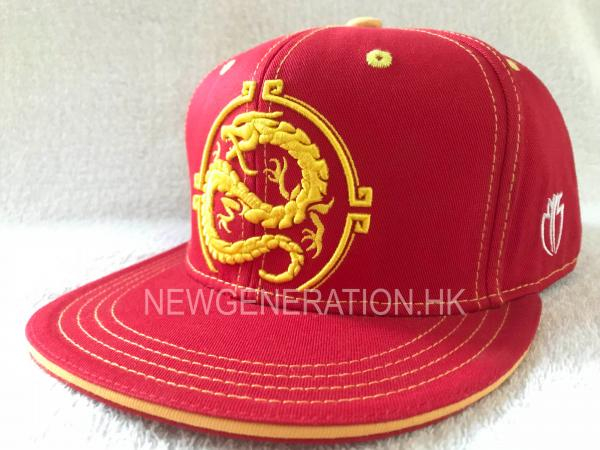
Take an independent London label we worked with extensively—let's refer to them as Rebel Thread. In mid-2024, they launched a high-end snapback honoring the local creative scene: heavy structured crowns, intricate 3D embroidery on the front panel, and a highly customized under-visor. Traditional sourcing forced them into a 600-piece minimum order across two colorways. They launched with massive hype, but actual organic sell-through stalled at 240 units. The remaining 360 premium caps sat in a damp storage container in Bethnal Green for nearly a year, locking up over £8,500 in dead capital. By the time they cleared them out at below-cost pricing, their quarterly margin was entirely wiped out.
This is not an isolated supply chain error; it is the industry standard for brands stuck with legacy cap manufacturers. Streetwear relies entirely on cultural relevance, artificial scarcity, and immediate iteration. If you are forced to lock down inventory specifications nine months before a drop, you are not running a brand—you are gambling on trends. Dead stock kills independent labels far faster than high unit costs ever will.
That is exactly why we spent the last three years rebuilding our infrastructure. We did not do it out of altruism; we did it because running a modern cap factory means evolving alongside our most agile buyers or losing them entirely.
How a modern cap factory reengineers workflow for 50-unit runs
The old narrative stated that small production batches inherently caused catastrophic quality variation and prohibitive setup costs. That held true when a factory floor consisted of a single, rigid 100-meter assembly line. If you stopped that line to change thread colors, swap out backing material, or recalibrate a visor stitching jig, you lost thousands of dollars in pure downtime.
To fix this, we tore down the traditional layout in our cap factory and replaced it with highly specialized, modular lean stitching cells. Each cell contains precisely configured sewing setups managed by a dedicated technician. When a design shifts, we do not halt the entire floor; we re-tool an isolated cell in under 45 minutes. This structural flexibility allows us to execute 50 pieces of a double-layer structured wool-blend snapback in the morning, pivot to an unstructured 5-panel nylon runner at noon, and maintain our total daily output targets without bleeding overhead expenses.
Our infrastructure relies on 12 Kamitsu multi-head electronic embroidery setups alongside high-precision ultrasonic cutting tables. The technical bottleneck in low-MOQ embroidery has always been stitch stabilization and registration. When running a dense 3D puff embroidery design at a small scale, normal tension settings will warp the buckram panel. We solved this by implementing real-time digital thread-tension optimization combined with shared material pooling. By pre-purchasing premium raw materials—such as 380gsm heavy-weight cotton twill and specialized double-density structured buckram—and consolidating these material bases across several independent boutique brands, we keep the raw material base cost identical to a 1,000-piece production run.
HH-Vibe, a streetwear imprint out of Hamburg, ran into this exact technical challenge. They needed a 60-unit run of a classic 6-panel snapback featuring highly complex, multi-layered artwork requiring exactly 12 Stitches Per Inch (SPI) to ensure the heavy front panel did not pucker or sag during retail display. Instead of routing this through traditional physical prototyping—which usually devours three weeks in continuous air-courier handoffs and modifications—we deployed full-spectrum digital material simulation. The design team reviewed high-fidelity 3D renderings that perfectly modeled how the 12 SPI stitching interacted with the 380gsm twill under specific tension. We dialed in the embroidery density, adjusted the stitch direction across the crown seam, and achieved final sign-off in 72 hours. The final physical production run matched the digital model with zero variance. Work like this requires a highly disciplined cap factory that understands the physical threshold of heavy textiles.
True low-MOQ performance requires complete vertical integration. If a supplier outsources their front-panel embroidery to a third-party workshop or sends out visors for brim-stitching, the logistics chain collapses. In our facility, the fabric cutting, panel preparation, multi-head embroidery, crown structuring, 8-row brim stitching, and final steam shaping happen entirely under one roof. We eliminate the third-party transit delays and quality blind spots completely.
The financial and operational reality of 50-piece batches
Let us look at the precise operational trade-offs you encounter when scaling down to a 50-unit run with a specialized cap factory.
Your individual per-unit cost will be higher than a mass-production run—typically scaled up by 15% to 25% depending entirely on the complexity of your interior seam taping, the total stitch count of your embroidery, and whether you specify specialized components like 0.12mm matte PVC snap closures. But looking at unit price in a vacuum is a fundamental accounting mistake. The metric that actually matters to a growing brand is total capital exposure and risk-adjusted return.
Remember Rebel Thread and their £8,500 loss on dead stock? Had they utilized a 50-unit testing framework, they could have launched three distinct capsule designs simultaneously, producing 150 total caps. Even at a 20% premium per unit, their total upfront capital outlay would have hovered around £1,900. Once the market validated the top-performing colorway, they could have triggered a rapid 200-piece reorder with verified data. They would have preserved thousands in liquidity, eliminated storage fees, and maintained absolute freshness in their product catalog. Experienced cap manufacturers will always advise you to optimize for capital velocity rather than an arbitrary per-unit discount.
Lead times for low-MOQ runs do not contract significantly compared to bulk production—they stabilize. From the moment the digital tech pack is locked and the deposit clears, the standard manufacturing cycle takes 28 to 32 days. This timeline is dictated by physical constraints: the curing time for structured components, the meticulous speed required for high-density 12 SPI embroidery, and rigorous final inspection logs. We maintain an average turnaround of 29 days for small-batch allocations, backed by strict DDP (Delivered Duty Paid) logistics pricing so customs tariffs are resolved before the shipment lands in the UK.
Validating a low-MOQ production partner's technical claims
Because low-MOQ sourcing has become a popular marketing catchphrase, many standard trading companies pretend to be agile factories when they are actually just brokering deals. Before routing deposits to any alleged cap manufacturers, require proof of these critical indicators:
- Demand real-time floor footage: Ask for a direct smartphone video of the modular stitching cells processing a mixed-batch run. If they refuse or provide polished corporate marketing videos, they are brokering your order to a third-party facility.
- Audit the internal embroidery setup: Confirm the brand and age of their embroidery machinery. High-density 3D stitch replication on snapbacks requires advanced tension-control systems (such as Tajima or Kamitsu setups). Low-tier machinery will cause alignment errors across the central crown seam.
- Request a comprehensive compliance dossier: Ensure they can provide timestamped fabric composition sheets, certified non-toxic dye logs, and structural data for components like the visor core (insist on virgin plastic cores rather than recycled cardboard, which warps after a single wash). Better overseas cap manufacturers will keep these documents ready on demand.
FAQ – Custom low-MOQ snapback manufacturing
What is the absolute minimum order quantity for premium custom snapbacks?
Our factory accepts custom production runs down to 50 units per design/colorway. This includes full customization options such as bespoke interior seam taping, customized woven labels, and specific under-visor fabric matches.
How does small-batch ordering impact the total cost structure?
While the cost per cap increases by roughly 15% to 25% compared to a bulk 500-piece run, the total order cost drops drastically. A standard 50-unit production run of a highly customized, premium snapback generally ranges between £450 and £850 inclusive of setup fees and DDP shipping to UK commercial addresses. This cost efficiency mirrors the operational baseline you should expect from an agile cap factory.
Can we execute physical material validation before full production?
Yes. While digital 3D material simulation resolves 90% of design alignments, we can dispatch physical fabric swatch books showing exact weights (e.g., 380gsm twill vs. heavy canvas) along with Pantone matching swatches within 5 to 7 business days.
Are the quality control steps identical for 50 units and 1,000 units?
Absolutely. Because our modular cells utilize identical Tajima/Kamitsu embroidery heads, identical premium thread lines, and the same 12 SPI quality threshold, the physical craftsmanship is completely uniform across all batch sizes.
Immediate execution steps for your next snapback collection
Stop gambling your core capital on unverified 500-piece runs. If you want to protect your label's liquidity this quarter, stop analyzing spreadsheets and complete these exact operational steps today.
First, drag your vector design files into a clean tech pack. Do not worry about rendering the stitching yourself—just clearly specify that you require a 12 SPI high-density 3D puff embroidery alignment, note your target crown height, and state whether you want a 380gsm premium twill base or a technical nylon alternative.
Next, send that brief over and demand an all-inclusive DDP (Delivered Duty Paid) commercial quote specifically for a 50-unit benchmark run. Make sure the quotation separates individual tooling setup fees from shipping costs so you know your exact landed cost per unit before anyone turns on a machine.
Finally, insist on a 3D digital material simulation review to double-check the front-panel registration before releasing your production deposit. If the factory cannot provide a high-fidelity digital test within 72 hours, they do not have the modular infrastructure required for true small-batch manufacturing.
— New Generation HK, custom cap manufacturers since 2004