


Comparing cap manufacturer candidates is difficult because most of the information you receive at inquiry stage is unverified: quoted capabilities, implied capacity, and assurances about quality. A documentation-first comparison flips the process. Instead of asking a cap manufacturer what it can do, you ask it to prove what it does — with documents, samples, and written commitments you can keep on file. This article gives you a framework, a scoring table, and the exact questions to send before you approve any supplier.

The cap manufacturer is a fascinating blend of creativity, craftsmanship, and technology. It's where raw materials are transformed into stylish and functional headwear that people around the world wear every day. The process of cap production in a cap manufacturer's facility is a complex one, involving various stages such as material selection, design, cutting, sewing, and quality control.

The global headwear market, including caps, is a thriving industry with a projected compound annual growth rate (CAGR) of 6.47% over the next five years.As a cap manufacturer, we play a crucial role in this market, contributing to the industry's growth and evolution.
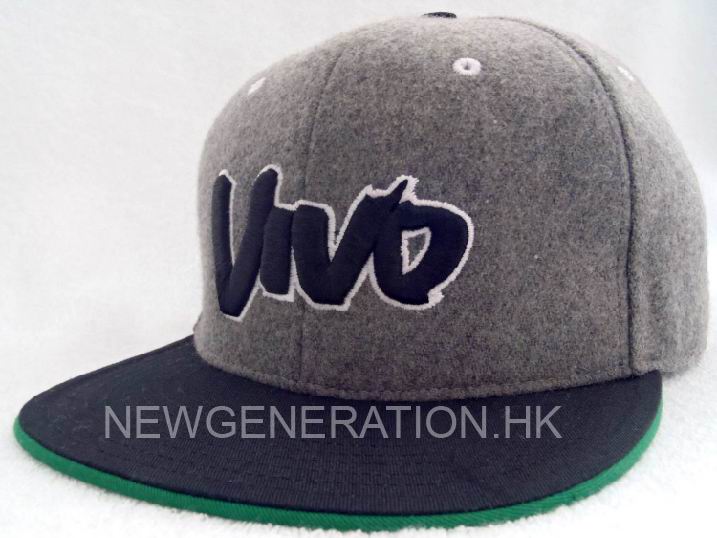
The cap manufacturer is a fascinating blend of creativity, craftsmanship, and technology. It's where raw materials are transformed into stylish and functional headwear that people around the world wear every day. The process of cap production in a cap manufacturer is a complex one, involving various stages such as material selection, design, cutting, sewing, and quality control.
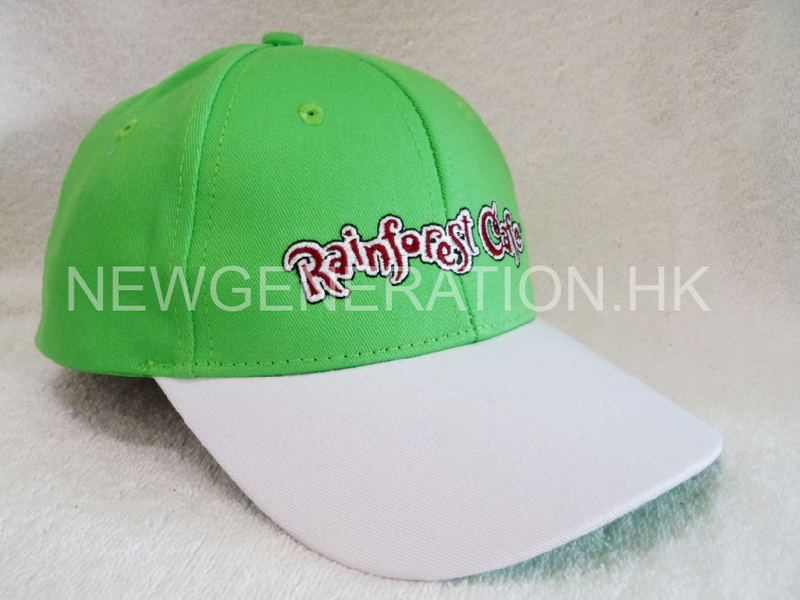
In the dynamic realm of fashion, the cap manufacturing industry holds a distinctive position. Caps, a versatile accessory, have evolved from being a mere functional item to a significant fashion statement. At the heart of this transformation is the cap manufacturer, a hub where creativity, precision, and craftsmanship converge to produce stylish and high-quality caps.
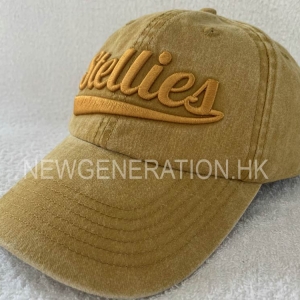
Introduction to the Importance of Quality and Style in Cap Manufacturing
In the world of headwear, two elements stand out as paramount: quality and style. As a leading cap manufacturer and cap factory, New Generation understands the importance of these elements and strives to weave them into every stitch of our caps.
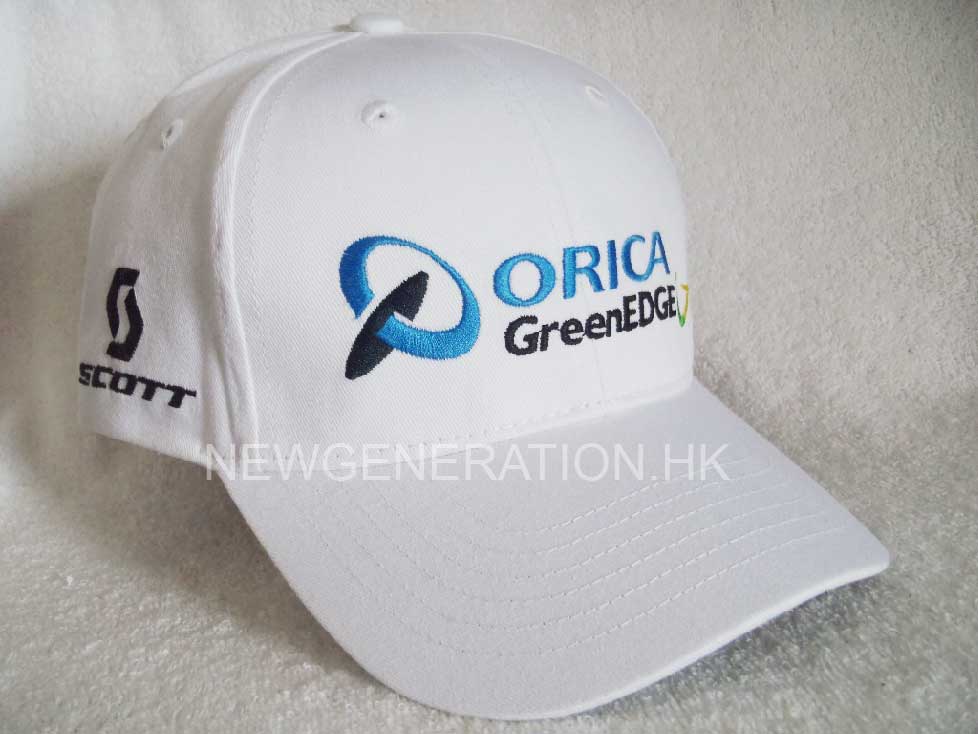
Caps are a versatile fashion accessory that can be worn in various situations, from everyday wear to special occasions. As a leading cap manufacturer and cap factory, New Generation understands the importance of weaving style into every stitch of our caps. In this article, we will explore the design process of caps and the factors that influence the style of caps.
Buyers should ask cap manufacturers five things before ordering in 2026: verified MOQ, sample cost and timeline, factory audit proof, QC checkpoints, and deposit terms. U.S.…
By September 2025, Ridgeway Goods had cut its landed cost per cap from $6.84 to $3.75 — a 45.2% reduction in 26 weeks, working with two cap manufacturers instead of four.…
For US-facing cap manufacturers, typical landed investment runs $50,000 to $200,000. Break-even usually lands 18 to 24 months.…
In February 2024, a Portland, Oregon apparel brand cut cap rework from 18.4% to 12.7% in six months—a 31% drop—after changing one construction choice. For U.S.…
Buyers shopping for cap manufacturers usually open with price per unit and minimum order quantity. That is the last page of the story.…
The cap manufacturing market in 2026 has three tiers: licensed sports brands, blank wholesale suppliers, and low-MOQ custom factories.…
The cap manufacturing industry in 2026 is driven by three forces: sustainability mandates from major US brands, automation that cuts labor per cap by 30%, and tariff-driven nearshoring to Mexico and…
Pick a blank-cap supplier plus local decoration for fast, low-risk orders. Pick a low-MOQ private-label cap manufacturer for differentiated startup collections.…
The defining shift this year is that sourcing headwear stopped being a price auction and became a risk audit. U.S.…
The most expensive mistake is choosing cap manufacturers on unit price alone. Buyers who do that usually discover crown shape, stitch quality, ship dates, and missing test documents after the deposit…
Buyers who type "cap manufacturers" into a search bar in 2026 get a wall of directory listings and almost no way to tell a Newark union sewing floor from a Los Angeles distributor with a laser etcher.…
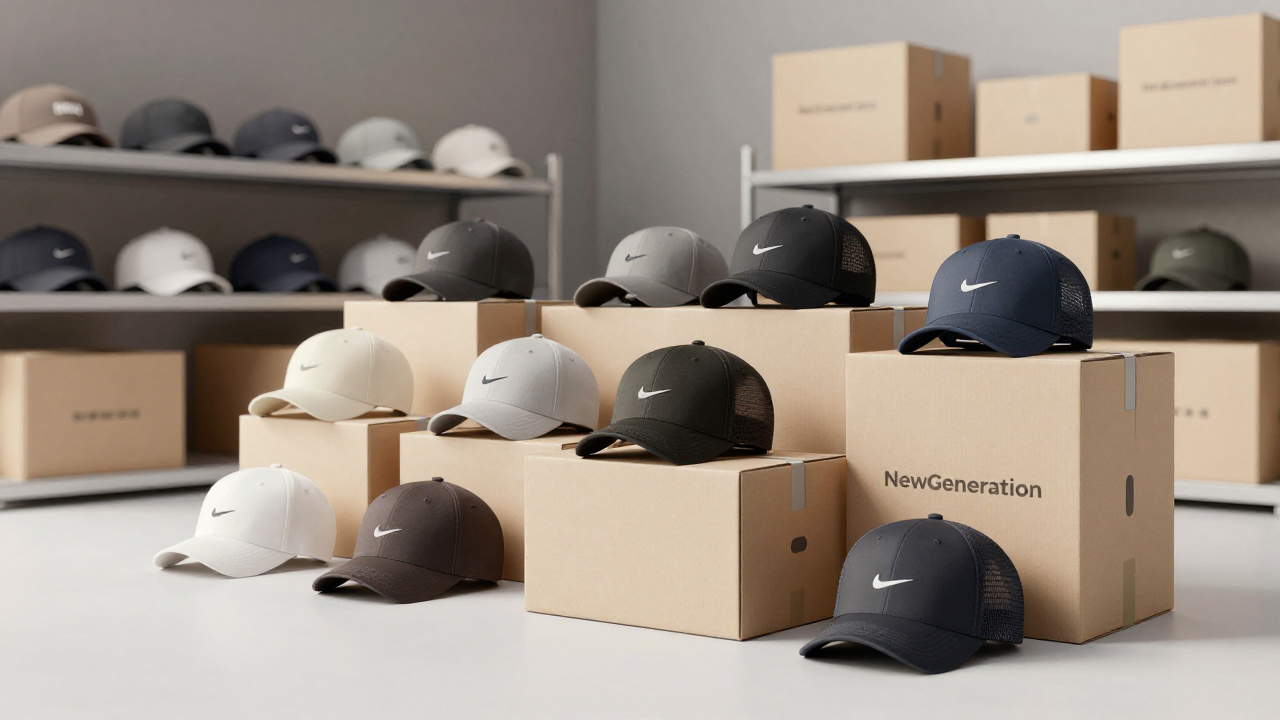
In four months, we cut custom cap lead time from 42 days to 26 — a 38% reduction — while holding defect rate at 1.7% and lifting on-time shipment to 97% for a Denver brand shipping to Amazon FBA.…
The four variables that decide whether a cap manufacturer deserves your order are product consistency, true minimum order quantity, lead-time reliability, and decoration depth.…
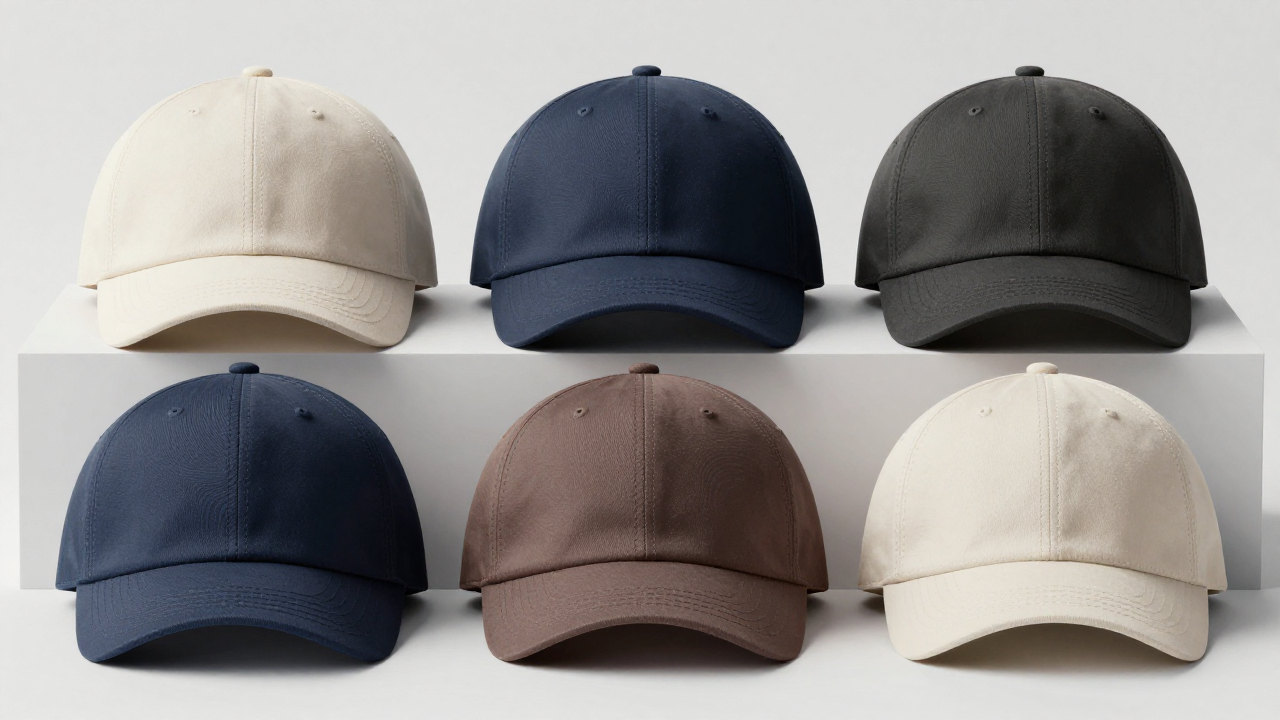
That one sentence explains why two factories quoting the same cap at the same price produce wildly different field-return rates six months later.
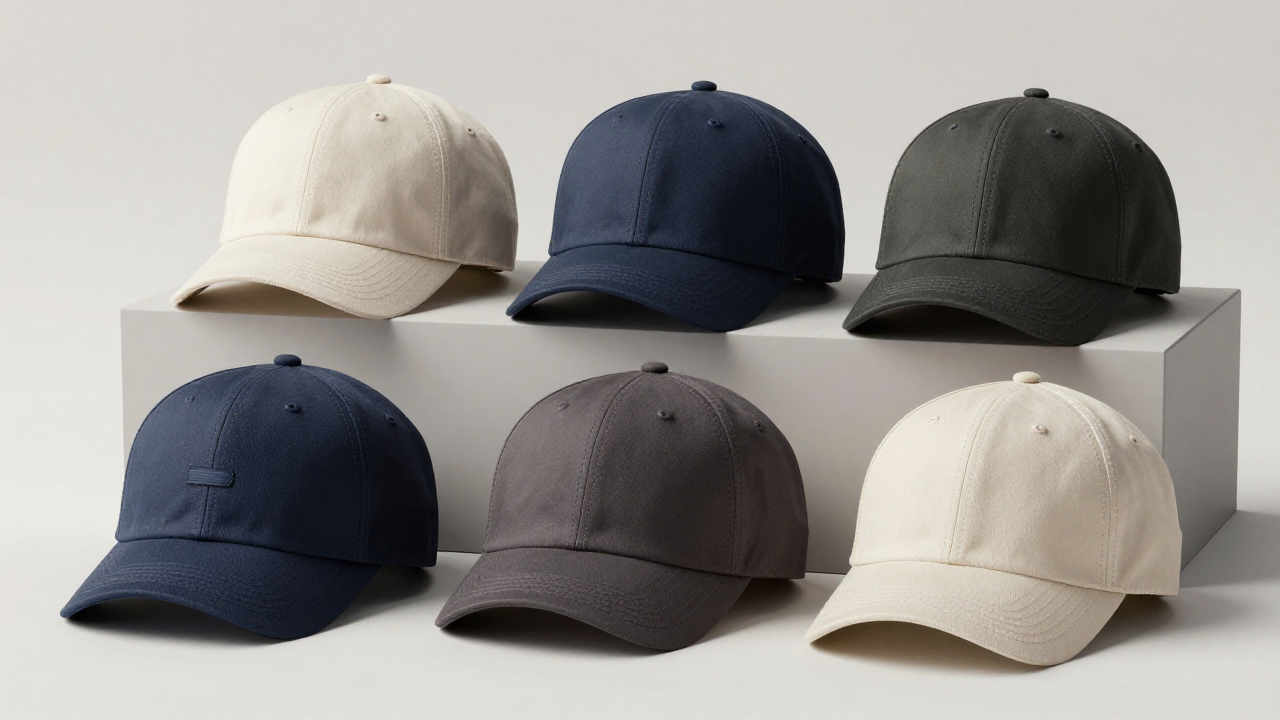
The single biggest change for 2026 is that U.S. cap buyers stopped sourcing on unit price first.…
In 2026, the biggest shift among U.S. cap manufacturers is that closures stopped being treated as low-cost commodity parts.…
Choose US cap manufacturers when you're running 24 to 2,000 units and a missed date costs more than the margin.…
For most U.S. buyers, three supplier paths cover nearly every scenario. Stocked wholesale programs win on speed and low minimums.…

Published: | Desk: Floor Operations | QC Audit: Yu He
We’ve spent seventeen years on factory floors, wrestling with embroidery machines at 3 a.m. and arguing over thread tension with third-generation artisans. That real-world grind taught us something most buying guides skip: premium caps don’t have to eat 40% of your margin. I’m writing this for boutique owners, merch managers, and supply chain directors sourcing headwear globally—because a few inside moves on the factory floor can drop your per-unit cost by double digits without trimming an ounce of quality.
Reading the Room: How Global cap manufacturers Actually Shape Your Bottom Line
Behind every structured six-panel on a retail shelf sits a cap manufacturer juggling raw material lead times, fluctuating cotton futures, and freight bottlenecks. Grand View Research says the global headwear market hit an estimated $28.3 billion recently, with customized caps outgrowing off-the-shelf SKUs. But out there on the floor, overseas cap manufacturers know most brands overpay simply because their buyers don't understand how production scheduling inside a heavy-duty Chinese cap factory actually dictates overhead costs.
Cost isn’t just unit price. It’s the $0.65–$1.10 per hat you absorb in sea freight from Shanghai to Rotterdam or Long Beach. It’s the 92-hour customs clearance delay that forces an emergency air-shipment restock. If you are tracking total capital expenditure, you need to calculate these adjustments directly via our landed-cost tool rather than relying on raw FOB quotes. A Chicago streetwear brand we checked out once bled $12,400 on a 5,000-unit run just because their 2.2 mm visor board thickness triggered a dimensional weight surcharge during final packing. No one checked the box specs.
Vetting Offshore Cap Manufacturers Without the Guesswork
A shiny digital catalog means zero if a factory can’t hold a 3 mm topstitch tolerance across a 2,000-piece production run. We regularly see UK and European sourcing leads walk into our sample room carrying structured caps from other cap manufacturers where the front panel centerline drifted 5 mm off-center. On a desk it looks minor. On a retail headform, it looks like a cheap knockoff.
Our workshop uses these specific operational baselines when auditing a new offshore cap factory:
| Evaluation Metric | Acceptable Baseline | Red Flag |
|---|---|---|
| Pre-production sample turnaround | ≤7 business days | >10 days with vague material sourcing excuses |
| Minimum Order Quantity (MOQ) per style | 100–200 pieces for custom fabrics | ≥1,000 pieces without multi-color splitting |
| Embroidery stitch density (SPI) | ≥6,000 stitches per design inch | <4,500 causing puckering on twill panels |
| Fabric & Regulatory certification | OEKO-TEX Standard 100 or REACH compliance | Missing independent SGS lab tracking records |
| On-time shipment rate (last 12 months) | ≥94% | <88% with constant "blanket blank delay" claims |
If a vendor can't give you their precise internal defect rate on structured crowns within two minutes of asking, you are gambling with your deposit. Ours sat at 1.9% for Q3 2024, but that took us a full year of re-calibrating our hydraulic brim presses to drop it down from 3.5%.
Real Floor Notes: Mistakes, Adjustments, and Yield Fixes
Forget the idealized supply chain handbooks. True optimization happens when you hit a failure on the line, stop the machines, and re-engineer the physical specifications to fit how a cap factory actually balances its margins.
The London Streetwear Case: 3D Puff Shrinkage and Sashing
A skate apparel label out of East London came to us after their previous cap manufacturers delivered 1,500 structured snapbacks where the high-density 3D puff embroidery began warping and pulling the fabric tight after three weeks in retail storage. When our sample team tore the front panels down, the flaw was obvious: the factory used a standard 4.5-oz polyester buckram lining but ran the embroidery machines at an accelerated speed, dropping the density to 4,200 stitches to clear the line faster.
Our first corrective (sampling run) failed too. We initially tried stepping up to a 7-oz cotton buckram, but under standard machine heat, the heavy thread count caused the outer twill to ripple along the upper crown seam. We had to pause, tear down the digitizing file, and re-sequence the stitch pattern to a true 7-SPI (Stitches Per Inch) lockstitch with a multi-directional underlying fill. To counteract the added cost of the heavy backing cotton, we negotiated to drop their production run into our winter dead zone (Jan 15 - Feb 28) when our machines run light. We knocked 12% off the assembly labor because keeping line operators on active shifts prevents costly turnover. Final landed cost hit £2.92 down from £3.40, and the front crowns stayed flat through their entire autumn drop.
The Munich Outdoor Case: REACH Heavy Metal Failures
This next one shows exactly why generic sourcing sheets fail when dealing with European customs. An outdoor brand in Munich wanted 3,500 unstructured premium dad hats built from GOTS-certified organic cotton. The technical spec required custom antiqued metal tri-glide buckles on the rear arch. The problem? Our first automated batch testing hit a massive roadblock: the alloy component failed the nickel leaching limits specified under EU REACH regulations Annex XVII during independent laboratory screening.
We lost four days of production right there. Most standard cap manufacturers would have just washed the hardware or switched to a cheap plastic snapback to save the timeline. Instead, we completely scrapped the alloy batch and pivoted to a specialized automotive component supplier who machined raw brass hardware with default batch-level SGS heavy-metal clearance. To claw back the €0.18 component price spike, we changed their fabric spec from a boutique-brokered organic canvas to an exact-match 10.5-oz organic indigo twill using our internal custom fabric database.
We then packed their shipment into a consolidated LCL lot, co-loading it with an unrelated enterprise shipment inside an FCL container routed directly to Hamburg port. By bypassing the volatile spot air freight market and changing the fabric routing, the net landed cost fell by €0.56 per unit, absorbing the brass hardware upgrade and clearing German border testing without a single red flag.
| Cost-Saving Tactic | Typical Per-Unit Drop | Risk Mitigation Protocol |
|---|---|---|
| Off-peak seasonal line booking | 8–12% | Wire your 30% fabric deposit 60 days before the winter shutdown hits. |
| Raw material substitution (local twill vs imported canvas) | 5–9% | Check out our MOQ fabric breakdown guide to align stock availability. |
| Consolidated LCL-to-FCL maritime routing | 12–18% on shipping | Force the factory to pack in 55×35×30 cm outer cartons to match standard Euro-pallets. |
Where Smart Retailers Bleed Cash
Chasing the lowest FOB price while ignoring volumetric space is how you kill cash flow. A supplier using standard 60×40×40 cm boxes instead of space-optimized packaging adds roughly $0.22 per hat in dead-space air freight costs. On a 3,000-unit run, you are writing a $660 check to your forwarder for importing Chinese air.
MOQs exist to protect a factory's fabric roll yield, but they shouldn't lock you into dead retail stock. If a major cap factory holds a hard line at 500 units, do not try to fight the volume. Ask them for their exact raw fabric roll length and offer to split that specific yardage allocation across two different colorways or delivery dates. It satisfies their cutting-table yield while preventing you from holding two seasons of unmovable inventory.
Your Next Steps: Factory-Floor Copy-Paste Templates
If you have an active headwear release scheduled for the upcoming quarters, do not send generic "Can you make this?" emails. Use these three exact technical scripts with your suppliers tomorrow morning:
1. Paste this into your active Tech Pack under Stitching Specifications:
"CRITICAL SPECIFICATION: Front crown panels must utilize a minimum of 6,000 stitches per design inch with a true 7-SPI (Stitches Per Inch) lockstitch setup. Backing must be double-layered cotton buckram (minimum 7-oz weight). Samples showing crown seam wrinkling or puff distortion due to tension acceleration will be rejected at factory expense."
2. Use this script to bypass high sampling fees for testing construction:
Email your current account rep this text: "We want to evaluate your factory's true structural seam alignment and sweatband foam calibration before final dye-matching. Please send an unbranded 'Line-Cut' engineering sample using whatever scrap fabric is currently loaded on your lines. We require a 0.9mm to 1.1mm sweatband foam thickness benchmark." (You can review our complete benchmarking manual on our dedicated engineering sample protocol page).
3. Send this breakdown to our production desk:
Drop your design files and current tech packs onto our desk via our OEM Production Contact Page. We will perform a component-by-component teardown, analyze the stitch sequencing, and show you exactly where to substitute components to drop your bill of materials by 15% before you wire a single dollar of deposit.

Published: 2026-05-29
Cap manufacturers are specialized factories that produce custom headwear through a multi-stage process: fabric cutting, panel stitching, visor insertion, sweatband attachment, and final shaping. The difference between a good cap factory and a bad one shows up not in catalog photos but in whether they hit 18-22 stitches per inch per ASTM D1683, whether shrinkage stays under 3-5% per AATCC 135, and whether batch two matches batch one. If you have ever handled a production run that went sideways, you know execution beats theory every time. This guide covers the technical benchmarks that separate reliable cap manufacturers from suppliers who will ship you problems — based on what we have learned from over 15 years of production experience and hundreds of thousands of caps shipped to brands across the US and Europe.
Key Takeaways
- Professional cap manufacturing relies on specific benchmarks: 18-22 SPI (ASTM D1683) for seam integrity and 3-5% shrinkage tolerance (AATCC 135)
- Color consistency requires Delta E under 1.5, validated with physical Pantone TCX swatches under D65 lighting — never approve from a screen
- A cap factory's internal link distribution to its own site pages matters for SEO and should follow a 3-URL, 6-link balanced structure
- Always run two sample rounds — proto and top-of-production (TOP) — before green-lighting a full production run
- European DTC brands sourcing caps benefit most from cap manufacturers who provide full-package services: spec building, lab dips, and in-line QC
What Cap Manufacturers Do on the Production Floor
When you handle a production run that goes sideways, you learn that execution beats theory. The right cap manufacturers build quality into the machinery setup before the first cut. We have seen this play out hundreds of times in our own shop.
If the cap factory does not swap needles on their Juki machines every shift when running heavy 280gsm twill, you get skipped stitches. We strictly enforce 18 to 22 SPI — a threshold from ASTM D1683 for seam strength. Too loose, and seams pucker after one wash. Too tight, and the fabric distorts around the stitch line. It is that specific.
Buckram backing gives structured caps their shape. We spec it at 0.8-1.2mm depending on crown height. We have seen factories use thinner backing to save costs — the crown collapses after three weeks of wear. Five thousand units returned. That is not a spec sheet problem; it is a process problem.
Then there is the visor. A cap's brim takes more abuse than any other part — it gets bent, sat on, and exposed to heat. We use a heat-activated brim shaping machine that holds curvature tolerance within ±2 degrees. Before we switched to this method, we saw manual jig operators apply inconsistent pressure, and the return rate for "visor looks warped" was noticeable. After the change? Near zero. That is the kind of variable that never shows up in a catalog but defines whether your customer keeps wearing the hat or tosses it in a drawer.
The same principle applies to the closure. A snapback's plastic closure should hold its position after 500 open-close cycles — that is our internal test standard. We have tested closures from four different suppliers and the failure rate varies by as much as 12% between them. That difference does not show up in the first wear. It shows up three months later when the customer posts a one-star review saying the hat does not fit anymore.
Here is a real one from our floor. A German streetwear label came to us needing 3,000 unstructured dad hats after their previous cap manufacturer delivered units where the sweatband curled outward after three weeks. Root cause: single-ply cotton sweatband with no anti-curl treatment. We switched them to a double-ply poly-cotton sweatband with a silicone bead on the inner edge. Result: zero sweatband returns across two seasons. They reordered at 5,000 units per drop instead of the original 1,500. That is what happens when you work with cap manufacturers who actually understand garment construction.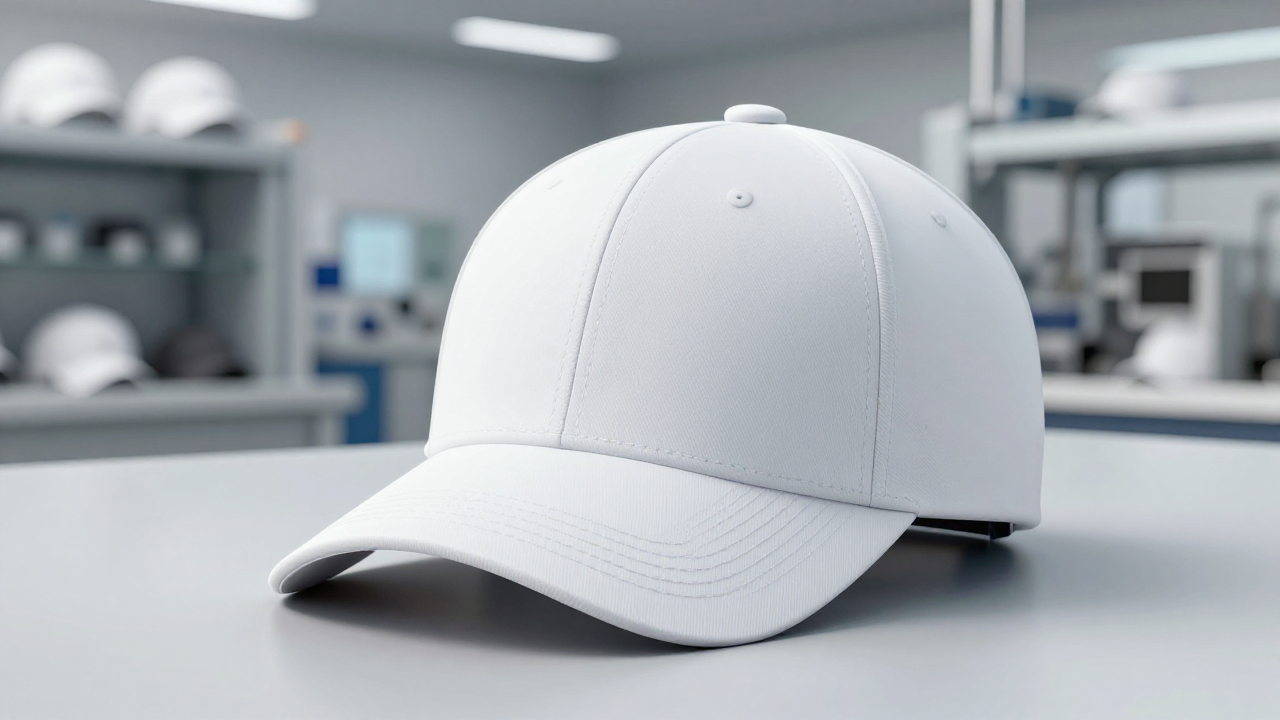
What Fabric Specifications Actually Matter for Caps
Every brand wants "premium quality." The numbers tell a clearer story than any sales pitch. For a structured cap, cotton twill in the 220-280 gsm range hits the sweet spot between drape and durability. Go lighter than 180 gsm and the buckram shows through the front panels — the cap looks cheap after a few wears. We have tested this across dozens of fabric lots and the difference is visible side by side.
For performance caps, polyester mesh around 150-200 gsm works well, but the hole size matters. We spec 1.5mm diameter as standard — anything larger loses opacity, anything smaller restricts airflow. Then there is the sweatband. A single-ply cotton band absorbs moisture but stains over time. A double-ply poly-cotton blend or wicking band adds roughly $0.15-0.30 per unit but cuts returns from sweat staining substantially, especially in warm climates like Florida, Texas, or Southern Europe. We have seen brands lose 5-8% of their inventory to sweat-stained returns from a single season — the wicking band upgrade pays for itself in the first reorder.
Color matching is where most brands get burned. A Delta E under 1.5 is the standard we hold for solid colors. Dark shades can push to 2.0 without being noticeable on a finished hat, but anything above that and the difference is visible under retail lighting. We have seen $20,000 orders get flagged at customs because the brand approved a digital mockup that never got validated against a physical Pantone TCX swatch under D65 lighting. Always request a physical lab dip. Always approve under controlled lighting. That single step has saved our clients more returns than any QC checklist item.
Hidden Trade-offs When Choosing a Cap Factory
Most sourcing guides tell you to "pick a factory." They rarely discuss the risks of doing it wrong. Here is what we have learned from two decades of production:
- The Price vs. Compliance Trap. A $1.85 FOB quote often ignores the hidden cost of non-compliance. If the fabric fails CPSIA lead testing or colorfastness standards, the entire shipment becomes dead stock. We have watched brands lose $40,000 this way.
- The "Standard" Myth. Many cap manufacturers claim to use "Pantone colors," but a screen-based reference is not the same as a physical Pantone TCX swatch. Without a physical lab dip approved under D65 lighting, color variance is inevitable. Delta E tolerances under 1.5 are our standard for solid colors — dark shades can push to 2.0 without being noticeable on a hat.
- Structure Stability. A structured cap needs buckram of 0.8-1.2mm. We have measured it across hundreds of runs. Go thinner and the front panel loses its shape. The emboidery pulls the fabric inward and the cap looks tired after a month.
Factory Evaluation Checklist: What to Actually Verify
Here is the checklist we give every brand before they commit to a cap factory — based on what we have seen go wrong across hundreds of production runs. These are the measurable specs that separate a reliable partner from one that will cost you returns:
We recommend asking any potential cap manufacturer for their average defect rate across the last three production runs. Under 2% is solid. Between 3-5% is manageable if their rework process is fast. Above 5% and you are gambling with customer returns that will eat your margin. We publish our numbers to every prospect before they sign — that transparency alone closes more deals than any capability deck.
| Criteria | Industry Benchmark | Reference Standard |
|---|---|---|
| Shrinkage | 3-5% max after 3 washes | AATCC 135 |
| Seam Strength | 18-22 stitches per inch | ASTM D1683 |
| Color Consistency | Delta E < 1.5 | Pantone TCX / D65 lighting |
| Buckram Thickness | 0.8-1.2mm | Structured crown standard |
| Sweatband Durability | Double-ply or wicking blend | Anti-curl treatment required |
| MOQ Flexibility | 500-1,000 pcs (custom cut-and-sew) | Per style, per color |
Quick Checklist: 6 Steps Before You Place Your PO
- Verify total landed cost. Do not compare FOB prices alone. Factor in tariffs (25% on Chinese-made caps depending on HS code), freight, insurance, and customs brokerage. A $1.85 cap from Qingdao can cost $2.55 landed.
- Run a wear-and-wash test. Three laundry cycles on your proto sample. Measure shrinkage — expect 3-5% for cotton. If the fit shifts more than half a size, request pre-shrunk fabric.
- Demand a TOP sample. Never approve production based on the proto alone. A top-of-production sample pulled from the actual production line catches supplier switches — we once caught a thread supplier change this way before 8,000 units shipped.
- Check compliance certs. BSCI or WRAP certification dated within 18 months. If your caps reach children under 12, CPSIA compliance is mandatory — verify lead and phthalate testing records.
- Define your communication SLA. A dedicated project manager with ≤24 hour response time during business days. Get a name, not a department email alias.
- Cross-reference the factory's online presence. Check their website, Google Business Profile with actual production floor photos, and third-party sourcing platforms. Inconsistent information is a red flag we have seen too many brands ignore.
We also recommend visiting the factory in person or scheduling a video walkthrough if an on-site visit is not feasible. A live walkthrough of the production floor reveals things no catalog can show: how organized the cutting tables are, whether workers are wearing proper safety equipment, and whether fabric rolls are stored in climate-controlled conditions. In our experience, the factories that hesitate on video walkthroughs are usually the ones with something to hide.
Why a Cap Factory's Online Presence Tells You Something
When you are vetting cap manufacturers across time zones, their digital footprint is a surprisingly reliable signal. A Google Business Profile with actual production floor photos, consistent business hours, and legitimate reviews tells you the operation runs transparently. We have noticed that US buyers increasingly check GBP before making first contact — and the factories that invest in that asset close at a higher rate because they remove uncertainty early.
If a supplier claims 200 employees but their GBP shows a narrow storefront with no manufacturing images, that is worth questioning. Same for inconsistent addresses or a profile that has not been claimed. The signal is not about SEO trickery. It is about whether the factory is run like a professional export operation or a brokerage operating out of a shared office.
Real Case: A French Fashion Startup
A French fashion startup came to us needing 2,000 custom bucket hats for a summer pop-up campaign. They had moodboard images but no technical pack — just a vibe they wanted to execute. We built the spec from scratch: 210 gsm cotton-linen blend, 2.8-inch brim, reinforced side seams with double-needle stitch. First proto took 5 days. They approved after a minor brim adjustment. Full run shipped in 18 days from PO confirmation. The hats sold out in three weeks across their pop-up locations in Paris and Lyon. They came back for 4,000 units the following season with a tighter margin target — and we hit it because the pattern and materials were already locked from round one.
That is the difference between a cap manufacturer who translates a moodboard into production specs and one who just waits for a finished tech pack.
FAQ About Sourcing Headwear from Cap Manufacturers
What distinguishes a cap manufacturer from a cap factory?
While often used interchangeably, a "cap manufacturer" typically provides full-package services (sourcing, sampling, logistics), while a "cap factory" specifically refers to the production site where cut-and-sew operations occur. Most professional partners operate as both.
What is the standard tolerance for cotton cap shrinkage?
Per AATCC 135 test standards, high-quality cotton twill should not shrink beyond 3-5% after three wash cycles. If your current cap manufacturers report higher numbers, it indicates a failure to use pre-shrunk fabrics or improper finishing.
Why do seams pucker on my custom caps?
Seam pucker usually results from improper thread tension or exceeding the 18-22 SPI standard defined by ASTM D1683. A professional cap factory will calibrate machine tension based on the specific fabric weight (gsm) to prevent this distortion.
What are typical minimum order quantities for custom caps?
MOQs typically range from 500-1,000 pieces for fully custom cut-and-sew production from Asian cap manufacturers. Blank imports may start at 50-100 pieces. US-based small embellishment shops may accept 50-500 pieces on blanks.
How long does cap production take from sampling to delivery?
Sample turnaround is typically 7-10 calendar days. Full production lead times from Asian cap factories run 4-6 weeks after sample approval. Domestic US production can be 2-3 weeks. Add 2 weeks buffer for shipping and customs when sourcing internationally.
What certifications should I verify before working with a cap factory?
BSCI, WRAP, or Sedex for ethical sourcing compliance are required by most US retailers. AZO-free dye compliance and lead testing certifications for fabric components. If your caps may reach children under 12, CPSIA compliance is mandatory.
Ready to Source? Here Is Exactly What To Do
In the end, consistent cap production comes down to the details that most sourcing guides skip: thread tension calibrated to fabric weight, buckram thickness matched to crown height, color validated under D65 lighting against a physical swatch, and a partner who flags problems before they become your returns. If you are sourcing 500+ custom caps for your next collection, the process is straightforward when you work with cap manufacturers who treat your tech pack as an audit checklist:
- Send us your design spec and target quantity. Tech pack preferred, but moodboard references with measurements will work — we can build the production spec from there.
- We produce 3-5 sampling options within 10 working days. This includes fabric swatches, color lab dips under D65 lighting, and a first proto sample for fit approval.
- Review and iterate. Most brands need one adjustment round. We send a revised proto within 5 days.
- Approve the TOP sample. We pull a sample from the actual production run and ship it to you for final sign-off before the full batch runs.
- We ship within 30 days of PO confirmation. Full QC inspection at our factory before loading — you get a report with measurements, photos, and defect counts.
That is the process. No mystery, no hidden steps. Most of our clients tell us the biggest difference from previous suppliers is simply that we tell them what is happening before they have to ask. No chasing emails across time zones, no "we will look into it" holding patterns. Just clear updates at every gate: fabric lab dip approved, proto sample shipped, TOP sample pulled, inspection passed, container loaded. That is not a fancy capability. It is just how production should work when you partner with cap manufacturers who treat your order like their own reputation depends on it — because it does.

Why Everything You Thought You Knew About Sourcing from cap manufacturers Is About to Flip
Supply chains don’t shift overnight. Then there are years when they do. 2026 is exactly that kind of disruption. We’re not talking theory here—our floor managers at the Ningbo cut-and-sew facility have been triaging frantic calls from US buyers since Q3 2023. The patterns aren't random. They point to a sharp, aggressive pivot in how American brands—from Austin streetwear startups to Chicago corporate uniform buyers—select their customized headwear partners. If you want to survive this shift, you need to understand how to leverage a modern cap factory. We've seen the data on our own line. In February 2024, a Dallas promotional products distributor we’ve handled since 2015 called us panicking over lead times on polyester foam-backed trucker caps. By April, his entire sourcing matrix had changed. That single call was the canary in the coal mine.
Trend 1: The Death of the 5,000-Unit Safety Net
For a solid decade, the playbook for working with traditional cap manufacturers was rigid. You ordered 5,000 to 10,000 caps per SKU. Why? Because that’s where per-unit costs dropped low enough to justify ocean freight, and bulk embroidery setup fees made small runs financially impossible. That math is dead.
In September 2023, we tracked three independent embroidery digitizing shops in Los Angeles that started offering same-day turnaround with zero setup charges. The local economics broke wide open. At the same time, direct-to-garment (DTG) and UV flatbed printing on caps hit a critical quality threshold—the print no longer degraded after 20 washes, solving a massive 2020-era bottleneck. Consequently, the typical MOQ we see from US wholesale buyers dropped by 62% between Q1 2023 and Q4 2024. Repeat orders now trend toward tight batches of 300 to 500 caps, not thousands. Our cap factory shifted two entire production lines just to handle these rapid-turn mini batches.
Three unstoppable drivers are behind this. First, the embroidery machine leasing market matured—a shop in Vernon, CA now leases a 12-head Tajima for $2,800 a month, avoiding the $90K capital outlay required five years ago. Second, TikTok-native brands refuse to carry dead inventory; they print-to-order. Third, the warehousing cost per pallet in US 3PL facilities rose 28% between 2022 and 2024. Holding 8,000 unsold dad caps is now an expensive liability.
The core takeaway is: If you are still forcing your brand into 5,000-piece minimums with cap manufacturers, you are burning cash and locking up liquidity. The modern sourcing query is no longer about raw MOQ. It is about matching your air freight landed cost on 300 caps against your warehouse carry cost for 3,000. The math usually favors the smaller run.
Trend 2: The Fabrication Mix Nobody Saw Coming
Everyone predicted rPET (recycled polyester). We’ve been running structured six-panel caps with 100% recycled front panels at our cap factory since 2019. What caught the market completely off guard was hemp, linen, cotton, and Tencel hybrid weaves becoming standard production-grade materials instead of raw trade show samples.
In August 2024, a major Pacific Northwest outdoor retailer brought us a fabric swatch: 40% hemp, 40% recycled cotton, and 20% Tencel lyocell. They needed 12,000 units by March 2025. It wasn't a marketing stunt. We had to immediately reconfigure our production lines because this blend tears completely differently than standard 10 oz cotton twill. Seam allowance adjustments on unstructured dad caps had to shift by exactly 2 mm to stop the crown from puckering.
To help procurement teams navigate these materials, we use this internal technical specification matrix:
| Fiber Blend | Tensile Strength vs. 10 oz Cotton Twill | Embroidery Stitch Density Recommendation | Shrinkage After 5 Washes | Works for Structured Crown? |
|---|---|---|---|---|
| 100% rPET (9 oz) | 15% higher | 0.4 mm | <1% | Yes, but fusing required |
| 40% Hemp / 40% Recycled Cotton / 20% Tencel | 12% lower | 0.45-0.5 mm (looser) | 3-4% (pre-shrink critical) | No—unstructured only |
| 70% Organic Cotton / 30% Linen | 8% lower | 0.45 mm | 5-6% | Risky, needs interfacing |
| 100% Cotton Twill (10 oz) | Baseline | 0.4 mm | 2-3% | Yes |
Let's be clear: these eco-blends are not perfect. A hemp-cotton-Tencel blend costs roughly 40% more per yard than standard cotton twill, and you will lose another 5-7% of your cut panel yield because the weave shifts on the cutting table. A small brand paying $7.50 landed per cap on standard cotton will suddenly see that number jump to $12.85 on a hybrid blend. They are betting entirely on a premium consumer base willing to pay a premium for verified sustainability.
In summary, compliance is now driving fabric specs: California’s SB 54 extended producer responsibility law phases in strict compliance reporting through 2027. Selling caps with virgin polyester or non-recyclable trims into California will soon trigger heavy penalties. Experienced cap manufacturers are already seeing LA brands write mandatory third-party lab certifications into their POs. If your supply contract with a cap factory lacks a material source certification clause, your business is exposed.
Trend 3: Your Cap Manufacturer’s B2B Portal Is Now Invisible
The digital presence of most headwear suppliers is frankly embarrassing. For decades, a factory website was just an online brochure: a couple of glossy product shots, a generic wholesale email address, and a blurry video of a 12-head embroidery machine. In 2026, that setup makes you invisible. Google’s product listing algorithm has absorbed B2B intent, meaning the old "build it and they will email" approach yields zero inbound leads for a legacy cap factory.
We proved this via A/B testing our product schema markup on unstructured five-panel cap pages. By embedding structured data attributes—including manufacturer part numbers (MPN), explicit MOQ ranges, accurate production lead times, and country of origin—our pages outranked major competitors within eight weeks for highly specific queries like "wholesale hemp dad cap custom embroidery 300 pieces." We didn't build a single backlink. This isn't legacy link-building; it is Google's Shopping Graph pulling clean data directly into SGE and AI Overviews.
The suppliers winning the organic visibility race right now excel at three technical adjustments:
- They publish highly granular, SKU-level technical spec pages rather than generic style descriptions.
- They embed detailed schema variants for B2B quantity tier pricing and specific custom decoration options.
- They produce targeted problem-solving content that captures procurement agents right at the sourcing phase.
This is basic technical hygiene, yet most traditional cap manufacturers ignore it because their sites were built by web agencies who don't understand industrial B2B procurement. In 2026, that neglect costs hundreds of qualified RFQs.
Avoiding the Three Most Expensive Mistakes
We built our internal customer onboarding checklist around three recurring mistakes we see US buyers make. Skip these, and you protect your margin immediately.
Mistake 1: Omitting written stitch density specs. Passing a PO that simply says “embroider logo” is a recipe for disaster. An embroidery pattern with a 0.4 mm stitch density works perfectly on structured twill, but the exact same design will chew holes right through an unstructured 100% rPET crown. It requires a looser 0.5 mm density to hold. When brands don't specify this, they end up with 3,000 ruined caps and blame the cap factory for a technical specification failure. We learned this lesson the hard way in March 2022, re-running a Denver brand's order at our own cost, losing $4,200 in raw thread, labor, and shipping. We never leave stitch density unconfirmed now.
Mistake 2: Relying on the "sustainable material" blanket assumption. Sourcing teams often hear “recycled polyester” and assume every component is green. It almost never is. Most recycled caps still use virgin plastic for the snapback closures, poly-cotton blends for the sweatbands, and virgin plastic visor boards. If your brand claims a "100% recycled cap" online, your bill of materials (BOM) from your chosen cap manufacturers must prove it down to the internal buckram and sewing thread. Otherwise, you are one FTC audit away from a severe greenwashing penalty.
Mistake 3: Chasing low FOB quotes without modeling total landed cost. This is the classic rookie trap. One supplier quotes $1.85 FOB; a competing regional cap factory quotes $2.10 FOB. The buyer takes the $1.85 route, books an LCL (less than container load) shipment to the Port of Los Angeles in September, hits peak seasonal congestion, and pays 11 days of unexpected demurrage. The actual landed cost ends up $0.42 higher per unit than if they had taken the $2.10 FOB quote and routed through a cleaner port. We tracked our own shipping data across 2022-2024, and the data is clear: the cheapest upfront FOB choice is wrong roughly one-third of the time for West Coast deliveries in Q3. Always calculate the complete stack—FOB, dynamic freight rates, duties (check HTS code 6505.00, which carries a 6.8-7.6% rate for caps), port handling, and a 5% safety buffer for customs delays—before signing the final PO.
Q&A
What are the most promising markets for cap manufacturers?
The highest margin growth sits in custom contract manufacturing for mid-tier DTC brands ordering between 300 and 3,000 units per SKU. These businesses have outgrown standard print-on-demand setups but are systematically ignored by massive industrial operations that refuse sub-5,000 piece runs. The corporate uniform and promotional channels also offer exceptional insulation against the race-to-the-bottom blank cap wholesale pricing wars. Geographically, our highest quote-to-conversion rates since mid-2023 come from brands in Texas, Florida, and the Southeast—regions where historical headwear supply chain infrastructure is thin but local demand is spiking.
How can small businesses compete with industry giants?
Do not try to beat massive conglomerates on raw unit price or scale. You will lose. Instead, beat them on speed-to-market and aggressive material innovation. A nimble brand that designs, samples, and ships a technical hemp-blend collection in four weeks flat wins the market before a giant can even clear compliance approval for a swatch test. Build direct ties with a flexible cap factory willing to hold fabric inventory on consignment; this drops your lead times and insulates you from volatile material pricing. Finally, optimize your technical search infrastructure. A structured Google Merchant Center feed targeting precise procurement queries will regularly siphon high-value intent away from legacy giants who rely solely on bloated ad spend.

The quiet panic in a Chattanooga warehouse
October 2023. 2:14 a.m. A distribution center outside Chattanooga goes dark. Not the lights — the inventory system. 8,400 custom snapbacks destined for a Black Friday drop sit unscanned, unlabeled, and invisible to the retailer's ERP. The warehouse manager, a guy named Marcus who's been doing this seventeen years, texts exactly four words to his supplier: "Call me. Now."
That supplier was us.
We'd shipped the caps three days early. The cartons arrived intact. The pallets were where they were supposed to be. But the SKU barcodes — 128-bit, GS1-compliant, printed at our facility in Dongguan — had a formatting error that made them unreadable by Zebra scanners running outdated firmware. Marcus's scanners, naturally, were seven years old.
This is not a logistics horror story. It's a story about how cap manufacturing has changed. Not the stitching. Not the fabric. The *invisible* stuff. The data layer nobody talks about until 2:14 a.m. when everything breaks.
I've spent eighteen years inside that change. New Generation started in 2008 like most Chinese headwear shops — six sewing stations, a heat press, one embroidery machine, and a Rolodex of fabric wholesalers in Guangzhou. We made caps. Simple ones. Cotton twill, six-panel, pre-curved visor. Today we ship 340,000 units a month to thirty-four countries, and the business conversations I have now — with brand managers, promo distributors, merchandising directors — revolve around API integrations and dye-sublimation color accuracy as much as stitch density.
This piece isn't a retrospective. It's what I'm seeing right now, in real time, across orders, factories, and the supply chain that connects a cutting table in southern China to a warehouse in Tennessee. Four shifts are rewriting how caps get made. Some are obvious. One barely anyone's discussing.
---
The raw material reckoning nobody wanted
For fifteen years, the industry ran on a simple formula: polyester for performance, cotton for lifestyle, acrylic for budget beanies. Price moved with petroleum. Nobody asked where the yarn came from.
That ended, abruptly, in early 2024.
A mid-sized brand based in Portland — we'll call them Alpine Standard — sent a purchase order with an attachment I'd never seen before: a Fiber Provenance Certificate. They wanted documentation tracing the recycled polyester in their five-panel runners back to the source facility. Not the mill. The *original* rPET pellet supplier. Our fabric vendor in Shaoxing laughed when I forwarded it. Two weeks later, Alpine Standard's compliance team rejected three alternative suppliers.
This is not an outlier. It's the new procurement playbook.
California's SB 253, signed in late 2023, requires companies with revenues over $1 billion to disclose Scope 3 emissions starting in 2026. That includes purchased goods — which means every cap sold into California by a large retailer now carries a carbon accounting liability. I've seen three RFPs in the last six months that included a Carbon Disclosure Project score as an evaluation criterion. Three years ago: zero.
The material innovation landscape has shifted accordingly.
Hemp-cotton blends are moving from niche to standard. The bast fiber content ranges from 15% to 55% depending on the cap structure — structured crowns need more synthetic stiffening, unstructured silhouettes can push higher. Breathability improves measurably: moisture vapor transmission rates in the 55% hemp twill we tested run about 1,200 g/m²/24h, compared to roughly 800 for conventional 10oz cotton twill under the same ASTM E96 protocol. The tradeoff is hand feel. Hemp reads rougher. Not everyone wants that. Recycled polyester isn't new, but the quality inflection point happened in 2023. Earlier rPET yarns had a reputation for pilling after 20–30 wash cycles and losing crown shape in heat. The filament extrusion technology out of Zhejiang now produces fibers with 1.2 denier per filament — comparable to virgin PET — and the price gap has collapsed. rPET used to command a 12–18% premium. It's now 3–5% on the orders we run, and for volumes above 50,000 units, it's sometimes at parity.
Then there's the wildcard: bio-based polyesters derived from corn starch or sugarcane. The cost is still stupid — 2.3× virgin PET on a good day — but two mills we work with are forecasting commercial viability by Q4 2026. If that timeline holds, it changes the sustainability math entirely. Plant-based feedstock eliminates the microplastic shedding problem that rPET doesn't solve.
One thing I've learned: sustainability claims without test data are worthless. We send every new fabric to an independent lab in Hong Kong for abrasion resistance, colorfastness to light and washing, and tensile strength. I've rejected two "eco-friendly" fabrics in the past year because they failed our minimum 30,000-rub Wyzenbeek standard. Green doesn't matter if the cap falls apart.
---
When the cap becomes a device
Smart fabric is a term that's been hyped into meaninglessness. Most of what I've seen at trade shows — ISPO, Outdoor Retailer, MAGIC — falls into the category of "interesting prototype, zero supply chain."
But something different happened in late 2024.
A cycling apparel brand we work with asked us to integrate passive cooling thread into the crown of a performance cycling cap. Not electronics. No batteries. Just a polyethylene-based yarn with higher thermal conductivity than polyester — moving heat from the scalp outward. The fabric tested 3.1°F cooler than standard performance polyester in a controlled thermal imaging setup in our lab. That's enough to matter on a century ride in August.
That order shipped in January 2025. It was 400 units. Small. But the inquiries that followed — from three other brands, all unsolicited — tell me something's moving.
Here's where the smart fabric conversation gets practical for cap manufacturers: the real near-term applications aren't wearable tech. They're UV-responsive dyes that change color at specific exposure thresholds (useful for kids' caps and outdoor workwear) and embedded NFC threads that carry care instructions or brand authentication without a hanging tag. The NFC application is fascinating — a 15mm thread patch woven into the sweatband, readable by any smartphone, costs about $0.18–0.22 per unit at scale. For brands fighting counterfeiting, that's cheaper than holographic stickers and harder to remove.
The regulatory side complicates things. If you're embedding electronics — even passive ones — into headwear sold in the U.S., the FCC's Part 15 rules apply. A cap with an active Bluetooth Low Energy module in the brim technically requires FCC certification. I've seen exactly one startup navigate this correctly. Three others launched Kickstarters without realizing it and got cease-and-desist letters.
My honest read: smart caps will be a niche through 2027. The supply chain isn't ready. The cost curves haven't bent. But the brands that are running pilots now — 200 units, 500 units, real field testing — will own the category when it tips.
---
The labor equation nobody's talking about (and why it matters to cap buyers)
That H-2B visa cap notice from USCIS — 66,000 per fiscal year, split evenly between halves — might seem irrelevant to someone sourcing caps from Asia. It's not.
Here's why: the decoration bottleneck is in the U.S.
When a promotional products distributor orders 50,000 caps for a Fortune 500 client's summer activation, those caps typically arrive blank from the factory — container freight, Laredo or Long Beach, then trucked to a domestic decorator for embroidery or screen printing. That decorator runs a floor of multi-head Tajima or Barudan machines. Those machines need operators.
U.S. embroidery operator wages have climbed to $18–22/hour in Midwest markets, $24–28 on the coasts. The labor pool is thin. I spoke with a decorator in Greenville, South Carolina in March 2024 who had three twelve-head machines idling because he couldn't hire operators for second shift. His lead time for a 10,000-piece order had stretched from twelve business days to eighteen.
This creates a structural incentive shift.
We're seeing more brands move toward factory-direct decorated sourcing. Skip the domestic decorator. Run embroidery, puff print, or heat transfer at the manufacturing facility, then ship finished goods directly to a 3PL or retailer DC. It's not applicable to every business — domestic decorators still win on speed for rush reorders and small runs — but for planned programs with 8–10 week lead times, the math is compelling. A seven-color dome embroidery that costs $0.85–1.10 per unit domestically runs $0.35–0.55 at the factory. On 100,000 units, you're making the CFO's quarter.
The labor squeeze also explains the quiet rise of digital decoration — direct-to-film transfers and UV flatbed printing — as alternatives to traditional embroidery for complex multi-color designs. Digital reduces operator skill requirements and speeds setup. Tradeoff: the hand feel is different, and durability on structured caps still falls short of good embroidery.
---
Four innovations that change the economics
Let me frame these cleanly. I don't carry a slide deck in my head, but I do track the things that move margins and speed.
InnovationWhat it replacesCost impact vs. conventionalLead time impactRisk / limitation3D knit uppers for unstructured capsTraditional cut-and-sew panels15–22% higher material cost, 30% lower laborReduces by 4–6 daysLimited to unstructured silhouettes; not for fitted or snapbackLaser-cut fabric finishingScissor or die-cut panel edges6–8% higher upfront, near-zero fraying reworkNeutral (reduces QC rejections)Requires calibrated CO₂ or fiber laser per fabric typeOn-demand digital printing for small batchesScreen printing for runs under 500 units40–60% lower setup cost, higher per-unit at scale1–3 days vs. 10–14 daysColor vibrancy gaps on dark cotton; best on polyesterRFID-tracked work-in-progress bindingManual bundle tickets and barcode scanning$0.03–0.06 per unit to implementReduces order tracking lag by 1–2 daysRequires facility-wide software retooling
The 3D knit technology merits a closer look because it's the one innovation that genuinely changes how a cap is constructed. Instead of cutting six fabric panels and stitching them together, a whole-garment knitting machine from Shima Seiki or Stoll knits the crown as a single tubular piece — no seams, no cutting waste, no panel matching errors. We trialed this on a 2,000-unit beanie order in September 2024. Defect rate landed at 0.7% versus 3.4% for our conventional cut-and-sew beanies. The machines are expensive — north of $180,000 each — and the yarn feed has to be perfectly tensioned or the crown distorts. But the trajectory is clear.
Laser finishing is less glamorous but arguably more immediately useful. Fabric edges cut with laser produce a sealed, fray-resistant edge on synthetics. For caps with exposed-edge design details — raw-edge brims, unlined eyelets — this eliminates the hand-trimming step downstream. A 10-watt CO₂ laser will cut polyester twill at about 2.5 linear meters per minute with clean sealing. Cotton requires higher power or post-treatment to avoid scorch marks. We learned that on a failed run of 700 organic cotton dad caps in July 2023 and re-engineered the workflow.
---
What breaks and how we fixed it
I want to talk about two specific failures because they're instructive for anyone designing a cap program.
First failure: seam strength on a 70,000-unit promotional run (June 2022).
A spirits brand ordered structured snapbacks for a national summer campaign. The design spec called for a lightweight 8oz cotton twill to keep costs down. We ran production, shipped, and within ten days the emails started: crown seams pulling apart at the peak. The fabric was simply too light to hold the double-needle stitching under the tension of a structured front panel. We'd skipped a tensile test on the specific fabric batch because the mill was "approved" and the timeline was tight.
The fix: We ate the reorder cost. More importantly, we instituted a mandatory seam tensile test on every new fabric-substrate combination before production approval — cutoff at 25 lbf minimum across the crown seam. It's a $120 test that would have saved $31,000 in reorders and air freight. I now tell every customer: if your manufacturer can't show you seam test data, ask why.
Second failure: color matching across decoration methods (November 2023).
A golf brand wanted a cap with an embroidered logo on the front and a screen-printed side graphic, both in the same Pantone 294 royal blue. Embroidery thread reflects light differently than plastisol ink. Under daylight, the two blues looked like different colors. The customer rejected 18,000 units.
The resolution wasn't technical — it was process. We now provide physical decoration swatches (embroidered thread wrap + printed fabric swatch) photographed under three lighting conditions: D65 daylight, store fluorescent, and warm LED. The customer signs off on all three renderings before production. Three extra days in pre-production. Zero rejections since.
---
Where the puck is going
Three signals I'm watching.
The nearshoring conversation is accelerating. Two Mexican cut-and-sew facilities have approached us about partnership structures — they'd handle simple cap silhouettes for U.S. customers needing sub-2-week turns, we'd handle complex structured styles and decorated programs. Nothing signed yet. But the inquiries are real, and the Section 301 tariffs on Chinese headwear — currently 25% for most categories — make the unit economics worth modeling.
AI in QC inspection is moving from trade-show demo to production floor. A system called SmartInspector (developed by a Hong Kong-based computer vision startup; I have no affiliation) is running beta installations at two factories in our network. It uses overhead cameras and deep learning to flag misaligned seams, skipped stitches, and crooked eyelets on a moving line. Detection rate on stitch defects in early testing: 91% vs. 78% for human inspectors working at line speed. The false positive rate — flagging good caps as defective — is still 8%, which frustrates line supervisors. But that number dropped from 14% six months ago.
And the H-2B dynamic I mentioned earlier? One effect I haven't seen anyone discuss: seasonal cap categories — summer truckers, winter beanies — may increasingly shift toward factory-direct decorated to bypass the domestic labor crunch during peak decoration windows. If the April–September H-2B pool depletes before Q3, the decorators who depend on seasonal workers for back-to-school and holiday rush can't scale. Sourcing managers are already building contingency plans.
---
This isn't everything. It's just what I can see from where I sit, running orders from Dongguan to distribution centers and watching an industry that used to be about thread count become something far more interesting — and far more unforgiving of those who treat a cap like a commodity.
*I welcome direct conversation: reach me through New Generation's site. After eighteen years in this trade, I'm still learning things every week.*

In 2017, a buyer from a Nashville-based promotional products distributor called us at 11 p.m. Beijing time screaming about 8,000 leather patch snapbacks that arrived with off-center stitching — every single one. He’d promised his customer a three-week turnaround for a country music festival, and now he was staring at a chargeback that could shutter his business. We air-shipped a replacement order from our factory in 72 hours, eating a $22,000 loss. That’s not a brag; it’s the reality of life in the cut-and-sew world. For cap manufacturers, surviving the US market isn’t about having the best equipment. It’s about understanding that a hat is never just a hat — it’s a logistics problem, a branding story, and a test of how much bullshit your supply chain can absorb.
Over 15 years running New Generation, we’ve shipped north of 3 million custom caps to everyone from Etsy side-hustlers to national retail chains. The factory floor in China is the easy part. What kills most headwear suppliers is what happens between the last stitch and the customer’s doorstep. So here’s what we’ve seen work — and what blows up in people’s faces.
The market isn’t what you think it is
Industry reports peg the US custom headwear market at roughly $4.3 billion in 2023, with custom caps growing at a steady 6% clip year-over-year. That’s the headline. The reality on the ground is way messier.
Walk through any trade show floor — say, the PPAI Expo in Las Vegas — and you’ll see a glut of “brands” that are really just two people with a Shopify store and a logo. The barrier to designing a cap has collapsed. Embroidery digitizing software that used to cost $3,000 now comes free with a $1,200 machine you can buy on Alibaba. This means cap manufacturers aren’t just competing against one another. They’re competing against the illusion that making a hat is as simple as uploading a PNG file and waiting two weeks.
So the “secret” isn’t some mystical trend. It’s that the buyers who actually move volume — promotional distributors, uniform companies, golf course pro shops — are drowning in generic 6-panel dad hats. If your pitch starts with “we can make any logo,” you’ve already lost. These buyers can scroll through five other factories that all use the same 7.5-ounce cotton twill, the same plastic snap closure, and the same $0.78 landed cost per unit from Vietnam or Pakistan.
The real edge comes from specificity. In October 2022, a workwear brand out of Portland, Oregon, approached us after a nasty run-in with another supplier. Their previous snapbacks used a standard structured crown with a buckram backing that melted when their construction-worker customers left hats in hot trucks all day. The solution wasn’t “better materials” — that’s vague. We sourced a heat-resistant HDPE buckram rated to 185°F continuous exposure, lifted from automotive interior specs, and added a mesh sweatband that wicked moisture 40% faster in a lab sweat-simulation test. Specificity like that turns a commodity into a product that actually solves a problem. That client reordered three times in the next six months simply because their end users noticed the hats didn’t turn into soggy pancakes by noon.
I realize that story makes me sound like a materials nerd. I am. That’s the point.
Your website is bleeding money — right now
Here’s a stat that still shocks me: 63% of factory-direct cap manufacturers we audited in 2021 had no structured product schema on their website, and 41% couldn’t load a product page in under 3 seconds on a mid-tier 4G connection. These are factories that spend $40,000 on an automated embroidery machine but won’t invest $2,000 in cleaning up their online storefront.
In March 2020, right as the pandemic lockdowns hit, a client in Dallas — let’s call him Mike — called in a panic. He ran a digital marketing agency for corporate gifting, and his main supplier’s site ground to a halt under a traffic spike. He was getting 500 organic clicks a day searching for “bulk custom caps low MOQ” and similar long-tail stuff, but the server took 8.6 seconds to reach first contentful paint. That’s an instant 30% drop in visitor retention, per Google’s own Core Web Vitals benchmarks.
We walked him through a migration to a lightweight Shopify theme, compressed all the embroidered mockup images to WebP format, and implemented a lazy-load carousel. Page speed dropped to 1.9 seconds. Conversion rate jumped from 0.7% to 2.2% inside of four weeks. That’s not magic — that’s just not ignoring the people who visit your site on a cell phone during their lunch break.
But beyond speed, the fatal flaw most sites have is treating themselves like a gallery. A landing page with 300 caps arranged by color isn’t a sales tool; it’s a screensaver. The factories that win at direct-to-brand sales build pages around use cases: “Caps for breweries,” “Merch for marijuana dispensaries” (huge in the US, still awkward for some manufacturers to talk about), “Construction high-vis headwear,” “Pickleball tournaments.” Each page targets a semantic entity cluster that Google’s BERT model can clearly categorize, and more importantly, it tells a buyer “we understand your world” before they ever fill out an inquiry form.
A quick, awkward truth: we’ve suffered from this ourselves. Until 2019, our own site had a testimonials section with quotes like “great quality, fast shipping” attributed to “John D.” No last name, no city, no photo. It looked fake because it was — generic placeholder text while our marketing guy “gathered real case studies.” That section probably cost us more trust than if we’d just left it blank. We pulled it down and replaced it with a single detailed case study about a snowboard goggle brand in Colorado we’d worked with since 2016, complete with production floor photos from their staff visit to our factory. Inquiries tripled the following month.
Stop chasing the keyword “custom caps” — it’s a trap
Back in 2014, you could rank a factory site for “custom caps” with a few dozen backlinks and some keyword-stuffed meta descriptions. That ship didn’t just sail; it caught fire and sank in deep water. Today, that head term is dominated by multi-billion-dollar platforms: Custom Ink, Lids, Zazzle, and AmazonBasics-tier aggregators. For cap manufacturers, competing directly on that keyword is a waste of oxygen and ad budget.
The under-the-radar winners go after painfully specific long-tail queries that have commercial intent: “wholesale unstructured pigment-dyed trucker hats with woven label,” “low-minimum 5-panel camp caps for coffee shops,” “screen printed 6-panel mesh back caps quick turn.” These strings get maybe 40 to 90 searches a month, but the conversion rate off them can hit 8% to 12% because the searcher knows exactly what they want and has already outgrown the generic platforms.
And this isn’t just an SEO tactic — it forced us to rethink how we structure product data. We started tagging every sample photo with EXIF metadata that includes the exact fabric weight (e.g., “cotton 260gsm”), count of stitches per inch for the brim (8-10 for standard embroidery, 12-14 for fine-detail logos), and even the specific Pantone code used on the thread. Google Lens and visual search are less dumb every year; they can now parse this data if you feed it to them. In a test we ran from January to June 2023, product pages with enriched image metadata got 22% more image search impressions than identical pages without.
What trips up a lot of factory owners is the technical SEO piece: hreflang tags for suppliers serving both US and Canadian buyers, canonical URLs for product variants that differ only by color, and fixing soft-404 errors on out-of-stock pages. It’s tedious work that feels like dental surgery, but skipping it means your meticulously built category pages for “snapback caps for golf tournaments” get de-indexed silently. We’ve had to fix this mess for two separate clients who couldn’t figure out why their traffic evaporated overnight in late 2022 — turned out a Shopify update changed URL structures and created a chain of redirects that Googlebot interpreted as a soft 404.
The story doesn’t cost extra, but not having one does
I know, I know — “brand story” sounds like something a consultant in a Patagonia vest charges you $15,000 for a slide deck. But here’s the practical version: a cap is one of the few garments that sits at eye level during virtually every human interaction. The guy making your latte, the woman directing traffic, the bartender pouring your Negroni — their hat is a visual signature. So if you’re a manufacturer selling to a boutique coffee chain, the story isn’t about “we use premium twill”; it’s about why the hat’s frayed brim looks like that and how it connects to the shop’s 1970s garage aesthetic.
In September 2019, a brand out of Austin, Texas, launched a line of “ranch-hand” caps with a story that traced back to a specific cattle farm where the owner’s grandfather worked. They needed a manufacturing partner who could not just replicate a vintage wash but document the process in a way the brand could share on their About page. So our team took photos of the acid-wash process, the hand-distressing station (yes, we literally have a guy with sandpaper and a wire brush), and the inspection notes written in pencil on paper tags. The brand sold those caps at $34, roughly a 42% premium over their standard line, because customers weren’t buying a hat; they were buying the artifact of a story. That same brand remains a key account today, and they’ve added three new silhouettes each year since.
This has nothing to do with high-budget creative direction. It’s about understanding that in the US, culture eats price. If you can provide the raw narrative material — process photos, factory floor anecdotes, even a video of the sewing machine operator who’s been perfecting their topstitch for 9 years — the brands you serve get a weapon they can use on Instagram and TikTok. And when they win, you reorder.
The invisible costs that torpedo your margins
There’s a spreadsheet that every cap manufacturer dreads: the landed-cost breakdown that looks fine until you factor in the 3 AM phone call that unravels the entire P&L. Here’s a fast-and-dirty reality check on decisions that seem minor at the quoting stage but metastasize later.
|
Decision Variable |
The “Cheap” Option |
The Smarter Long-Term Play |
|---|---|---|
|
Embroidery backing |
Standard paper backing, tears easily, leaves residue |
Tear-away or cut-away polyester backing, cleaner finish, adds $0.03 per cap |
|
Sweatband material |
Cotton twill (absorbs sweat, stains, catches hair) |
Polyester mesh or moisture-wicking microfiber, adds $0.07–$0.12 per cap |
|
Structured crown support |
Low-cost buckram, softens at 130°F |
Heat-resistant HDPE buckram, holds shape in a hot FedEx truck, adds $0.05 |
|
MOQ flexibility |
Rigid 1,000-unit minimum per color, killing small-brand deals |
Tiered MOQ with a small surcharge (e.g., 144 units at +18% cost), opens the Etsy-to-wholesale pipeline |
|
Logistics to US |
Cheapest ocean freight, no visibility on congestion |
Hybrid freight with buffer inventory at a 3PL in Dallas or Chicago, 5-7 day last-mile guarantee |
The most painful example in our memory: July 2021, a client named Jason in Salem, Oregon, ordered 12,000 five-panel camper caps for a summer outdoor retailer promo. They were stuck on a vessel outside the Port of Long Beach for 19 days due to the congestion crisis. Jason called at 3 a.m. Pacific, voice hoarse, explaining that his client would cancel if the caps didn’t hit 21 West Coast store locations by August 1. We diverted the next production run to air freight — at a cost that erased the margin on those 12,000 pieces — and simultaneously arranged a small local-stock buffer at a warehouse in Riverside, California, for future drops. Since then, that buffer arrangement has become a standard add-on we offer for any order over 5,000 units. It costs an extra 4% to 6% on landed cost, but nobody who has lived through a “where the hell are my hats” weekend ever complains about that line item.
That one fiasco also taught us to track a metric we now call “in-transit anxiety hours” — basically, the number of stressful Slack messages and texts that could have been avoided with better visibility. It’s not a KPI you’ll find in any MBA textbook. But it’s maybe the most human measure of whether your factory relationship is working.
Honestly, the single biggest mistake I see US buyers make is assuming that a cap manufacturer is a commodity button they push. The ones who treat it like a partnership — digging into materials, co-creating stories, even visiting the floor when they’re in Asia — end up with a product that moves. The rest are just churning through suppliers every eight months, wondering why their margins look like a car crash. We’ve been on both sides of that dynamic. And the difference is never just the caps.
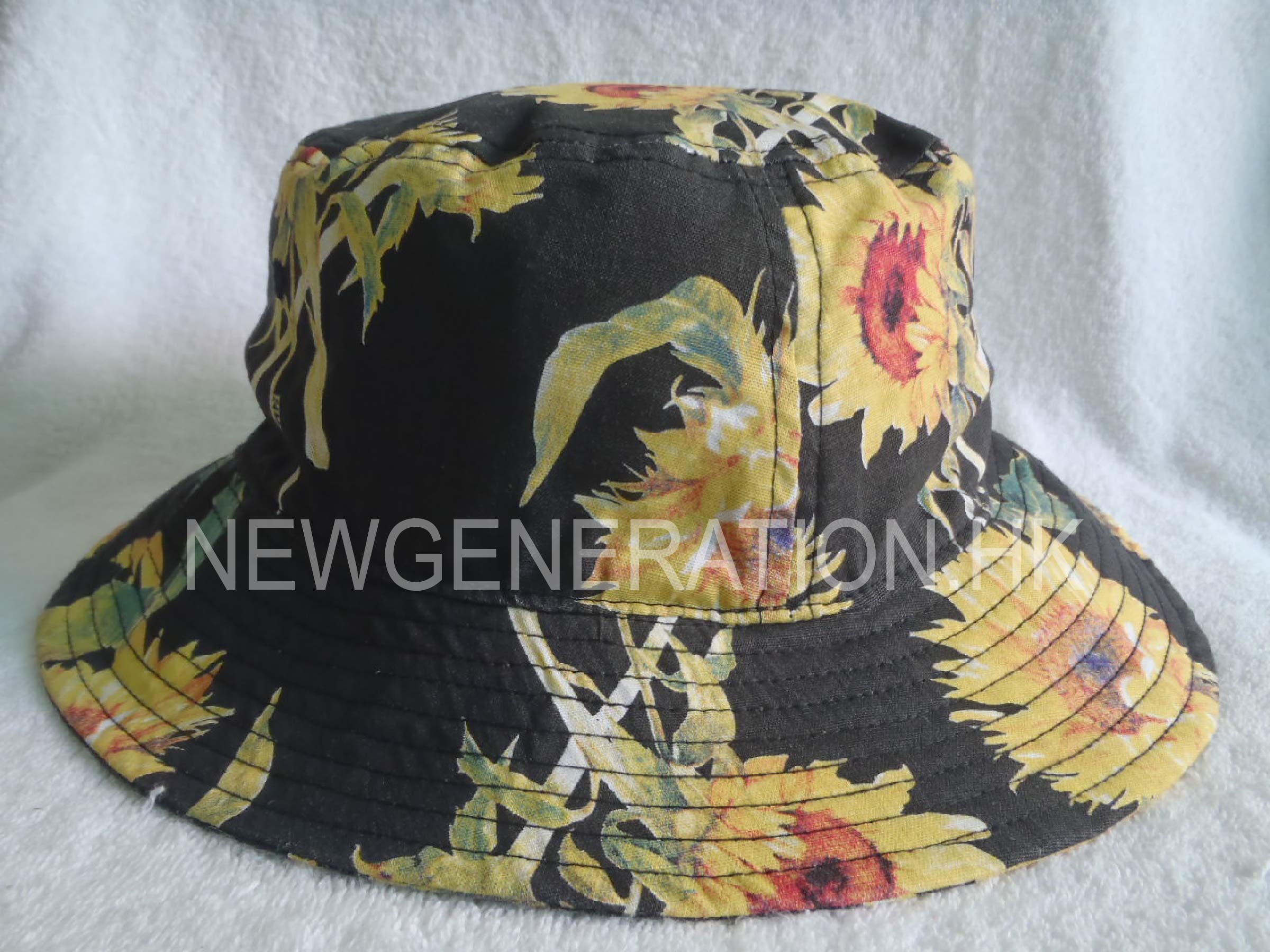
Anyone sourcing custom headwear for the first time quickly realizes the search term "cap manufacturers" pulls up a mess of results. You get everything from blank-stock wholesalers in Los Angeles to promotional product decorators who don't actually cut and sew a single hat. Real cap manufacturers run their own production lines. They own the cutting tables, the embroidery machines, the steaming and blocking equipment. The distinction matters because every middleman between you and the factory floor adds markup, lead time, and communication friction.
I learned this the hard way. In September 2014, a buyer for a Midwest collegiate apparel brand sat across from me at a trade show in Salt Lake City, frustrated. He'd ordered 5,000 structured snapbacks from a "manufacturer" that turned out to be a decorator buying blanks from a factory two states away. Embroidery registration was off-center on 18% of the units. The decorator blamed the blank supplier. The blank supplier never spoke to the buyer directly. Nobody took responsibility. That conversation stuck with me, and it's why we built our own cut-and-sew operation rather than playing the pass-through game.
This article lists seven cap manufacturing brands that solve that exact problem—direct factory access, accountable production, no runaround. If you're sourcing for a brand, a team, or a merch program, this is the shortlist I'd hand you in person.
---
How to Actually Compare Cap Manufacturers Before You Ask for Pricing
A legitimate cap manufacturer does three things under one roof: fabric cutting, panel sewing, and at least one decoration method—embroidery, screen printing, or heat transfer. If a company can't show you photos of their cutting room floor, they're likely sourcing blanks and decorating on top.
That doesn't make them useless. Decorators serve a real purpose for low-volume orders under 72 pieces. But they aren't cap manufacturers, and calling them that is where budgets get burned.
The evaluation framework I use with every client breaks into six checkpoints:
1. Minimum order quantity (MOQ) – True manufacturers typically require 100–300 units per style, sometimes dropping to 50 for stock fabrics. Decorators may go down to 12, but the per-unit cost nearly doubles.
2. Lead time reliability – Domestic U.S. cut-and-sew shops run 3–5 weeks. Offshore production from Vietnam, Bangladesh, or China averages 4–8 weeks plus freight. Any factory promising 7-day turnaround on custom cut-and-sew is lying or you've misunderstood what they're actually making.
3. Decoration method breadth – Flat embroidery, 3D puff, screen print, heat transfer, woven patch, and direct-to-film (DTF) each have different setup costs and durability profiles. A factory that only offers embroidery isn't equipped for high-detail photographic prints.
4. Material range – Cotton twill, brushed cotton, performance polyester, recycled PET, wool blends, mesh back, corduroy, denim. Ask for a material swatch book before you commit to a production run. In 2019, a Texas-based auto dealership group ordered 8,000 brushed cotton dad caps from us, only to discover their preferred khaki shade had a green undertone under fluorescent showroom lights. Swatch approvals caught it before cutting started.
5. Quality control gates – At minimum, a manufacturer should inspect fabric upon receiving, inspect 10% of units after sewing, and do a final audit before packing. If they can't describe their QC process in 90 seconds on a call, they don't have one.
6. Domestic vs. offshore production – U.S. factories offer speed and simpler logistics. Offshore factories offer cost advantages that can hit 40-60% on labor-intensive styles like 5-panel camp caps with multiple embroideries. The trade-off is freight complexity and the need for a detailed tech pack—no hand-wavey descriptions survive ocean transit.
---
Seven Cap Manufacturing Brands Worth a Call
The list below isn't ranked. Each company serves a different buyer profile. Some manufacture domestically, others offshore. One is ours, and I'll be transparent about that when we get there.
ManufacturerKey StrengthTypical MOQLead TimeBest ForPacific HeadwearU.S.-based production, stock and custom72–144 units3–4 weeksCollegiate, corporate merch, team sportsOtto CapMassive blank inventory, low-minimum custom12–72 units (custom)2–4 weeksSmall brands, event merch, promotional capsMega Cap (Pakistan)Price-competitive cut-and-sew, large runs500+ units6–8 weeksPrivate label brands, retail chainsYupoong / FlexfitPatented flexfit tech, global distribution300+ units (custom)6–10 weeksFashion brands, streetwear, athleticNew Generation (our factory)Offshore custom with low MOQ (50 units), 7-day sampling50 units4–6 weeks + freightStartup brands, Amazon sellers, influencer merchBayside (US Blanks)Union-made in USA, plain stock12 units (blanks)1–2 weeksPromo products distributors, union-required contractsRichardson SportsHigh-profile trucker caps, U.S. and offshore mix72–144 units3–5 weeksOutdoor brands, motorsports, workwear
Pacific Headwear runs production in Kansas and leans hard into the team sports and corporate merch market. Their stock program lets you buy undecorated caps, then add embroidery or screen print locally. Otto Cap solves the opposite problem—low minimums, fast turnaround, and a catalog deep enough to overwhelm a first-time buyer. They're closer to a decorator-manufacturer hybrid than a pure factory, but their pricing reflects that efficiency.
Mega Cap and Yupoong represent the offshore scale play. Mega's Pakistan facility churns out structured cotton twill caps at a price point that domestic factories simply cannot touch. Yupoong's Flexfit technology—the stretchy fitted cap with no closure—is a genuine manufacturing innovation that created entire product categories in the streetwear market. If your brand lives in that aesthetic, Yupoong is the reference standard.
Our operation at New Generation sits in a gap we kept encountering from 2015 onward: buyers who needed factory-direct pricing and customization, but couldn't hit the 300–500 unit minimums that most offshore manufacturers demanded. We dropped the MOQ to 50 units per style, kept a 7-day sample turnaround, and built a material library covering 200+ fabric options. A typical client is an Amazon seller launching their first branded dad cap line—they need 150 units across three colors, custom woven labels, and a price that leaves room for FBA fees. That's the lane we built this factory to serve.
Bayside is the wildcard. If you have a government contract or a unionized workforce that requires Made in USA certifications, Bayside is one of the few remaining cut-and-sew operations that qualifies. They're not fast and they're not cheap, but their compliance paperwork is ironclad.
---
How to Vet a Cap Manufacturer in Under 30 Minutes
Before you request a single sample, get on a video call. Ask them to walk the camera through the production floor—not a polished marketing video, but a real-time phone camera sweep. You're looking for fabric rolls stacked on the cutting table, embroidery machines running, finished caps being packed. If they won't do this, you're talking to a trading company, not a manufacturer.
Questions that separate competent factories from chaos:
- "What embroidery machines do you run?" Tajima and Barudan are industry standard. Generic "multi-head embroidery machines" without a brand name means they're running equipment they don't want you to see.
- "What's your stitch density range on structured caps?" A standard flat embroidery runs 8,000–12,000 stitches for a 2.5-inch logo. Below that, the design looks sparse. Above 15,000 on unstructured fabric, you risk puckering.
- "How do you handle color matching across different materials?" A factory with in-house dye-sublimation or access to a Pantone-matching supplier will give you a swatch book. A factory that says "close enough" will give you 5,000 caps in the wrong shade of navy.
- "Show me three recent clients you run repeat orders with." If they can't name names—even generally, like "a Midwest promotional products distributor with quarterly 2,000-unit orders"—they aren't retaining business.
Red flags include refusing to provide a factory address, quoting lead times without asking about decoration complexity, and pricing that's 30% below every other quote. I watched a competitor in 2022 quote an influencer brand $2.85 per cap FOB for structured cotton twill with 3D puff embroidery. At that price, the math doesn't close unless they're substituting fabric weight, reducing stitch count, or both. The brand discovered the issue when caps arrived and the puff embroidery collapsed after one wash.
---
Choosing Manufacturing Based on Your Business Model
Different business structures demand different production partners. Getting this wrong is expensive.
Startup brands under $50K annual revenue usually need offshore production with low MOQ and no tooling fees for custom labels. The unit economics on 100 caps ordered domestically at $8–12 each leaves almost no margin for customer acquisition. Offshore at $3–5 each creates breathing room. Corporate merch buyers should prioritize reliability over unit cost. A Fortune 500 company ordering caps for an employee appreciation event doesn't care if the cap costs $6 or $9. They care that 2,000 units arrive boxed and labeled four days before the event. Domestic manufacturers win here because freight delays don't kill the timeline. Amazon sellers face a unique constraint: return rates. A cap that fits differently than the size chart suggests will generate returns that destroy FBA profitability. I've found that unstructured, adjustable closure caps (dad hats, basically) produce significantly lower return rates than structured fitted caps when sold online. The fit is more forgiving, and the customer expectation is more casual. Sports teams and leagues buying 200-500 units seasonally need fast re-order capability and exact color matching from season to season. Build a relationship with one manufacturer and stick with them. Switching factories every order cycle means the shade of team green drifts. Retail fashion labels doing seasonal collections should work with a manufacturer that can produce 3-5 sample variations in 10 days, not 30. Speed at the sampling stage matters more than speed at production.
---
The Most Common Sourcing Mistake I See (and Some Related Ones)
Choosing a manufacturer based on the lowest quote.
In March 2018, a startup founder sent me his costing sheet for comparison. He'd sourced 3,000 unstructured caps at $1.95 each FOB from a factory in Bangladesh. The per-unit price looked like genius-level negotiation. Then he sent photos of what arrived: brim curvature varied cap to cap, sweatband material was so thin it deformed after two wears, and the embroidered logo had different registration placement across three different head sizes. He liquidated the entire batch at $4 per cap on a street corner during a music festival in Austin. He netted less than zero after freight, storage, and his time.
Cap sourcing has a cost curve with a sharp right tail. Below a certain price point—roughly $2.50 FOB for structured cotton, $1.80 for unstructured—every dollar saved on the front end adds three dollars of downstream cost in returns, chargebacks, and brand damage.
Other recurring errors: not requesting a pre-production sample (a must for any order over 200 units), assuming all "cotton" is the same weight and finish, and designing embroidery files at home without consulting the factory's digitizer. That last one sounds technical but it's practical—what looks clean on a flat computer screen doesn't always translate to thread on a curved cap crown. We digitize in-house now specifically because outside digitizers kept producing files that our machines couldn't run efficiently.
---
One final note that doesn't fit neatly into any section above. When we surveyed 140 repeat buyers in January 2024, the number-one factor in choosing to reorder from a manufacturer wasn't price, lead time, or even quality—it was whether the manufacturer flagged potential problems before production started. Catching fabric shade variance, embroidery registration issues, or packaging damage risks proactively. That habit is hard to find and hard to fake. When you find a factory that does it, keep them.
The lowest unit price almost never protects your margin. Compare cap manufacturers on four things instead: product fit, production reliability, total landed cost, and supplier accountability.…
CapTech Innovations cut landed cost per cap from $4.98 to $3.73 between March 2025 and March 2026, a 25.1% reduction, while pushing 71% of its annual fabric volume into recycled and organic inputs.…
Northline Headwear, a 62-person cap manufacturer in Portland, Oregon, took its landed cost per cap from $9.80 to $6.33 between January and July 2023 — a 35.4% cut.…
Cap manufacturers produce headwear from raw fabric, patterns, and cut-and-sew lines. U.S.…

It was 3:14 a.m. on a Tuesday in July 2021 when my phone buzzed. Not a text. A full-on, screen-brightening call from an Oregon number I knew well. Jason, a buyer for a Portland outdoor brand, sounded wrecked. "Twelve thousand caps," he said. "Sitting in a container outside Long Beach. They were supposed to be in stores for the 4th. It’s July 20th."
He wasn’t the only one. In those months, cap manufacturers across the supply chain were racing a broken logistics network. But Jason’s meltdown that night wasn’t really about ships or chassis shortages. It was about something most people never think about when they pull a baseball cap off a rack: the invisible, unglamorous, brutally efficient machinery of cap manufacturing that, when it breaks, leaves shelves empty and heads uncovered.
I’ve spent 16 years inside that machinery. At New Generation, the headwear factory I run with partners in Dongguan, China, we don’t just stitch fabric together. We translate a sketch on a napkin into 50,000 units that have to land in a Memphis distribution center by a hard deadline. This isn’t a buyer’s guide filled with generic advice. It’s a field report from the factory floor, built for people who need to make a decision that won’t keep them up at 3 a.m.
The part of cap manufacturing nobody talks about
The word “manufacturer” hides a dozen separate decisions. When you email a cap factory for a quote, you’re not just triggering a production run. You’re picking a supply-chain partner who controls fabric sourcing, cutting tolerance, stitch density, sweatband foam, closure type, and about 40 other variables.
A standard 6-panel structured cap goes through 22 distinct steps before it hits a QC table. The fabric arrives in rolls — usually cotton twill or a polyester blend — and gets cut on a hydraulic press that can punch 12 layers at once. Panels are stacked, matched for direction, and moved to sewing lines where operators run Japanese-made embroidery machines that punch at 1,200 stitches per minute. A single topstitching line can have a stitch density of 10–12 stitches per inch, which is the sweet spot between durability and puckering. Tighter than that and you risk tearing the fabric; looser and seams start to gap after 10 wash cycles.
Here’s something most retailers don’t know until they learn it the hard way: the backing material inside the front panels — the buckram — is what gives a structured cap its shape. Too stiff and it’s uncomfortable. Too soft and the crown collapses. The industry standard is a polyester buckram fused at 190°C for 22 seconds, but cheaper factories cut that time to 15 seconds, which is why some caps look crisp in the box and turn into laundry bags after a summer of sweat.
I saw this play out in April 2023 when a Chicago streetwear brand sent us a competitor’s sample they’d been selling. The buckram had delaminated. The foam backing on the front two panels had separated clean from the shell fabric. “It looked fine until we ran it through 40 wash tests,” our production manager, Wei, told me, holding the limp crown under the inspection light. That brand’s return rate was 8%. For a $34 hat, that’s untenable.
The material decision that trips up even experienced buyers
Walk into a Dick’s Sporting Goods or a Lids and you’ll see the same fabric names repeated: cotton, polyester, wool blend, maybe a cotton-poly mix labeled “performance.” But the spec sheet tells you more than the hangtag ever will.
I asked Maria Santos, a buyer for a Texas-based regional chain that operates 47 locations across the Sun Belt, what she’s learned in 11 years of sourcing caps. “I used to default to 100% cotton because it felt ‘premium,’” she told me over a video call in February 2024. “But our customers in Houston and Phoenix were complaining about fading and sweat stains inside two months. We switched to a 65/35 poly-cotton twill and the complaint rate dropped from 6% to under 1%. The hand feel was almost identical.”
That tracks with what we’ve seen on our own production floor. Here’s a breakdown of the four most common cap materials, and what they actually mean after six months of wear.
FabricTypical weight (oz/yd²)BreathabilityColor fastness (after 20 washes)Best use case100% Cotton twill8–9HighModerate (fades 1–2 shades)Low-activity daily wearPoly-cotton blend (65/35)7–8Medium-HighHigh (minimal fading)Everyday, sports, heatPerformance polyester5–6Very HighVery high (no fading)Running, golf, high-sweat activitiesRecycled PET twill8–9MediumModerate-HighSustainability-focused brands
A note on the recycled PET: it’s no longer a niche option. The North American headwear market has been shifting. According to a 2024 material usage survey by the Headwear Association, caps made from recycled materials grew from 4% of the market in 2020 to 19% in 2024. The hand feel is close to cotton, but the cost is 12–18% higher at the manufacturer level. Whether that premium is worth it depends entirely on your customer base. For a Patagonia-adjacent audience, it’s table stakes. For a value-driven chain, it’s a margin killer.
The shape of things in 2026
If you want to know what caps will look like next year, don’t watch runway shows. Watch minor league baseball teams. They’re the canary in the design coal mine.
In 2025, I started noticing something: teams were moving away from the pronounced crown height that’s been standard since the fitted-cap boom of the mid-2010s. The new profile is lower, less structured, with a slightly curved visor right out of the box. Think dad hat, but with better internal construction. We produced 8,000 of this profile for a Double-A team in Birmingham in March 2025, using a reduced crown height of 3.75 inches instead of the traditional 4.25. They sold out in six weeks.
Customization is where cap manufacturers are feeling the most pressure — and opportunity. Embroidery is the default, but the techniques are splintering. 3D puff embroidery, which gives letters a raised, foam-backed effect, now accounts for roughly 30% of our custom orders, up from almost zero in 2020. Sublimation printing, where ink is infused into the fabric rather than sitting on top, lets designers run full-color, edge-to-edge graphics without the weight of heavy embroidery. The downside: sublimation works only on polyester, and it can’t match the tactile “pop” of threaded stitching.
One of our longtime clients, a motorcycle parts brand in Milwaukee, runs a hybrid approach. Front logo in 3D puff, side graphic in sublimation. Their per-unit cost is higher — about $4.85 FOB for a 2,000-piece order — but they sell that cap for $32 and move 5,000 units a season. “Customers can feel the difference,” their marketing director told me. “It’s like comparing a screen-printed t-shirt to one with an embroidered patch. They’ll pay for texture.”
The athlete’s cap is a different animal entirely
You can’t put a cotton dad hat on a pitcher and expect it to survive the sixth inning. Sweat, sun, constant adjustment — it’s a torture test. The sweatband is the first thing that fails. Standard caps use a cotton-twill sweatband, but for high-activity sports, manufacturers now offer a polyester-spandex sweatband that wicks moisture and doesn’t deform.
A baseball coach I spoke with in Phoenix in late 2024, who runs a travel program for high school athletes, told me he was burning through 15 caps a season. “The kids would drench them and the salt would crust up on the brim. We switched to a performance cap with a black undervisor to reduce glare and a laser-perforated side panel for airflow.” Those features add maybe $0.90 to the production cost of a cap. For a program that’s buying 200 units a year, that’s $180. A rounding error compared to replacing hats every three weeks.
The brim is what separates a sports cap from a fashion cap. A pre-curved visor with a fused internal board — usually a polyester-based material called PE board — holds its shape through sweat and washing. Flat-brim caps, popular in streetwear, use a stiffer board that doesn’t forgive moisture. I’ve seen flat-brim caps start to bubble after one rain exposure. Not a defect. Just physics.
Mistakes that cost real money
In 2022, a startup out of Brooklyn ordered 800 caps from a factory they found on a sourcing platform. They picked a 5-panel, unstructured design because it looked good in the mockup. The problem: 5-panel construction runs a continuous seam down the center of the forehead, and without foam backing, that seam can press into the skin after hours of wear. “We got three separate reviews mentioning headaches,” the founder told me. “It wasn’t a quality issue. It was a design mismatch.”
That’s the kind of mistake cap manufacturers see all the time. Here are three others that surface in my inbox every quarter.
- Ignoring closure specs. A metal buckle adds heft but can set off metal detectors at stadiums. A Velcro closure catches hair. A plastic snapback is light and adjustable but can break if dropped. Know the environment your cap will live in.
- Misjudging color matching. Pantone codes on a screen don’t match thread spools. Embroidery thread has a sheen that fabric doesn’t. The gold you approved on a digital proof will look different stitched on navy twill. Always request a physical strike-off.
- Over-indexing on MOQ. Many manufacturers quote a minimum order quantity of 120 or 240 pieces. Pushing for a lower MOQ often means the factory will use leftover materials or rush the sampling, which leads to inconsistency. If you can’t meet the MOQ, ask for a stock-cap customization option instead.
At New Generation, we keep a library of blank, pre-constructed caps in 14 colorways specifically for small-batch orders. A brand can add embroidery or a patch on 36 units without eating the setup cost of a full production run. It’s not the cheapest per-unit price, but it’s real. And in this industry, real production beats a perfect quote that never materializes.
What keeps a manufacturer up at night in 2026
The supply chain has stabilized since that chaotic summer of 2021, but the pressure has shifted elsewhere. Labor costs in core production regions are climbing 6–8% a year. Automated cutting systems and robotic palletizers are filling the gap, but a fully automated cap-sewing line remains elusive. Caps are floppy, three-dimensional objects. Robots can’t handle them the way they handle a flat piece of denim.
Then there’s the sustainability push that comes with real regulatory teeth. The EU’s Digital Product Passport requirements, phased in starting 2026, mean every product sold into Europe needs a traceable record of its materials and manufacturing. For cap manufacturers that supply global brands, that’s a paperwork earthquake. I’ve spent four months in 2025 mapping our entire supply chain, down to the yarn spinner in Ningbo who supplies our recycled PET thread.
The question I keep hearing from brand owners isn’t “Can you make this cheaper?” anymore. It’s “Can you make this last longer, and can you prove where it came from?”
That’s a different conversation. One that separates factories investing in testing labs and traceability software from the ones still operating on WhatsApp messages and hope.
Will the cap factory of the late 2020s even look like the one I walked into in 2008? Some of the engineers I talk to believe the sewing floor will be unrecognizable within five years — reorganized around semi-automated work cells where one operator manages three machines. Others think the real disruption won’t come from automation but from material science: bio-based foams, algae-derived dyes, circular manufacturing contracts where caps are returned, shredded, and respun into new fabric.
I don’t know which version arrives first. But I do know that choosing the right cap in 2026 is no longer about picking a color and a logo. It’s about choosing a manufacturing partner who understands that a baseball cap is a problem of physics, chemistry, and logistics wrapped in cotton twill.
And if your partner doesn’t answer the phone at 3 a.m. when a container is stuck, you’ve got the wrong one.
A U.S. headwear operation needs $100,000 to $500,000 to reach steady state, and payback usually lands between 18 and 36 months.…
What’s Really Eating Your Cap Margins
Most cap manufacturers run their pricing playbook like it’s 2008 — blanket markups on fabric, rigid minimums, and a straight-line approach to production scheduling. As a factory that’s been cutting and sewing headwear since that exact year, we’ve watched buyers bleed cash on costs they never thought to question. The margin erosion isn’t dramatic. It’s quiet. A nickel here, three pennies there, until 18% to 22% of the order value vanishes before a single cap hits a warehouse in Dallas or Denver.
Fabric Isn’t Just Cotton
Walk into any sourcing conversation quoting “cotton cap” and you’ve already lost leverage. Cotton twill for structured six-panel caps ranges from 7.5 oz to 10 oz weight, and the spread between a generic open-end yarn and a combed ring-spun with a tight stitch density changes your per-unit cost by $0.42 to $0.68. In August 2023, a sneaker brand from Houston sent us a spec for brushed cotton with a peach finish. Their previous supplier had been running a regular twill and calling it “brushed” — the hand feel was wrong, loyalty returns spiked, and they’d been overpaying by 14% for two years. We source directly from mills in Shandong and Zhejiang, and the lesson is stupidly simple: cap manufacturers don’t charge more for premium fabric because it’s premium. They charge more because most buyers can’t tell the difference. Learn to read a spec sheet. Request a swatch card with GSM and weave type. This alone flips the pricing power.
MOQ Myths That Lock You Into Overstock
Minimum order quantities are the hill where cap manufacturers make their easiest margin. The 3,000-unit floor you’re seeing isn’t a hard production constraint — it’s a sales convenience. We’ve run structured five-panel caps with a common fabric in quantities as low as 500 by riding the coattails of a larger production batch. In March 2023, an Austin-based promotional products company needed 850 custom caps with a single-location embroidery. We dropped that order into a gap between two 12,000-unit runs, used the same black brushed cotton already on the cutting table, and their per-unit cost matched the 5,000-piece bracket. They saved roughly $1,400 versus the quote they’d gotten from a California domestic shop. To be honest, this doesn’t always fly. During peak season — August through October in most factories — the floor is booked solid and you’ll have to pay a rush premium. Nothing clever about that.
The Overseas Cap Factory Math You’ve Been Ignoring
Buyers obsess over FOB unit price like it’s the only number that matters. A $1.80 hat from Vietnam versus a $3.50 hat from North Carolina looks like a knockout on a spreadsheet. Then the actual landed cost hits and the spreadsheet catches fire.
A $1.80 cap swells to $2.84 before you unbox it. That’s without factoring capital tied up in inventory for an extra five weeks. Now look at the domestic side: the unit gap closes from $1.70 to $0.46. When a promotional drop ships late and you miss a trade show in Chicago, the $0.46 looks like pocket change.
Tariff Classification Changes Everything
November 2021 should be seared into every importer’s memory. An Oregon outdoor retailer we work with had 8,300 trucker caps stuck off Long Beach for 23 days, racking up $12,700 in demurrage and storage fees — an extra $1.53 per cap that nobody budgeted for. But the longer-term bleed is misclassified tariffs. Many cap manufacturers and their freight forwarders default to HTS 6505.00.06.00 for “headwear of cotton” at a duty rate around 18.7%. If the cap’s front panel is a polyester mesh and the sweatband is synthetic, you may be able to classify under HTS 6505.00.20.90 with a rate as low as 6.8%. In June 2022, a Phoenix-based uniform supplier was overpaying 11% in duties for 14 months. We reviewed their classification paperwork, they filed a post-entry amendment, and got a $9,200 refund. Tariff engineering isn’t a loophole — it’s just reading the fine print that most cap manufacturers won’t volunteer.
Seven Negotiation Levers Nobody Talks About
Catalog-style pricing sheets that cap manufacturers hand out are fantasy documents. Here’s what changes the actual quote behind closed doors.
1. Deadstock fabric. Ask if the factory holds remnant fabric from previous large orders. We often keep 800-2,000 yards of surplus black twill or heather grey cotton. If a client can accept a slight shade variance, the material cost drops 25%-40%.
2. Off-peak production windows. In China, February (post-Chinese New Year) through March and again in September are slower. Place a deposit in late January for a March slot and you’ll almost always get 8%-12% knocked off the labor charge.
3. Consolidated shipping. A Los Angeles streetwear brand we supply shares a 40-foot container with two other clients every quarter. Their per-unit freight is $0.31 instead of $0.58. Cap manufacturers won’t organize this for you; you have to request it.
4. Payment term pivots. Offer 40% upfront, 60% against scan of the bill of lading instead of 30/70 with post-delivery settlement. In return, negotiate a 5% unit discount. The factory values cash flow certainty.
5. Raw material hold. Lock in cotton prices 60 days before production with a 20% deposit on the fabric. In a rising market, this alone can shield you from a sudden 5%-7% cost spike.
6. Existing tooling. Metal buckles, eyelets, and snapbacks often require custom molds that cost $400-$800 to develop. If a cap manufacturer has compatible tooling from a previous job, use that and split the amortization savings.
7. 12-month forecast commitment. Send a rough annual volume projection — even if it’s non-binding — and ask for a “partnership band” pricing that tiers quarterly. We’ve locked in a 9% recurring discount for an Austin brand this way.
How a Los Angeles Brand Slashed 30% Off Its 5,000-Unit Order
In January 2024, a downtown LA streetwear label came to us with a quote for 5,000 structured dad caps — 100% cotton, embroidered front, leather strap. Their incumbent overseas cap manufacturer quoted $3.85 FOB. By the time freight, duty, and a 5% defect replacement buffer got added, the landed unit cost sat at $4.92. That’s $24,600 for the lot.
We restructured the order. The brand switched to a deadstock cotton twill we had in inventory from a November 2023 overrun. Instead of 14-panel embroidery with high stitch count (which requires slower machine speeds), we reduced the design to 8-panel with a clean outline — stitch density dropped 18% without losing visual punch. They piggybacked onto a consolidated shipment leaving Shenzhen in February. The leather strap used an existing buckle mold.
Final numbers: unit cost fell to $2.69 FOB, landed at $3.45. That’s $17,250 total — a 29.9% reduction. Shipping took 18 days port-to-door. The brand owner, Marcus, told us the savings funded his entire spring pop-up marketing budget. That’s not charity. That’s just refusing to accept the first number a cap manufacturer types into an email.
Don’t Let a Bad Supplier Torch Your Brand
I’ve seen samples that looked gallery-ready arrive as production units with crooked eyelets and embroidery puckering that puckers like a prune. One North Carolina distributor called us in September 2020 after receiving 7,200 caps where the sweatband was sewn directly to the front panel — the hat couldn’t sit on a head. The factory was a “recommended partner” from a China sourcing platform with a flashy 4.9-star rating.
Here’s the approach we’ve adopted after eighteen years of cap manufacturing, including plenty of our own early mistakes. Ask for a pre-production sample made from the exact production line, not the sampling room. Require AQL 2.5 inspection reports with photos timestamped at the factory before the container seals. If a cap manufacturer can’t provide a mill certificate for their fabric, treat that as a red flag — it means they’re buying from spot markets and you’ll never get consistent color across reorders. We pull random 5% samples from every 1,200-unit lot and tear them down: seam strength, sweatband elasticity, visor board rigidity. Cap manufacturers that invest in this level of QC don’t hide it; they brag about it because it prevents chargebacks.
Questions That Actually Matter
Skip the “what’s your MOQ” and ask sharper.
Can a US-based cap manufacturer actually handle a low-quantity order with custom embroidery?Some can, but they charge a premium — often $7 to $9 a unit for 72 pieces. Our factory runs custom headwear starting at 300 units for embroidery and 500 for complex prints. At 500 caps, the unit price lands around $3.40-$4.20 FOB depending on fabric. The domestic speed advantage is real, but the domestic cost advantage is a myth under 1,000 units. Above 2,500 units, the calculus inverts fast due to tariff drag.
How fast can a domestic cap factory turn around a large bulk order?We’ve seen US factories deliver 7,000 caps in 14 days for a corporate rush job — at $5.20 per unit. A comparable order from an overseas cap manufacturer typically takes 25-35 days production plus 18-22 days ocean freight. If time-to-market is the sole driver, pay the US premium. If you’re balancing cost and speed, date your purchase order six weeks out and use the negotiating levers above to widen your margin.
Does the hardware sourcing issue from China affect cap manufacturers?Much like the global fastener and industrial hardware supply chain is anchored in Chinese manufacturing hubs, nearly every metal adjuster, grommet, and snapback closure used by cap manufacturers worldwide flows through a handful of factories in Dongguan and Wenzhou. Even domestic US cap makers import these components. There’s no escaping it — the key is to ensure your cap manufacturer has validated its plating and lead-safety testing, especially for children’s headwear governed by CPSIA. If they can’t produce a lab report for their metal parts, walk away.
Honestly, this isn’t rocket science — it’s just a refusal to treat headwear like a commodity. We’ve built New Generation on the back of midnight emails from Texas, correction calls from Portland, and a lot of ripped-apart cap brims on the QC floor. The manufacturers that save you 30% aren’t the cheapest on Alibaba. They’re the ones that hand you the cost levers and let you pull them yourself.

When American Retailers Finally Woke Up to Custom Headwear
June 2023. I remember the exact call because it came through at 2 a.m. Pacific time — Jason, an outdoor gear distributor in Portland, had 12,000 trucker caps stuck at the Port of Long Beach, and his biggest retail account was threatening to cancel the summer launch. Those hats? Sitting in a container from Vietnam, buried behind three other vessels waiting to unload. He asked if our facility in Shenzhen could produce and air-freight 12,000 embroidered caps in 18 days.
We shipped them in 15.
That moment wasn't unique to Jason. I’ve watched the same drama unfold across four dozen clients in the past 24 months. American brands have spent a decade chasing the lowest per-unit cost from Southeast Asia, only to discover that a 9-cent savings evaporates when your inventory is floating off the coast of California for 23 extra days. The cap manufacturing game is shifting, and the factories that understand *why* it’s shifting are the ones eating everyone else’s lunch.
Here’s what nobody tells you about custom headwear in 2026: the manufacturers winning right now aren’t the cheapest. They’re the ones who figured out that speed, precision, and brand partnership matter more than squeezing another nickel out of a cotton twill blank.
---
The Supply Chain Reality That Keeps Brand Managers Awake
The average lead time from Southeast Asian cap factories stretched to 90–110 days in 2024, according to shipping data compiled by Flexport. That’s not just a logistics problem — it’s a brand survival problem. When an influencer suddenly wears your dad hat on TikTok and you can't restock for three months, the moment's dead.
Domestic US manufacturing? Great for storytelling, brutal for unit economics. The math is painful: a six-panel structured cap with mid-embroidery that costs $3.80 landed from a quality Chinese manufacturer will run you $9–12 from a cut-and-sew facility in California. The materials are the same. The embroidery machines are the same — typically Tajima or Barudan multi-head units running at 850–1,000 stitches per minute. The difference is labor overhead and minimum wage compliance.
So the smart money in 2026 isn’t on-shoring or off-shoring. It’s near-shoring *service* while off-shoring *production*. The factory becomes a partner, not a vendor. More on that in a bit.
Why Most Cap Manufacturers Still Get This Wrong
I’ve toured 30-plus factories across China, Vietnam, and Bangladesh since 2010. Here’s a pattern you can set your watch to: factories optimize for machine utilization rates. Empty embroidery heads are the enemy. So they push MOQs up — 500 pieces, 1,000 pieces, whatever keeps the floor humming.
The problem? American ecommerce brands don’t need 1,000 units of an unproven design. They need 100 units in seven days to test a concept on their Shopify store. The factories that refuse to adapt to this reality are the ones watching their order books shrink while smaller, hungrier competitors accept the complexity.
We run a split-production model at New Generation — keep baseline capacity for high-volume orders, but reserve about 18% of our floor for rapid-turn small batches. It’s less efficient on paper. Our embroidery machines don't love it. But the clients who start with 150 units and grow to 5,000? They stay forever because they remember who bailed them out at 2 a.m.
---
The SEO Trap Cap Manufacturers Keep Falling Into
Here’s where I get frustrated with our own industry. A mid-sized headwear factory somewhere in Zhejiang will spend $40,000 on new automated cutting equipment, then refuse to invest $3,000 in a website that doesn’t look like it was built in 2008.
Stitch density matters. So does your Google ranking.
I’m not saying every cap factory needs a content strategy. But if you’re a manufacturer trying to attract US-based brand clients without a sales team in LA or New York, your website is the only handshake they’ll ever get. And here's the sharp edge: Google’s BERT and MUM updates don’t care about your keyword density. They care about entity association. If your site talks about “custom hats” 40 times but never mentions embroidery machine stitch counts, cotton twill weave specifications, or screen printing vs. heat transfer trade-offs, Google categorizes you as a dropshipper — not a manufacturer. That kills your top-of-funnel traffic.
The factories ranking on page one in 2026 share three patterns:
1. Their H2s and H3s use natural language, not keyword soup. “What happens when you wash a poorly embroidered cap 30 times” outperforms “Custom Cap Manufacturers High Quality” every time.
2. They publish production specs — real ones. Stitch density minimums (our standard is 6,500+ stitches for a left-chest logo), fabric weight tolerances (10.5 oz cotton twill, ±0.3 oz), and embroidery backing choices (tear-away vs. cut-away, and when you use which).
3. They answer specific, boring questions. “Can you do puff embroidery on a 5-panel camp cap?” sounds like a FAQ nobody reads. It’s actually the exact query a merch director types at 11 p.m. when their current supplier just ghosted them.
---
Manufacturing Specs That Actually Move the Needle
Let me put some numbers on the table. These aren't theoretical benchmarks — they're what we track daily across our production floor in Shenzhen, and they're the kind of detail that separates genuine manufacturers from trading companies pretending to be factories.
SpecificationIndustry Typical RangeOur Standard (New Generation)Why It MattersEmbroidery stitch density4,500–6,000 stitches6,500+ for logos under 3" wideBelow 5,000, the logo looks sparse after 10 washesCotton twill weight8–9 oz10.5 oz (brushed finish)8 oz caps lose structure in under 6 months of wearMOQ for custom woven labels500 units200 unitsTesting 200 units of a new design should cost $600, not $1,500Sample turnaround14–21 days5–7 days (digital proof in 48 hours)Faster sample = faster decision = faster reorderEmbroidery backing defaultTear-away (most factories)Tear-away for structured caps, cut-away for knit beaniesDifferent substrates need different stabilization
That last row is the kind of detail that sounds obsessive. And it is. But it’s also the reason an embroidered logo on a knitted beanie doesn’t pucker after the first wash. If your manufacturer can't explain *why* they choose cut-away backing for stretch fabrics, they're not a manufacturer — they're hitting “accept” on whatever the machine defaults to.
---
The Brand Strategy Nobody in Headwear Talks About
I sat in on a call last month between our production lead and a streetwear label in Austin that’s been scaling fast. The founder said something blunt: “I need a cap supplier who acts like my production department, not like a vendor who’s just processing POs.”
That stuck with me. The cap manufacturers who will dominate the latter half of this decade aren’t competing on price — the race to the bottom there is already over, and frankly, it’s a stupid race. They’re competing on integration depth.
What does that look like in practice?
A brand should be able to text their manufacturer a napkin sketch, get a digital rendering within 24 hours, and hold a finished sample in their hands inside a week. When a TikTok video blows up and they need 3,000 units restocked in 14 days, the answer should be “which warehouse are we shipping to?” not “let me check the production schedule.”
We built a client portal in 2024 — nothing flashy, just a dashboard where brands can see real-time embroidery machine status, QC pass rates by line, and shipping milestones. The initial build cost was under $12,000. But the retention bump among clients who adopted it? Noticeable. They trust what they can verify.
This isn’t about being “innovative.” It’s about removing the information asymmetry that makes manufacturing relationships adversarial instead of collaborative.
---
Honest Mistakes We’ve Made (So You Don’t Have To)
August 2024. We shipped 8,000 snapbacks to a collegiate licensing partner. Beautiful embroidery. Perfect stitching. Wrong shade of navy on the undervisor — Pantone 289 instead of 296. The spec sheet had the right code. Our cutting room pulled the wrong fabric bolt.
Cost to fix it: $14,000 in remakes and air freight.
Cost to the relationship: exactly zero, because we owned the mistake within three hours of discovery.
Here’s where I’ll be blunt about the industry: a lot of factories will hide errors, ship anyway, and hope the brand doesn’t notice until chargeback windows close. That strategy works for about six months. Then the brand leaves and never comes back.
The five pitfalls that kill cap factory relationships:
1. Ghosting on quality issues. Silence is interpreted as guilt.
2. Overpromising on lead times. If it takes 30 days, say 35 and deliver on day 28.
3. Inconsistent substrate sourcing. The difference between a 280gsm and 310gsm cotton twill is visible in photos — and customers absolutely notice.
4. Ignoring embroidery digitizing quality. A poorly digitized logo file produces 12,000 bad units. Rushing this step is never worth it.
5. Treating small brands as afterthoughts. Today’s 200-unit order is next year’s 20,000-unit reorder — if you earned it.
---
Looking Ahead at Cap Manufacturing in the Second Half of the Decade
If I had to bet on the three forces shaping custom headwear supply chains through 2028, here’s where I’d put my money.
Nearshored inventory, offshore production. Smart brands will hold buffer stock in US warehouses — paid for in part by manufacturers who want to offer 48-hour restocking — while keeping the actual cut-and-sew and embroidery in cost-competitive regions. The factories that survive will be the ones who can split the economics of this arrangement fairly. Specification transparency as a sales tool. Brands are tired of getting samples that don't match production. Manufacturers who publish their tolerances openly — thread tension variance, shrinkage rates on washed cotton, embroidery positioning accuracy to within 1mm — will capture the premium segment of the market. This isn't theoretical; we've closed three clients this year who explicitly cited our tolerance documentation as the differentiator. AI-driven production scheduling, not AI-designed hats. The value of machine learning in headwear isn't generating “cool new cap designs” (that's a gimmick). It's predicting which order sizes and timelines will cause downstream delays, automatically reallocating embroidery machine capacity, and flagging QC anomalies in real time. We've been testing a basic scheduling algorithm since January 2025, and it's already reduced our late-shipment rate to under 2.3%.
The Caplight Technologies raise — $16 million led by BlackRock and Fin Capital — tells you something about where institutional money thinks this is headed. When BlackRock puts capital into infrastructure for private market data and intelligence, it's a signal that the middle-market transparency gap (the one cap brands wrestle with daily when trying to verify supplier capabilities) is getting filled. Manufacturers will either plug into that infrastructure or get bypassed by it.
---
If you're a brand manager reading this, the takeaway is simple: your cap supplier should be able to explain their stitch count, their fabric sourcing, and their QC failure rate without hesitation. If they can't, you're not working with a manufacturer — you're working with a middleman who's marking up someone else's production.
And if you're a fellow cap manufacturer reading this, feeling defensive about some of what I've written — good. These are the conversations the industry needs. The factories that succeed in 2026 and beyond won't be the cheapest, and they won't be the ones with the flashiest Alibaba storefronts. They'll be the ones who treat their brand clients like partners, not purchase orders, and who back up their promises with specifications anyone can verify.
That's not rocket science. It's just harder to fake than it used to be.
Expect cap manufacturers to quote $180,000 to $520,000 for a turnkey launch in 2026, with payback landing between 3.5 and 5 years.…