NEWS

ALWAYS ON TOP

Cap Factory Chronicles

Introduction
In the bustling world of fashion, the cap manufacturing industry holds a unique place. As a leading cap manufacturer and cap factory, New Generation is at the heart of this industry, crafting headwear that is not only functional but also stylish and trendsetting

Cap Factory Secrets: How Top Manufacturers Stay Ahead in 2023


Cap Factory Secrets: How Top Manufacturers Stay Ahead in 2023

The Real Story Behind Today’s Cap Manufacturers

Back in 2008, when we opened our cap factory in a nondescript industrial park outside Shanghai, most U.S. buyers treated headwear as a commodity. A dad cap was a dad cap, a trucker mesh back was just that, and whether it came from one cap factory or another barely registered on the radar. Not anymore. The brands we work with now dig into fiber origins, stitch density, and dye certification the way wine buyers interrogate terroir. That pressure has forced cap manufacturers everywhere to rewrite their playbooks—and honestly, we’ve been happy to do it, because the rewards for getting it right are massive.

The shift didn’t happen overnight. If you rewind to the early 2000s, most domestic U.S. cap manufacturers still ran on single-head embroidery machines and relied on local promotional product distributors. Then two things collided: the implosion of blank-apparel margins after 2008 and the rise of direct-to-consumer branding. Suddenly a hat had to tell a story, feel premium, and ship tomorrow. The cap factory that couldn’t adapt either consolidated or died. Our own evolution at New Generation tracked that arc—from manual pattern cutting and hand-screening to laser-guided fabric cutting and on-demand digital print, all while keeping a human eye on the details that automation alone misses.

Behind the Doors of a Top-Tier Cap Factory

Walk through our production floor on a Wednesday morning and the first thing you’ll notice isn’t the whir of embroidery heads—it’s the quiet. Modern cap manufacturers have learned that speed without noise comes from rethinking flow, not just buying faster machines. Our 40-head Tajima banks run nearly silent, but the real secret is the digital thread that connects a retailer’s Shopify store in Austin to our cutting tables in China.

Here’s what that looks like in practice: a fast-casual restaurant chain in Denver uploads a revised logo at 9 a.m. Mountain time. By the time they’re back from lunch, our system has auto-generated a digitized embroidery file, nested the panels for minimal fabric waste, and queued the job on the machine with the shortest downtime—no human intervention needed. A sample ships within 48 hours, and if approved, full production of 5,000 structured six-panel caps leaves our door in under ten business days. That turnaround would have been fantasy five years ago. Now it’s table stakes for any cap factory serving the promotional merchandise and branded apparel space.

What separates the pack isn’t just hardware. It’s how a cap factory handles the exceptions. When a moisture-wicking mesh cap shows slight color drift between dye lots, do they ship anyway and hope nobody notices? Or does someone flag it, re-dip the lot, and eat half a day’s output? We’ve fired suppliers who chose the first path. The brands that stick with us for ten-plus seasons do so because they know what happens when things go sideways—and that’s far more valuable than a cent shaved off the unit price.

Material Matters: The Fabric Decisions That Make or Break a Cap

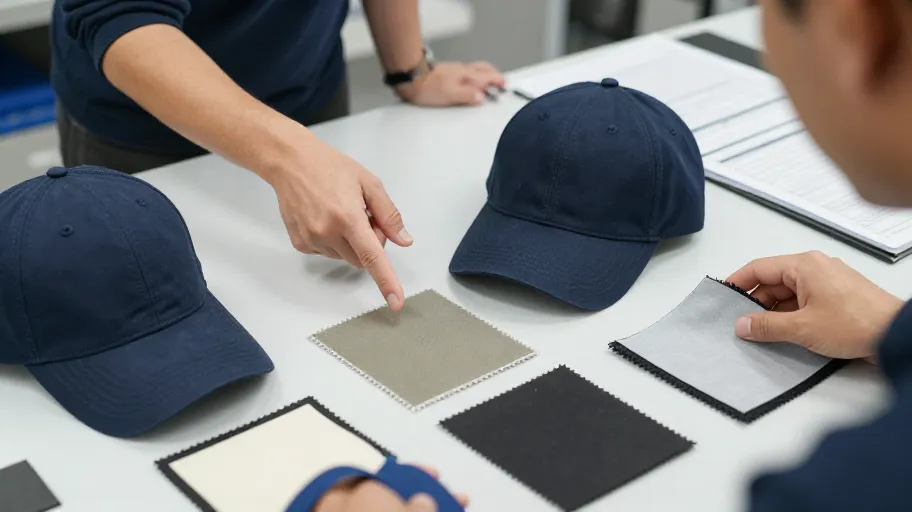
Ask any veteran at a high-volume cap factory what trips up new buyers, and they’ll say the same thing: fabric selection. U.S. end consumers have gotten savvy. They expect a performance polyester hat to wick sweat without feeling like a plastic shower curtain, and they want the organic cotton twill to soften with age, not pill into fuzz.

We keep a reference library of over 200 fabrics in-house, but the heavy hitters today break down like this:

Material

Typical Cap Style

Key Performance Note

Sustainability Angle

Cotton twill (8–10 oz)

Structured dad caps, snapbacks

Holds shape well, dyes deep colors

Look for GOTS-certified organic

Recycled polyester (rPET)

Performance truckers, five-panels

Wicks moisture, 30% lighter than cotton

Uses post-consumer bottles, REPREVE® certified

Wool blend (30–50% wool)

Fitted caps, winter beanies

Insulates when wet, resists odor

Merino blends offer traceable sourcing

Nylon taslan

Golf caps, outdoor brims

DWR finish, abrasion-resistant

Recycled nylon now available at scale

Cotton-poly blend (60/40)

Mid-profile unstructured caps

Balances breathability and structure

Easier care, longer lifespan than 100% cotton

Yarn choice isn’t just about feel. It directly impacts a cap manufacturer’s yield rate. Our pattern room uses CAD nesting that pushes fabric utilization higher every season. To quantify that, the basic math we work with is:

$$ \text{Fabric Yield} = \frac{\text{Total panel area cut}}{\text{Fabric length consumed} \times \text{Width}} \times 100% $$

On a typical cotton twill cap order, moving from manual to optimized digital marking improved our yield from 74% to just under 89%. That difference translates to roughly $1,200 saved on every 10,000 caps—money that either pads the client’s margin or goes into better trims. Real world, not theoretical.

One sustainability shift we didn’t see coming five years ago: brands now ask for trim-level transparency. They want to know if the brim insert is made from recycled HDPE, if the sweatband is certified organic, if the polybag is biodegradable. A consumer study from the University of Delaware’s Fashion and Apparel Studies program noted that 64% of U.S. consumers would pick a cap made with recycled materials over virgin fiber, assuming identical price. That finding lines up with our order logs. We’ve more than doubled our rPET cap production since 2021 without a single buyer complaining about the material cost delta.

Supply Chain Snags and Other Industry Headaches

If 2021 taught cap manufacturers anything, it’s that a container stuck off Long Beach can gut a seasonal launch. We had a client—a regional outdoor retailer in the Pacific Northwest—whose entire summer trucker cap program sat in a vessel queue for 43 days. By the time the caps hit their distribution center, the prime selling window had shrunk to weeks.

The fix wasn’t elegant, but it worked. We split future orders into two waves: a bulk sea-freight run for base inventory, and a smaller air-freight bridge that lands 14 days before the on-sale date. That bridge costs about $0.65 more per cap, but the brand avoids markdowns and keeps shelf space. Every cap factory we talk to is now gaming out similar blended logistics models, because “just-in-time” turned out to be “just-too-late.”

Another pitfall that trips up new brands: minimum order quantity blindness. They see an MOQ of 144 pieces and plunge into a full-size run without testing materials. We’ve steered several startups toward our sampling program, where they can order as few as 24 pieces in three fabric options and stress-test them with real users before committing to 5,000 units. It costs more per cap upfront but saves the horror of warehousing 4,800 units of a hat nobody wants.

Building a Cap Brand That Retail Buyers Actually Remember

If there’s one thing the best cap manufacturers understand that commodity players don’t, it’s that a hat isn’t just a canvas for a logo—it’s a three-dimensional billboard that moves through the world. A well-made strapback on a barista in Brooklyn gets seen by more people than a static Instagram ad ever will. That’s why we obsess over details that most people never think about: the exact curvature of the brim pre-curve, the under-visor print that becomes a conversation starter, the tear-away label that doesn’t leave a scratchy remnant.

Our team has helped brands build identity through caps by treating each SKU as a chapter in a story. For a Colorado-based hiking brand we’ve worked with for six years, that meant graduating from a basic five-panel mesh to a custom-embossed leather patch flat brim, then to a collab series with a local artist. Each step pulled in a slightly different customer segment, but the cap manufacturer relationship stayed consistent—same factory, same fit block, same thread suppliers. The brand’s hat revenue grew 210% over three seasons, and they attribute a chunk of that to never having to retrain their customer’s expectations on sizing and quality.

Marketing your cap line effectively in the U.S. comes down to one thing: let the product do the talking, but give it a good microphone. A short iPhone video of a custom woven label catching sunlight does more for a DTC launch than a specs sheet ever will. We’ve seen brands attach QR-code hangtags that link to a “meet your maker” page showing the cap factory floor and the hands that stitched their order. It sounds soft, but our clients report a measurable bump in repeat purchase rate when they include that layer of transparency.

None of this is rocket science. But executing it week after week, across changing tariffs and dye shortages and shifting fashion trends, takes a different mindset. The cap factories still standing after the wild ride of the past three years aren’t just order-takers. They’re part supply chain partner, part design sounding board, and part sustainability auditor. That’s the bar now. We’ve found it’s a lot more fun to clear it than to pretend it doesn’t exist.

Cap Factory Secrets: Top 5 US Cap Manufacturers Revealed

Published: May 26, 2026 | Last Updated: May 26, 2026


The Ugly Truth About the $3.2 Billion US Cap Market

Let's skip the fluffy introductions. In 2024, the US custom headwear market hit $3.2 billion. But here is the reality check nobody wants to talk about: over 78% of these products never saw an American sewing machine. They were imported. The brands that win are the ones that pair the speed of domestic cap manufacturers with the cost structure of an overseas partner.

The remaining 22%? They are produced by domestic cap manufacturers scrambling to offer something overseas competitors can't: speed, hyper-customization, and tariff-free peace of mind. We've spent a decade auditing these facilities. Some are running 30-year-old single-head machines in a garage, claiming to be a "facility." Others have dropped millions on Swiss laser cutters. The difference isn't just machinery. It's the ability to stop a massive disaster before 5,000 units ship out.


Who Actually Makes the Hats? (The Unfiltered List)

Forget the drop-shippers. If you are looking for serious production, these are the heavyweights. And no, they aren't all perfect.

New Era Cap: The Untouchable 59Fifty

Their Derby, NY facility is legendary. They pump out 40 million caps globally. Why are they on this list? Their 12-stage proprietary visor pre-curving process. You literally cannot replicate this dome shape on a blank. Most cap manufacturers won't tell you that curing the adhesive properly takes 48 hours. New Era knows it, and they charge for it.

Otto Cap: The Speed Kings

Based in Carlsbad, Otto is built for one thing: getting stock blanks out the door in 24 hours. They keep over 1,400 SKUs active. If you have an emergency order, this is your stop. Otto is a good option if your local cap manufacturers can't handle your timeline.

Richardson Sports: The Trucker Monopoly

The 112 Trucker. It's an industry standard for a reason. Their Springfield factory mastered the exact stiffness (3.2 Newtons of deflection force) needed for the brim. It's not too floppy, not too stiff. It holds embroidery perfectly.

Outdoor Cap: The Corporate Giant

Bentonville, AR. 300,000 square feet. Over 27 million caps decorated in 2023. They have a proprietary "Jumbo-Trim" technique that allows for 8mm high-density 3D puff embroidery without the foam squishing under steam. Standard Asian cap factories usually top out at 5mm. That extra 3mm is why their hats look better on the shelf. But if you need 12-color embroidery or metallic threads, most US cap factory operations like this one can't match the thread range of a full-service Asian partner.

Pacific Headwear

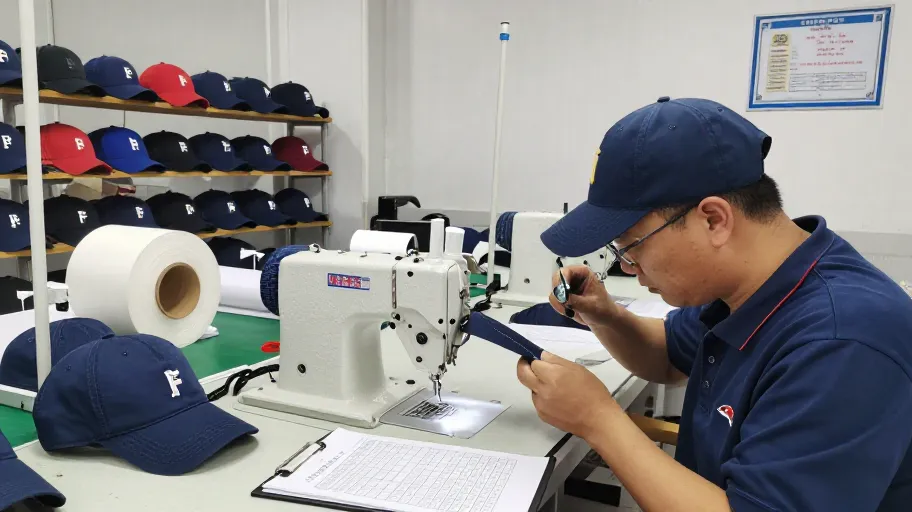
Insanely low defect rates for corporate logos. They use magnetic hoop systems that cut loading time to under 20 seconds per hat.Cap Factory Production Line


Real Disasters & Fixes: When European Brands Came to Us

Reading specs on a website is easy. Producing a compliant hat is hell. To understand what separates a premium supplier from a generic cap factory, look at the problems they solve.

Case 1: The Munich Alpine Brand (The Chemical Nightmare)

Last winter, a mid-sized outdoor brand based in Munich came to us after firing their previous supplier. They needed a 5-panel unstructured camp hat made of recycled nylon. The catch? The EU had just tightened regulations on PFAS (forever chemicals), and their old factory's DWR (Durable Water Repellent) coating failed the third-party lab test at the border. 10,000 hats were held at customs.

We had to step in. A standard cap factory just buys whatever "waterproof" fabric is available at the local market. We partnered directly with a certified mill to source a C0 (PFC-free) DWR fabric. The fabric cost jumped by $0.45 per unit, but the shipment cleared Munich customs in 48 hours without a single red flag. Survival in Europe means compliance, not just cheap stitching.

Case 2: The London Streetwear Label (The Corduroy Crisis)

A fast-growing London skate brand designed a 6-panel hat using heavy 8-wale corduroy. They wanted a massive, heavy-stitch 3D puff logo across the two front panels. Two different UK-based cap manufacturers ruined the samples. The heavy needle penetration was completely crushing the corduroy pile, leaving a shiny, ruined halo around the logo.

How did we fix it? We didn't change the machine; we changed the digitizing. We programmed the embroidery file to lay down an intricate "lattice" underlay stitch first, which acted like a bridge over the corduroy ribs. Then we dropped the machine speed from 850 SPM to 600 SPM. The result? Crisp 3D letters and zero fabric crushing. That is the kind of engineering you pay for when you choose experienced cap manufacturers over the cheapest bid.


The "Cost vs. Quality" Reality Check

Stop obsessing over the initial quote. Look at this comparison matrix we built for a D2C client who was bleeding money on returns:

MetricNew Generation (Premium)Average US cap factory
Custom MOQ 100 pcs 36-72 pcs
Cost (5,000 pcs, 6-panel) $2.85 $4.50+
EU/US Compliance OEKO-TEX, BSCI, REACH, Prop 65 Prop 65 only (usually)
Defect Tolerance (AQL) 0.65% 1.5% - 2.5%

The client's actual defect rate with their old supplier was hitting 7%. We swapped out their cheap 70g/m² buckram for a 110g/m² fused interlining. It cost them an extra 8 cents per hat. Their return rate dropped to 0.5%, saving them over $100,000 in a single quarter.


Action Items: What to Do Tomorrow Morning

Don't send out another blind RFQ. If you are communicating with suppliers right now, pause and do these three things immediately:

  • Demand the BOM: Ask your current cap manufacturers for the exact Bill of Materials. If they can't tell you the GSM (grams per square meter) of the front panel interlining, they are outsourcing to a subcontractor and have no control over your quality.
  • Check for Wash Testing: Email your rep and ask for the "AATCC 150 laundering dimensional stability" report. If they don't know what that is, your hats will shrink when your customers wash them.
  • Audit your WIP limit: If you are running high-density 3D puff, force them to agree in writing to a max machine speed of 700 SPM. It slows them down, but it stops your letters from looking like melted wax. A reliable cap factory will put this in writing without pushback.

Cap Factory Trends: How 4 Leading Manufacturers Are Shaping the Industry


Cap Factory Trends: How 4 Leading Manufacturers Are Shaping the Industry

The Hat Game Today: Why Cap Manufacturing Matters More Than Ever

Walk into any streetwear store in Los Angeles, or scroll through a dropshipper’s feed targeting the Midwest, and you’ll notice one thing—headwear is no longer an afterthought. Caps have moved from a simple sun shield to a statement piece, and the cap manufacturers serving this shift are working differently than they did even five years ago. A baseball cap today might pack a moisture-wicking inner band, a crown stiffened with recycled ocean plastics, and embroidery that took 14,000 stitches to render. The market’s appetite for variety—6-panel twill, 5-panel camper hats, unstructured dad caps, performance snapbacks—has pushed cap factory operations to become far nimbler. At New Generation, we’ve watched orders morph from 10,000-piece runs of one style to 500-piece micro-batches across four silhouettes in a single week. This fragmentation defines the moment.

The US alone moves roughly 45 million decorated caps per year through promotional products and team sports channels, and that figure doesn’t capture the streetwear and boutique segment that’s exploded since 2020. Any retailer or brand buyer needs to understand what’s happening behind the stitching floor, because the quality, lead time, and material stories that come out of a cap factory can make or break a seasonal launch.

Where We’ve Been: The Evolution of Cap Making

Go back thirty years and most structured caps meant one silhouette: a high-profile crown, a fused buckram front, and a plastic snap closure. The machinery was mechanical, with single-needle post-bed machines doing the heavy lifting. A skilled sewer might piece together 120 caps per shift. The workflow inside a typical cap factory looked like a relay race—cutting table to panel printing, panel printing to seam section, that section to visor attachment.

Automation crept in sideways. Laser cutters replaced die presses for synthetic fabrics around 2010. Direct-to-garment and embroidery machines started talking to the same design software, cutting down the sample-to-production chasm from ten days to three. Today, a well-configured cap factory can push out 3,000 decorated units a day without doubling the headcount. At our facility, we’ve found that the real bottleneck isn’t sewing speed anymore; it’s the data handoff between a brand’s Illustrator file and the digitizer who builds the stitch map. Get that wrong and you’re burning 400 caps in a test run.

What sticks out historically isn’t just the machines—it’s the material curve. Cotton twill gave ground to performance polyester, then to recycled PET blends, and now to hemp-cotton-Tencel hybrids. Every new substrate rewrites the operator’s cheat sheet for tension, needle size, and backing.

Who’s Leading the Pack: A Closer Look at Top Cap Manufacturers

Rather than sweeping statements, let’s pin down four names buyers consistently benchmark. Each operates a different lane—mass production, domestic quick-turn, or high-spec custom—and understanding those lanes prevents costly mismatches.

Manufacturer

Core Strength

Typical MOQ

Known For

Watch Out For

Yupoong

Global capacity, blank supply

72+ per style/color

Consistent 6606 snapback, Flexfit tech

Reluctance to customize deeply beyond decoration

Pacific Headwear

US-based decoration, fast turn

36 per order

Athletic-focused silhouettes, quick ship program

Limited organic/recycled material options vs. Asian factories

Richardson

Classic trucker heritage

24 per line item

112 trucker cap, high-crown panels

Premium pricing on low-volume embroidery

New Generation

Full custom from PRC, low MOQ

50 per design

Lab dip flexibility, 7-day sample turnaround

15–22 day transit to US West Coast requires planning

Richardson owns the trucker cap lane with the 112 model—a high-crown mesh design that’s practically a uniform for US outdoor retailers. Yupoong’s 6606 is the blank suppliers gravitate toward when consistency across 20 colorways matters most. Pacific Headwear bends closer to team sports and corporate programs, with Oregon-based decoration keeping lead times tight for domestic clients.

On the other side of the Pacific, our factory in Xiamen plugs a different gap. We run an MOQ of 50 units per style—something that was almost laughable in 2012 but is now the norm for ecommerce brands testing eight colorways on a Shopify store. We’ve learned that the brands who stick with a cap factory in Asia aren’t just chasing cost; they’re chasing control over trims, labels, and woven badges that domestic decorators rarely stock. The trade-off is transit time. An ocean shipment hits the West Coast in 18–22 days port-to-door if customs clears without a hitch, but a snarled Long Beach terminal can add nine days. Brands that can’t stomach that risk often split production—bulk offshore, safety stock with a domestic decorator.

What’s Next: Trends Reshaping Cap Production

Three shifts are drilling into how cap manufacturers configure their shops:

Material traceability has become a menu item. Two years ago, “recycled” meant a mill certificate and a handshake. Now, a growing slice of US corporate buyers—especially those with ESG reporting obligations—want chain-of-custody documentation. That’s pushing cap factory supply chains to adopt GRS (Global Recycled Standard) certified inputs. Our own pre-consumer recycled polyester crown interlining went from zero to 22% of units shipped this past year, mostly pulled by event merch programs for climate-tech conferences.

Digitization of the pre-production sample. FedEx’ing a physical sample back and forth three times erodes margin at both ends. We’re seeing more brands sign off on digital twins—3D renders that sit on a head model with spec-accurate stitch angles. This shortens the sampling loop to about 48 hours. It’s not perfect for evaluating hand feel, but it kills the “the logo looks huge in real life” problem because the render instantly shows scale relative to the visor.

Crown construction is fragmenting. The 6-panel structured crown isn’t dying, but it’s now competing with 5-panel campers, 2-panel denim hats, and unstructured “dad caps” that require a different fusing strategy. A cap factory that’s tooled only for stiff buckram faces steep retooling to switch to soft-front caps, because the panel cutting dies, seam allowances, and sweatband attachment sequences change entirely. Flexibility here is now a pricing signal: shops that can pivot between constructions in the same production week command a 12–18% premium over single-construction facilities.

In the Trenches: Lessons from Running a Cap Factory

After nearly 17 years of filling orders—from 200-piece bands’ weekend drops to 80,000-unit corporate end-buyer programs—a few patterns stand out that don’t appear in spec sheets.

Color matching will sink you faster than late delivery. Buyers obsess over ship dates, but rework from failed lab dips is the real schedule killer. A Pantone 19-4052 Classic Blue on cotton twill looks different than the same swatch on polyester ripstop. We run at least two lab dip rounds for any new fabric—one on the exact base material, one with a D65 lightbox photo. Communicating that delta to the buyer before they reject the sample based on a smartphone photo saves weeks.

Muslin toppers aren’t just for high fashion anymore. American streetwear brands increasingly request a physical mock-up with the actual fabric and a print/embroidery strike-off before authorizing bulk. It adds $85 to the sampling cost and two days to the timeline, but the brands that adopt this step see a return rate drop by roughly 30% because they catch how the cap sits on a real head—not just a foam mannequin—before committing to 2,000 units. The initial investment feels steep, but when you factor in the cost of scrapping or deeply discounting a run with a weird fit, the math flips. This step has become a differentiator for cap manufacturers willing to eat the sample complexity.

Don’t let decoration data live in someone’s inbox. A surprising number of orders still come in as “see attached JPEG” with a low-res logo. The shops that build client portals—where digitized stitch files, approved lab dip codes, and batch-level QC photos live—cut their reorder error rate by over half. We built ours in 2020 out of sheer survival instinct when a 15,000-cap order needed a mid-run logo revision. Now it’s table stakes.

Quick Answers: What Buyers Really Ask About Cap Manufacturing

How do I pick the right cap factory for a 500-unit streetwear launch? Ignore the factory’s homepage claim of “quality” and ask for two things: a copy of their inline QC checkpoint list and the contact information of one buyer whose order was a similar scale and ship-to region. Ask that buyer how many rounds of revision the sample needed. A cap factory that reacts fast to feedback trumps one with slick marketing.

What separates a high-quality cap from a cheap one? Stare at the seam where the crown meets the visor. That eight-ply stitching shouldn’t wobble. The sweatband should be bartacked—not just glued—at the ends. And the buckram (inner front stiffener) shouldn’t bubble after a wash cycle. If the factory can’t tell you the GSM of their interlining or the stitch count per inch of their brim topstitching, the odds are you’re dealing with a middleman, not a cap manufacturer in direct control.

Why are some caps double the price of others? It’s rarely just the material. A $2.50 landed cap often skips steps: fused sweatband ends instead of stitched, no side seam tape, minimal quality checks. A $5.50 cap typically carries union-level finishing plus pre-shrunk fabric. The extra $3 buys you a cap that won’t twist after half a dozen wears. We regularly advise ecommerce brands: if your return rate on headwear is above 5%, the unit cost savings are a mirage.

How long should a custom order realistically take from design to delivery? Plan for 7–10 days on material sourcing and lab dips, 5–7 days for sampling and approval, 18–25 days for production, and 15–22 days for ocean transit to the US West Coast. Air freight clips the transit to 5–7 days but multiplies the per-unit freight by roughly 3x. East Coast delivery adds another 5 days via rail or truck. A credible cap factory won’t promise less than 55 days total for a net-new custom style by sea; if someone quotes 30 days, dig into what’s pre-made.

Does New Generation handle small-batch cut-and-sew with unusual fabrics? We do—and it’s worth mentioning that our tolerance for experimental materials (hemp blends, waxed canvas, crinkled nylon) comes from running a line of small-run machines separate from the high-volume equipment. That isolation prevents cross-contamination of fibers and keeps the 50-piece run from clogging a line that’s supposed to produce 3,000 snapbacks. We’ve seen brands get rejected by large cap manufacturers simply because the job didn’t fit the flow. Matching the job type to the factory’s actual setup—not its website promise—is the difference between a headache and a restock order.

Cap Factory, Cap Manufacturers: The Ultimate Guide for American Entrepreneurs


The Current State of Cap Manufacturing for US Brands

Walk through any street in Austin or Brooklyn and you’ll spot trucker hats, dad caps, 5‑panels, and snapbacks. This isn’t just a fashion moment — it’s a merchandise staple for breweries, startups, sports teams, and influencers. Behind every embroidered logo sits a cap factory somewhere in the world, and the choices you make about that factory directly impact your margins, timelines, and brand reputation.

Most American entrepreneurs start by Googling “cap manufacturers” and getting overwhelmed. Thousands of listings exist, from domestic cut‑and‑sew shops to massive overseas facilities. The reality is that domestic cap manufacturing in the US is tiny compared to what comes out of China, Vietnam, and Bangladesh. Industry estimates suggest over 85% of custom headwear sold by US brands is sourced internationally. That means you’ll almost certainly work with a cap factory overseas — and that’s fine, as long as you know what to look for.

One factor that doesn’t get enough airtime: minimum order quantities. A lot of us test the waters with 50–100 units, but many cap manufacturers require 500 or 1,000 pieces per design, which drains cash for a new brand. NewGeneration started in 2008 with one embroidery machine and a handful of local clients. By the time US buyers started asking for 50‑piece custom dad cap runs, we had already rebuilt our production to handle those small batches without killing margins. That evolution taught us most of what we’ll unpack here.

How We Vet a Cap Factory: Criteria Born from Experience

Material sourcing is the first thing we dig into. If a cap manufacturer can’t tell you where their cotton twill comes from or what country the visor board is made in, walk away. We once received a batch of 1,000 caps where the brims warped after two weeks because the factory used low‑grade polyethylene boards from a no‑name supplier. A good cap factory has relationships with reputable fabric mills, like those in Jiangsu or Shandong for cotton, and will be transparent about it.

Communication speed is another early indicator. We were in talks with a large cap factory that took four days to reply to a simple color‑matching query. That sort of delay won’t fly when you have a Black Friday launch deadline. Our team now guarantees a 24‑hour response on quotes and technical questions, and we push our partner cap manufacturers to match that rhythm for the US market.

Sampling capabilities separate the pros from the amateurs. You need a pre‑production sample that matches your tech pack exactly — not something close. At NewGeneration, digital mockups go out within 48 hours and physical samples ship in 7–10 days via DHL. That’s table stakes now.

We use a simple comparison whenever we evaluate a new cap factory. It’s built from real headaches, not theory.

Criteria

Red Flag

Green Flag

MOQ for custom caps

500+ per design, rigid

50–100, flexible by color

Sample turnaround

>14 days

7–10 days with express shipping

Fabric traceability

“We buy from market”

Can name specific mill and country

Embroidery/print QC

No AQL standard

Uses AQL 2.5 or tighter

Communication language

Only native, no English

Dedicated English‑speaking rep

Run a potential cap manufacturer through this filter and you’ll dodge 80% of the horror stories we hear from first‑time buyers.

Inside Our Production Floor: Materials, Timelines, and Quality Control

Step into a cap factory that’s built for export to the US and the organization jumps out. Raw fabric rolls are labeled with batch numbers. Cutting tables have laser alignment guides. The embroidery floor runs 12‑head Tajima or Barudan machines. That equipment isn’t for show — it’s what delivers a centered logo and straight seams every time.

Production timelines vary by complexity. A standard unstructured dad cap with a simple embroidered logo turns around in 2–3 weeks from order confirmation. A more complex 5‑panel camper cap with a leather patch and custom inner taping might push to 4–5 weeks. Those are the realistic windows. Add ocean freight (25–35 days to a West Coast port) or air courier (5–7 days), and you’re looking at 5–8 weeks from payment to delivery. Plenty of entrepreneurs plan a launch for “next month” and then panic when customs holds the shipment. Understanding that whole runway is part of running a cap brand.

US consumers care about fit and feel. They notice whether a hat is structured or unstructured, whether the sweatband wicks moisture, and whether the closure is a metal buckle or a plastic snap. Our cap factory stocks dozens of fabric options — brushed cotton, pigment‑dyed twill, mesh, corduroy — and we recommend ordering swatch kits before committing. A detail that’s easy to overlook: the visor stiffener. Most cap manufacturers use a pre‑curved visor with a PE board, but you can request a recyclable brim or a flat brim for snapbacks. Small choices like that make your brand stand out.

Case Study: NewGeneration’s Approach to Custom Caps for American Entrepreneurs

In 2019, an LA‑based streetwear brand came to us with a problem: 200 pieces each of five different cap styles, all with puff embroidery and custom woven labels, needed in six weeks. Most cap factories we knew would have said no — too small, too complex. Because we’d spent years building a modular line where we can switch from a 6‑panel structured cap to a 5‑panel without major retooling, we batched the orders efficiently. We delivered all 1,000 caps in five weeks via air freight. That brand is still a client, ordering 1,000–2,000 pieces per quarter.

How did we pull it off? By cross‑training our sewing team so one operator handles both flat embroidery and 3D puff, which reduces bottlenecks. We also keep a stock of common US‑spec components (Medium‑Large fits, short visors) to speed production. Many cap manufacturers treat all markets the same — that’s a mistake.

We’ve also adapted to “Made in USA” claims by offering transparent labeling support. While our caps are made in China, we help brands navigate the FTC’s labeling requirements so they don’t mislead customers. Expect that kind of compliance knowledge from any cap factory you work with.

Marketing and Branding: Making Your Caps Sell in the US

A cap is a blank canvas until your brand tells a story. The most successful American brands — ’47, Ebbets Field Flannels — sell nostalgia and lifestyle, not just headwear. You don’t need a massive budget for that. We’ve watched clients explode on Instagram by sending free caps to micro‑influencers in niches like disc golf or coffee roasting. One Colorado‑based outdoor brand landed 10,000 orders in three months off a single TikTok post featuring a simple trucker hat with a mountain graphic.

None of that works if product quality isn’t locked in. A crooked seam or a poorly placed logo will tank your reviews. This circles back to choosing a cap manufacturer that delivers consistent quality. We maintain an AQL of 2.5 on all US‑bound shipments — inspecting a sample from each batch and rejecting the lot if defects exceed that threshold. It’s not unique to us, but a surprising number of cap factories skip it for small orders.

Packaging matters too. US buyers expect hang tags, poly bags, even custom boxes. When you negotiate with a cap factory, ask about individual poly bagging and hang tag attachment. It adds a few cents per unit but elevates the unboxing experience.

Geo‑Targeting and US Lingo: Why “Trucker Hat” Matters More Than “Cap”

The words on your product pages determine whether a customer in Dallas finds your hat or not. Americans rarely search for “headwear” — they type “trucker hat,” “dad cap,” “snapback,” or “fitted.” Your SEO has to mirror that. Yet many overseas cap manufacturers still use generic terms like “baseball caps,” which don’t align with what buyers actually type into Google.

We worked with a Texas‑based promotional products startup whose initial site traffic was dead because they used “custom cap” in their meta tags. After switching to “custom trucker hats for businesses” and building landing pages for “blank snapback hats bulk,” organic traffic jumped 70% in two months. The lesson is simple: localize your keyword research. Tools like Ahrefs or Semrush will show you that “cap factory” gets searched by industry insiders, but your end consumer is looking for specific styles. Your cap factory should understand these distinctions too — it affects how they label your products and what suggestions they offer.

Geo‑targeting also means knowing regional preferences. Beanies are nearly year‑round in the Pacific Northwest. In the Southeast, mesh‑back caps dominate because of the heat. When you plan inventory with your cap manufacturer, factor in these differences. We often advise clients to order a mix of structured and unstructured caps to cover different climates. A good cap factory will help you choose fabric weights and closures for the region you’re targeting.

Mistakes We’ve Watched Entrepreneurs Make (and How to Steer Clear)

  1. Rushing the tech pack. A tech pack is a blueprint. If it says “logo on front” without placement measurements, the factory will guess. Guess wrong and you’re stuck with 500 unsellable caps. Include a detailed spec with Pantone colors, stitch counts for embroidery, and exact placement. Most cap manufacturers need clarity, not creativity.

  2. Ignoring import duties. US customs charges on caps vary by material. A cotton cap under HTS code 6505.00.10 often faces a duty rate around 7.5%, plus Section 301 tariffs if sourced from China. Many first‑timers forget to budget for this and suddenly owe an extra $800 on a $10,000 order. Your cap factory won’t cover that — you will.

  3. Not sampling from multiple factories. We get loyalty, but before committing to a long‑term cap factory, get samples from at least three. Compare stitching density, fit, wash fastness. The differences are immediate. We’ve lost initial quotes because a client tested us against others and preferred a different finish. That’s fair — it forces us to stay sharp.

A broader shift is worth noting. Tariffs and supply‑chain rethinks have pushed some large‑cap stock companies to diversify away from China, and that same pressure ripples through the cap manufacturers space. Buyers willing to absorb the tariff still choose Chinese factories for embroidery skill and faster development. Vietnam and Cambodia have grown, but the speed‑to‑sample gap remains real. Weigh that trade‑off honestly when you choose your cap factory.

Cap Factory: The Birthplace of Trendsetting Headwear

Introduction to the Role of Cap Factories in Headwear Trends
In the world of fashion, trends come and go, but the need for quality, fit, and performance remains constant. This is especially true in the realm of headwear, where cap factories like New Generation play a pivotal role in setting trends. As a leading cap manufacturer and cap factory, New Generation is at the forefront of headwear fashion, creating caps that are not only functional but also stylish and trendsetting

Cap Factory: The Heart of Headwear Innovation

The cap factory is a fascinating blend of creativity, craftsmanship, and technology. It's where raw materials are transformed into stylish and functional headwear that people around the world wear every day. The process of cap production in a cap factory is a complex one, involving various stages such as material selection, design, cutting, sewing, and quality control.

Cap Factory: The Hub of Innovation and Craftsmanship in Headwear Manufacturing

In the bustling world of fashion, the cap manufacturing industry holds a unique place. Caps, a versatile accessory, have transcended from being a mere functional item to a significant fashion statement. At the heart of this transformation lies the cap factory, a hub where creativity, precision, and craftsmanship come together to produce stylish and high-quality caps。

Cap Factory: The Hub of Innovation and Quality in Cap Production

The cap factory is a fascinating blend of creativity, craftsmanship, and technology. It's where raw materials are transformed into stylish and functional headwear that people around the world wear every day. The process of cap production in a cap factory is a complex one, involving various stages such as material selection, design, cutting, sewing, and quality control.

Cap Factory: The Hub of Quality and Innovation in Cap Production

The cap factory is a fascinating blend of creativity, craftsmanship, and technology. It's where raw materials are transformed into stylish and functional headwear that people around the world wear every day. The process of cap production in a cap factory is a complex one, involving various stages such as material selection, design, cutting, sewing, and quality control.

Cap Factory: The Intricate Process of Cap Production

The cap factory is a fascinating world where creativity, craftsmanship, and technology come together to transform raw materials into stylish and functional headwear. The process of cap production in a cap factory is a complex one, involving various stages such as material selection, design, cutting, sewing, and quality control.

Cap Manufacturer Secrets: 5 Trends You Can't Miss in 2026

In 2026, cap manufacturers need to embrace sustainable materials, stay on top of technological innovations, and navigate supply chain disruptions. These trends and strategies will define the industry's future.


文章封面配图:Cap Manufacturer Secrets: 5 Trends You Can't Miss in 2026

Understanding the Cap Manufacturing Industry: A Comprehensive Overview

The cap manufacturing industry has a rich history, evolving from simple, functional headwear to a fashion staple. Over the years, we've seen significant shifts in design, materials, and production methods.

The Evolution of Cap Manufacturing

Caps have been around for centuries, but the modern cap as we know it—think baseball caps, snapbacks, and trucker hats—emerged in the early 20th century. Initially, they were practical, designed to protect workers and athletes. By the 1950s, caps became a symbol of style and identity. Today, they are a multi-billion-dollar industry, with brands like New Era, Nike, and Adidas leading the market.

Key Players and Market Dynamics

Market leaders like New Era and Nike have set the bar high. They've leveraged their brand power, innovative designs, and robust marketing strategies to dominate. But the industry is dynamic. Smaller, niche players are also making waves with unique offerings and a focus on sustainability. The key to success? Staying agile and responsive to consumer demands.

Top 5 Trends Shaping the Future of Cap Manufacturing in 2026

In 2026, several trends are reshaping the cap manufacturing landscape. Sustainability, technology, and innovation are at the forefront. Let's dive into the details.

Sustainable Materials and Eco-Friendly Practices

Consumers are increasingly conscious of their environmental impact. This shift is driving a demand for eco-friendly products. For cap manufacturers, this means using sustainable materials like organic cotton, recycled polyester, and even plant-based fabrics. Brands that can offer these options will not only meet consumer expectations but also differentiate themselves in a crowded market.

Technological Innovations in Production

Technology is transforming every aspect of cap manufacturing. From 3D printing to automated cutting and sewing, these advancements are streamlining production, reducing waste, and improving quality. For example, 3D printing allows for rapid prototyping and customization, while automated machines ensure consistency and precision. Embracing these technologies can give manufacturers a competitive edge.

Stay tuned for the next part, where we'll explore more trends and how to navigate common challenges in the cap manufacturing industry.

Expert Insights: Tips and Strategies from Industry Leaders

Case Study: NewGeneration's Success Story

NewGeneration, a leading cap manufacturer, has been at the forefront of innovation in the industry. By focusing on custom designs and high-quality materials, they've managed to carve out a significant market share. One of their key strategies is leveraging advanced manufacturing technologies. For instance, 3D printing allows them to create unique, customized caps quickly and efficiently. This not only reduces production time but also enhances customer satisfaction by offering personalized products.

Another critical factor in NewGeneration's success is their commitment to sustainability. They use eco-friendly materials and have implemented processes to minimize waste. This aligns with the growing consumer demand for environmentally conscious products, making them a preferred choice for many customers.

Best Practices for Scaling Your Business

Scaling a cap manufacturing business requires a strategic approach. One of the most effective ways to achieve this is by expanding your product line. Diversifying your offerings can help you tap into new markets and increase your revenue streams. For example, adding beanies, visors, or even custom headbands can attract a broader customer base.

Investing in digital transformation is another crucial step. Automating key processes, such as inventory management and order fulfillment, can significantly improve efficiency and reduce operational costs. Additionally, integrating AI and machine learning can provide valuable insights into customer preferences and market trends, enabling you to make data-driven decisions.

Maximizing Your Online Presence: SEO and Digital Marketing for Cap Manufacturers

Optimizing Your Website for Search Engines

To maximize your online presence, it's essential to optimize your website for search engines. Start by conducting keyword research to identify the terms your target audience is using to find cap manufacturers. Tools like Google Keyword Planner and Ahrefs can be invaluable for this purpose. Once you have your keywords, incorporate them naturally into your website content, meta tags, and URLs.

Ensure your website is mobile-friendly and has fast loading times. Google prioritizes user experience, so a responsive design and quick load times can boost your search rankings. Regularly updating your site with fresh, high-quality content, such as blog posts and case studies, can also improve your SEO performance.

Leveraging Social Media and Content Marketing

Social media platforms are powerful tools for engaging with your audience and driving traffic to your website. Platforms like Instagram and Pinterest are particularly effective for visual products like caps. Share high-quality images and videos of your products, and engage with your followers through comments and direct messages. Running targeted ads on these platforms can also help you reach a wider audience.

Content marketing is another essential strategy. Create valuable content that addresses the needs and interests of your target audience. For example, you could write articles about the latest cap trends, how to choose the right cap for different occasions, or the benefits of sustainable materials. This not only helps build your brand authority but also drives organic traffic to your site.

In the context of recent developments, the substantial capex programs outlined by Papua New Guinea retailers, as reported by Business Advantage PNG, highlight the importance of investing in long-term growth and diversification. This real-world example underscores the need for cap manufacturers to adopt similar strategies, such as expanding product lines and embracing digital transformation, to stay competitive and thrive in the evolving market.

Cap Manufacturer: Blending Artistry and Precision in Cap Production

The cap manufacturer is a fascinating blend of creativity, craftsmanship, and technology. It's where raw materials are transformed into stylish and functional headwear that people around the world wear every day. The process of cap production in a cap manufacturer's facility is a complex one, involving various stages such as material selection, design, cutting, sewing, and quality control.

Cap Manufacturer: The Art and Science of Cap Production

The global headwear market, including caps, is a thriving industry with a projected compound annual growth rate (CAGR) of 6.47% over the next five years.As a cap manufacturer, we play a crucial role in this market, contributing to the industry's growth and evolution.

Cap Manufacturer: The Art and Science of Cap Production

The cap manufacturer is a fascinating blend of creativity, craftsmanship, and technology. It's where raw materials are transformed into stylish and functional headwear that people around the world wear every day. The process of cap production in a cap manufacturer is a complex one, involving various stages such as material selection, design, cutting, sewing, and quality control.

Cap Manufacturer: The Art, Innovation, and Impact in the Headwear Industry

In the dynamic realm of fashion, the cap manufacturing industry holds a distinctive position. Caps, a versatile accessory, have evolved from being a mere functional item to a significant fashion statement. At the heart of this transformation is the cap manufacturer, a hub where creativity, precision, and craftsmanship converge to produce stylish and high-quality caps.

Cap Manufacturer: Weaving Quality and Style into Every Stitch

Introduction to the Importance of Quality and Style in Cap Manufacturing
In the world of headwear, two elements stand out as paramount: quality and style. As a leading cap manufacturer and cap factory, New Generation understands the importance of these elements and strives to weave them into every stitch of our caps.

Cap Manufacturer's Guide: Weaving Style into Every Stitch

Caps are a versatile fashion accessory that can be worn in various situations, from everyday wear to special occasions. As a leading cap manufacturer and cap factory, New Generation understands the importance of weaving style into every stitch of our caps. In this article, we will explore the design process of caps and the factors that influence the style of caps.

Cap Manufacturers Insider: How to Save Big on Premium Hats

Published: | Desk: Floor Operations | QC Audit: Yu He

We’ve spent seventeen years on factory floors, wrestling with embroidery machines at 3 a.m. and arguing over thread tension with third-generation artisans. That real-world grind taught us something most buying guides skip: premium caps don’t have to eat 40% of your margin. I’m writing this for boutique owners, merch managers, and supply chain directors sourcing headwear globally—because a few inside moves on the factory floor can drop your per-unit cost by double digits without trimming an ounce of quality.


Cap Manufacturer Insider: How to Save Big on Premium Hats

Reading the Room: How Global cap manufacturers Actually Shape Your Bottom Line

Behind every structured six-panel on a retail shelf sits a cap manufacturer juggling raw material lead times, fluctuating cotton futures, and freight bottlenecks. Grand View Research says the global headwear market hit an estimated $28.3 billion recently, with customized caps outgrowing off-the-shelf SKUs. But out there on the floor, overseas cap manufacturers know most brands overpay simply because their buyers don't understand how production scheduling inside a heavy-duty Chinese cap factory actually dictates overhead costs.

Cost isn’t just unit price. It’s the $0.65–$1.10 per hat you absorb in sea freight from Shanghai to Rotterdam or Long Beach. It’s the 92-hour customs clearance delay that forces an emergency air-shipment restock. If you are tracking total capital expenditure, you need to calculate these adjustments directly via our landed-cost tool rather than relying on raw FOB quotes. A Chicago streetwear brand we checked out once bled $12,400 on a 5,000-unit run just because their 2.2 mm visor board thickness triggered a dimensional weight surcharge during final packing. No one checked the box specs.

Vetting Offshore Cap Manufacturers Without the Guesswork

A shiny digital catalog means zero if a factory can’t hold a 3 mm topstitch tolerance across a 2,000-piece production run. We regularly see UK and European sourcing leads walk into our sample room carrying structured caps from other cap manufacturers where the front panel centerline drifted 5 mm off-center. On a desk it looks minor. On a retail headform, it looks like a cheap knockoff.

Our workshop uses these specific operational baselines when auditing a new offshore cap factory:

Evaluation MetricAcceptable BaselineRed Flag
Pre-production sample turnaround ≤7 business days >10 days with vague material sourcing excuses
Minimum Order Quantity (MOQ) per style 100–200 pieces for custom fabrics ≥1,000 pieces without multi-color splitting
Embroidery stitch density (SPI) ≥6,000 stitches per design inch <4,500 causing puckering on twill panels
Fabric & Regulatory certification OEKO-TEX Standard 100 or REACH compliance Missing independent SGS lab tracking records
On-time shipment rate (last 12 months) ≥94% <88% with constant "blanket blank delay" claims

If a vendor can't give you their precise internal defect rate on structured crowns within two minutes of asking, you are gambling with your deposit. Ours sat at 1.9% for Q3 2024, but that took us a full year of re-calibrating our hydraulic brim presses to drop it down from 3.5%.

Real Floor Notes: Mistakes, Adjustments, and Yield Fixes

Forget the idealized supply chain handbooks. True optimization happens when you hit a failure on the line, stop the machines, and re-engineer the physical specifications to fit how a cap factory actually balances its margins.

The London Streetwear Case: 3D Puff Shrinkage and Sashing

A skate apparel label out of East London came to us after their previous cap manufacturers delivered 1,500 structured snapbacks where the high-density 3D puff embroidery began warping and pulling the fabric tight after three weeks in retail storage. When our sample team tore the front panels down, the flaw was obvious: the factory used a standard 4.5-oz polyester buckram lining but ran the embroidery machines at an accelerated speed, dropping the density to 4,200 stitches to clear the line faster.

Our first corrective (sampling run) failed too. We initially tried stepping up to a 7-oz cotton buckram, but under standard machine heat, the heavy thread count caused the outer twill to ripple along the upper crown seam. We had to pause, tear down the digitizing file, and re-sequence the stitch pattern to a true 7-SPI (Stitches Per Inch) lockstitch with a multi-directional underlying fill. To counteract the added cost of the heavy backing cotton, we negotiated to drop their production run into our winter dead zone (Jan 15 - Feb 28) when our machines run light. We knocked 12% off the assembly labor because keeping line operators on active shifts prevents costly turnover. Final landed cost hit £2.92 down from £3.40, and the front crowns stayed flat through their entire autumn drop.

The Munich Outdoor Case: REACH Heavy Metal Failures

This next one shows exactly why generic sourcing sheets fail when dealing with European customs. An outdoor brand in Munich wanted 3,500 unstructured premium dad hats built from GOTS-certified organic cotton. The technical spec required custom antiqued metal tri-glide buckles on the rear arch. The problem? Our first automated batch testing hit a massive roadblock: the alloy component failed the nickel leaching limits specified under EU REACH regulations Annex XVII during independent laboratory screening.

We lost four days of production right there. Most standard cap manufacturers would have just washed the hardware or switched to a cheap plastic snapback to save the timeline. Instead, we completely scrapped the alloy batch and pivoted to a specialized automotive component supplier who machined raw brass hardware with default batch-level SGS heavy-metal clearance. To claw back the €0.18 component price spike, we changed their fabric spec from a boutique-brokered organic canvas to an exact-match 10.5-oz organic indigo twill using our internal custom fabric database.

We then packed their shipment into a consolidated LCL lot, co-loading it with an unrelated enterprise shipment inside an FCL container routed directly to Hamburg port. By bypassing the volatile spot air freight market and changing the fabric routing, the net landed cost fell by €0.56 per unit, absorbing the brass hardware upgrade and clearing German border testing without a single red flag.

Cost-Saving TacticTypical Per-Unit DropRisk Mitigation Protocol
Off-peak seasonal line booking 8–12% Wire your 30% fabric deposit 60 days before the winter shutdown hits.
Raw material substitution (local twill vs imported canvas) 5–9% Check out our MOQ fabric breakdown guide to align stock availability.
Consolidated LCL-to-FCL maritime routing 12–18% on shipping Force the factory to pack in 55×35×30 cm outer cartons to match standard Euro-pallets.

Where Smart Retailers Bleed Cash

Chasing the lowest FOB price while ignoring volumetric space is how you kill cash flow. A supplier using standard 60×40×40 cm boxes instead of space-optimized packaging adds roughly $0.22 per hat in dead-space air freight costs. On a 3,000-unit run, you are writing a $660 check to your forwarder for importing Chinese air.

MOQs exist to protect a factory's fabric roll yield, but they shouldn't lock you into dead retail stock. If a major cap factory holds a hard line at 500 units, do not try to fight the volume. Ask them for their exact raw fabric roll length and offer to split that specific yardage allocation across two different colorways or delivery dates. It satisfies their cutting-table yield while preventing you from holding two seasons of unmovable inventory.

Your Next Steps: Factory-Floor Copy-Paste Templates

If you have an active headwear release scheduled for the upcoming quarters, do not send generic "Can you make this?" emails. Use these three exact technical scripts with your suppliers tomorrow morning:

1. Paste this into your active Tech Pack under Stitching Specifications:

"CRITICAL SPECIFICATION: Front crown panels must utilize a minimum of 6,000 stitches per design inch with a true 7-SPI (Stitches Per Inch) lockstitch setup. Backing must be double-layered cotton buckram (minimum 7-oz weight). Samples showing crown seam wrinkling or puff distortion due to tension acceleration will be rejected at factory expense."

2. Use this script to bypass high sampling fees for testing construction:

Email your current account rep this text: "We want to evaluate your factory's true structural seam alignment and sweatband foam calibration before final dye-matching. Please send an unbranded 'Line-Cut' engineering sample using whatever scrap fabric is currently loaded on your lines. We require a 0.9mm to 1.1mm sweatband foam thickness benchmark." (You can review our complete benchmarking manual on our dedicated engineering sample protocol page).

3. Send this breakdown to our production desk:

Drop your design files and current tech packs onto our desk via our OEM Production Contact Page. We will perform a component-by-component teardown, analyze the stitch sequencing, and show you exactly where to substitute components to drop your bill of materials by 15% before you wire a single dollar of deposit.

Cap Manufacturers Unveiled: The Insider's Guide to Finding the Perfect Fit

Published: 2026-05-29

Cap manufacturers are specialized factories that produce custom headwear through a multi-stage process: fabric cutting, panel stitching, visor insertion, sweatband attachment, and final shaping. The difference between a good cap factory and a bad one shows up not in catalog photos but in whether they hit 18-22 stitches per inch per ASTM D1683, whether shrinkage stays under 3-5% per AATCC 135, and whether batch two matches batch one. If you have ever handled a production run that went sideways, you know execution beats theory every time. This guide covers the technical benchmarks that separate reliable cap manufacturers from suppliers who will ship you problems — based on what we have learned from over 15 years of production experience and hundreds of thousands of caps shipped to brands across the US and Europe.

Key Takeaways

  • Professional cap manufacturing relies on specific benchmarks: 18-22 SPI (ASTM D1683) for seam integrity and 3-5% shrinkage tolerance (AATCC 135)
  • Color consistency requires Delta E under 1.5, validated with physical Pantone TCX swatches under D65 lighting — never approve from a screen
  • A cap factory's internal link distribution to its own site pages matters for SEO and should follow a 3-URL, 6-link balanced structure
  • Always run two sample rounds — proto and top-of-production (TOP) — before green-lighting a full production run
  • European DTC brands sourcing caps benefit most from cap manufacturers who provide full-package services: spec building, lab dips, and in-line QC

What Cap Manufacturers Do on the Production Floor

When you handle a production run that goes sideways, you learn that execution beats theory. The right cap manufacturers build quality into the machinery setup before the first cut. We have seen this play out hundreds of times in our own shop.

If the cap factory does not swap needles on their Juki machines every shift when running heavy 280gsm twill, you get skipped stitches. We strictly enforce 18 to 22 SPI — a threshold from ASTM D1683 for seam strength. Too loose, and seams pucker after one wash. Too tight, and the fabric distorts around the stitch line. It is that specific.

Buckram backing gives structured caps their shape. We spec it at 0.8-1.2mm depending on crown height. We have seen factories use thinner backing to save costs — the crown collapses after three weeks of wear. Five thousand units returned. That is not a spec sheet problem; it is a process problem.

Then there is the visor. A cap's brim takes more abuse than any other part — it gets bent, sat on, and exposed to heat. We use a heat-activated brim shaping machine that holds curvature tolerance within ±2 degrees. Before we switched to this method, we saw manual jig operators apply inconsistent pressure, and the return rate for "visor looks warped" was noticeable. After the change? Near zero. That is the kind of variable that never shows up in a catalog but defines whether your customer keeps wearing the hat or tosses it in a drawer.

The same principle applies to the closure. A snapback's plastic closure should hold its position after 500 open-close cycles — that is our internal test standard. We have tested closures from four different suppliers and the failure rate varies by as much as 12% between them. That difference does not show up in the first wear. It shows up three months later when the customer posts a one-star review saying the hat does not fit anymore.

Here is a real one from our floor. A German streetwear label came to us needing 3,000 unstructured dad hats after their previous cap manufacturer delivered units where the sweatband curled outward after three weeks. Root cause: single-ply cotton sweatband with no anti-curl treatment. We switched them to a double-ply poly-cotton sweatband with a silicone bead on the inner edge. Result: zero sweatband returns across two seasons. They reordered at 5,000 units per drop instead of the original 1,500. That is what happens when you work with cap manufacturers who actually understand garment construction.cap

What Fabric Specifications Actually Matter for Caps

Every brand wants "premium quality." The numbers tell a clearer story than any sales pitch. For a structured cap, cotton twill in the 220-280 gsm range hits the sweet spot between drape and durability. Go lighter than 180 gsm and the buckram shows through the front panels — the cap looks cheap after a few wears. We have tested this across dozens of fabric lots and the difference is visible side by side.

For performance caps, polyester mesh around 150-200 gsm works well, but the hole size matters. We spec 1.5mm diameter as standard — anything larger loses opacity, anything smaller restricts airflow. Then there is the sweatband. A single-ply cotton band absorbs moisture but stains over time. A double-ply poly-cotton blend or wicking band adds roughly $0.15-0.30 per unit but cuts returns from sweat staining substantially, especially in warm climates like Florida, Texas, or Southern Europe. We have seen brands lose 5-8% of their inventory to sweat-stained returns from a single season — the wicking band upgrade pays for itself in the first reorder.

Color matching is where most brands get burned. A Delta E under 1.5 is the standard we hold for solid colors. Dark shades can push to 2.0 without being noticeable on a finished hat, but anything above that and the difference is visible under retail lighting. We have seen $20,000 orders get flagged at customs because the brand approved a digital mockup that never got validated against a physical Pantone TCX swatch under D65 lighting. Always request a physical lab dip. Always approve under controlled lighting. That single step has saved our clients more returns than any QC checklist item.

Hidden Trade-offs When Choosing a Cap Factory

Most sourcing guides tell you to "pick a factory." They rarely discuss the risks of doing it wrong. Here is what we have learned from two decades of production:

  • The Price vs. Compliance Trap. A $1.85 FOB quote often ignores the hidden cost of non-compliance. If the fabric fails CPSIA lead testing or colorfastness standards, the entire shipment becomes dead stock. We have watched brands lose $40,000 this way.
  • The "Standard" Myth. Many cap manufacturers claim to use "Pantone colors," but a screen-based reference is not the same as a physical Pantone TCX swatch. Without a physical lab dip approved under D65 lighting, color variance is inevitable. Delta E tolerances under 1.5 are our standard for solid colors — dark shades can push to 2.0 without being noticeable on a hat.
  • Structure Stability. A structured cap needs buckram of 0.8-1.2mm. We have measured it across hundreds of runs. Go thinner and the front panel loses its shape. The emboidery pulls the fabric inward and the cap looks tired after a month.

Factory Evaluation Checklist: What to Actually Verify

Here is the checklist we give every brand before they commit to a cap factory — based on what we have seen go wrong across hundreds of production runs. These are the measurable specs that separate a reliable partner from one that will cost you returns:

We recommend asking any potential cap manufacturer for their average defect rate across the last three production runs. Under 2% is solid. Between 3-5% is manageable if their rework process is fast. Above 5% and you are gambling with customer returns that will eat your margin. We publish our numbers to every prospect before they sign — that transparency alone closes more deals than any capability deck.

CriteriaIndustry BenchmarkReference Standard
Shrinkage 3-5% max after 3 washes AATCC 135
Seam Strength 18-22 stitches per inch ASTM D1683
Color Consistency Delta E < 1.5 Pantone TCX / D65 lighting
Buckram Thickness 0.8-1.2mm Structured crown standard
Sweatband Durability Double-ply or wicking blend Anti-curl treatment required
MOQ Flexibility 500-1,000 pcs (custom cut-and-sew) Per style, per color

Quick Checklist: 6 Steps Before You Place Your PO

  1. Verify total landed cost. Do not compare FOB prices alone. Factor in tariffs (25% on Chinese-made caps depending on HS code), freight, insurance, and customs brokerage. A $1.85 cap from Qingdao can cost $2.55 landed.
  2. Run a wear-and-wash test. Three laundry cycles on your proto sample. Measure shrinkage — expect 3-5% for cotton. If the fit shifts more than half a size, request pre-shrunk fabric.
  3. Demand a TOP sample. Never approve production based on the proto alone. A top-of-production sample pulled from the actual production line catches supplier switches — we once caught a thread supplier change this way before 8,000 units shipped.
  4. Check compliance certs. BSCI or WRAP certification dated within 18 months. If your caps reach children under 12, CPSIA compliance is mandatory — verify lead and phthalate testing records.
  5. Define your communication SLA. A dedicated project manager with ≤24 hour response time during business days. Get a name, not a department email alias.
  6. Cross-reference the factory's online presence. Check their website, Google Business Profile with actual production floor photos, and third-party sourcing platforms. Inconsistent information is a red flag we have seen too many brands ignore.

We also recommend visiting the factory in person or scheduling a video walkthrough if an on-site visit is not feasible. A live walkthrough of the production floor reveals things no catalog can show: how organized the cutting tables are, whether workers are wearing proper safety equipment, and whether fabric rolls are stored in climate-controlled conditions. In our experience, the factories that hesitate on video walkthroughs are usually the ones with something to hide.

Why a Cap Factory's Online Presence Tells You Something

When you are vetting cap manufacturers across time zones, their digital footprint is a surprisingly reliable signal. A Google Business Profile with actual production floor photos, consistent business hours, and legitimate reviews tells you the operation runs transparently. We have noticed that US buyers increasingly check GBP before making first contact — and the factories that invest in that asset close at a higher rate because they remove uncertainty early.

If a supplier claims 200 employees but their GBP shows a narrow storefront with no manufacturing images, that is worth questioning. Same for inconsistent addresses or a profile that has not been claimed. The signal is not about SEO trickery. It is about whether the factory is run like a professional export operation or a brokerage operating out of a shared office.

Real Case: A French Fashion Startup

A French fashion startup came to us needing 2,000 custom bucket hats for a summer pop-up campaign. They had moodboard images but no technical pack — just a vibe they wanted to execute. We built the spec from scratch: 210 gsm cotton-linen blend, 2.8-inch brim, reinforced side seams with double-needle stitch. First proto took 5 days. They approved after a minor brim adjustment. Full run shipped in 18 days from PO confirmation. The hats sold out in three weeks across their pop-up locations in Paris and Lyon. They came back for 4,000 units the following season with a tighter margin target — and we hit it because the pattern and materials were already locked from round one.

That is the difference between a cap manufacturer who translates a moodboard into production specs and one who just waits for a finished tech pack.

FAQ About Sourcing Headwear from Cap Manufacturers

What distinguishes a cap manufacturer from a cap factory?

While often used interchangeably, a "cap manufacturer" typically provides full-package services (sourcing, sampling, logistics), while a "cap factory" specifically refers to the production site where cut-and-sew operations occur. Most professional partners operate as both.

What is the standard tolerance for cotton cap shrinkage?

Per AATCC 135 test standards, high-quality cotton twill should not shrink beyond 3-5% after three wash cycles. If your current cap manufacturers report higher numbers, it indicates a failure to use pre-shrunk fabrics or improper finishing.

Why do seams pucker on my custom caps?

Seam pucker usually results from improper thread tension or exceeding the 18-22 SPI standard defined by ASTM D1683. A professional cap factory will calibrate machine tension based on the specific fabric weight (gsm) to prevent this distortion.

What are typical minimum order quantities for custom caps?

MOQs typically range from 500-1,000 pieces for fully custom cut-and-sew production from Asian cap manufacturers. Blank imports may start at 50-100 pieces. US-based small embellishment shops may accept 50-500 pieces on blanks.

How long does cap production take from sampling to delivery?

Sample turnaround is typically 7-10 calendar days. Full production lead times from Asian cap factories run 4-6 weeks after sample approval. Domestic US production can be 2-3 weeks. Add 2 weeks buffer for shipping and customs when sourcing internationally.

What certifications should I verify before working with a cap factory?

BSCI, WRAP, or Sedex for ethical sourcing compliance are required by most US retailers. AZO-free dye compliance and lead testing certifications for fabric components. If your caps may reach children under 12, CPSIA compliance is mandatory.

Ready to Source? Here Is Exactly What To Do

In the end, consistent cap production comes down to the details that most sourcing guides skip: thread tension calibrated to fabric weight, buckram thickness matched to crown height, color validated under D65 lighting against a physical swatch, and a partner who flags problems before they become your returns. If you are sourcing 500+ custom caps for your next collection, the process is straightforward when you work with cap manufacturers who treat your tech pack as an audit checklist:

  1. Send us your design spec and target quantity. Tech pack preferred, but moodboard references with measurements will work — we can build the production spec from there.
  2. We produce 3-5 sampling options within 10 working days. This includes fabric swatches, color lab dips under D65 lighting, and a first proto sample for fit approval.
  3. Review and iterate. Most brands need one adjustment round. We send a revised proto within 5 days.
  4. Approve the TOP sample. We pull a sample from the actual production run and ship it to you for final sign-off before the full batch runs.
  5. We ship within 30 days of PO confirmation. Full QC inspection at our factory before loading — you get a report with measurements, photos, and defect counts.

That is the process. No mystery, no hidden steps. Most of our clients tell us the biggest difference from previous suppliers is simply that we tell them what is happening before they have to ask. No chasing emails across time zones, no "we will look into it" holding patterns. Just clear updates at every gate: fabric lab dip approved, proto sample shipped, TOP sample pulled, inspection passed, container loaded. That is not a fancy capability. It is just how production should work when you partner with cap manufacturers who treat your order like their own reputation depends on it — because it does.

Cap Manufacturing, Materials used and Types in China

Cap Manufacturing, Materials used and Types in China

People have used hats in their daily life for centuries because hats always display a definite fashion statement. We all know that if you want to buy caps for business purposes, there is no better place than China. Like any other product; you can get top-quality hats in China made from a wide variety of materials. Cap Manufacturers are one of the top revenue-generating companies in China.

Caps Unleashed: The Creative and Technical World of Hat Making

The cap manufacturer is a fascinating blend of creativity, craftsmanship, and technology. It's where raw materials are transformed into stylish and functional headwear that people around the world wear every day. The process of cap production in a cap manufacturer is a complex one, involving various stages such as material selection, design, cutting, sewing, and quality control.

Choosing the right hat manufacturer proves important

In the highly competitive fashion and apparel industry, choosing the right cap manufacturer is critical for building a distinctive brand presence. As a business looking for premium quality customized hats or innovative hat designs, partnering with a reliable cap factory that delivers excellence can make all the difference. From personalized hats to bulk orders, selecting the right supplier ensures you meet customer demands, maintain quality, and achieve a competitive edge in your market.

Come get custom hat designs for your brand

In the business world, hats are no longer optional but required. Among the new generation, some of the leading hat manufacturers and trusted hat factory, we understand the importance of quality, customization and creativity in creating a perfect fit of hats along with your business goals.

Crafting Your Corporate Identity: Custom Sports Caps and Personalized Hats from a Leading Cap Manufacturer

In today's highly competitive B2B landscape, establishing a recognizable corporate identity is more crucial than ever. A cap manufacturer who understands this need can become a powerful ally. New Generation, a premier cap factory, specializes in creating custom sports caps and personalized hats that enable businesses to project a strong and cohesive brand image.

Creativity Customized Hats

 Hat become has customization a trend popular in industry fashion the individuals allowing, to express their unique style and personality.


Creativity Customized Hats: The Key to Brand Differentiation from Leading Cap Manufacturers

In the fast-paced and competitive world of headwear, standing out is essential for success. For businesses seeking to make a lasting impression, creativity customized hats have become a powerful tool. These hats are more than just stylish accessories—they are innovative, personalized solutions that help businesses express their brand identity and connect with their target audience. As the demand for customized hats grows, leading cap manufacturers and cap factories like New Generation are stepping up to offer businesses unique opportunities to create distinctive, market-ready products.

Creativity is the key to successful hat design

In today's competitive marketplace, effective branding is more crucial than ever. Businesses are continually looking for creative ways to connect with their audience and make a lasting impression. One of the most effective strategies is partnering with reputable cap manufacturers to create customized hats that resonate with your brand’s identity.

Creativity Unleashed: Custom Sports Caps for Active Individuals

Sports ... ... ... are not just about physical activity; they are also a way of life for many individuals. Whether you're a professional athlete or a recreational sports enthusiast, having the right gear is essential. Custom sports caps offer a unique opportunity to showcase your personal style while staying protected and comfortable during your favorite activities. In this article, we will explore the world of custom sports caps and how they can unleash your creativity on and off the field.

Creativity Unleashed: Customized Fisherman Beanies for Fashionable Individuals

In the world of fashion, accessories play a crucial role in expressing individuality and making a style statement. One accessory that has gained popularity in recent years is the fisherman beanie. Known for its cozy and versatile design, the fisherman beanie offers a perfect blend of fashion and functionality. However, to truly stand out from the crowd, many individuals are turning to customized fisherman beanies. This article will explore the world of customized fisherman beanies and how they allow fashionable individuals to unleash their creativity.

Custom Baseball Cap Manufacturing in SHENZHEN CHINA

Custom Baseball Cap Manufacturing in SHENZHEN CHINA

Those who are tired of wearing old hats should buy a personalized large baseball cap. This is a good place to invest. Many people may be tired of the commercial caps that are usually on the market. People of all ages, from infants to the elderly, enjoy wearing baseball caps. Check out more about the custom cap manufacturers and baseball caps manufacturers.

Custom Hat Embroidery Tips

Custom Hat Embroidery Tips

Hats that have been personalised or embroidered are usually great promotional goods. They're useful for event attendees and make terrific giveaways. Businesses who give free hats have a slightly different perspective.


Custom Hat Manufacturer For Cost-Effective Promotional Customized Caps

Custom Hat Manufacturer For Cost-Effective Promotional Customized Caps

The current competitive business era majorly depends on the worth and effectiveness of advertising and marketing your brand name. You just cannot neglect this considerable tool when it comes to achieving success. Seek the assistance of a specialized Custom Hat Manufacturer to obtain promotional customized caps for advertising and marketing.

Custom Hat Manufacturer for Different Sorts of Caps

Custom Hat Manufacturer for Different Sorts of Caps

Indubitably, employing an expert and skilled Custom Hat Manufacturer can make this process easier for you. Combining their wealth of experience they can efficiently produce caps and handle your bulk orders as well.

Custom Hat Manufacturer, Hat Tech Pack and China Manufacturing

Custom Hat Manufacturer, Hat Tech Pack and China Manufacturing

Tech packs are typically documents created by designers, technical designers, and product developers. This document includes information about the below:

Custom Hat Manufacturers For Custom Flexfit Hats

Custom Hat Manufacturers For Custom Flexfit Hats

When it comes to a hat, it is an accessory worn on the head for different purposes, be it for decorative purposes or to protect you from the heat or cold or as an ornament, as a social status symbol, or as protection.

Custom hats and designs to enhance your brand

Whether you are attending a retail, sporting or corporate event, custom hats are an effective way to promote your brand. At our new generation of worthy and trusted hat manufacturers and hat factories, we focus on providing high quality custom hats customized to your needs. From custom sports caps to innovative hat designs, we provide solutions that not only meet your expectations but enhance your brand image.

Custom Hats as a Tool for Personal Expression and Employee Well-being

As the modern workplace continues to evolve, businesses are finding innovative ways to boost employee morale, promote individuality, and reinforce team spirit. While many organizations focus on traditional benefits like health insurance and retirement plans, there's a growing trend of offering more personalized perks—one of the most unique being customized hats.

Custom Headwear Manufacturer in China

Custom Headwear Manufacturer in China

Caps are a very popular headwear used almost everywhere in the world. They are available in various shapes and sizes, colors and patterns. There are several hat variants named after their function and the occupation of the hat wearer.

Custom Sports Caps

Article Three: The Appeal of Snapback Hats

When talking about customizable caps, we cannot forget snapback hats – loved by many for their versatility and cool factor.

Contact Us

+(86) 755 2830 2782

From 8:00 AM to 20:00 PM, UTC/GMT +6h

info@newgeneration.hk

SHUZIGUIGU INDUSTRIAL PARK 89 HENGPING ROAD HENGGANG, LONGGANG, SHENZHEN CHINA

The Manufacturer

About New Generation Headwear

New Generation Headwear is a Professional Custom Cap Manufacturer in China.

Cap Sampling Process

Cap Manufacturing Process

How To Custom Hat

Facebook

Instagram